
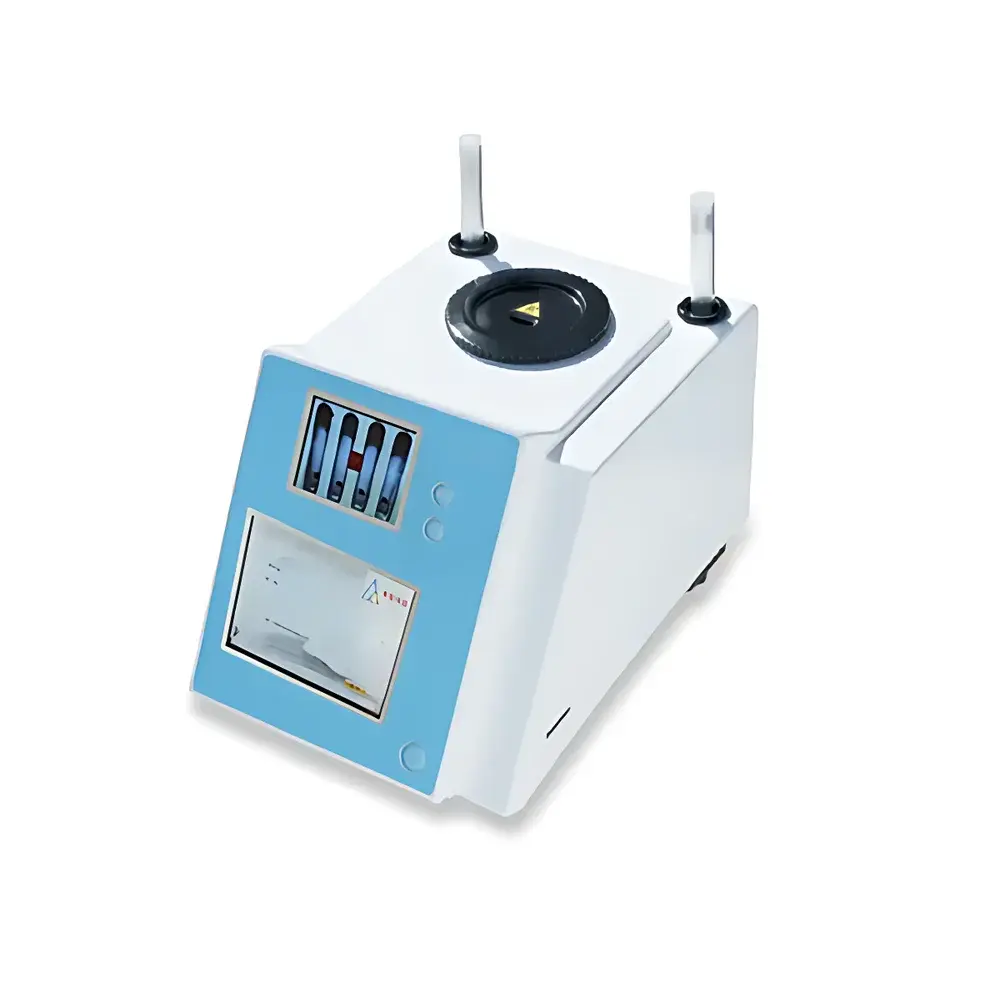
BenAng BA-30RDY Automated Video Melting Point Apparatus
| Brand | BenAng |
|---|---|
| Origin | Shanghai, China |
| Model | BA-30RDY |
| Temperature Range | Ambient to 400 °C |
| Heating Rate | 0.1–20 °C/min |
| Temperature Repeatability | ±0.1 °C |
| Temperature Accuracy | ±0.3 °C (≤250 °C) |
| Capillary Dimensions | ID 1.00 mm, OD 1.40 mm |
| Sample Capacity | 4 samples per run |
| Temperature Resolution | 0.1 °C |
| Display | 7-inch TFT high-definition color touchscreen |
| Data Interfaces | USB, RS-232, SD card slot, Ethernet |
| Optical Magnification | 7× |
| Video Recording | Full HD real-time capture with playback |
| Image Storage | Up to 200 test records + 8 GB internal video storage |
| User Accounts | 8 configurable operator profiles |
| Compliance | USP <741>, EP 2.2.17, ChP 0612 |
Overview
The BenAng BA-30RDY Automated Video Melting Point Apparatus is a precision thermal analysis instrument engineered for pharmacopeial-compliant determination of melting point and melting range of crystalline organic solids. It operates on the classical capillary tube method—per USP , European Pharmacopoeia 2.2.17, and Chinese Pharmacopoeia Chapter 0612—where solid samples are loaded into standardized glass capillaries (1.00 mm ID, 1.40 mm OD), inserted into a precisely controlled heating block, and optically monitored in real time. A high-resolution digital camera captures continuous video at 30 fps, enabling frame-by-frame analysis of structural collapse, meniscus formation, and complete liquefaction. The system employs closed-loop PID temperature control with programmable ramp rates (0.1–20 °C/min), achieving ±0.1 °C repeatability and ±0.3 °C accuracy below 250 °C. Its operational range extends from ambient temperature to 400 °C, accommodating high-melting-point pharmaceutical intermediates, polymers, and specialty chemicals.
Key Features
- Simultaneous four-channel measurement with independent thermal profiling for each capillary position—enabling comparative analysis or replicate testing within a single run.
- 7× optical magnification coupled with a 7-inch high-brightness TFT color display ensures clear visualization of subtle morphological transitions during melting onset and completion.
- Full HD video recording with timestamped metadata; videos stored internally on an 8 GB embedded memory module and exportable via USB or Ethernet for audit-ready documentation.
- Programmable heating protocols: users define start temperature, target temperature, ramp rate, hold time, and stop criteria—supporting both standard pharmacopeial methods and custom thermal profiles.
- Eight user accounts with role-based access control (view-only, operator, administrator), supporting GLP-aligned laboratory workflows and electronic signature requirements.
- Integrated data output options: direct thermal printer connectivity (via USB/RS-232), CSV export to external storage, and network-enabled data transfer compliant with LIMS integration standards.
Sample Compatibility & Compliance
The BA-30RDY accommodates standard pharmacopeial capillaries (1.00 mm ID × 1.40 mm OD) and supports sample masses between 1–3 mg—optimized for reproducible packing density and heat transfer uniformity. It is validated for use with APIs, excipients, reference standards, dyes, fragrances, and polymer additives. Instrument performance meets ASTM E324-22 (Standard Test Methods for Melting Point and Melting Range) and aligns with ICH Q5C stability guidance for thermal characterization of biopharmaceuticals. All calibration and verification procedures follow documented SOPs traceable to NIST-certified reference materials (e.g., indium, tin, zinc). The device supports 21 CFR Part 11-compliant audit trails when connected to validated enterprise software platforms.
Software & Data Management
The embedded firmware provides intuitive touchscreen navigation across five primary interface layers: user login, method setup, real-time monitoring, result review, and report generation. During testing, the screen displays synchronized thermal curves (TA1–TC4), dynamic video feed, and automatic detection markers for onset (Tonset) and offset (Toffset) temperatures. Each test record stores raw video, annotated thermal data, operator ID, timestamp, environmental conditions (if externally logged), and method parameters. Data exports comply with ISO/IEC 17025 reporting requirements—CSV files include column headers for traceability, and PDF reports embed digital signatures where enabled. Firmware updates are delivered via secure HTTPS download and require administrative authentication.
Applications
This instrument serves critical quality control and R&D functions across regulated and non-regulated environments. In pharmaceutical development, it verifies batch-to-batch consistency of active ingredients and detects polymorphic transitions during forced degradation studies. Chemical manufacturers employ it for purity assessment using mixed-melting-point analysis and eutectic behavior mapping. Academic laboratories utilize its video capability for teaching crystallography fundamentals and documenting phase-change kinetics. Regulatory submissions—including ANDA, NDA, and DMF dossiers—routinely cite BA-30RDY-generated data due to its alignment with pharmacopeial visual endpoint criteria and built-in documentation integrity.
FAQ
Does the BA-30RDY support automated melting point detection without manual intervention?
Yes—the system uses edge-detection algorithms applied to real-time video frames to identify the precise moment of meniscus movement and liquid pool formation, triggering automatic Tonset and Toffset assignment.
Can test results be exported in formats compatible with LIMS or ELN systems?
Yes—CSV exports contain structured columns (sample ID, operator, date/time, Tonset, Toffset, ramp rate, capillary position) and are fully importable into common laboratory informatics platforms.
Is calibration traceable to national metrology institutes?
Calibration is performed using NIST-traceable reference standards (indium: 156.60 °C, tin: 231.93 °C, zinc: 419.53 °C); certificates of calibration are provided with each annual service.
What safety features prevent overheating or unattended operation risks?
The unit includes dual independent thermal cutoffs (mechanical and electronic), door-open interlock disabling heating, and auto-shutdown after 12 hours of idle operation.
How does the BA-30RDY ensure compliance with 21 CFR Part 11 for electronic records?
When integrated with validated third-party data management software, the instrument generates time-stamped, immutable audit logs with user authentication, change tracking, and electronic signature support per FDA requirements.



