
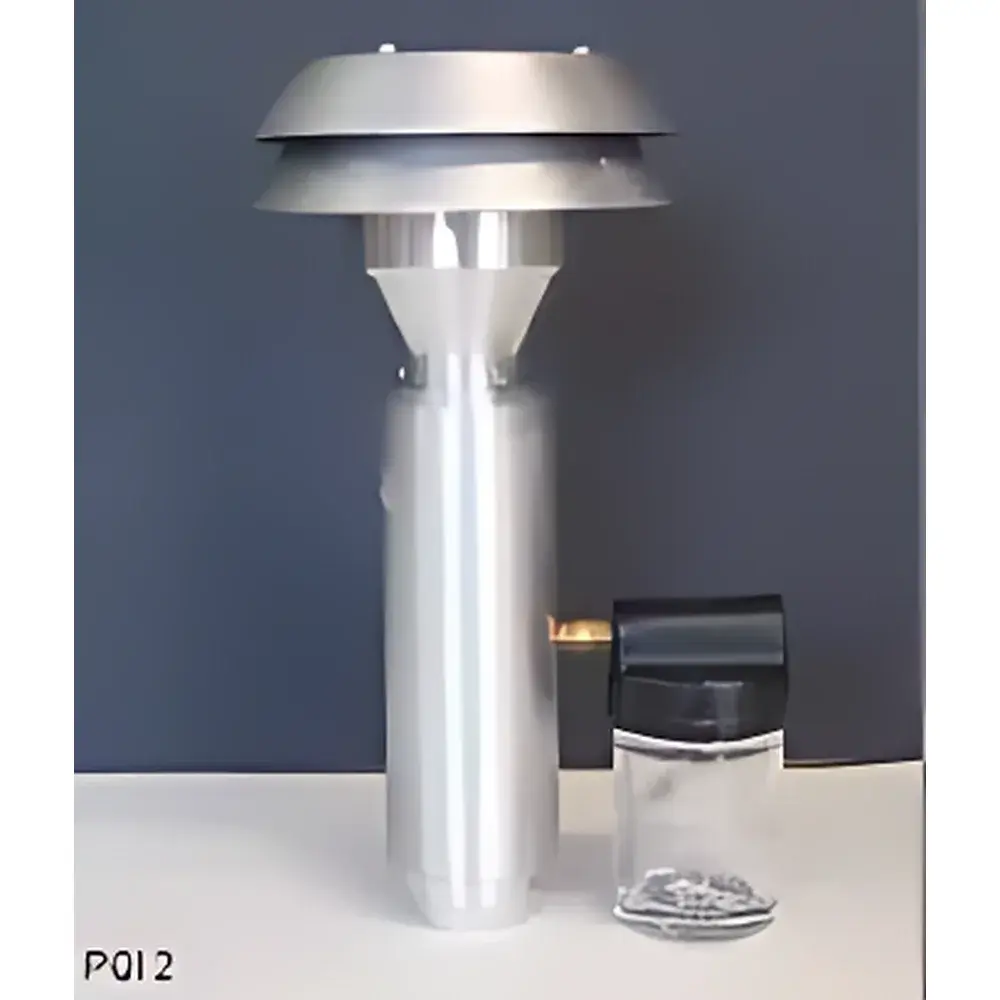
BGI PQ167HA High-Altitude Ambient Particulate Matter (PM2.5) Sampler
| Brand | BGI |
|---|---|
| Origin | USA |
| Model | PQ167HA |
| Operating Altitude | up to 15,000 ft (4,572 m) |
| Flow Rate | 5.0 L/min (±2% accuracy) |
| Sampling Duration | 24 h on internal DC battery |
| Particle Size Cutpoints | TSP, PM10, PM4.0, PM2.5, PM1.0 |
| Filter Format | 47 mm diameter membrane |
| Compliance | U.S. EPA Federal Reference Method (FRM) for PM2.5 |
| Sampling Head | BGI miniPM with integrated water separator |
| Power Options | Internal rechargeable DC battery + AC adapter |
Overview
The BGI PQ167HA High-Altitude Ambient Particulate Matter Sampler is an EPA-compliant, field-deployable reference-grade instrument engineered for precise gravimetric and chemical analysis of airborne particulate matter at extreme elevations. Unlike conventional low-altitude samplers, the PQ167HA maintains strict volumetric flow control—5.0 L/min ±2%—under low-pressure, low-density atmospheric conditions up to 15,000 ft (4,572 m), where barometric pressure drops to approximately 57 kPa and air density decreases by ~35%. This performance is achieved through a thermally compensated mass flow controller and a custom-engineered BGI miniPM sampling head featuring an integrated inertial water separator and dual-stage cyclonic cutpoint selection. The system operates on the principle of inertial impaction combined with size-selective cyclone separation, ensuring adherence to U.S. EPA’s FRM requirements for PM2.5 (40 CFR Part 53) and enabling traceable, legally defensible data acquisition in mountainous, remote, or high-desert environments.
Key Features
- EPA FRM-certified design for PM2.5 monitoring at altitudes up to 15,000 ft (4,572 m), validated per 40 CFR Part 53 Subpart C protocols
- BGI miniPM sampling head with built-in water separator—eliminates need for external deliquescent filters or heated inlets while preserving hygroscopic particle integrity
- Thermally compensated critical orifice + closed-loop mass flow controller ensures stable 5.0 L/min operation across ambient temperatures from –20 °C to +45 °C and pressures from 57–101 kPa
- Modular cyclone interchangeability: supports standardized cutpoints for TSP, PM10, PM4.0, PM2.5, and PM1.0 using EPA-recognized physical dimensions and Stokes number calibration
- Integrated environmental sensor suite records real-time temperature, relative humidity, barometric pressure, and flow rate with timestamped metadata stored onboard
- 24-hour autonomous operation via sealed, rechargeable DC battery pack; AC mains charging capability with smart charge management and battery health monitoring
- 47 mm filter holder compliant with EPA FRM filter media specifications (e.g., PTFE, quartz fiber); accommodates both gravimetric and subsequent ion chromatography or ICP-MS analysis
Sample Compatibility & Compliance
The PQ167HA is designed exclusively for ambient air sampling under uncontrolled outdoor conditions, including alpine summits, high-elevation research stations, and arid plateau sites. It accepts standard 47 mm circular filters certified for EPA FRM use—including Pallflex T60A20, Zefluor PTFE, and Whatman QMA quartz—and maintains laminar flow profiles across the entire filter surface per ISO 29463-3:2017 guidance. All mechanical components—including the miniPM head, cyclones, and flow housing—are manufactured to ASME BPE-2021 surface finish standards and undergo helium leak testing (<1×10⁻⁹ atm·cm³/s). The system meets U.S. EPA’s Performance Specification 12 (PS-12) for continuous ambient PM monitors and supports full GLP/GMP audit trails when paired with BGI’s optional data logger firmware (v3.2+), which includes 21 CFR Part 11–compliant electronic signatures and immutable event logging.
Software & Data Management
Data acquisition is handled by an embedded ARM Cortex-M7 microcontroller running a deterministic real-time OS. Raw sensor outputs—including differential pressure across the critical orifice, thermistor readings, and motor current feedback—are sampled at 10 Hz and averaged over 1-minute intervals. Compressed binary logs (with SHA-256 checksums) are stored on a removable microSD card (up to 32 GB) and include calibrated flow, ambient T/RH/P, battery voltage, and operational status flags. Optional BGI DataLink software (Windows/macOS/Linux) enables automated log parsing, QA/QC flagging per EPA 40 CFR Part 58 Appendix A, and export to CSV, NetCDF, or EPA AQS-compatible XML formats. Firmware updates are cryptographically signed and verified prior to installation, supporting secure over-the-air (OTA) deployment in networked remote installations.
Applications
- Long-term PM2.5 trend monitoring in high-mountain observatories (e.g., Mauna Loa, Jungfraujoch, or Himalayan stations)
- Source apportionment studies requiring co-located multi-size fraction sampling (TSP–PM1.0) under identical meteorological conditions
- Validation of satellite aerosol optical depth (AOD) retrievals in regions with sparse ground-based networks
- Regulatory compliance monitoring for national parks and wilderness areas governed by Class I PSD increments under the Clean Air Act
- Climate research involving black carbon, dust, and sulfate aerosol transport across elevation gradients
- Calibration transfer between low- and high-altitude reference sites for regional air quality modeling (e.g., WRF-Chem, CAMx)
FAQ
Does the PQ167HA require external power conditioning or voltage stabilizers at high altitude?
No. The internal DC-DC converter regulates input from both battery and AC sources across 100–240 VAC, 50/60 Hz, and maintains output stability under transient load conditions typical of cyclone motor startup.
Can the miniPM head be used with non-EPA-approved cutpoints (e.g., PM0.5)?
Not without revalidation. While the mechanical interface supports custom cyclones, EPA FRM designation applies only to configurations tested and listed in the official FRM designation notice (e.g., PQ167HA-PM2.5, PQ167HA-PM10).
Is the water separator effective for fog or freezing fog conditions?
Yes—the miniPM separator removes >95% of liquid droplets ≥10 µm diameter at flow rates ≤5.0 L/min, as verified per ASTM D7520-18 Annex A1 testing. Ice formation on internal surfaces is mitigated by thermal inertia and passive heat exchange with ambient air.
How often must the critical orifice be cleaned or replaced?
Under typical remote deployment (no industrial contamination), inspection is recommended every 6 months; replacement interval is ≥2 years when operated within specified environmental limits.
Does the system support NIST-traceable flow calibration?
Yes—each unit ships with a certificate of calibration against NIST SRM 1920a (critical orifice standard) and includes a dedicated calibration port compatible with primary-standard dry calibrators (e.g., Mesa Labs DryCal).







