
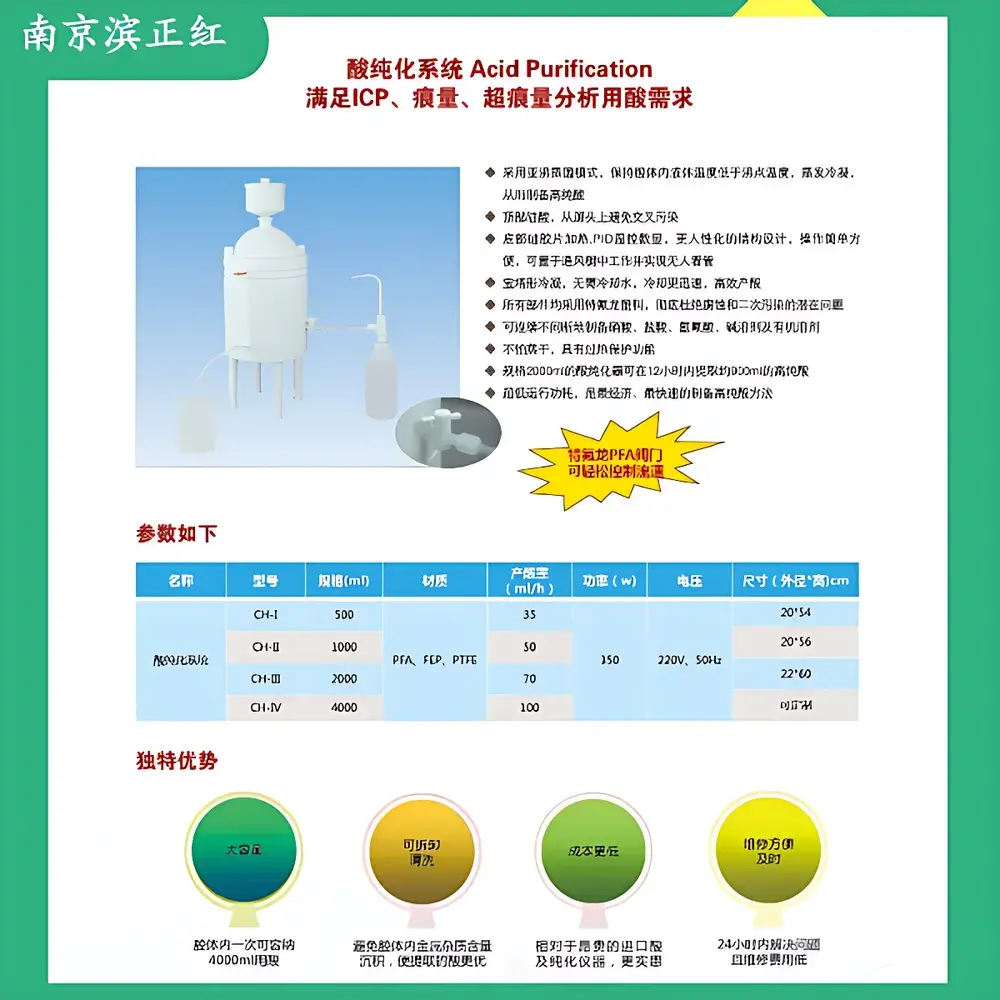
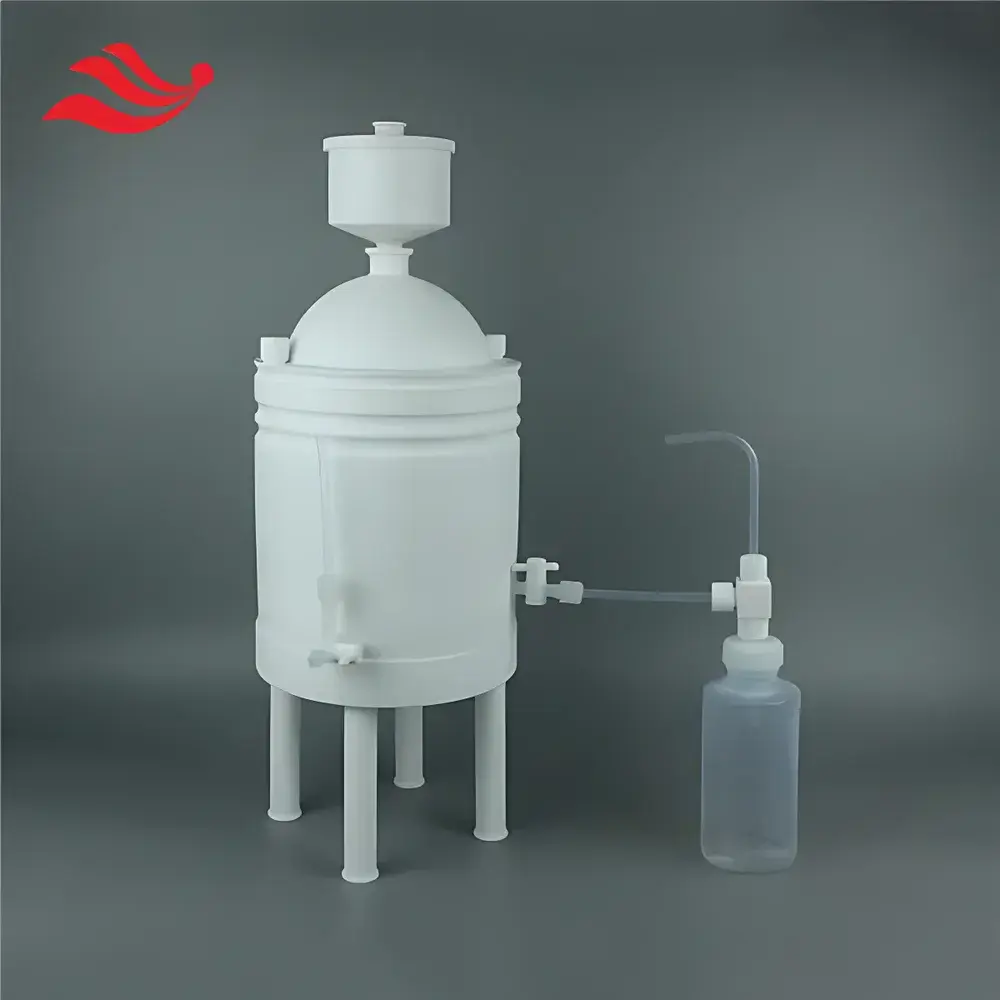
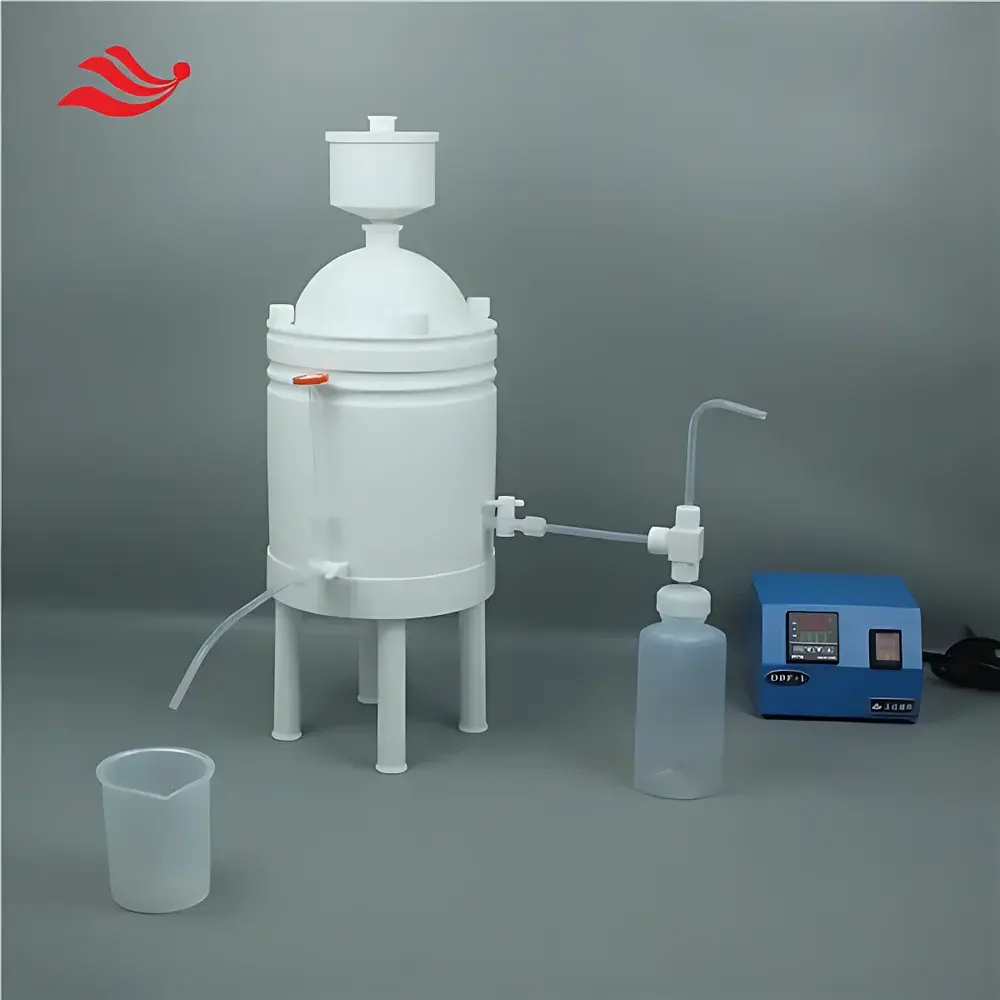
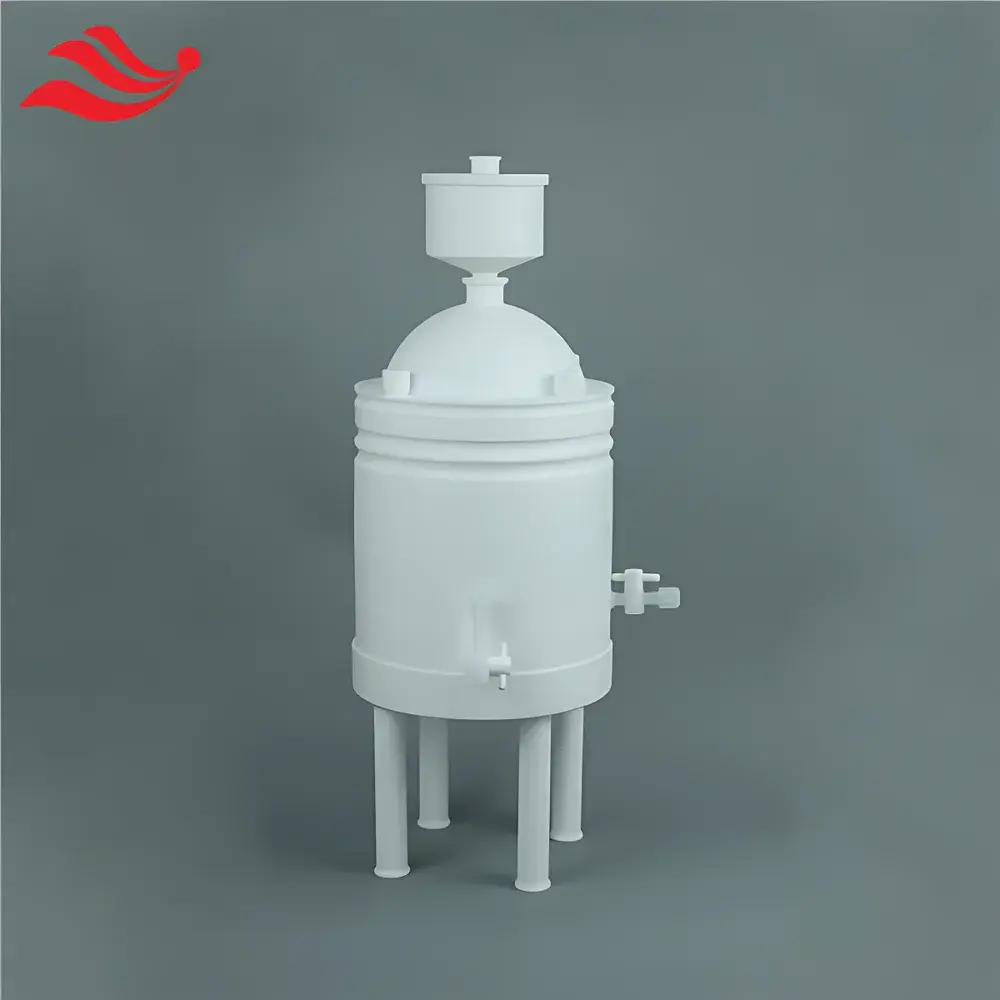
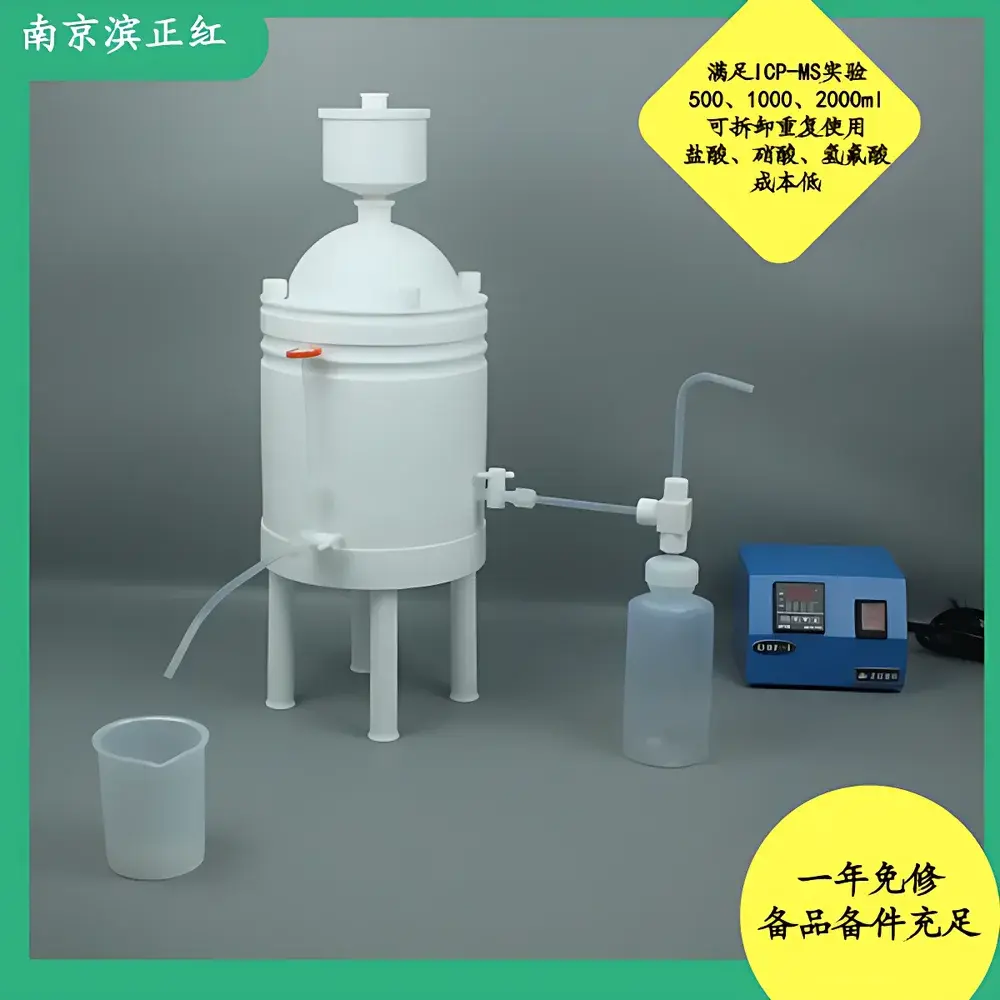
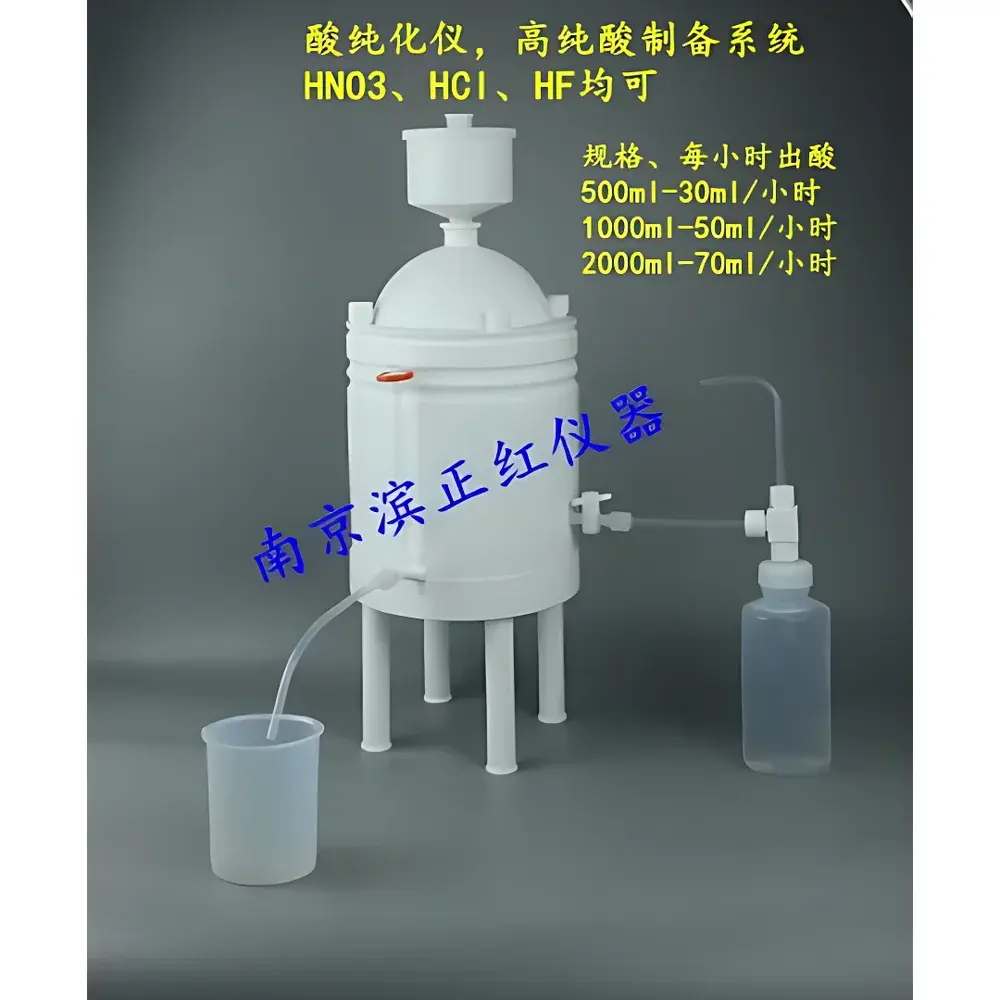
Binzhenghong NJ-CH-II-1L Sub-Boiling Acid Purifier with 1 L Distillation Tower for Advanced Materials Preparation
| Brand | Binzhenghong |
|---|---|
| Model | NJ-CH-II-1L |
| Origin | Jiangsu, China |
| Manufacturer Type | Direct Manufacturer |
| Instrument Type | Sub-boiling Distillation System |
| Heating Method | Silicone Heater Pad |
| Distillation Rate | 50 mL/h |
| Heating Units | 1 |
| Warm-up Time | 30 min |
| Capacity | 1000 mL |
| Material Compatibility | HNO₃, HCl, HF, NaOH, and Organic Solvents |
| Construction | PTFE (Teflon)-lined Chamber and Condensation Pathway |
| Compliance | Designed for ISO/IEC 17025-aligned trace metal analysis workflows |
Overview
The Binzhenghong NJ-CH-II-1L Sub-Boiling Acid Purifier is an engineered solution for the preparation of ultra-high-purity inorganic acids—specifically nitric acid (HNO₃), hydrochloric acid (HCl), hydrofluoric acid (HF), sodium hydroxide (NaOH) solutions, and select organic solvents—required in advanced materials synthesis, semiconductor metrology, and trace elemental analysis. Unlike conventional boiling-point distillation, this system operates on the principle of sub-boiling (or near-boiling) thermal evaporation: heat is applied uniformly via a silicone heating pad to maintain the bulk liquid temperature just below its atmospheric boiling point. This controlled thermal gradient minimizes aerosol entrainment, volatile impurity carryover, and decomposition of thermally sensitive species—ensuring condensate purity at the part-per-quadrillion (ppq) level for key cationic contaminants (e.g., Fe, Al, Cr, Ni, Pb). The integrated 1 L PTFE-lined distillation tower enables batch processing without glass-to-acid contact, eliminating leaching from borosilicate or quartz surfaces—a critical requirement for ICP-MS, HR-ICP-OES, and single-crystal growth applications where background contamination directly limits detection capability.
Key Features
- PTFE (Teflon)-encapsulated distillation chamber and condenser pathway—fully inert to aggressive media including concentrated HF and hot alkaline solutions
- Single-zone silicone heating pad with precise thermal ramp control (0–200 °C range), achieving stable sub-boiling operation within ≤30 minutes
- Controlled distillation rate of 50 mL/h—optimized for high recovery yield (>92%) and minimal volatile loss of low-boiling acids (e.g., HCl)
- Modular, tool-free disassembly design—enabling full access to internal surfaces for routine cleaning, verification, and scheduled maintenance per GLP protocols
- No metal components in fluid path—eliminates catalytic degradation and metallic leaching during long-term operation
- Compact footprint (320 × 280 × 450 mm) suitable for fume hood integration with standard 600 mm depth clearance
Sample Compatibility & Compliance
The NJ-CH-II-1L supports purification of analytical-grade reagents into sub-ppb purity grades compliant with ASTM D1193 Type I water specifications when used with appropriate collection vessels. It is validated for repeated use with ≥70% HNO₃, 37% HCl, 49% HF, and 1–5 mol/L NaOH. All wetted parts conform to USP Class VI biocompatibility standards and meet ISO 10993-5 cytotoxicity requirements. For regulated laboratories, the system supports audit-ready documentation: each purification run can be logged manually with start/end time, acid type, volume processed, and operator ID—aligning with FDA 21 CFR Part 11 principles for traceability in GMP-compliant cleanroom environments (e.g., Class 1000 or better). Optional PTFE collection bottles (sold separately) are certified for ≤0.01 ppb blank levels for transition metals.
Software & Data Management
This model operates as a standalone benchtop instrument without embedded microcontroller or digital interface. All operational parameters—including heating setpoint, duration, and distillate volume—are managed manually per SOP-defined protocols. While no proprietary software is included, the unit is compatible with external laboratory information management systems (LIMS) via manual entry of purification logs. Users may integrate optional digital timers or external temperature data loggers (e.g., Omega OM-EL-USB-TC) for automated thermal profiling and electronic record retention—supporting ISO/IEC 17025 clause 7.5.2 on equipment calibration and usage history.
Applications
- Preparation of matrix-matched calibration standards for ICP-MS quantification of dopants in battery cathode precursors (e.g., Ni-rich NMC, LiCoO₂)
- Acid digestion blanks for certified reference material (CRM) validation in geological and environmental sample analysis
- Purification of etchants and cleaning agents used in MEMS fabrication and photomask cleaning processes
- Generation of ultra-low-metallic background acids for atomic absorption spectroscopy (AAS) and graphite furnace AAS (GFAAS) method development
- Recovery and reuse of spent HF–HNO₃ mixtures in silicon wafer surface passivation R&D
FAQ
What is the maximum recommended operating temperature for hydrofluoric acid (HF) purification?
The system is rated for continuous operation up to 180 °C, which is appropriate for 49% HF under sub-boiling conditions. Temperature must be empirically optimized per batch to avoid PTFE softening above 200 °C.
Can this unit purify aqua regia?
No. Aqua regia is not recommended due to rapid NOCl and Cl₂ off-gassing, which compromises containment integrity and poses safety hazards beyond the design envelope.
How often should the PTFE chamber be cleaned between runs?
Cleaning is required after every 5–10 batches when processing HNO₃/HF mixtures; visual inspection for residue buildup is mandatory prior to each use per ISO 15190:2022 Annex B.
Is third-party certification available for metal impurity reduction performance?
Yes—certified test reports (including ICP-MS analysis of feed vs. distillate for 22 elements) can be provided upon request, traceable to NIST SRM 3100 series standards.
Does the unit include a condensate collection vessel?
No. Collection vessels are sold separately as PTFE or FEP labware (e.g., 500 mL or 1 L capacity), selected based on compatibility with final application and storage duration requirements.



