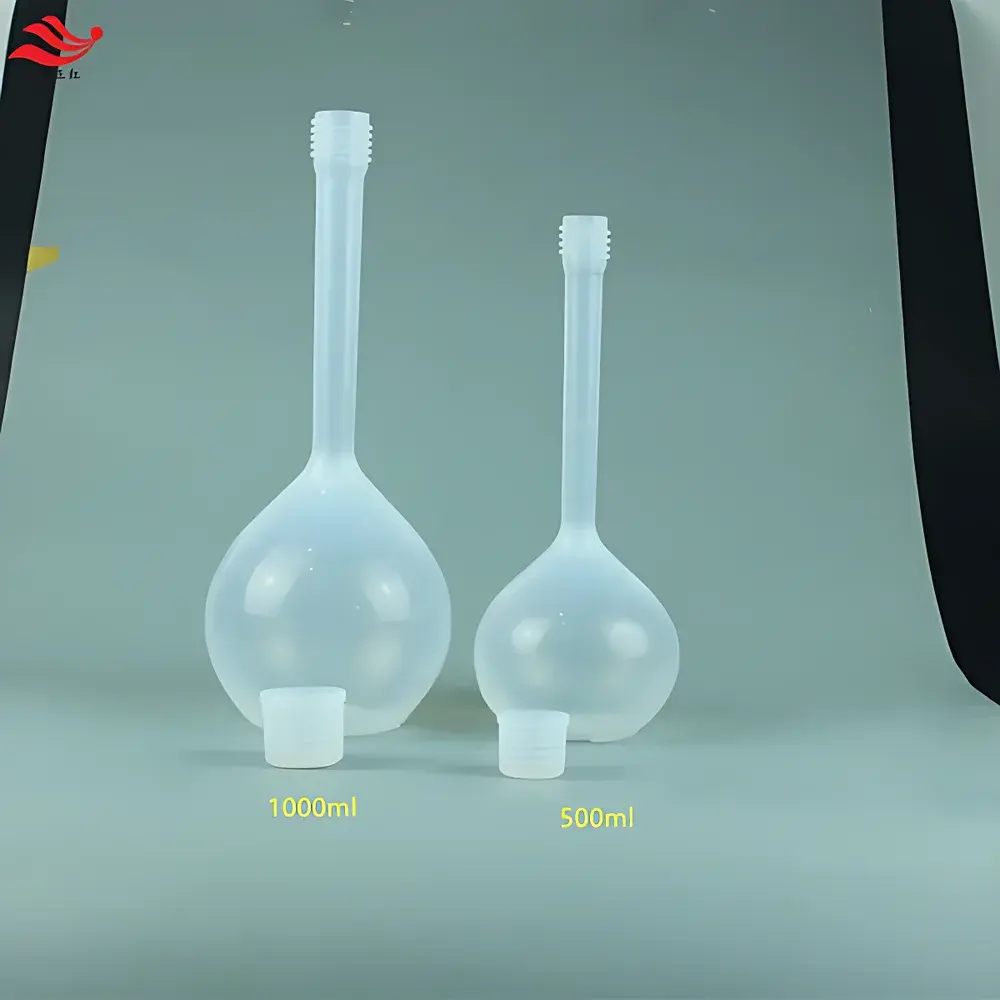
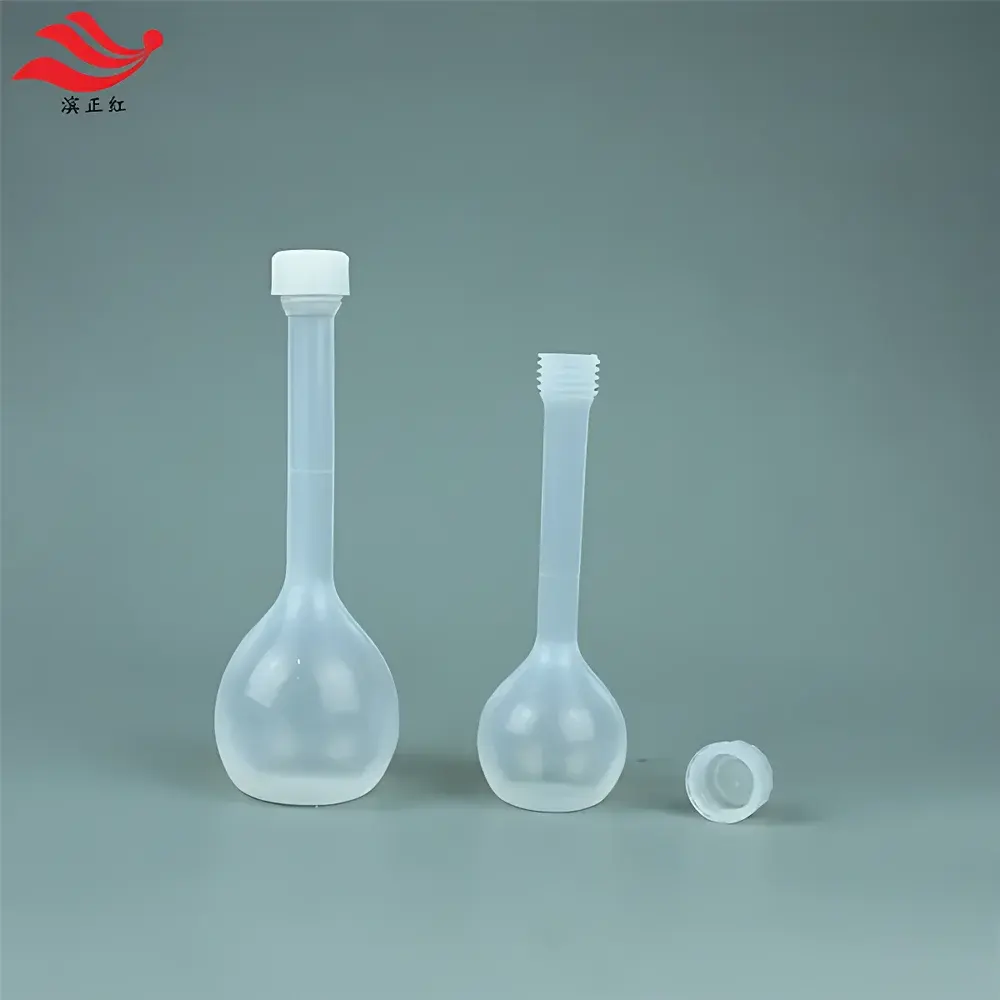
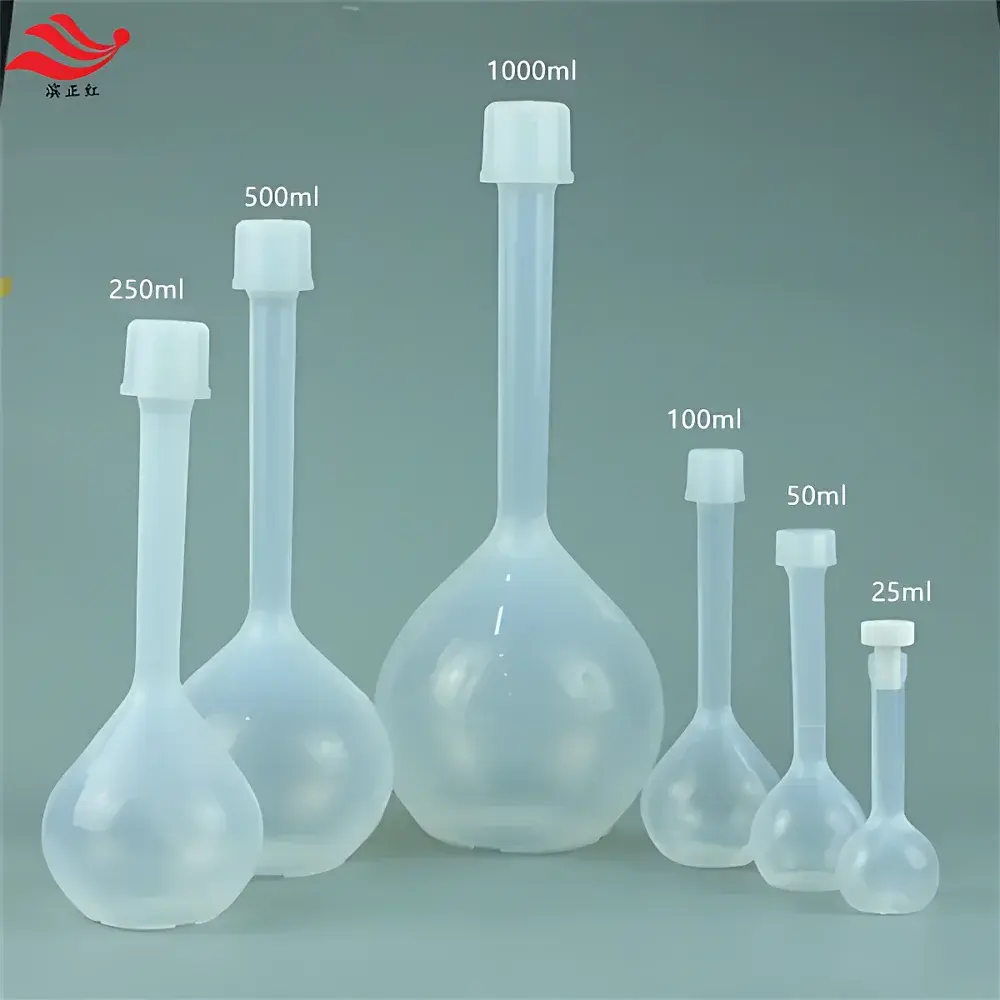
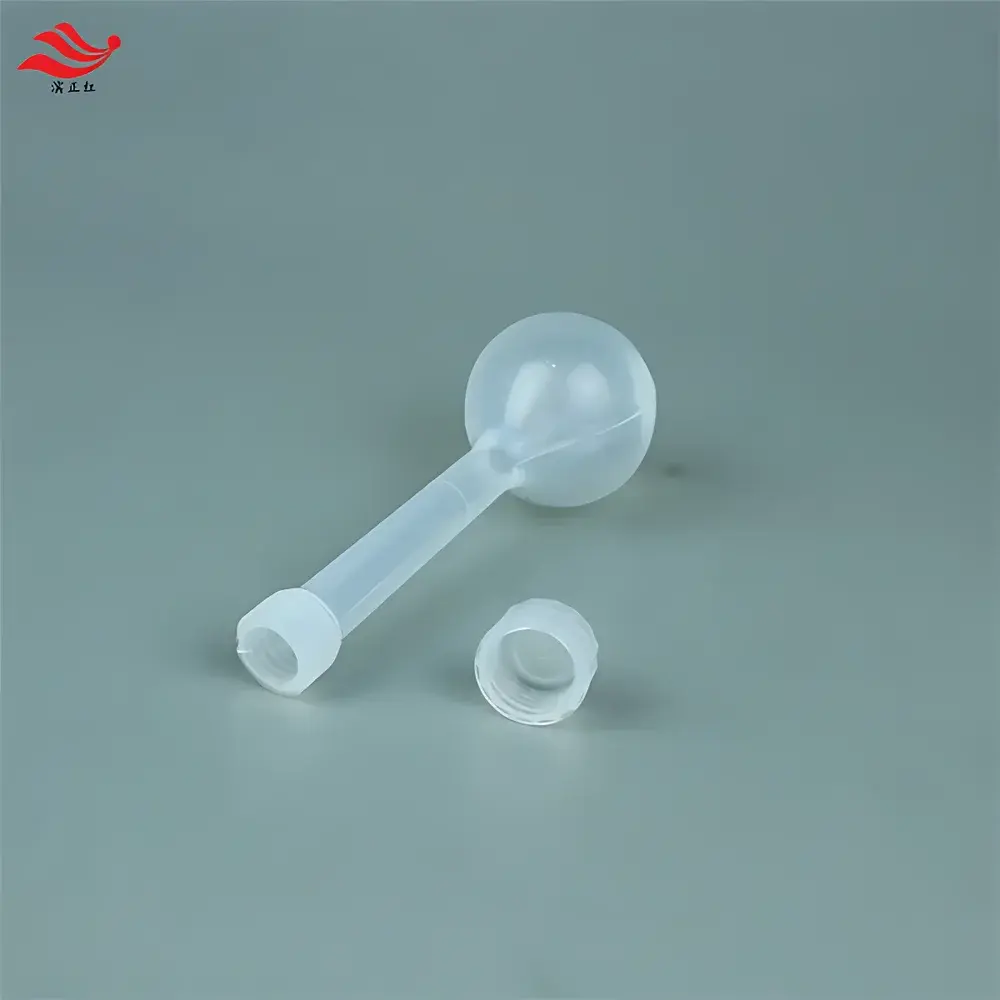
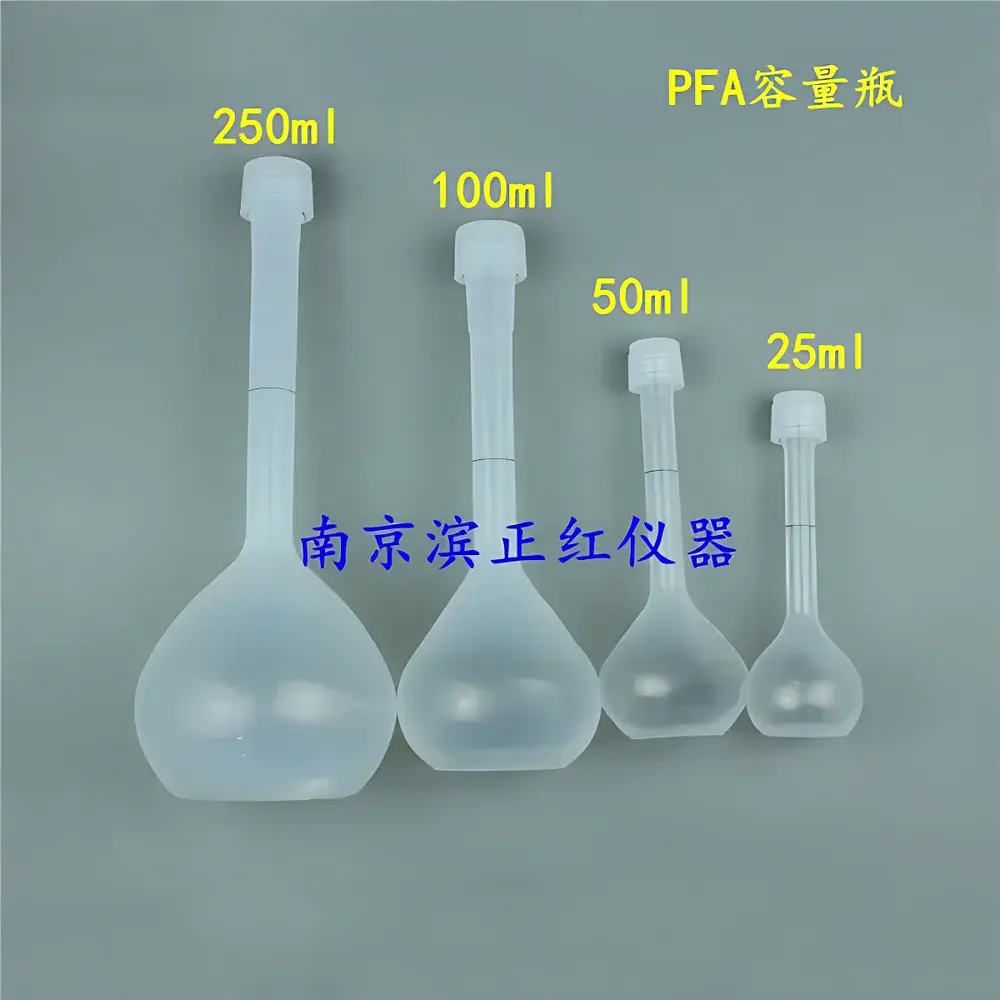
Binzhenghong RLP Series PFA Volumetric Flasks for Semiconductor-Grade Chemical Handling
| Brand | Binzhenghong |
|---|---|
| Model | RLP |
| Material | Perfluoroalkoxy (PFA) |
| Temperature Range | −200 °C to +260 °C |
| Closure Type | Threaded Cap with PFA Seal |
| Optical Clarity | High Transparency |
| Surface Finish | Ultra-Smooth Internal Wall |
| Chemical Resistance | HF-Compatible, Low Extractables/Leachables |
| Calibration | Optional NIST-Traceable Volume Certification (Customer-Sponsored) |
| Compliance | Suitable for ISO/IEC 17025 Laboratories |
| Recommended Cleaning Temp | <60 °C |
| Intended Use | Class 1–10 Cleanroom-Compatible Volumetric Preparation of Standards and Reagents |
Overview
The Binzhenghong RLP Series PFA Volumetric Flasks are precision-engineered laboratory vessels designed specifically for semiconductor process chemistry, ultra-trace analytical workflows, and high-purity reagent handling. Constructed entirely from high-molecular-weight perfluoroalkoxy (PFA) resin—certified to ASTM D4894 and IEC 60674-2 specifications—these flasks deliver exceptional thermal stability, chemical inertness, and dimensional integrity across extreme operating conditions (−200 °C to +260 °C). Unlike borosilicate glass or standard polypropylene alternatives, PFA exhibits negligible ion leaching, near-zero metal extractables (<0.1 ng/mL for Na⁺, K⁺, Ca²⁺, Fe³⁺ under USP testing), and immunity to hydrofluoric acid—making them indispensable for wet etch formulations, dopant precursor storage, and calibration standard preparation in fab metrology labs. As Class A volumetric instruments classified under ISO 1042 (2020) for “volumetric flasks—capacity and tolerance,” the RLP series is manufactured to meet ±0.05% volumetric tolerance at 20 °C when calibrated per ISO/IEC 17025-accredited procedures.
Key Features
- Monolithic PFA construction with seamless body-to-neck fusion—eliminates adhesive interfaces and potential contamination pathways
- Optimized threaded cap design with dual-stage PFA sealing surface ensures leak-tight closure during vortex mixing and long-term static storage
- Laser-etched calibration marks with permanent, chemically resistant contrast—visible under UV and visible light without ink migration
- Sub-micron internal surface roughness (Ra < 0.05 µm) verified by atomic force microscopy—minimizes liquid film retention and cross-contamination between sequential preparations
- Impact-resistant architecture validated per IEC 60068-2-75 hammer test (1.5 J impact energy)—reduces breakage risk in cleanroom gowning environments
- Batch-certified lot documentation includes FTIR spectral verification, heavy metal impurity screening (ICP-MS), and outgassing profiles per ASTM E595 for vacuum compatibility
Sample Compatibility & Compliance
RLP flasks are routinely deployed in applications requiring strict adherence to SEMI F57 (specifications for fluoropolymer labware), USP (plastic packaging systems), and ISO 15189:2022 (medical laboratory quality requirements). Their low extractables profile enables use in EPA Method 200.8 (ICP-MS multi-element analysis), ASTM D5128 (silicon wafer rinse water testing), and JIS K 0123 (high-purity chemical certification). Each unit is supplied with a material traceability certificate indicating polymer grade (e.g., DuPont Teflon® PFA 350HP), melt flow index (MFI), and residual catalyst content (<10 ppb Ti). The flasks comply with RoHS 2015/863/EU and REACH SVHC thresholds and are suitable for GLP/GMP environments where audit-ready documentation of vessel qualification is required.
Software & Data Management
While inherently analog devices, RLP flasks integrate seamlessly into digital lab infrastructure via companion calibration management protocols. When paired with accredited third-party calibration services (e.g., NIST-traceable gravimetric volume verification), raw data—including temperature-compensated mass measurements, environmental humidity logs, and uncertainty budgets per GUM (JCGM 100:2008)—are delivered in CSV and PDF formats compatible with LIMS platforms such as LabWare LIMS, Thermo Fisher SampleManager, and Agilent OpenLab ECM. Calibration certificates include full traceability chains to national metrology institutes (NIM China, NPL UK, or NIST USA) and support 21 CFR Part 11-compliant electronic signatures when processed through validated e-signature modules.
Applications
- Preparation of ppq-level reference standards for ICP-MS and HR-ICP-MS analysis in semiconductor wafer defect forensics
- Storage and dilution of HF/HNO₃-based etchants in 300 mm fab tool maintenance protocols
- Volumetric delivery of dopant solutions (e.g., phosphorus oxychloride, boron tribromide) in diffusion furnace calibration
- Trace metal stabilization for EPA 6020B method validation in ultrapure water monitoring loops
- Long-term holding of certified reference materials (CRMs) from NIST, BAM, or LGC under inert gas purging
- On-site field calibration of handheld XRF analyzers using matrix-matched standards prepared in RLP vessels
FAQ
Are RLP PFA flasks suitable for use in Class 1 cleanrooms?
Yes—they are manufactured in ISO Class 5 (Class 100) cleanroom environments and pass particle shedding tests per ISO 14644-1:2015 Annex B.
Can these flasks be autoclaved?
No—autoclaving exceeds the recommended cleaning temperature limit of 60 °C; instead, use solvent rinsing followed by nitrogen purge drying.
Is volume calibration included with purchase?
Calibration is optional and customer-sponsored; standard units ship with nominal capacity labeling only.
How does PFA compare to FEP or ETFE for trace metal work?
PFA demonstrates superior low-temperature flexibility, lower extractables, and higher purity batch consistency than FEP or ETFE—particularly critical below 1 ppt detection limits.
Do you provide lot-specific certificates of analysis?
Yes—each shipment includes CoA with FTIR identity confirmation, ICP-MS residual metal screen, and thermal degradation onset data (TGA @ 10 °C/min under N₂).