
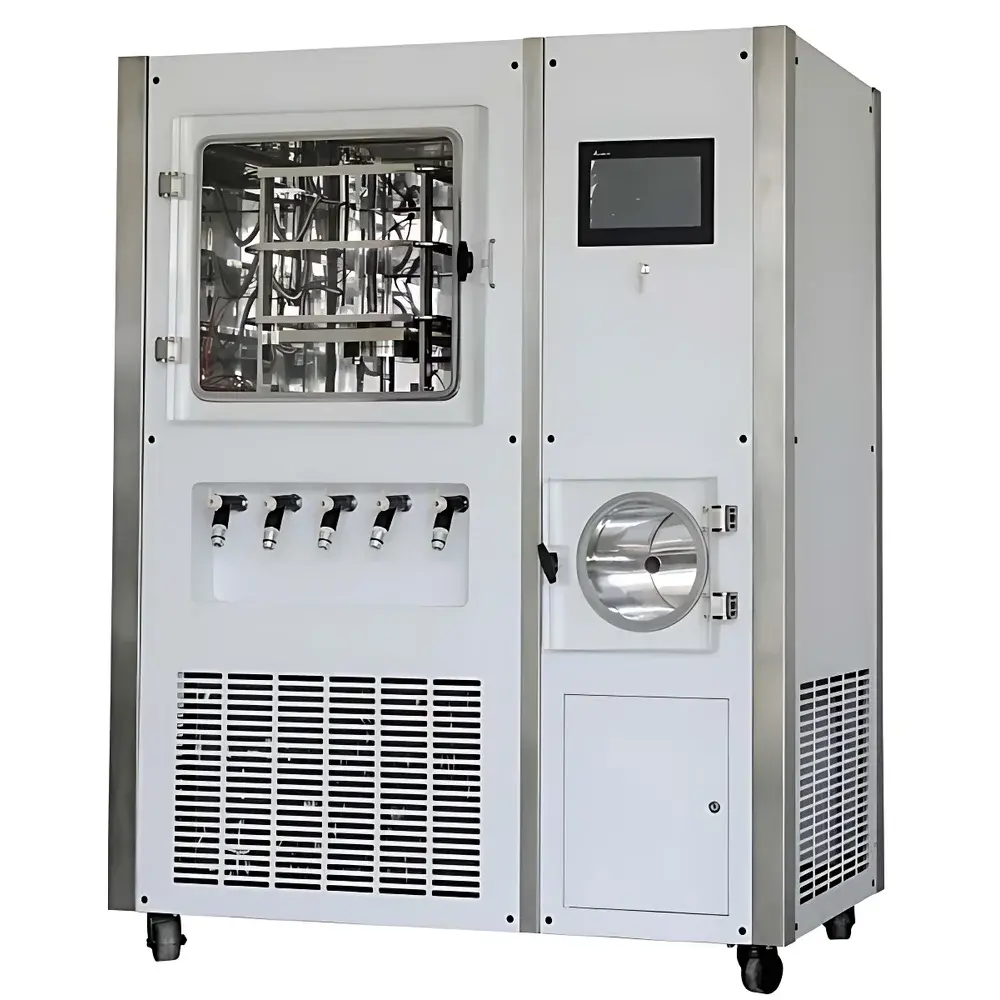
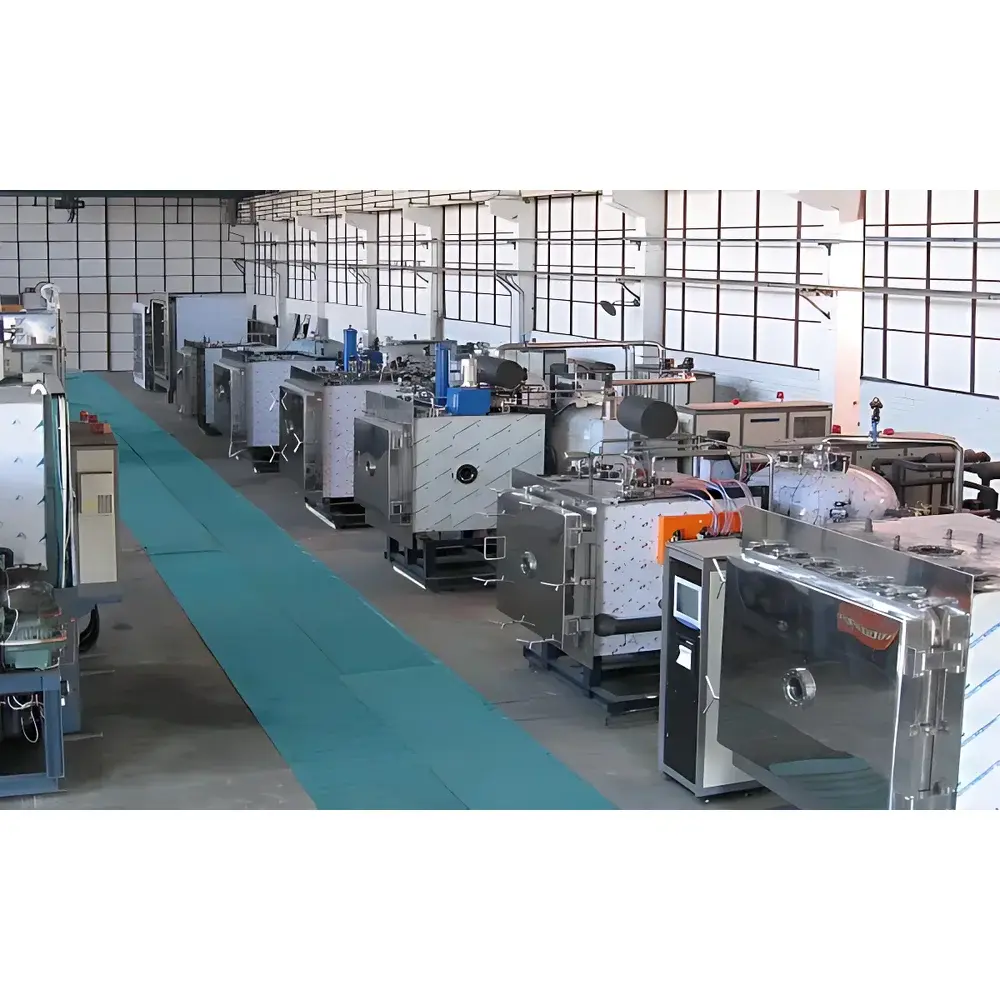
BIOCOOL Pilot3-6H Pilot-Scale Freeze Dryer
| Brand | BIOCOOL |
|---|---|
| Origin | Beijing, China |
| Model | Pilot3-6H |
| Type | Standard Shelf-Type Freeze Dryer |
| Application | Pilot-Scale Processing |
| Lyophilization Area | 0.3 m² |
| Ultimate Vacuum | <3 Pa |
| Condensate Capacity | 6 L/24 h |
| Cold Trap Temperature | <−80 °C |
Overview
The BIOCOOL Pilot3-6H is a pilot-scale shelf-type freeze dryer engineered for reproducible, GMP-aligned lyophilization process development and scale-up validation in pharmaceutical, biotechnology, and academic research laboratories. It operates on the fundamental principles of sublimation under controlled low-pressure and low-temperature conditions: frozen aqueous or viscous samples are subjected to primary drying (ice sublimation) and secondary drying (adsorbed water desorption) within a thermally regulated chamber and cold trap system. The unit integrates a silicone oil-heated shelf system, high-efficiency dual-stage refrigeration, and a vacuum control architecture designed to maintain stable pressure profiles across dynamic drying phases—enabling precise thermal management of heat-sensitive biomolecules, proteins, vaccines, and sterile formulations.
Key Features
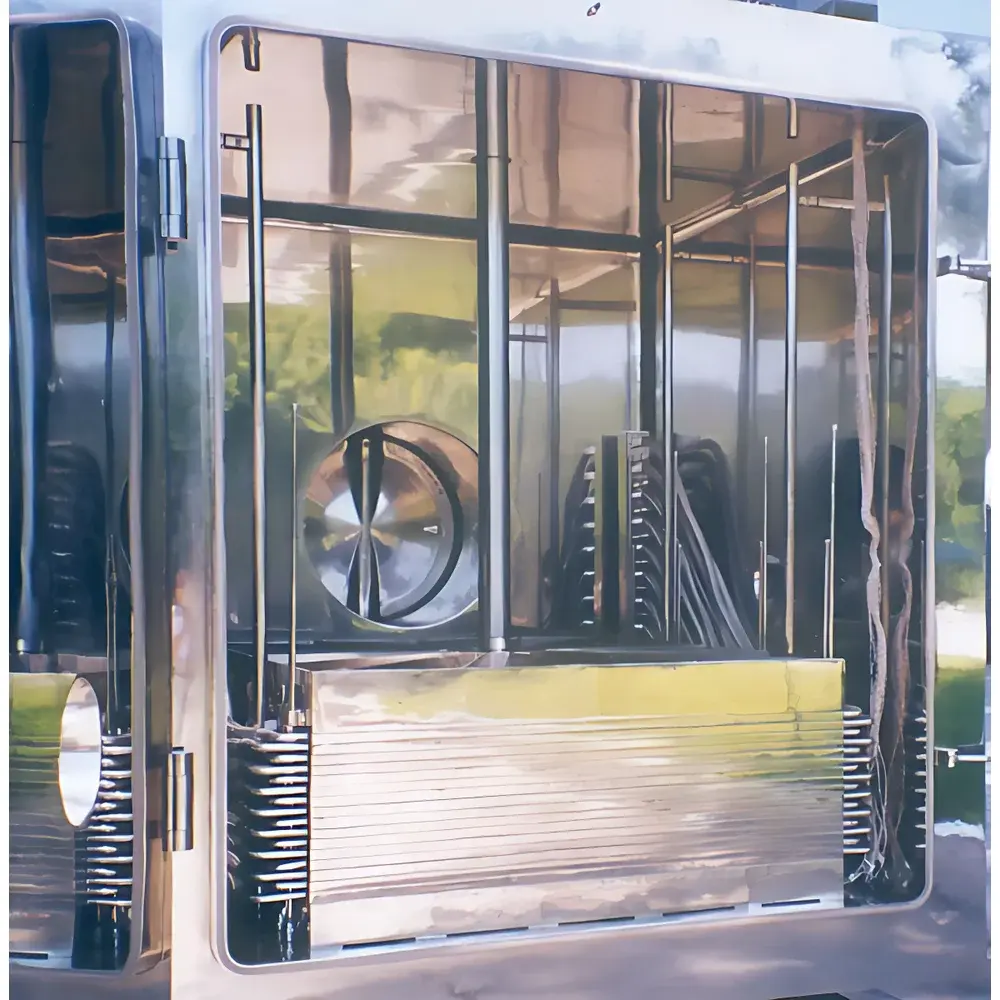
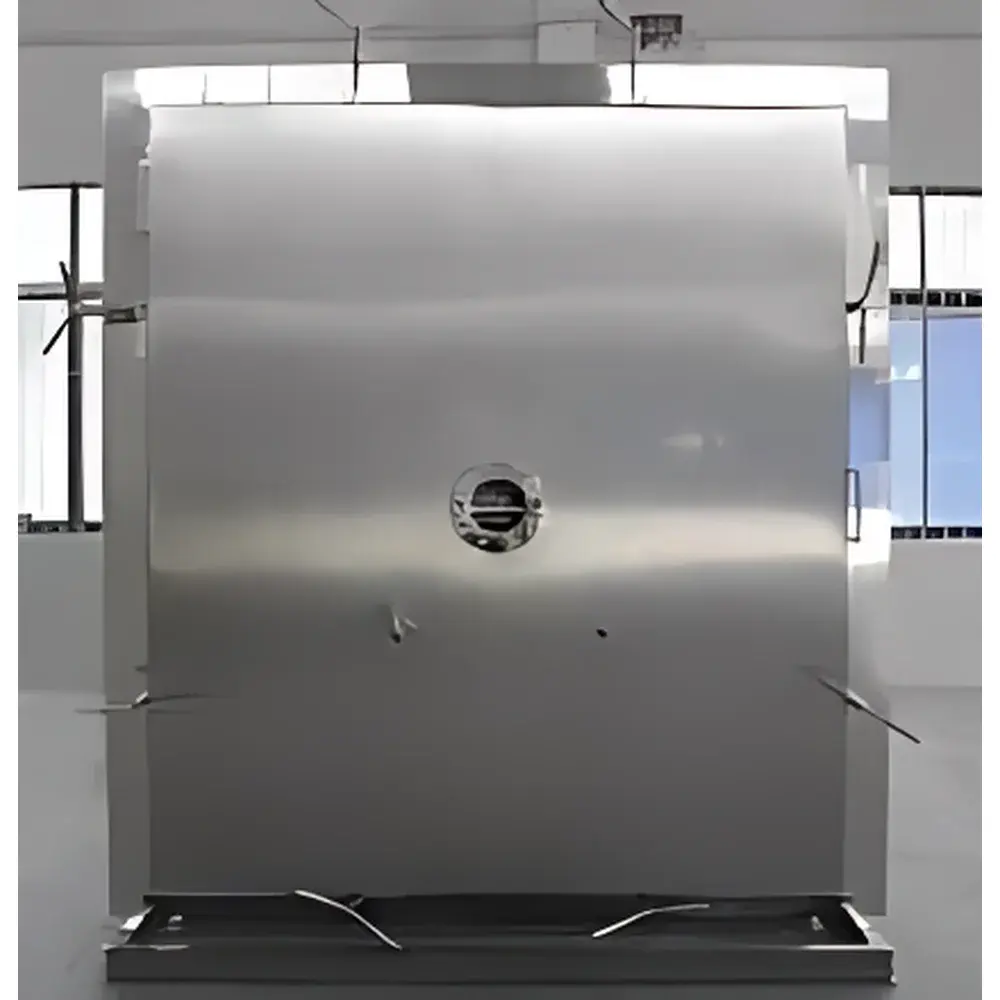
- Aerospace-grade acrylic chamber door—optically transparent, leak-tight, and chemically inert—provides real-time visual monitoring without compromising structural integrity or vacuum performance.
- Shelf pre-freezing capability allows sample freezing directly on temperature-controlled shelves, eliminating reliance on external ultra-low temperature freezers and reducing contamination risk during transfer.
- Industrial-grade hermetic compressors and high-speed dual-stage vacuum pumps ensure stable operation at <3 Pa ultimate vacuum with low acoustic emission (<62 dB(A)) and extended service life.
- Hydraulic stoppering system with pressure feedback control enables uniform, programmable vial compression under vacuum—critical for maintaining container closure integrity in aseptic processing.
- Oil mist filtration integrated into the vacuum line meets ISO 8573-1 Class 2 compressed air purity requirements and eliminates operator exposure to hydrocarbon aerosols during pump operation.
- Non-electric cold trap defrosting mechanism—utilizing ambient heat exchange and internal pressure equalization—reduces thermal shock to condenser coils and avoids electrical hazards associated with resistive heating elements.
- Multi-stage vacuum regulation (pulse modulation and continuous control) supports optimized mass transfer during both primary and secondary drying, mitigating boil-over, collapse, or foaming in sensitive formulations.
- Fuzzy PID-based shelf temperature control with real-time thermal loop monitoring ensures ±0.5 °C stability across −55 °C to +80 °C operating range, supporting accurate ramp-hold-cool protocols.
Sample Compatibility & Compliance
The Pilot3-6H is validated for use with aqueous solutions, suspensions, emulsions, and semi-solid matrices exhibiting eutectic temperatures above −40 °C. Its design conforms to core elements of FDA 21 CFR Part 11 (when equipped with optional PC database logging and audit trail modules), EU Annex 11, and ISO 20933:2020 (Good Lyophilization Practice). All critical parameters—including shelf temperature, chamber pressure, condenser temperature, and elapsed time—are continuously logged with 50 ms sampling resolution. Built-in calibration functions support traceable verification of temperature (PT100 sensors) and vacuum (capacitance manometer) measurements per ISO/IEC 17025 guidelines. Optional eutectic point determination module enables empirical characterization of formulation-specific collapse temperatures prior to cycle development.
Software & Data Management
The system runs on an embedded industrial HMI touchscreen interface with intuitive icon-driven navigation—requiring no prior training for basic operation. Up to 500 user-defined lyophilization protocols can be stored locally, each containing multi-step shelf temperature ramps, vacuum setpoints, hold durations, and pressure modulation profiles. Data recording options include internal flash memory (retains ≥90 days of full-resolution logs), USB export (FAT32 formatted drives), and optional networked PC database integration with timestamped, password-protected access control. Remote supervision is supported via Ethernet or RS485 (up to 1.5 km range) with live parameter streaming and alarm notification. All data files comply with ALCOA+ principles (Attributable, Legible, Contemporaneous, Original, Accurate, Complete, Consistent, Enduring, Available) when configured with electronic signature and audit trail modules.
Applications
- Process development and optimization of parenteral lyophilized products (e.g., monoclonal antibodies, recombinant enzymes, diagnostic reagents).
- Stability studies under ICH Q5C conditions using identical shelf geometry and thermal dynamics as commercial production units.
- Feasibility testing of novel excipient systems and cryoprotectant formulations.
- Training and technology transfer between R&D, clinical manufacturing, and commercial operations teams.
- Academic research in food science, material engineering, and microbiology requiring controlled dehydration of thermolabile biologicals.
FAQ
What is the maximum batch capacity for vials on the Pilot3-6H?
With a 0.3 m² shelf area and standard 130 mm shelf spacing, the unit accommodates approximately 1,200 × 10 mL or 600 × 20 mL serum vials per batch—subject to vial geometry and loading density.
Does the system support organic solvent trapping?
Yes—an optional condenser upgrade with stainless-steel coil and enhanced surface area is available for efficient capture of methanol, ethanol, acetone, and other low-boiling-point solvents.
Can the freeze dryer be integrated into a cleanroom environment?
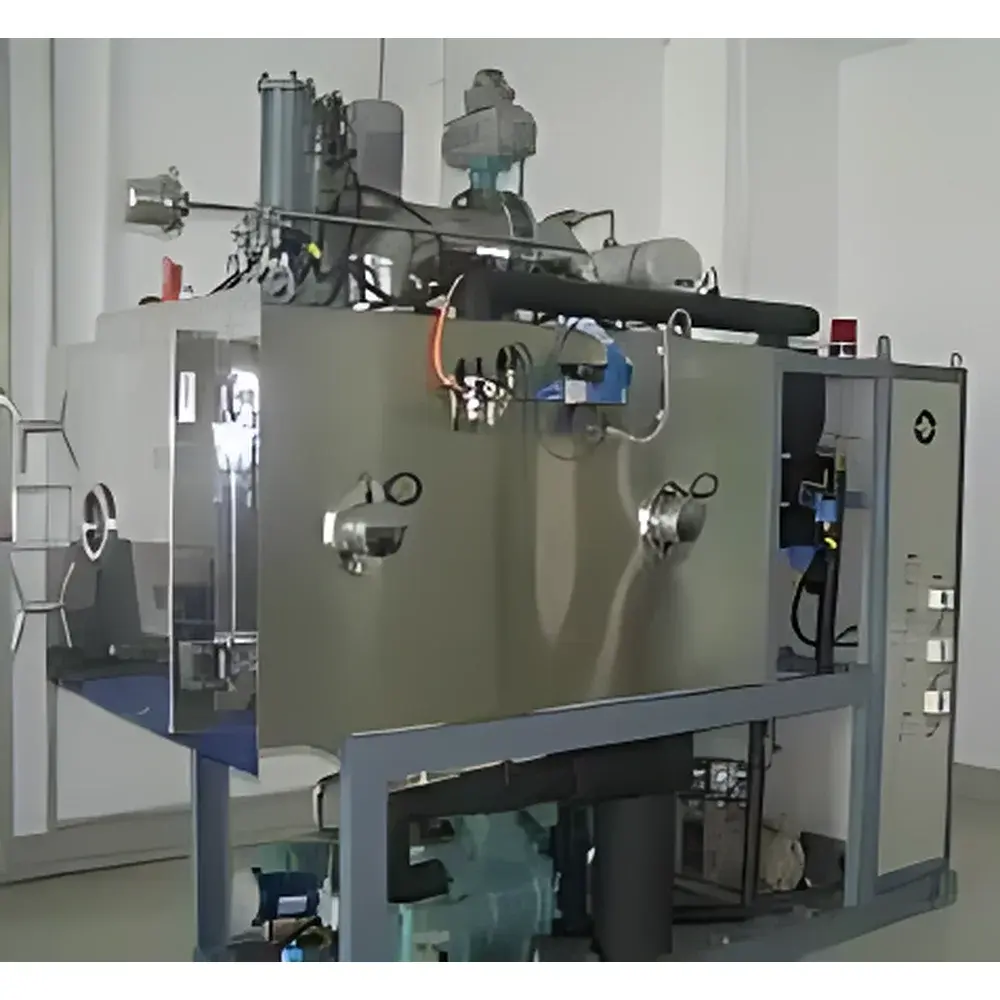
The Pilot3-6H-T variant features wall-penetration isolation capability with double-door interlock and HEPA-filtered purge ports, enabling seamless installation in ISO Class 5–7 classified spaces.
Is IQ/OQ documentation provided?
Comprehensive Installation Qualification (IQ) and Operational Qualification (OQ) protocols—including test scripts, acceptance criteria, and blank execution records—are supplied as part of the standard delivery package.
What maintenance intervals are recommended?
Vacuum pump oil replacement every 2,000 operating hours; refrigerant circuit inspection annually; temperature and vacuum sensor calibration biannually or per internal SOP requirements.



