
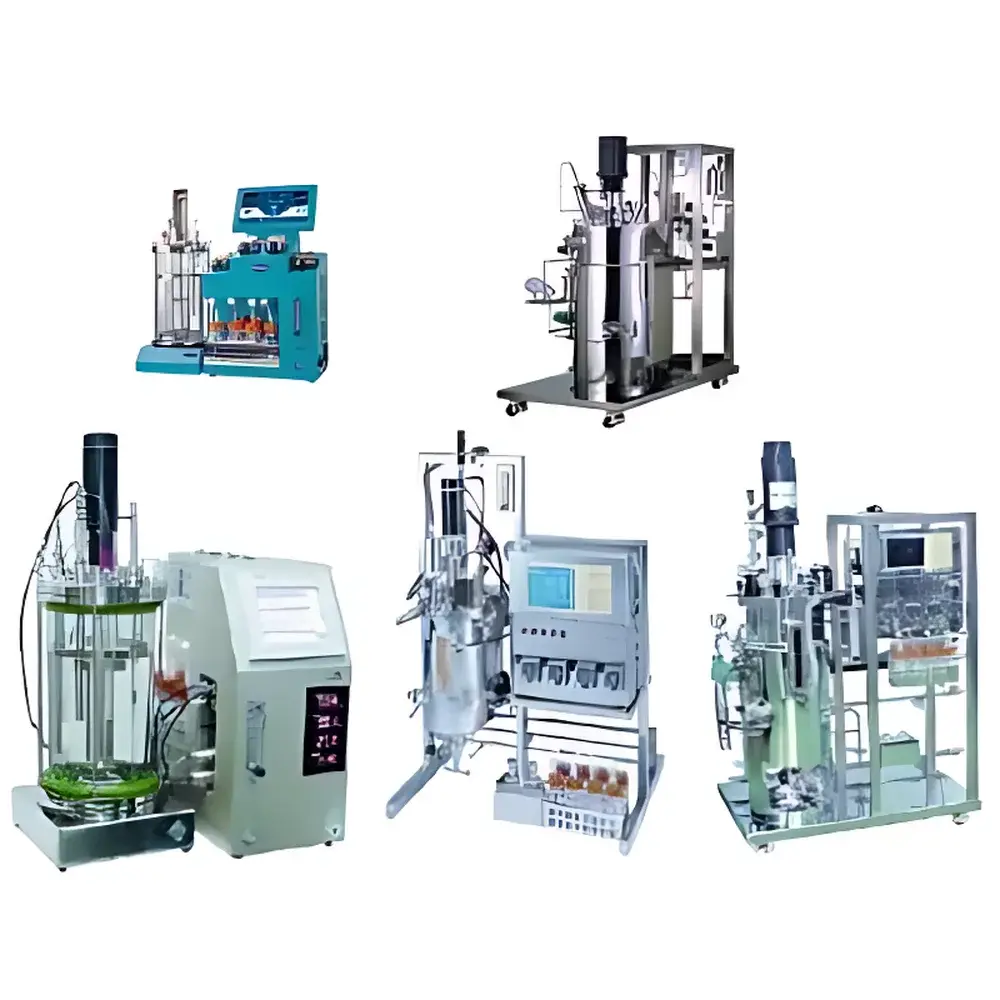
BioG Series Automated SIP Fermenters (Lab-Scale, Pilot-Scale, and Production-Grade)
| Origin | Imported |
|---|---|
| Manufacturer Type | Authorized Distributor |
| Model | BioG Series |
| Pricing | Available Upon Request |
Overview
The BioG Series Automated SIP Fermenters are a modular family of stainless-steel bioreactor systems engineered for reproducible, scalable bioprocess development—from academic research and early-stage cell line characterization through pilot-scale process validation and cGMP-compliant technology transfer. Designed around the core principle of steam-in-place (SIP) sterilization without external autoclaves, these fermenters implement a closed, single-use–compatible architecture with integrated electric heating elements, jacketed temperature control, and fully traceable process monitoring. Each system operates on the same fundamental engineering philosophy as commercial production bioreactors—ensuring seamless scale-up from lab to pilot (5–100 L) and onward to manufacturing (≥500 L). The BioG platform supports both microbial fermentation (e.g., E. coli, S. cerevisiae, P. pastoris) and suspension-based mammalian and insect cell culture when equipped with optional gas blending modules, perfusion manifolds, and low-shear impeller configurations.
Key Features
- 316L stainless-steel vessel with dual mechanical + electropolished surface finish (Ra ≤ 0.4 µm), validated for cleanability per ISO 14644-1 Class 5 (ISO Class 5) and ASME BPE-2022 standards
- Integrated SIP capability: automated thermal sterilization cycle (105–130 °C, ≥30 min hold time) covering vessel, sparger, exhaust filter, and all wetted piping—no external steam generator required
- Dual-mode temperature control: internal cartridge heaters (for rapid ramp-up and SIP) combined with jacketed cooling via external chiller loop (±0.1 °C stability over 3–80 °C range)
- Intelligent microprocessor-based controller (MC68EC020 core) with 8.5″ color TFT touchscreen interface, real-time trend display, and configurable alarm thresholds
- High-fidelity process sensing: Pt-100 RTD (IEC 60751 Class A) for temperature; industrial-grade ISFET-based pH probe; polarographic DO sensor with auto-calibration routine; digital torque-compensated tachometer for RPM feedback
- Top-mounted 150 W DC servo motor with tungsten carbide mechanical seal (ISO 21522 compliant), enabling precise agitation control across 50–1500 rpm (±1 rpm accuracy)
- Gas delivery system featuring sanitary 0.2 µm absolute-rated sterilizing filters (cylindrical, SIP-capable), ring-type stainless-steel sparger, and optional mass flow controllers for O2/N2/CO2/air blending
- Modular port configuration: standardized 1/2″ NPT and Tri-Clamp™ interfaces on headplate and lower sidewall for flexible sensor integration (e.g., viable cell density probes, glucose analyzers, off-gas analyzers)
Sample Compatibility & Compliance
The BioG Series accommodates diverse biological systems—including aerobic and anaerobic bacteria, yeasts, filamentous fungi, hybridoma cells, CHO-K1, HEK293, Sf9, and baculovirus-infected insect cells—under controlled pH (2.0–12.0), dissolved oxygen (0–100% air saturation), pressure (0–1.5 bar(g)), and temperature regimes. All wetted materials comply with USP Class VI, FDA 21 CFR Part 11 (audit trail enabled), and EU Annex 1 requirements for sterile pharmaceutical manufacturing. System qualification documentation (DQ/IQ/OQ/PQ) templates are provided in accordance with ASTM E2500-13 and ISO 13485:2016 frameworks. Sterility assurance level (SAL) of 10−6 is validated per ISO 11138-3 for SIP cycles.
Software & Data Management
Process data—including temperature, pH, DO, agitation speed, pressure, gas flow rates, and feed volumes—is logged at user-defined intervals (1 s–60 min) to internal SD card storage or exported via RS-232C/USB to external SCADA or MES platforms (e.g., DeltaV, Siemens Desigo, LabArchives). The BioG-α software suite provides secure user role management (admin/operator/auditor), electronic signature support, and full 21 CFR Part 11 compliance—including immutable audit trails, data integrity checks, and encrypted backups. Historical batch reports can be generated in PDF or CSV format with embedded metadata (operator ID, timestamp, calibration status).
Applications
- Strain screening and media optimization in academic and industrial R&D labs
- Pilot-scale process characterization for regulatory filings (IND, BLA, MAA)
- Cell banking and master/working cell bank expansion under GLP/GMP conditions
- Downstream process integration studies (e.g., coupling with ATF or TFF systems)
- Bioprocess training for QA/QC personnel and manufacturing operators
- Contract development and manufacturing organization (CDMO) technology transfer support
FAQ
Does the BioG Series support fed-batch and perfusion modes?
Yes—via programmable peristaltic pump modules and integrated weight-based harvest control.
Can the system be validated for GMP manufacturing?
Yes—complete qualification packages (DQ/IQ/OQ/PQ) and FAT/SAT protocols are available upon request.
Is remote monitoring supported?
Yes—through optional Ethernet/Wi-Fi gateway module with TLS 1.2-secured web HMI access.
What is the maximum working volume for the largest BioG pilot model?
The BioG-100 model supports up to 100 L working volume with 120 L total capacity.
Are spare parts and service contracts available globally?
Yes—authorized service centers operate across North America, EMEA, and APAC with 48-hour critical-part dispatch.
Related Products




