
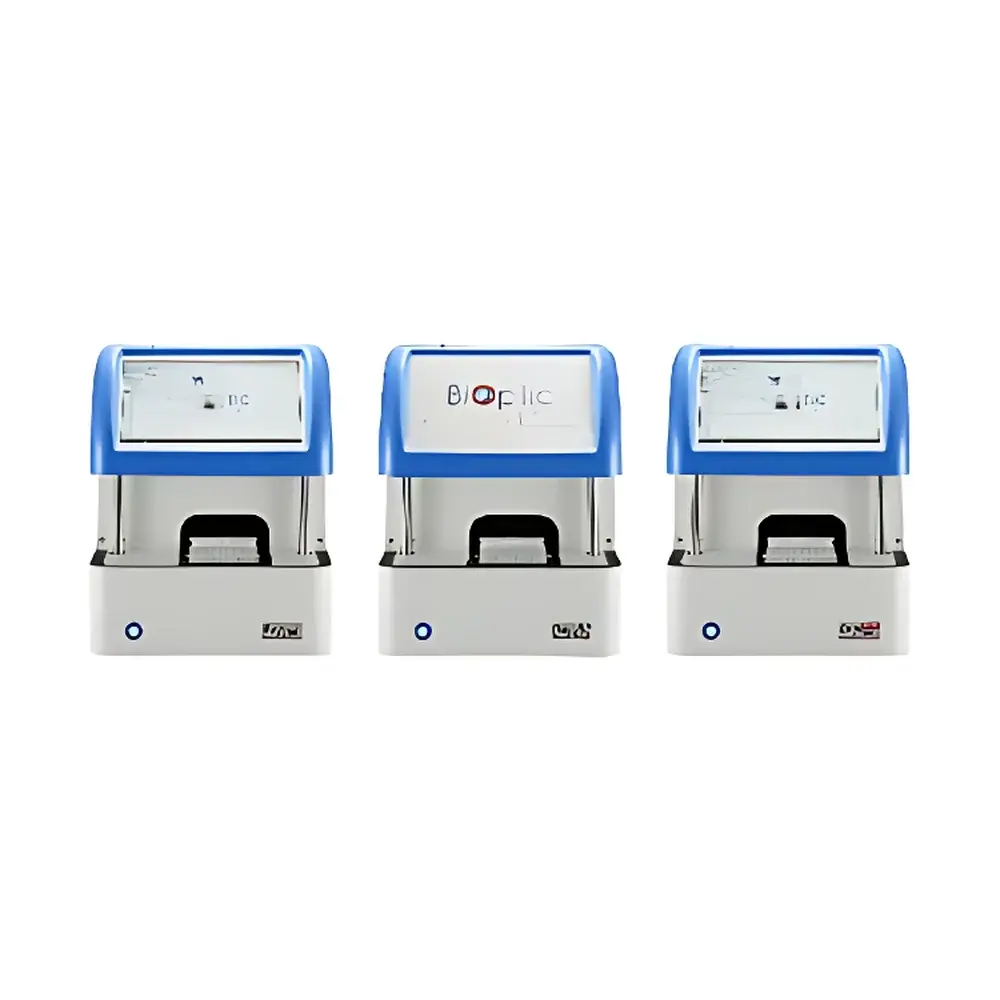
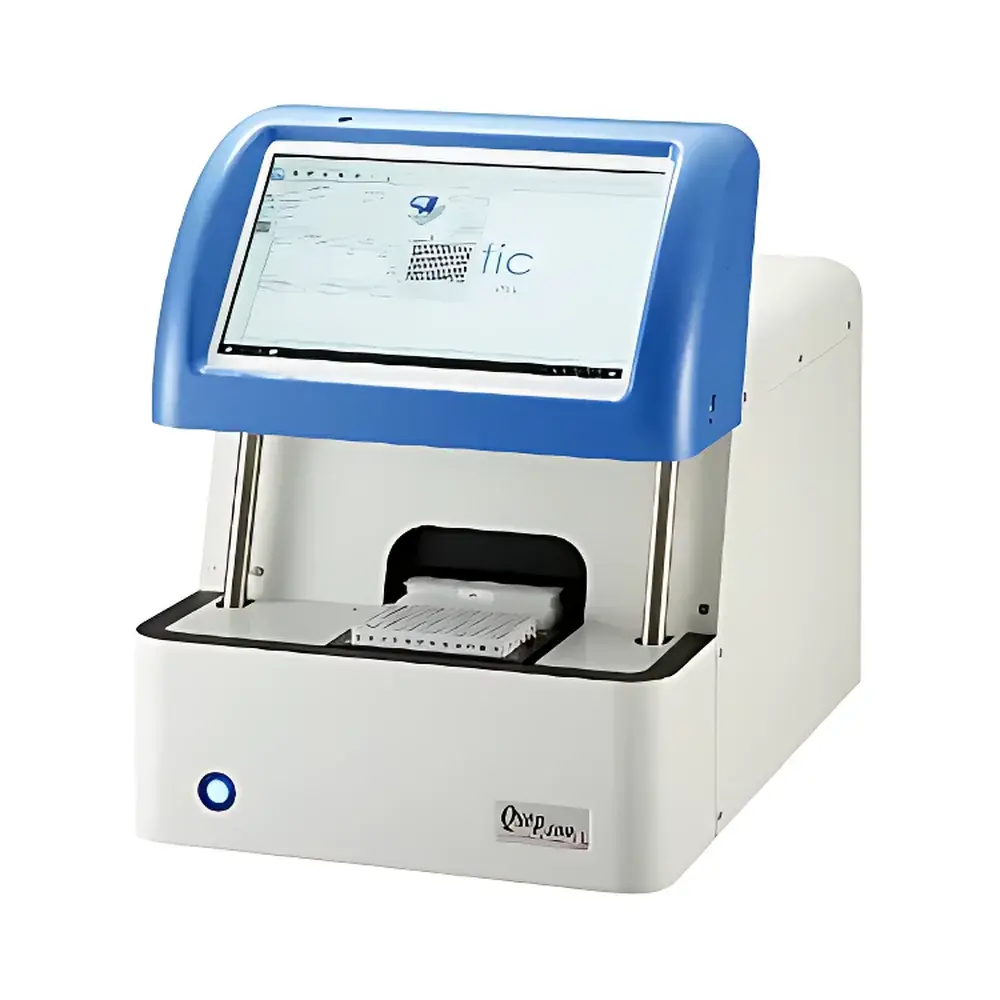
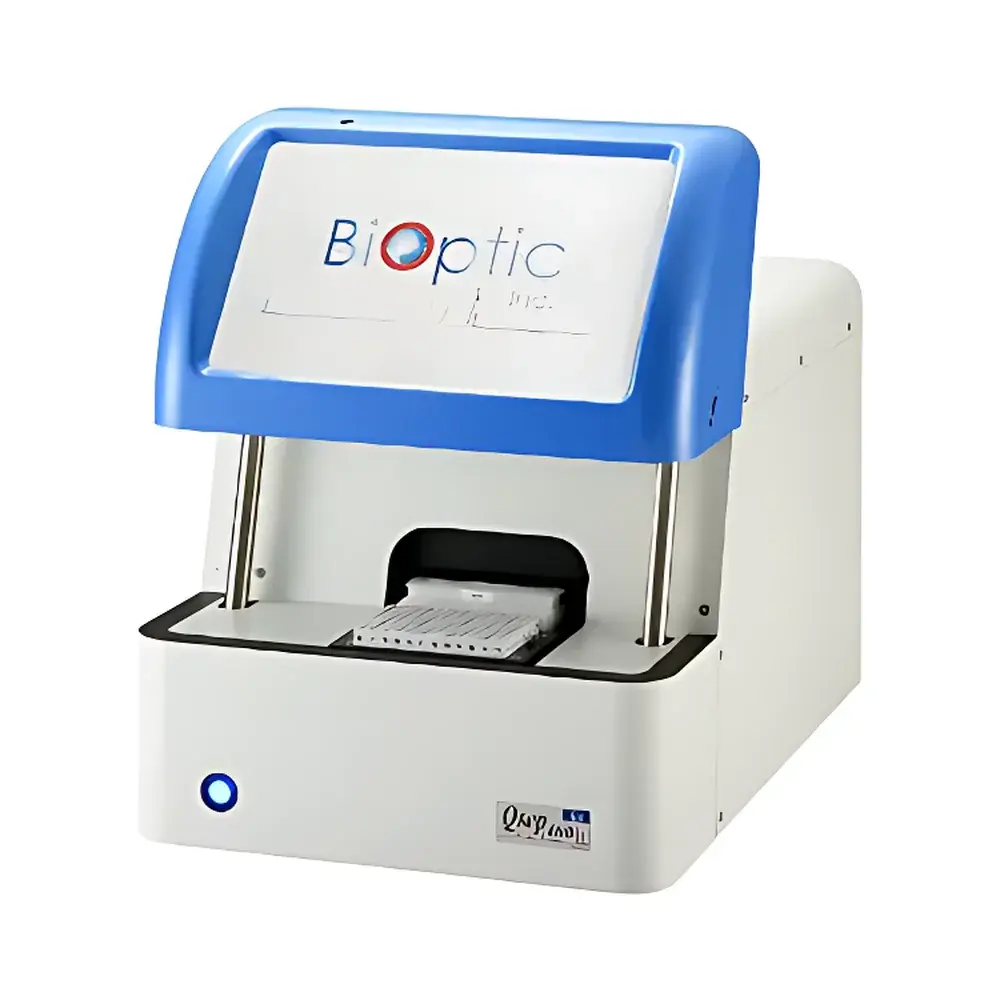
Bioptic Qsep400 / Qsep400SE / Qsep400Advance High-Throughput Capillary Electrophoresis System for Nucleic Acid and Protein Analysis
| Brand | Bioptic |
|---|---|
| Origin | Jiangsu, China |
| Manufacturer Type | Authorized Distributor |
| Product Category | Domestic |
| Model | Qsep400 |
| Sample Volume Requirement | 1 µL |
| Instrument Classification | Conventional Nucleic Acid & Protein Analyzer |
Overview
The Bioptic Qsep400 series represents a fully automated capillary electrophoresis (CE)-based platform engineered for high-throughput, quantitative analysis of nucleic acids and proteins. Unlike traditional slab-gel electrophoresis—which requires manual gel casting, staining, destaining, imaging, and subjective band interpretation—the Qsep400 leverages microfluidic capillary arrays with integrated UV absorbance detection to deliver reproducible, digital electropherograms in real time. Each run is performed under precisely controlled voltage, temperature, and buffer flow conditions, ensuring consistent migration kinetics and accurate size calibration via internal DNA or protein ladders. The system operates on the principle of charge-to-mass ratio separation in an electric field within fused-silica capillaries (50–100 µm inner diameter), enabling resolution down to single-base differences for DNA fragments and sub-kDa distinctions for proteins. Designed for routine QC in molecular biology labs, core facilities, and diagnostic support units, the Qsep400 series supports walk-away operation for unattended batch processing—making it suitable for applications ranging from PCR product verification and CRISPR editing validation to RNA integrity assessment and recombinant protein purity profiling.
Key Features
- Fully automated workflow: Eliminates manual gel preparation, staining, imaging, and post-run documentation—reducing hands-on time by >85% compared to agarose or polyacrylamide gels.
- Ultra-low sample consumption: Requires only 1 µL per injection, minimizing precious sample depletion and enabling analysis of limited clinical or single-cell-derived material.
- High-throughput capability: Processes up to 96 samples per run (full 96-well plate format); achieves throughput of up to 4 samples per minute in rapid mode without compromising resolution.
- Integrated size-calling algorithm: Automatically aligns electropherogram peaks against pre-loaded ladder standards (e.g., 100 bp DNA Ladder, Low Molecular Weight Protein Standard) and reports fragment sizes with ±0.5% relative error under standardized conditions.
- Robust thermal management: Maintains capillary cartridge temperature at 25°C ± 0.3°C during separation, critical for reproducibility across ambient lab environments.
- Modular configuration options: Qsep400 (standard), Qsep400SE (enhanced sensitivity for low-abundance targets), and Qsep400Advance (expanded dynamic range + optional fluorescence detection module).
Sample Compatibility & Compliance
The Qsep400 series accommodates a broad range of biological analytes, including double-stranded DNA (50–10,000 bp), single-stranded DNA/RNA (20–500 nt), plasmid isoforms, cDNA libraries, and denatured or native proteins (5–200 kDa). Sample matrices include PCR eluates, enzymatic digests, column-purified nucleic acids, cell lysates, and purified recombinant proteins—provided viscosity remains below 2 cP and particulate content is minimized via centrifugation or filtration (0.22 µm). All system hardware, consumables (capillary cartridges, buffer kits, ladders), and software comply with ISO 13485 design control requirements for in vitro diagnostic support tools. Data files adhere to MIAME-compliant metadata structures and are exportable in .csv, .xls, and .fsa formats for integration into LIMS or ELN platforms. Audit trails, user access controls, and electronic signatures meet GLP/GMP documentation expectations as defined in FDA 21 CFR Part 11 when configured with optional security modules.
Software & Data Management
QsepView™ v4.x is the proprietary acquisition and analysis software bundled with all Qsep400 systems. It provides intuitive instrument control, real-time electropherogram visualization, automated peak detection, size calibration, concentration quantification (via dsDNA standard curve), and customizable reporting templates. Raw data files include embedded instrument parameters (voltage, current, temperature, injection time), user ID, timestamp, and calibration history—ensuring full traceability. Software supports multi-user role-based permissions (admin, operator, viewer), password-protected method locking, and encrypted local database storage. Export functions enable direct transfer to third-party analysis suites (e.g., Geneious Prime, SnapGene, PeakFit) and compliance-ready PDF reports with embedded chromatograms, ladder overlays, and pass/fail flags based on user-defined acceptance criteria.
Applications
- PCR product verification and amplicon sizing in genotyping, qPCR validation, and NGS library QC.
- CRISPR-Cas9 editing efficiency assessment via T7E1 or Surveyor nuclease digestion fragment analysis.
- RIN (RNA Integrity Number) estimation using rRNA peak ratios in total RNA preparations.
- Plasmid quality control: supercoiled vs. linear vs. nicked isoform quantification prior to transfection or sequencing.
- Protein expression screening: SDS-capillary electrophoresis for purity, degradation, and dimer/monomer ratio analysis of His-tagged or GST-fused constructs.
- Forensic STR profiling and microsatellite analysis in human identification workflows.
FAQ
What buffer systems are compatible with the Qsep400 platform?
The system uses proprietary, pre-formulated running buffers optimized for DNA or protein separation—available as ready-to-use kits (e.g., Qsep DNA Separation Buffer, Qsep Protein CE Buffer). Custom buffer formulations are not supported due to strict conductivity and pH tolerances required for stable electroosmotic flow.
Can I reuse capillary cartridges?
No. All capillary cartridges are single-use, factory-primed consumables designed for 100–200 injections depending on sample cleanliness. Reuse risks carryover contamination, reduced resolution, and inconsistent migration times.
Is the Qsep400 validated for regulatory submissions?
While the Qsep400 itself is not an IVD device, its performance characteristics (precision, accuracy, linearity, LOD/LOQ) have been characterized per CLSI EP05-A3 and EP17-A2 guidelines. Validation packages—including IQ/OQ documentation, system suitability test protocols, and raw data exemplars—are available upon request for GxP-aligned implementation.
How does the Qsep400 compare to microfluidic chip-based electrophoresis systems?
Unlike chip-based platforms with fixed channel geometry and limited run cycles, the Qsep400 employs replaceable capillary arrays offering superior resolution over extended dynamic ranges, lower reagent consumption per run, and compatibility with custom ladder standards beyond vendor-supplied options.




