
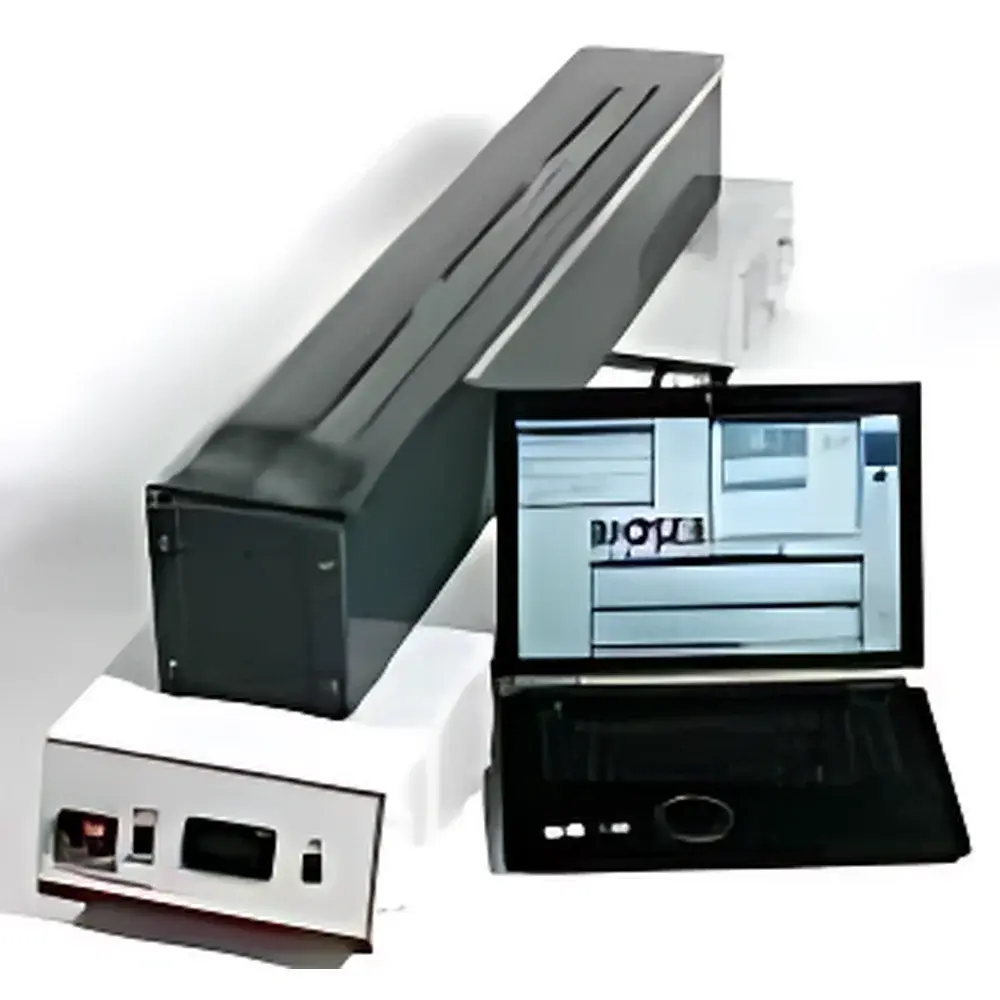
Bioseb BIO-GRADIENT Gradient Temperature Preference System
| Brand | Harvard Apparatus |
|---|---|
| Origin | USA |
| Manufacturer Type | Authorized Distributor |
| Import Status | Imported |
| Model | BIO-GRADIENT |
| Channel Configuration | 1-channel (2 mice or 1 rat) / 2-channel (4 mice or 2 rats) |
| Overall Dimensions (L×W×H) | 139 × 30 × 40 cm (1-channel) |
| Weight | 25 kg (1-channel) |
| Runway Dimensions | 125 × 10 × 15 cm (per runway) |
| Temperature Range | 5–55 °C (floor surface) |
| Temperature Stability | ±1 °C |
| Floor Material | Anodized aluminum heating plate |
| Wall & Lid Material | Gray PPC-coated polycarbonate walls, transparent PPC lid |
| Detection Resolution | Up to 20 discrete temperature zones per animal |
| Output Metrics | Position-resolved dwell time per zone, cumulative path length, zone transition frequency, thermal preference index (TPI), latency to first entry into target zones |
Overview
The Bioseb BIO-GRADIENT Gradient Temperature Preference System is a rigorously engineered platform for quantitative assessment of thermosensory behavior in rodents. Based on the validated gradient-based paradigm first described by Moqrich et al. (2005, Neuron), the system establishes a continuous, linear thermal gradient—from 5 °C to 55 °C—across a 125 cm-long heated aluminum runway. Unlike binary choice assays or static temperature chambers, this design enables animals to express naturalistic, fine-grained thermal preference through free locomotion and spatial occupancy. The system operates under controlled ambient conditions (20–25 °C, ~50% RH), ensuring that floor-surface temperature—not convective air currents—serves as the primary thermal stimulus. Each runway is independently regulated via precision Peltier-based thermal modules, enabling stable, reproducible gradients with ≤±1 °C spatial uniformity across all 20 programmable thermal zones.
Key Features
- Modular dual-channel configuration: Supports simultaneous testing of up to 4 mice or 2 rats without cross-contamination or thermal crosstalk between lanes.
- High-fidelity thermal control: Anodized aluminum floor provides rapid thermal response, uniform heat distribution, and corrosion-resistant durability under repeated cleaning protocols.
- Non-invasive video-based tracking: Integrated high-resolution camera (optional external USB 3.0 model supported) captures animal position at ≥30 fps; motion data synchronized with real-time thermal mapping.
- Comprehensive behavioral metrics: Software computes dwell time per 0.5–1 °C bin, cumulative path length, zone entry/exit frequency, velocity profiles, and thermal preference index (TPI) — defined as the weighted mean temperature of occupancy.
- GLP-compliant hardware architecture: All thermal controllers feature onboard calibration memory, timestamped firmware logs, and fail-safe overtemperature cutoff (60 °C max).
Sample Compatibility & Compliance
The BIO-GRADIENT system is validated for use with C57BL/6, BALB/c, CD-1, and Sprague-Dawley strains (mice and rats). Runway dimensions (125 × 10 × 15 cm) accommodate standard adult rodent body size while minimizing vertical escape behavior. Wall and lid materials (PPC-coated polycarbonate) meet ISO 10993-5 cytotoxicity standards and are autoclavable (121 °C, 20 min) for longitudinal studies requiring strict hygiene control. The system complies with NIH Guide for the Care and Use of Laboratory Animals (8th ed.) and supports IACUC protocol documentation via exportable CSV and HDF5 data packages. Thermal gradient linearity is traceable to NIST-calibrated RTD probes (included in validation kit).
Software & Data Management
The Bioseb Thermotrack™ v4.2 software provides a validated, audit-ready environment for experimental design, acquisition, and analysis. Users define gradient slope, acclimation duration (default: 30 min), test session length (up to 120 min), and zone binning resolution (0.5–5 °C steps). All raw video timestamps, thermal sensor readings, and centroid coordinates are stored in encrypted HDF5 containers compliant with FAIR data principles. Software supports 21 CFR Part 11–ready user authentication, electronic signatures, and immutable audit trails for GCP/GLP-regulated studies. Export options include ISO/IEC 17025–compatible PDF reports with embedded metadata (instrument ID, calibration date, operator ID, environmental log).
Applications
- Pharmacological screening of TRP channel modulators (e.g., TRPV1 antagonists, TRPM8 agonists) via dose-dependent shifts in thermal preference curves.
- Longitudinal assessment of neuropathic pain models (e.g., SNI, CCI) by quantifying cold allodynia (increased dwell time at 5–15 °C) or heat hyperalgesia (avoidance of >45 °C zones).
- Genetic phenotype characterization of thermosensory mutants (e.g., Trpv1−/−, Trpm8−/−) using TPI deviation from wild-type baselines.
- Thermoregulatory dysfunction evaluation in metabolic disease models (e.g., diet-induced obesity, type 1 diabetes) via altered zone selection entropy and reduced exploratory range.
- Validation of non-opioid analgesics where traditional hot-plate or tail-flick assays lack translational relevance to spontaneous pain states.
FAQ
What is the minimum required acclimation time before initiating a test session?
Standard protocols specify 30 minutes of undisturbed acclimation under ambient conditions (20–25 °C); however, the software allows user-defined durations from 5 to 60 minutes.
Can the system be integrated with third-party electrophysiology or optogenetics rigs?
Yes — TTL-compatible trigger outputs (5 V logic) and analog voltage inputs (0–5 V) enable hardware synchronization with patch-clamp amplifiers, laser stimulation units, or fiber photometry systems.
Is calibration verification included with each shipment?
Each unit ships with a NIST-traceable certificate of calibration for both thermal sensors and positional tracking accuracy, valid for 12 months from date of manufacture.
How is data integrity ensured during extended multi-hour sessions?
The system employs dual-write buffering: real-time streaming to RAM + concurrent logging to industrial-grade microSD (Class 10, 64 GB included), with automatic checksum validation upon file closure.
Does the software support batch processing of multiple subjects across independent experiments?
Yes — Thermotrack™ includes a project manager module that maintains hierarchical metadata (strain, sex, treatment group, date) and enables cohort-level statistical comparison using built-in ANOVA and post-hoc Tukey HSD tests.
Related Products





