
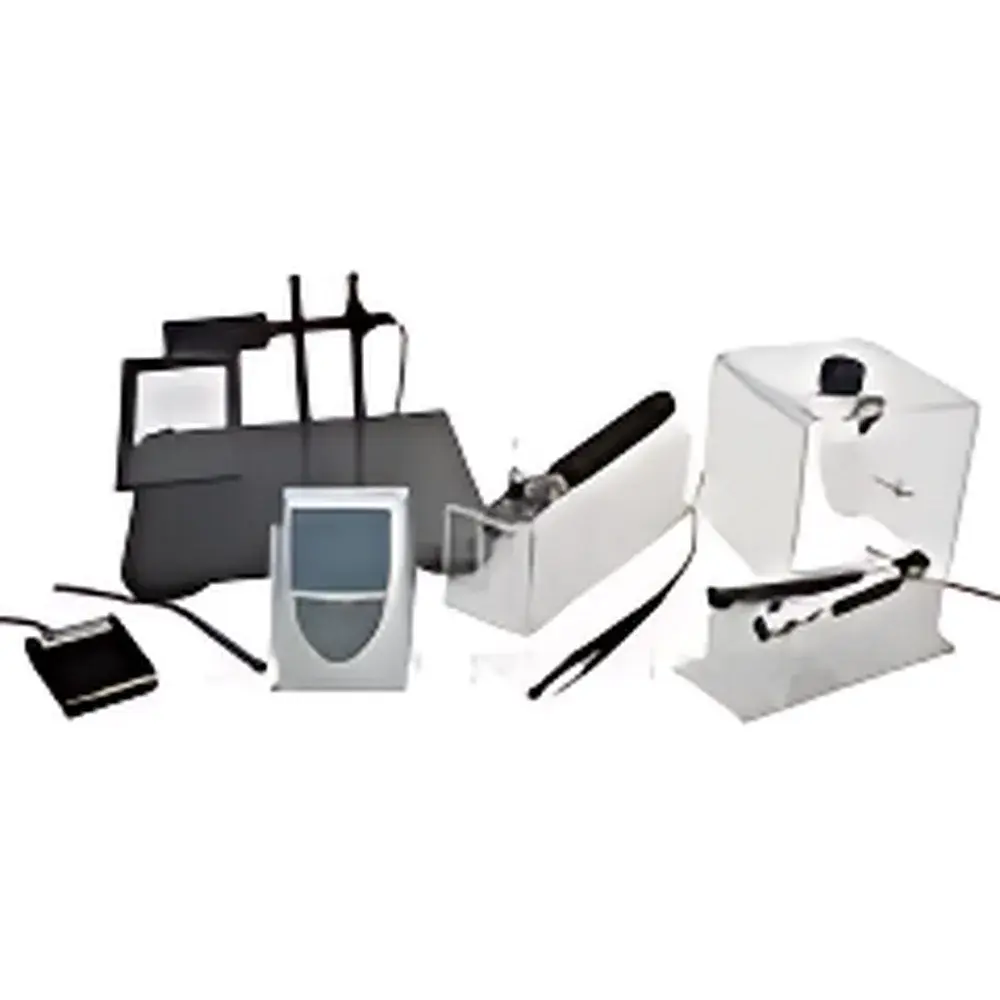
Bioseb Multi-Modality Nociception Testing System Model 2888/2889/2890
| Origin | USA |
|---|---|
| Manufacturer Type | Authorized Distributor |
| Origin Category | Imported |
| Model | 2888 (Tri-Modality), 2889 (Quad-Modality), 2890 (Penta-Modality) |
| Pricing | Available Upon Request |
Overview
The Bioseb Multi-Modality Nociception Testing System (Models 2888, 2889, and 2890) is a modular, research-grade platform engineered for standardized, quantitative assessment of nociceptive responses in rodent models. Designed to support preclinical pain pharmacology, neuropharmacology, and translational neuroscience studies, the system integrates multiple validated behavioral endpoints within a single ergonomic workstation. Each configuration operates on established physiological principles: electronic von Frey (eVF) testing applies calibrated, logarithmically incremented mechanical stimuli to assess mechanical allodynia/hyperalgesia; the digital Randall–Selitto assay measures withdrawal threshold under controlled ramped pressure applied to the hind paw—reflecting deep-tissue mechanical nociception; paw volume displacement quantifies inflammatory edema via water displacement or optical volumetry; grip strength evaluation captures neuromuscular integrity and motor-related pain inhibition; and the rodent-specific compression-based nociception module provides graded axial loading to the dorsal paw surface, enabling reproducible assessment of weight-bearing–dependent pain behaviors. All modules are synchronized via a unified USB-controlled interface and comply with NIH and IASP guidelines for ethical animal pain research.
Key Features
- Modular architecture supporting three (2888), four (2889), or five (2890) independent nociception assays in one integrated platform
- High-resolution digital force transducers (±0.1 g accuracy) across all mechanical testing modules
- Automated stimulus ramping and real-time data capture with programmable dwell time, pressure slope, and cutoff thresholds
- Ergonomic, low-stress animal restraint system compatible with C57BL/6, Sprague-Dawley, and Wistar strains
- Calibration traceable to NIST standards with annual recalibration support per ISO/IEC 17025 requirements
- Interchangeable probe tips and paw cradles for consistent anatomical targeting and reduced inter-operator variability
- Integrated LED timing and acoustic cue synchronization for behavioral conditioning protocols
Sample Compatibility & Compliance
The system is validated for use with adult male and female mice (18–35 g) and rats (150–300 g). All modules meet AAALAC International accreditation criteria for humane endpoint determination and align with Directive 2010/63/EU Annex VIII requirements for pain assessment methodology. Data acquisition workflows support GLP-compliant study execution, including user authentication, electronic signatures, and audit-trail generation per FDA 21 CFR Part 11. Device firmware and calibration certificates are maintained under Bioseb’s ISO 13485-certified quality management system. CE marking (Class I Medical Device) and RoHS compliance are documented for EU-based installations.
Software & Data Management
Bioseb Nociception Suite v5.2 provides native Windows-based control, real-time visualization, and export-ready analysis. The software enables batch processing of multi-assay datasets, automatic outlier detection using Grubbs’ test, and statistical overlay of longitudinal response curves. Raw force-time waveforms, latency-to-withdrawal timestamps, and volumetric change logs are stored in vendor-neutral CSV and HDF5 formats. Role-based access control (RBAC) ensures separation of operator, reviewer, and administrator privileges. Audit trails record every parameter modification, session start/stop, and calibration event with ISO 8601 timestamps and user IDs. Export modules support direct integration with GraphPad Prism, MATLAB, and SAS for advanced modeling of dose–response relationships and mechanistic clustering.
Applications
- Preclinical evaluation of opioid analgesics, NSAIDs, TRPV1 antagonists, and sodium channel blockers
- Longitudinal monitoring of neuropathic pain progression in chronic constriction injury (CCI), spared nerve injury (SNI), and streptozotocin-induced diabetic neuropathy models
- Assessment of central sensitization via temporal summation and wind-up phenomena using repeated eVF stimulation
- Functional phenotyping of genetically modified rodents (e.g., Nav1.7 KO, TRPA1 KO) across multiple sensory modalities
- Support for regulatory submissions requiring multi-endpoint pain characterization per ICH S5(R3) and EMA CHMP reflection papers on nonclinical pain models
- Training and standardization of technical staff across multi-site contract research organizations (CROs)
FAQ
Is the system compatible with existing Bioseb hardware such as the Dynamic Weight Bearing system?
Yes—models 2888/2889/2890 share the same USB communication protocol and software architecture, enabling seamless cross-platform data aggregation.
Can the software generate reports compliant with FDA IND submissions?
All raw data files include embedded metadata (animal ID, session timestamp, operator ID, calibration status) required for IND-enabling toxicology and pharmacology studies.
What maintenance is required for long-term measurement stability?
Annual transducer recalibration and biannual verification of probe tip geometry and load-cell linearity are recommended; Bioseb provides remote diagnostic support and on-site service contracts.
Does the system support automated animal identification?
RFID reader integration (optional) enables auto-population of subject IDs from ISO 11784-compliant ear tags or implanted chips.
Are validation documents available for GCP/GLP audits?
Yes—Installation Qualification (IQ), Operational Qualification (OQ), and Performance Qualification (PQ) templates, along with risk assessments per ISO 14971, are provided upon request.





