
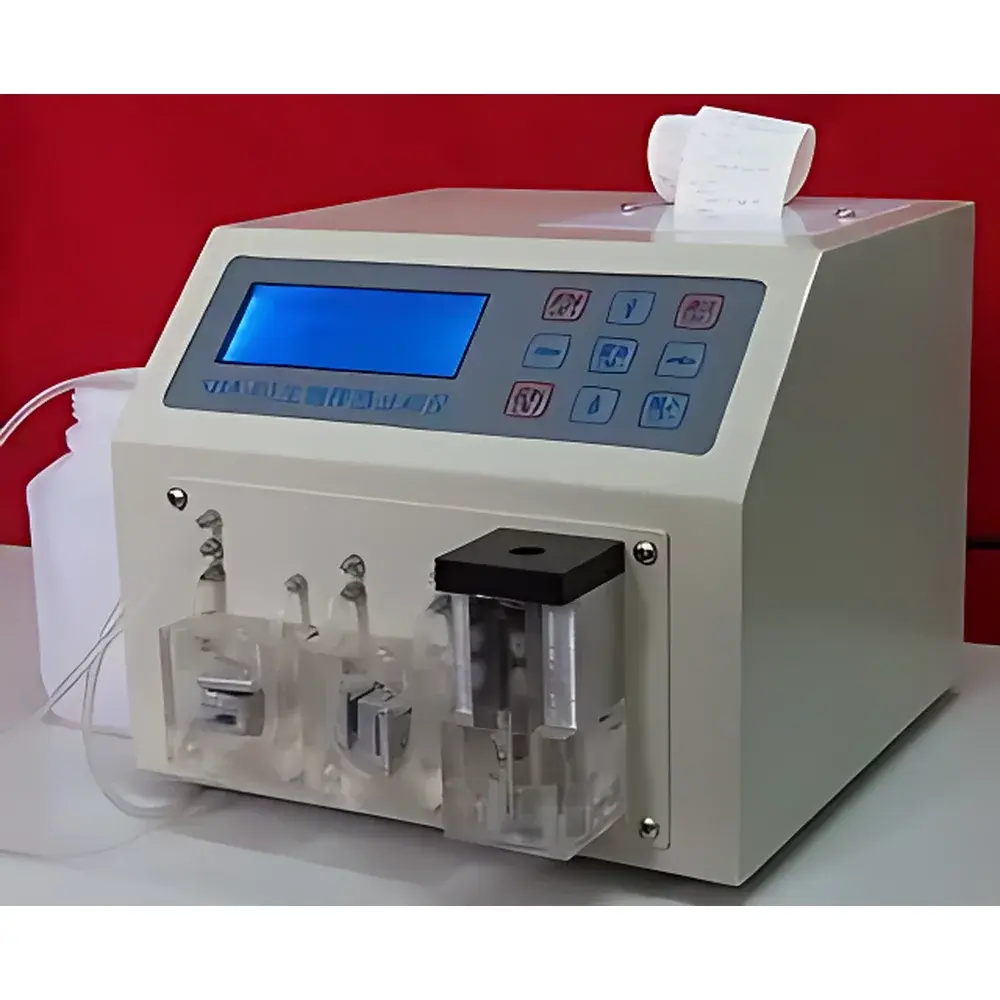
BioSensor Series for Fermentation Process Monitoring
| Origin | Shandong, China |
|---|---|
| Supplier Type | Authorized Distributor |
| Origin Category | Domestic (China) |
| Pricing | Available Upon Request |
Overview
The BioSensor Series is a dedicated platform of amperometric and potentiometric biosensing systems engineered for real-time, in-line or at-line monitoring of key metabolites in industrial bioprocesses. Based on enzyme-immobilized electrode architectures—such as glucose oxidase, glutamate dehydrogenase, or lactate oxidase—the system quantifies target analytes via selective enzymatic conversion coupled with electrochemical signal transduction. This principle enables continuous, label-free detection of substrates and products in complex fermentation broths without sample dilution or derivatization. Designed for integration into pilot- and production-scale bioreactors, the series supports dynamic process understanding and facilitates data-driven decisions aligned with Quality by Design (QbD) frameworks. Its modular architecture allows adaptation to diverse microbial, fungal, and mammalian cell culture environments under aerobic or anaerobic conditions.
Key Features
- Redesigned vertical motor mounting configuration for improved mechanical stability and reduced vibration-induced signal drift during prolonged operation.
- Upgraded high-torque drain motor to ensure complete, residue-free emptying of reaction chambers—critical for cross-batch contamination control in GMP-compliant facilities.
- Optical (photoelectric) sample injection system replacing legacy micro-switch mechanisms, delivering higher repeatability (>99.8% cycle-to-cycle consistency) and extended service life under continuous 24/7 operation.
- Re-engineered electrode retention hardware and optimized flow-cell dimensions to enhance mass transfer uniformity and minimize boundary layer effects—resulting in improved response linearity across 0.1–500 mM analyte ranges.
- Fully redesigned main control board with gold-plated connectors for superior corrosion resistance, long-term signal integrity, and compatibility with ISO 13485-certified manufacturing environments.
- Bilingual UI firmware (English ↔ Chinese), with all operator prompts, alarm messages, and calibration menus available in native Chinese—supporting seamless adoption in domestic R&D labs and manufacturing QA/QC departments.
Sample Compatibility & Compliance
The BioSensor Series is validated for direct analysis of undiluted or minimally filtered fermentation liquors from bacterial (e.g., Corynebacterium glutamicum, E. coli), yeast (Saccharomyces cerevisiae, Pichia pastoris), and filamentous fungal cultures. It accommodates viscous media (up to 15 cP) and particulate loads typical of fed-batch antibiotic or organic acid fermentations. System design adheres to IEC 61000-6-2 (EMC immunity) and IEC 61000-6-4 (EMC emission) standards. Data acquisition protocols support ALCOA+ principles (Attributable, Legible, Contemporaneous, Original, Accurate, Complete, Consistent, Enduring, Available) and are compatible with 21 CFR Part 11-compliant audit trail modules when integrated with validated LIMS or MES platforms.
Software & Data Management
Embedded firmware provides real-time sensor calibration tracking, automatic drift compensation, and multi-point standard curve generation using NIST-traceable reference solutions. Raw electrochemical signals (nA–µA range) are digitized at 100 Hz with 16-bit resolution and timestamped to millisecond precision. Export formats include CSV (for Excel/Python analysis), XML (for LIMS ingestion), and OPC UA (for SCADA integration). Optional software modules enable statistical process control (SPC) charting, batch trajectory comparison, and correlation analysis between multiple analytes (e.g., glucose consumption vs. glutamate accumulation). All calibration logs, maintenance records, and user actions are stored locally with SHA-256 hashing for integrity verification.
Applications
- Amino Acid Production: Continuous monitoring of glutamic acid, lysine, and aspartic acid in aerobic submerged fermentation—enabling precise feed-forward pH and nutrient control.
- Alcoholic Beverages: Quantification of ethanol, glucose, and fructose in beer wort, wine must, and baijiu mash—supporting fermentation endpoint prediction and alcohol yield optimization.
- Antibiotic Manufacturing: Real-time tracking of penicillin G precursor (phenylacetic acid) and cephalosporin C intermediates in Acremonium chrysogenum cultivations.
- Food & Flavor Industry: Rapid assay of lactic acid in yogurt starters, citric acid in Aspergillus niger processes, and acetic acid in vinegar acetators.
- Biopharmaceuticals: In-process measurement of glucose and lactate in CHO cell cultures—correlating with viable cell density and metabolic shift detection.
FAQ
Is the system suitable for sterile, in-situ bioreactor installation?
Yes—optional steam-sterilizable flow cells and autoclavable tubing kits are available for SIP-compatible configurations.
Can it interface with third-party DCS or PLC systems?
Yes—via Modbus RTU/TCP or analog 4–20 mA outputs; custom protocol drivers (e.g., Profibus, EtherNet/IP) are available upon request.
What is the typical sensor lifetime under continuous operation?
Enzyme electrodes maintain ±5% accuracy for ≥120 hours in glucose monitoring mode; lifetimes vary by analyte and matrix complexity—validated replacement schedules are provided per application.
Does the system comply with GLP or GMP documentation requirements?
Full electronic records—including calibration certificates, performance qualification reports, and change control logs—are exportable in PDF/A-1b format for regulatory submission.
Are reagents and consumables supplied with validated shelf-life and lot traceability?
All immobilized enzyme electrodes and calibration standards are supplied with CoA, expiration date, and unique lot numbers traceable to ISO/IEC 17025-accredited testing reports.






