
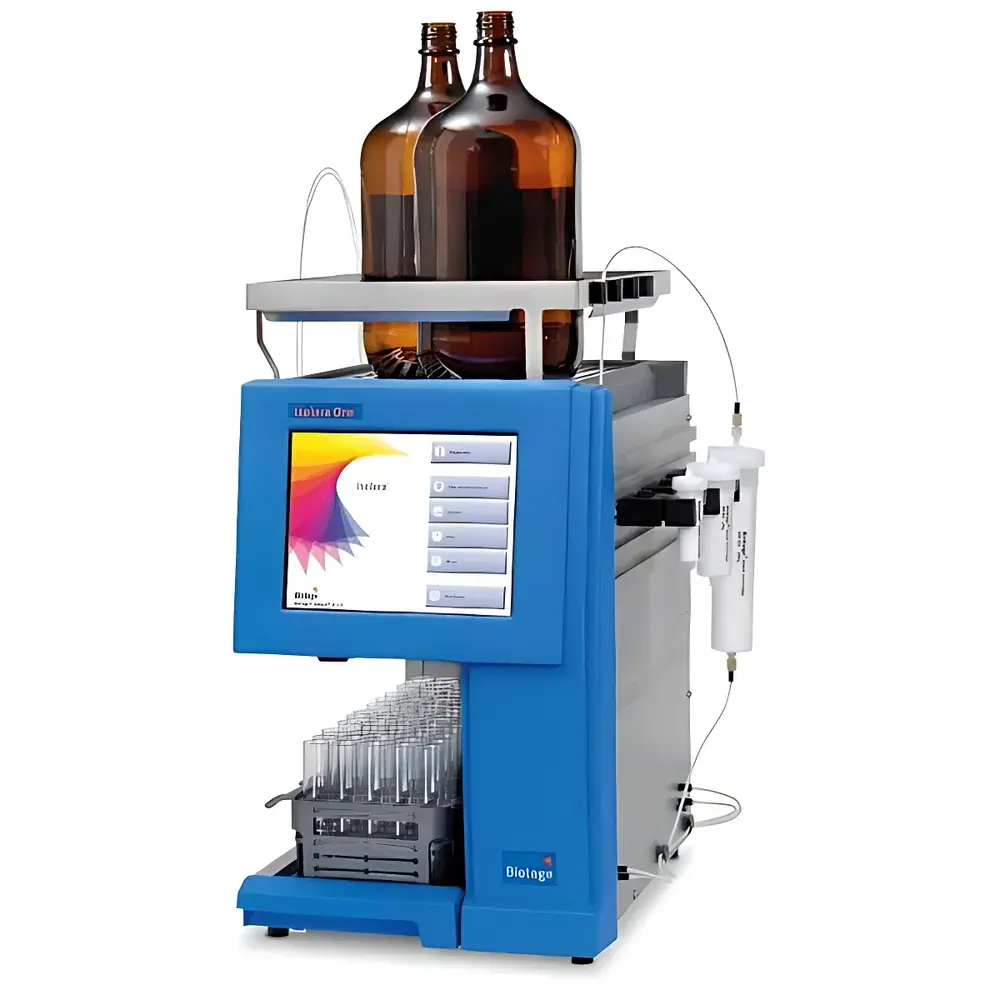
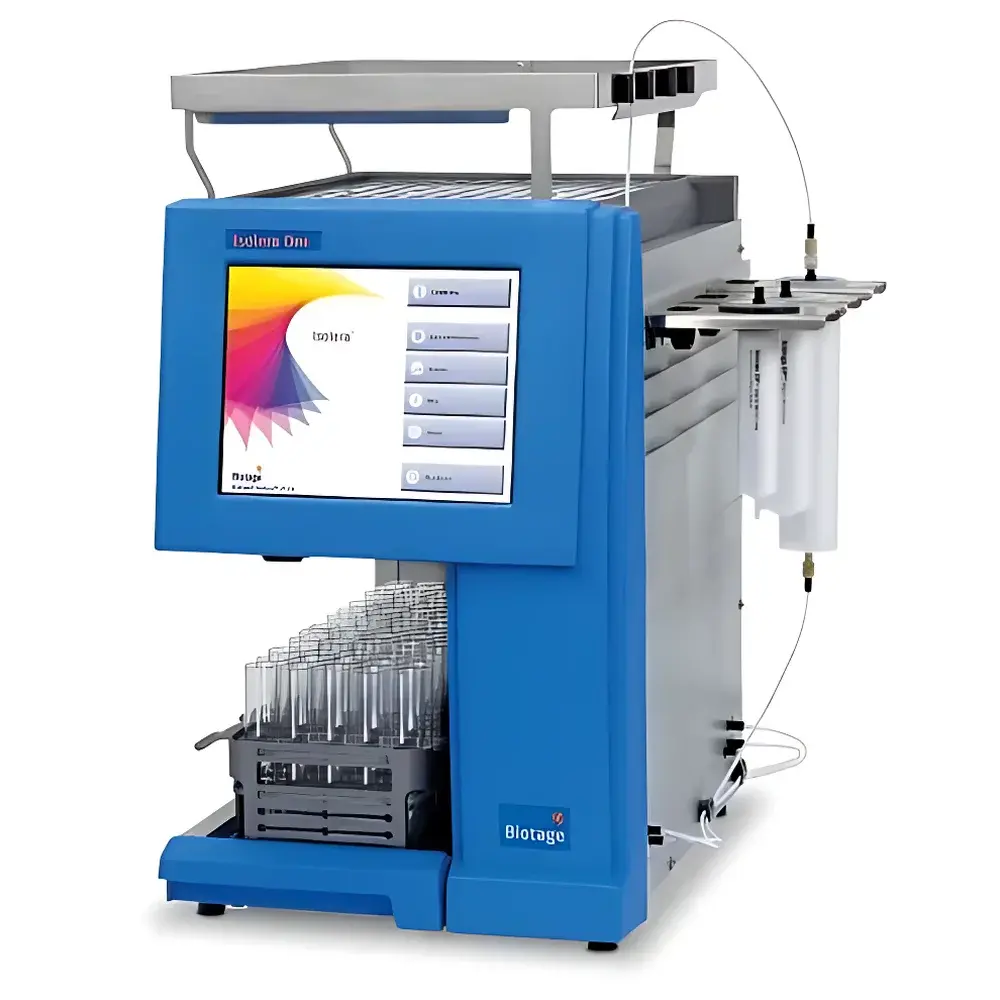
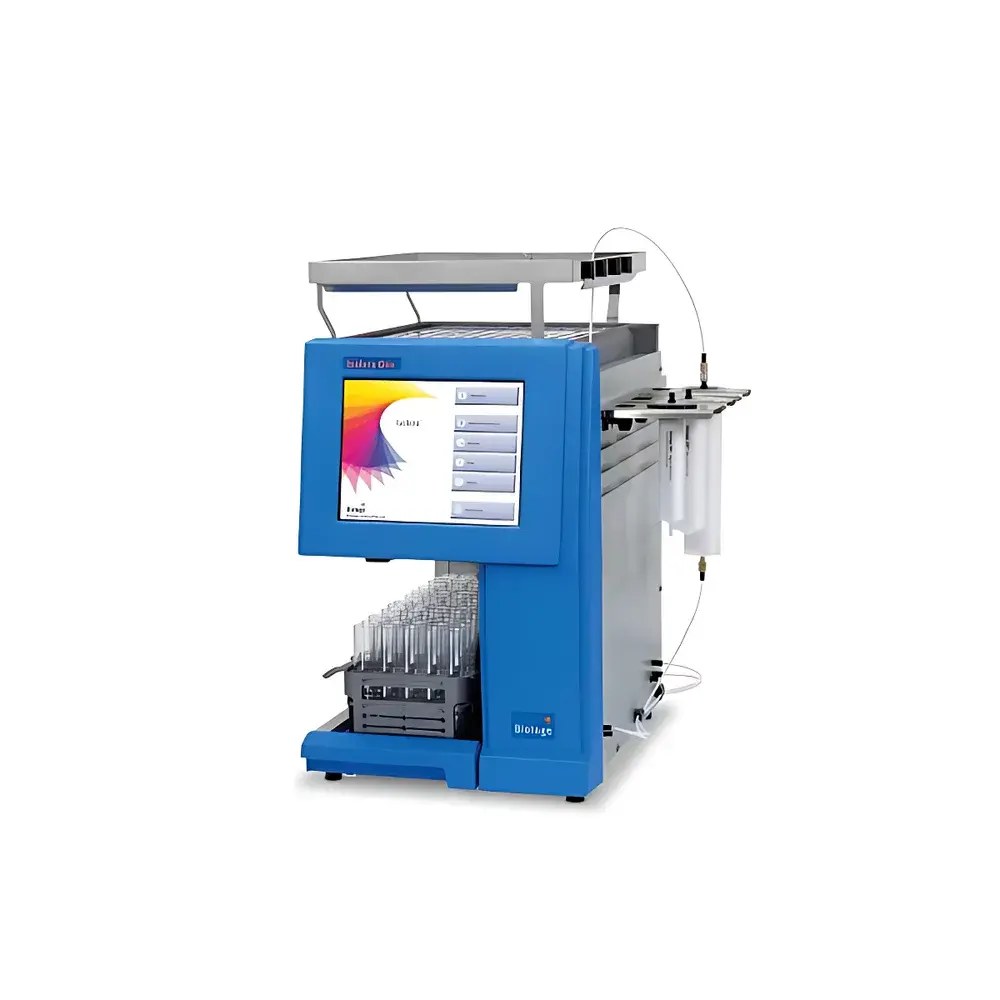
Biotage Isolera One Preparative Flash Chromatography System
| Brand | Biotage |
|---|---|
| Origin | Sweden |
| Model | Isolera One |
| Application Level | Laboratory Grade |
| Instrument Type | Medium-to-Low Pressure Preparative Liquid Chromatography |
| Flow Rate Range | 1–200 mL/min |
| Flow Accuracy | RSD ≤ 0.5% |
| Flow Precision | RSD ≤ 0.2% |
| Maximum Operating Pressure | 145 psi |
| Wavelength Range | ±1 nm |
| Wavelength Repeatability | 0.1 nm |
| Baseline Noise | ≤2×10⁻⁵ AU (peak-to-peak, methanol, 1 mL/min, 254 nm, 20 °C) |
| Data Acquisition Rate | 10 Hz |
Overview
The Biotage Isolera One is a compact, medium-pressure preparative flash chromatography system engineered for reproducible, scalable purification of organic synthetic reaction mixtures, natural product extracts, and complex small-molecule libraries. It operates on the principle of gradient elution liquid chromatography under controlled pressure and flow conditions—optimized for silica- and reversed-phase column chemistries. Designed for laboratory-scale method development and early-stage process transfer, the Isolera One bridges the gap between analytical screening and preparative isolation without requiring dedicated infrastructure or high-pressure plumbing. Its architecture integrates a dual-pump binary gradient system with real-time UV detection, automated fraction collection, and intelligent solvent management—all within a footprint smaller than standard lab bench space. As a successor to Biotage’s legacy in flash chromatography innovation—dating back to the first commercial manual systems in 1990—the Isolera One reflects over three decades of empirical refinement in purification workflow design, compliance-readiness, and user-centric operation.
Key Features
- Four-solvent gradient capability: Enables true quaternary gradient formation via two independent binary pumps plus an auxiliary modifier channel—supporting simultaneous optimization of polarity, solubility, and resolution across diverse compound classes (e.g., lipophilic heterocycles and highly polar glycosides).
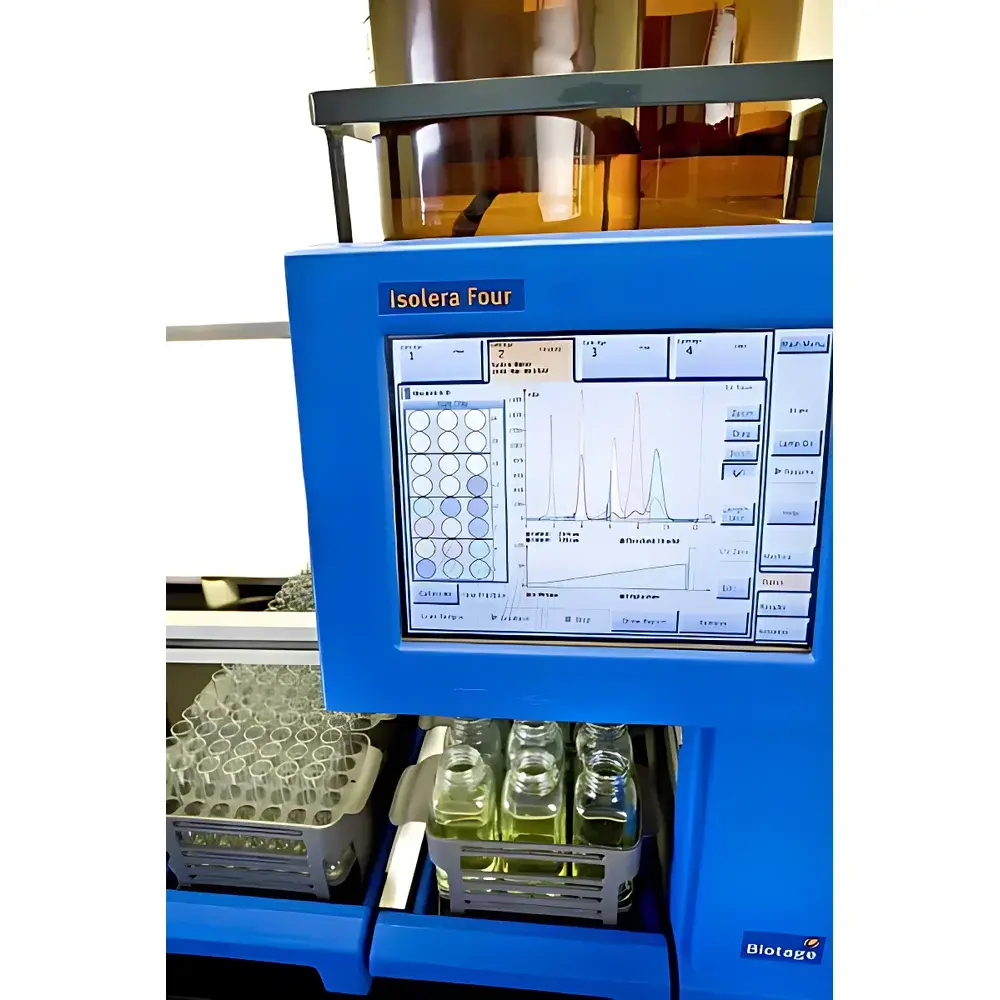
- DAD-based λ-All spectral acquisition: Full UV spectral data (190–400 nm) captured at 10 Hz during elution; enables real-time peak identification, co-elution assessment, and post-run purity evaluation without secondary analysis.
- Intelligent baseline correction: Adaptive algorithm compensates for solvent front drift and column bleed artifacts—minimizing false triggers and reducing unnecessary fraction cuts, thereby conserving solvent and sample mass.
- TLC-to-Step Gradient translation: Built-in method conversion tool estimates initial gradient profiles from Rf values obtained via thin-layer chromatography—accelerating method development by up to 70% compared to iterative trial gradients.
- Scalable flow control: Linear flow rate range of 1–200 mL/min with ≤0.2% RSD repeatability ensures consistent retention time alignment from analytical scouting to gram-scale isolation.
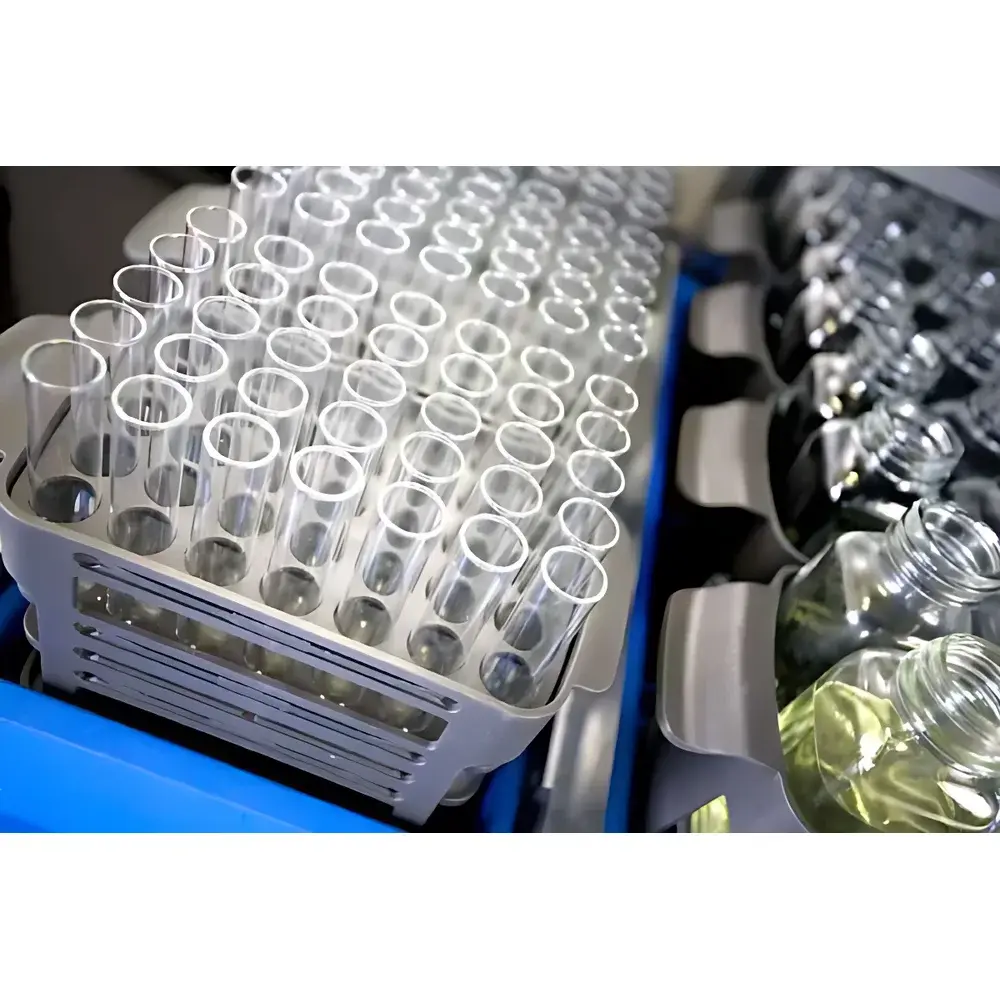
- Modular fraction collection: Supports up to 9.6 L total collection volume via interchangeable racks (including 12-, 24-, and 48-position configurations), with on-the-fly rack swapping and dynamic trigger-based collection logic.
Sample Compatibility & Compliance
The Isolera One is validated for use with all Biotage prepacked columns—including SNAP KP (silica), SNAP Ultra (C18), and SNAP Bio (diol/amide)—across the full 5 g to 750 g loading range. Column compatibility extends to custom-packed glass or stainless-steel hardware meeting ISO 8573-1 clean air standards. The system supports both normal-phase (hexane/EtOAc) and reversed-phase (water/acetonitrile) mobile phases, with solvent compatibility verified per ASTM D4057 and ISO 17025 guidelines for trace-level residual solvent carryover. All electronic logs—including method parameters, UV traces, fraction assignments, and system diagnostics—are timestamped, user-annotated, and exportable in CSV/PDF formats compliant with GLP audit requirements. Optional 21 CFR Part 11-compliant software modules provide electronic signatures, role-based access control, and immutable audit trails for regulated environments.
Software & Data Management
Controlled via Biotage Spektra™ software (v5.0+), the Isolera One offers a unified interface for instrument configuration, method building, real-time monitoring, and post-run analysis. Methods are constructed using drag-and-drop gradient editors, with automatic dwell volume compensation and solvent compressibility correction applied during execution. Spectral data is stored in vendor-neutral .jdx format; integrated peak deconvolution tools support multi-wavelength purity assessment and spectral library matching (NIST-compatible). Raw chromatograms and metadata are archived in hierarchical folder structures with SHA-256 checksum validation. Remote access is enabled via HTTPS-secured web interface—allowing method review, queue management, and diagnostic checks from any networked workstation without proprietary client installation.
Applications
- Purification of intermediates and final APIs in medicinal chemistry campaigns (≤500 mg scale)
- Isolation of bioactive constituents from plant extracts and fermentation broths
- Separation of diastereomers and regioisomers in asymmetric synthesis workflows
- Desalting and buffer exchange of peptides prior to LC-MS characterization
- Rapid cleanup of Suzuki, Heck, and Buchwald-Hartwig reaction mixtures
- Method scouting for downstream HPLC or SFC purification steps
FAQ
Can the Isolera One be used for reversed-phase purification?
Yes—it is fully compatible with Biotage SNAP Ultra C18 columns and supports aqueous/organic mobile phases with pH stability up to 8.0.
Does it support method transfer to other Isolera platforms?
All methods created on the Isolera One are natively compatible with Isolera LS and Isolera Four systems—retaining gradient profiles, detection settings, and collection logic without revalidation.
Is third-party column integration possible?
While optimized for Biotage SNAP columns, the system accepts standard 1/4″ tubing connections and accommodates externally packed columns with appropriate frits and end-fittings meeting ISO 8573-1 particle class 3 specifications.
What maintenance protocols are recommended for long-term reliability?
Daily purging with IPA/water (1:1) followed by system equilibration; quarterly pump seal inspection; annual UV lamp intensity calibration using NIST-traceable holmium oxide reference standard.
How does the λ-All feature improve compound identification confidence?
By capturing full UV spectra at every data point, λ-All enables spectral overlay comparisons across peaks, detection of hidden shoulders indicative of impurities, and assignment of chromophore classes based on λmax shifts—reducing reliance on off-line NMR or MS confirmation.





