
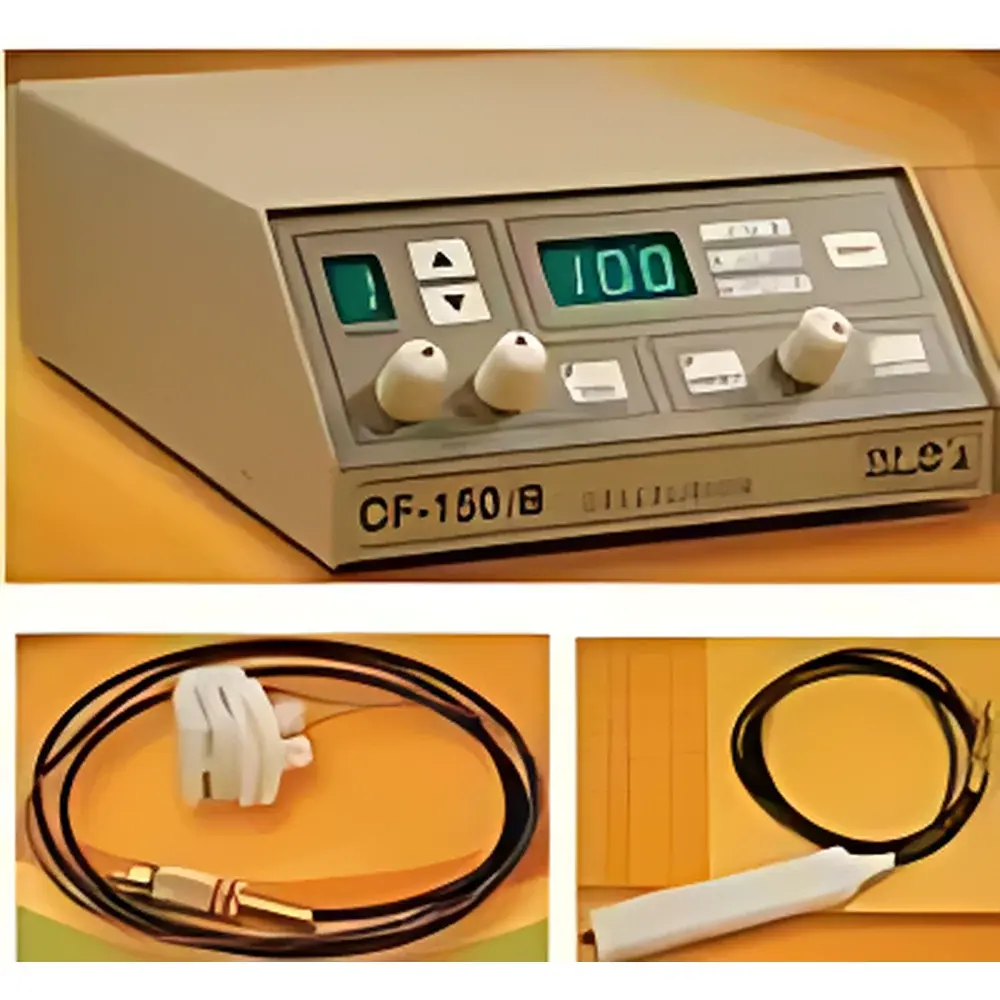
BLS CF150B Electroporation-Based Cell Fusion System for Embryo and Somatic Cell Nuclear Transfer
| Brand | BLS |
|---|---|
| Origin | EU-manufactured |
| Manufacturer Type | Original Equipment Manufacturer (OEM) |
| Country of Origin | European Union |
| Model | CF150B |
| Pricing | Available upon Request |
Overview
The BLS CF150B is a precision-engineered electroporation-based cell fusion system designed specifically for high-efficiency, low-toxicity electrofusion of mammalian preimplantation embryos and somatic cells in nuclear transfer (NT) applications. Unlike generic electroporators optimized for DNA transfection, the CF150B operates on a dual-pulse principle: a low-voltage alignment pulse induces reversible dielectric breakdown and dipole-driven cell contact (electroalignment), followed by a precisely timed, high-intensity DC fusion pulse that transiently destabilizes adjacent plasma membranes at the point of contact—enabling cytoplasmic and nuclear content exchange with minimal thermal or oxidative stress. This architecture is validated for use in both electrolyte-containing media (e.g., mannitol-based fusion buffers) and non-conductive media (e.g., mineral oil overlays), ensuring compatibility with standard embryo handling workflows under laminar flow hoods or inverted microscopes. The system’s core application domain includes tetraploid embryo generation in mouse models, somatic cell nuclear transfer (SCNT) in livestock and non-human primates, and ES cell–embryo aggregation for chimeric analysis.
Key Features
- Programmable dual-pulse delivery: Alignment pulse (0.1–10 V/cm, 1–10 s duration) + fusion pulse (1–5 kV/cm, 10–100 µs width), fully adjustable via front-panel interface
- Dedicated electrode chamber compatibility: Supports GSS-250, GSS-500, and GSS-1000 stainless-steel electrode slots with calibrated gap widths (250 µm, 500 µm, 1000 µm) for precise field strength control
- GSH-1 universal electrode clamp: Tool-free, spring-loaded mechanism ensures rigid fixation to standard tissue culture plates (6-well, 35 mm, or 60 mm dishes) and maintains stable electrical contact throughout repeated fusion cycles
- DN-09 and DN-10 aggregation needles: Sterile, borosilicate glass microtools with ergonomic handles; create standardized microwells (diameter ~150 µm, depth ~50 µm) for embryo/ES cell positioning prior to fusion
- Bio-inert construction: All wetted components—including electrodes, chamber walls, and needle tips—are fabricated from medical-grade 316L stainless steel and optical-grade borosilicate glass, compliant with ISO 10993-5 cytotoxicity testing
Sample Compatibility & Compliance
The CF150B is validated for use with murine zygotes, 2-cell and 4-cell stage embryos, bovine and porcine oocytes, primate blastomeres, and primary somatic cells (e.g., fetal fibroblasts, cumulus cells, mammary epithelial cells). It supports protocols aligned with internationally accepted standards for reproductive biotechnology, including those referenced in IETS (International Embryo Technology Society) guidelines and EMA/CVMP/785/03 for embryo manipulation in veterinary biologics development. While not a medical device per FDA 21 CFR Part 820, its operational parameters are traceable to NIST-traceable voltage and timing calibrations. Data acquisition logs (when used with optional RS-232 output) support GLP-compliant record retention per OECD Principles of Good Laboratory Practice (GLP) Section 1.3.
Software & Data Management
The CF150B operates as a standalone analog-digital hybrid instrument with no embedded firmware or cloud connectivity. Pulse parameters are set manually using rotary encoders and LED displays, eliminating software validation overhead required under FDA 21 CFR Part 11 for regulated environments. Optional RS-232 serial output enables integration with third-party lab information management systems (LIMS) or custom Python/Matlab scripts for timestamped pulse logging. All user-defined protocols—including voltage, pulse duration, interval delay, and repetition count—are stored in non-volatile memory (EEPROM) with write-protection to prevent accidental overwrites. Device calibration certificates (voltage accuracy ±1.5%, timing resolution ±0.5 µs) are provided with each unit and updated annually during factory recalibration.
Applications
- Generation of tetraploid mouse embryos for ES cell–embryo aggregation (Nagy et al., Development 1990; Rossant & Nagy, Methods Mol Biol 1993)
- Somatic cell nuclear transfer (SCNT) in livestock species, including bovine and porcine cloning (e.g., PPL Therapeutics, Nature Biotechnology 2000)
- Primate embryology studies requiring high-fidelity blastomere fusion (Meng et al., Biology of Reproduction 1997)
- Functional validation of genetically engineered embryonic stem cell lines via chimera formation and germline transmission assays
- Gene-trap screening in tetraploid-complemented embryos to assess spatiotemporal gene expression patterns (Forrester et al., Genes & Development 1991)
FAQ
What is the typical fusion efficiency using the CF150B under optimized conditions?
Under protocol-specified conditions—including GSS-250 electrode slot, 2-cell mouse embryos in 0.3 M mannitol + 0.1 mM MgCl₂, and alignment/fusion pulses per BLS Technical Bulletin TB-CF150B-02—fusion rates exceed 90% with ≤10% acute embryo lethality and ≥80% progression to healthy 4-cell stage within 24 h.
Can the CF150B be used for plasmid transfection or RNA electroporation?
No. The CF150B is purpose-built for cell–cell electrofusion and lacks the waveform flexibility (e.g., exponential decay, square-wave multi-burst) and cuvette compatibility required for nucleic acid delivery. For transfection, BLS recommends the separate BTX ECM 830 platform.
Is the GSS-250 electrode slot required for SCNT applications?
Yes. For somatic cell–oocyte fusion in nuclear transfer, the 250 µm gap provides optimal field homogeneity across the zona pellucida–cytoplasm interface, minimizing membrane damage while maximizing fusion pore formation. GSS-500/GSS-1000 are intended for larger constructs such as embryoid bodies or organoid clusters.
Are replacement parts and calibration services available outside the EU?
Yes. BLS maintains authorized service centers in North America (via BLS Americas LLC), Japan (BLS K.K.), and Australia (BLS Pacific Pty Ltd). Electrode slots, aggregation needles, and GSH-1 clamps are stocked globally with lead times under 5 business days. Annual calibration is performed using Fluke 8508A multimeters and Tektronix DPO70000SX oscilloscopes traceable to NIST SRM 1282a.




