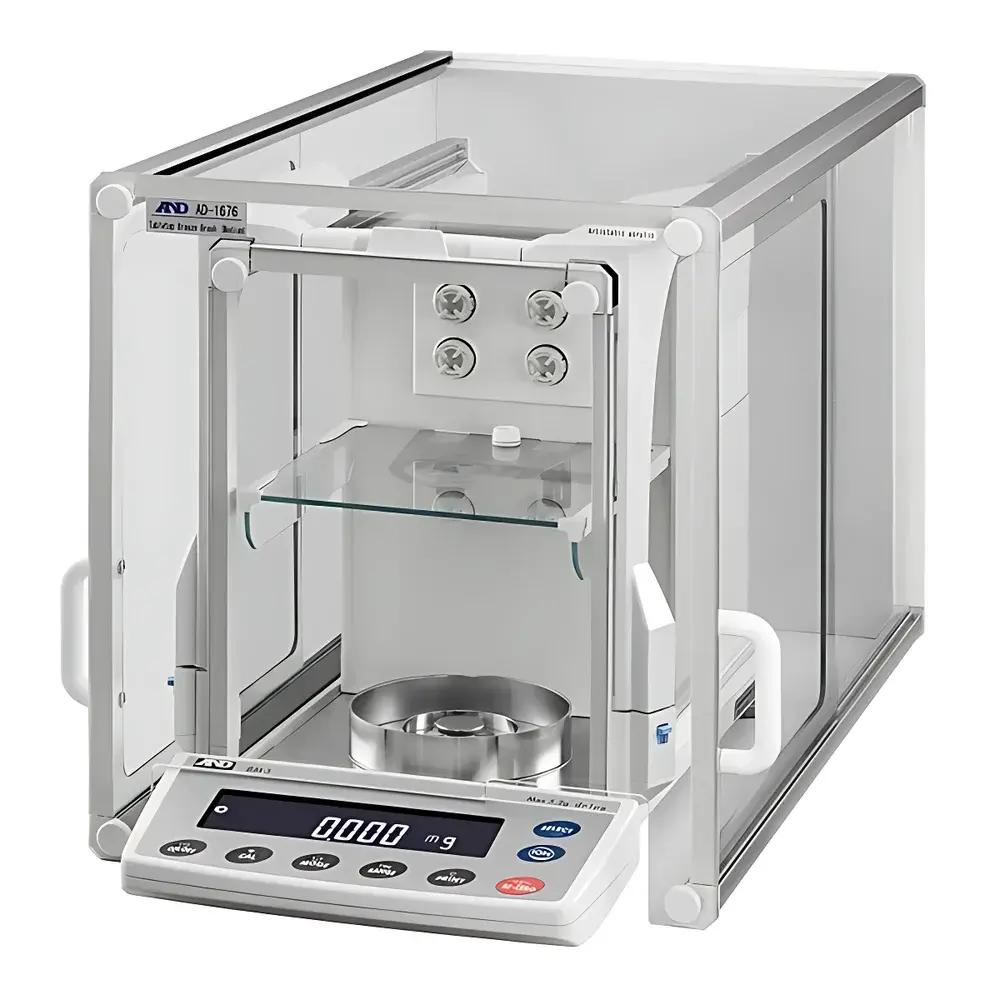
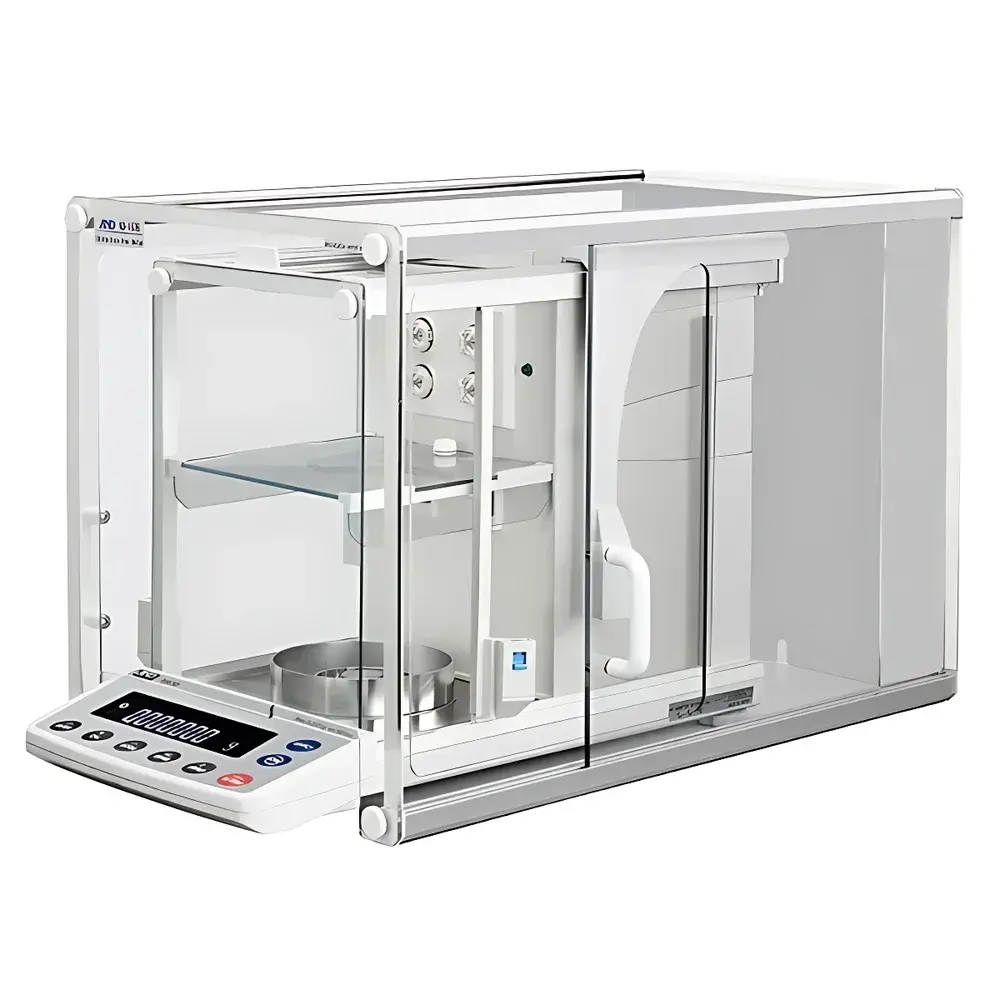
AND BM-20 Ultra-Micro Balance with 1 µg Readability
| Brand | AND/A&D |
|---|---|
| Origin | Japan |
| Model | BM-20 |
| Type | Ultra-Micro Balance |
| Maximum Capacity | 22 g |
| Readability | 1 µg (0.001 mg) |
| Repeatability | 0.0025 mg |
| Calibration | Internal motorized calibration with built-in砝码 |
| Sample Pan | Perforated mesh design |
| Draft Shield | Conductive-coated glass with lateral sliding door |
| Interfaces | RS-232C and USB |
| Data Storage | 200 measurement records + 50 calibration logs |
| Software | WinCT-Balance (A&D certified, GLP/GMP-compliant) |
| Display | High-contrast white-backlit LCD |
Overview
The AND BM-20 is an ultra-micro balance engineered for laboratory environments demanding sub-milligram mass resolution and metrological stability. Operating on electromagnetic force compensation (EMFC) principle, it delivers true 1 µg (0.001 mg) readability across its 22 g maximum capacity range—meeting the stringent requirements of pharmaceutical R&D, reference standard preparation, catalyst dosing, and nanomaterial quantification. Its design prioritizes measurement integrity in low-mass regimes where electrostatic interference, air currents, and mechanical drift dominate uncertainty budgets. The BM-20 is not merely a high-resolution scale; it is a controlled microenvironmental measurement system integrating conductive shielding, active static neutralization, and thermally stable transduction architecture to ensure traceable, repeatable results under ISO/IEC 17025-aligned conditions.
Key Features
- Electrostatic Mitigation System: Integrated DC-powered ionizer eliminates surface charge without airflow—critical for hygroscopic powders, APIs, and nanoscale samples prone to levitation or adhesion errors.
- Conductive Draft Shield: Tempered glass windscreen coated with transparent conductive oxide (TCO), grounded via chassis to dissipate operator- or sample-induced static, reducing zero drift by up to 60% compared to standard acrylic shields.
- Ergonomic Lateral Sliding Door: Mechanically decoupled from the weighing cell; enables simultaneous door operation and sample placement without transmitting vibration or thermal load to the sensor assembly.
- Perforated Mesh Weighing Pan: Optimized geometry minimizes buoyancy effects and turbulence-induced noise; compatible with desiccant trays and low-profile sample vessels while maintaining full draft shield integrity.
- Dual-Ring Weighing Platform: Modular partition allows flexible configuration—removable divider enables full static dissipation zone coverage during sensitive measurements, while retaining structural rigidity for off-center loading tolerance.
- Internal Motorized Calibration: Fully automated, temperature-compensated self-calibration using factory-traceable internal weights; compliant with ASTM E898–22 and ISO 17025 clause 6.5.2 for calibration validity assurance.
Sample Compatibility & Compliance
The BM-20 supports diverse sample forms—including lyophilized powders, crystalline reference standards, microcapsules, thin-film substrates, and microfluidic device components—within ambient lab conditions (18–25 °C, <60% RH). Its draft shield meets ISO 9001:2015 Annex A.4.2 requirements for environmental isolation, and all firmware operations adhere to FDA 21 CFR Part 11 criteria for electronic records and signatures when used with WinCT-Balance software. Data export formats conform to GLP/GMP audit trails: timestamps, operator ID, calibration history, environmental metadata (optional external sensor integration), and digital signatures are embedded in CSV and PDF reports per ISO/IEC 17025 clause 7.8.2.
Software & Data Management
WinCT-Balance v4.x (included) provides full instrument control, real-time trend visualization, statistical analysis (mean, SD, CV%, min/max), and automated report generation in customizable templates aligned with USP , EP 2.1.3, and JP 2.03. All data entries are immutable post-acquisition; audit trail logs record every action—including parameter changes, calibration events, and user logins—with time stamps and hash-verified integrity. USB mass storage mode enables direct export of raw datasets for LIMS integration; RS-232C supports legacy SCADA and MES systems via ASCII protocol with configurable delimiters and handshake protocols.
Applications
- Quantitative preparation of certified reference materials (CRMs) at NIST-traceable levels
- Weighing of active pharmaceutical ingredients (APIs) for high-potency drug formulation (e.g., oncology compounds)
- Gravimetric analysis of catalyst loading on nanostructured supports (e.g., Pt/C, NiFe LDH)
- Mass verification of MEMS/NEMS devices and photomask substrates
- Residue-on-evaporation testing per USP and EP 2.2.32
- Calibration of pipette performance using gravimetric method (ISO 8655-6)
FAQ
What environmental conditions are required to achieve rated 1 µg readability?
Stable temperature (±0.5 °C/h), humidity <60% RH, and vibration isolation (Class A according to ISO 5347) are mandatory. An anti-vibration table and dedicated AC line filter are recommended.
Does the BM-20 support external environmental sensors (e.g., temperature, humidity)?
Yes—via optional RS-232 expansion module; sensor inputs are time-synchronized and embedded into audit trail records.
How is compliance with 21 CFR Part 11 enforced in WinCT-Balance?
Through role-based access control, electronic signatures with biometric or token-based authentication, and write-protected audit logs with cryptographic hashing.
Can the mesh pan be replaced with a solid pan for non-powder applications?
No—the perforated pan is integral to the EMFC cell’s airflow management and thermal equilibrium design; alternative pans void calibration certification.
Is the internal calibration weight NIST-traceable?
Yes—factory-certified against primary standards maintained at A&D’s JCSS-accredited calibration laboratory (JCSS No. 0223).