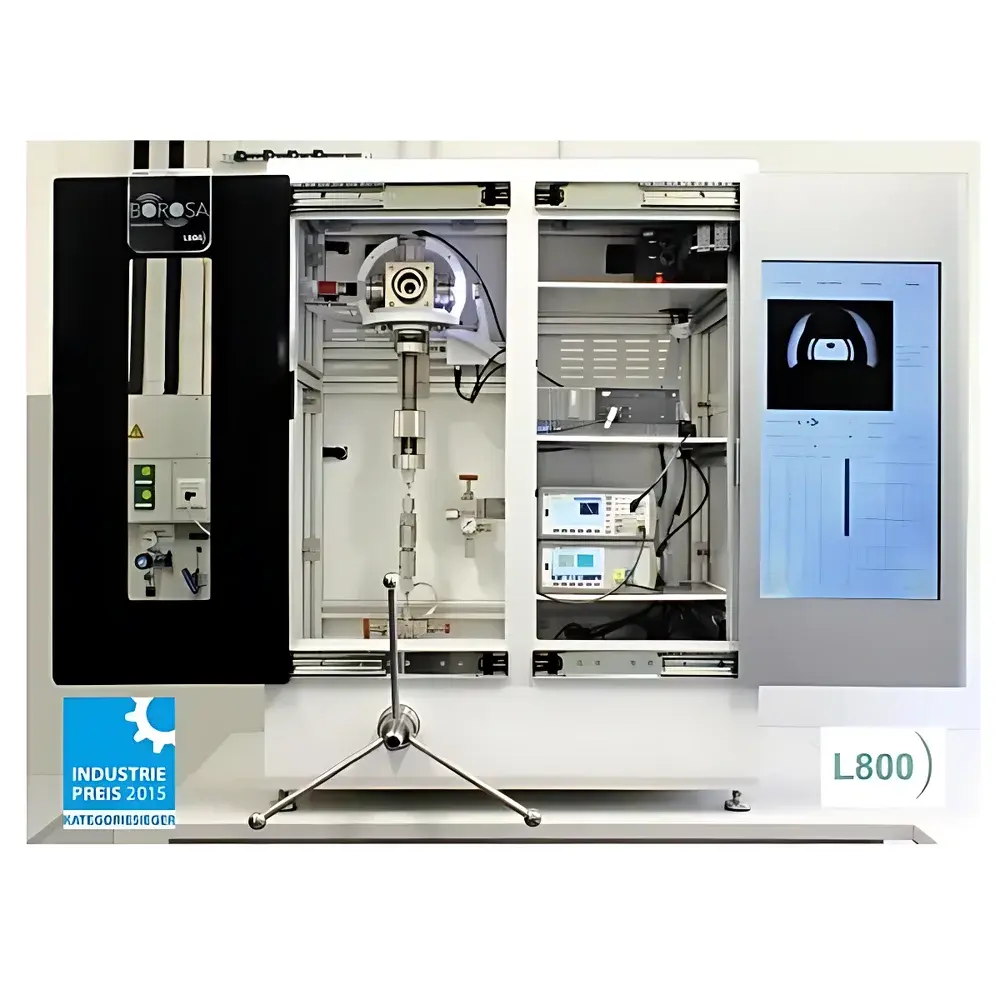
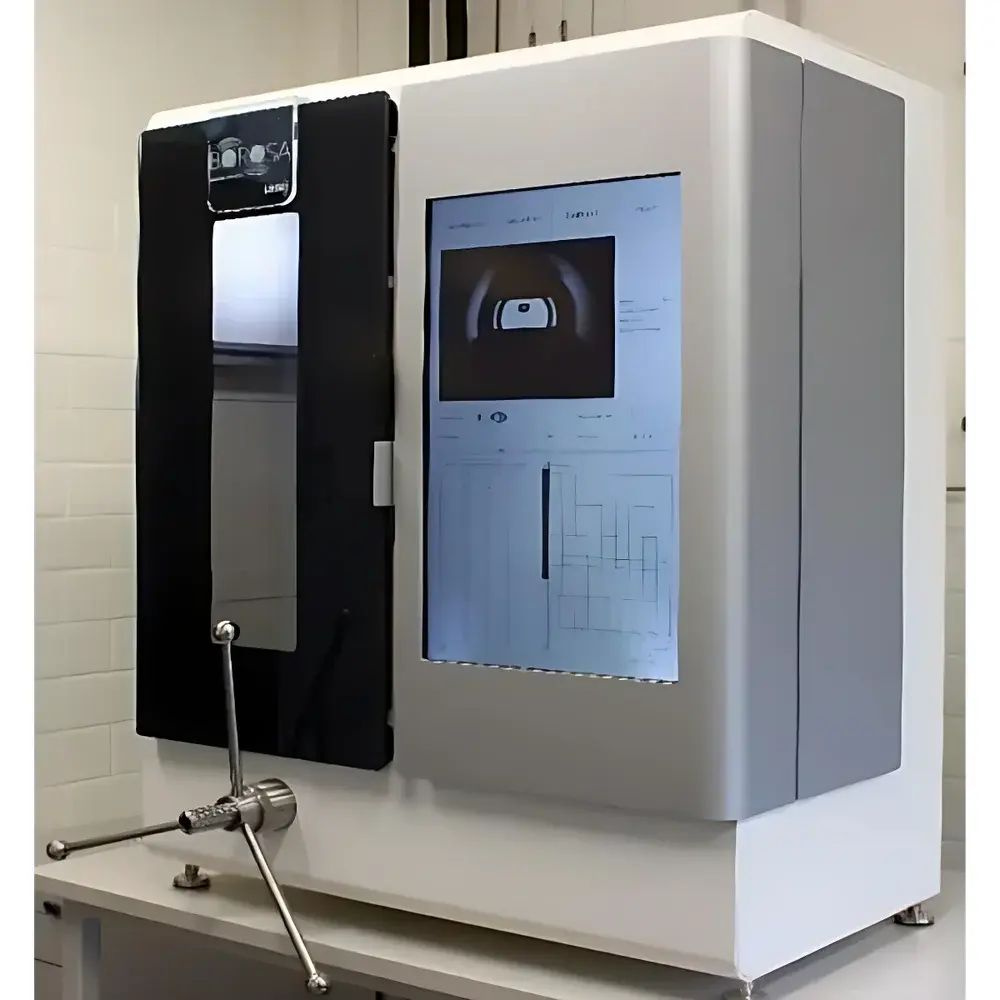
BOROSA L800 High-Temperature High-Pressure Acoustic Levitation System
| Brand | BOROSA |
|---|---|
| Origin | Germany |
| Model | L800 |
| Pressure Range | 0.10–20 MPa |
| Temperature Range | −20 °C to +180 °C |
| Droplet Diameter Capacity | 0.7–4 mm |
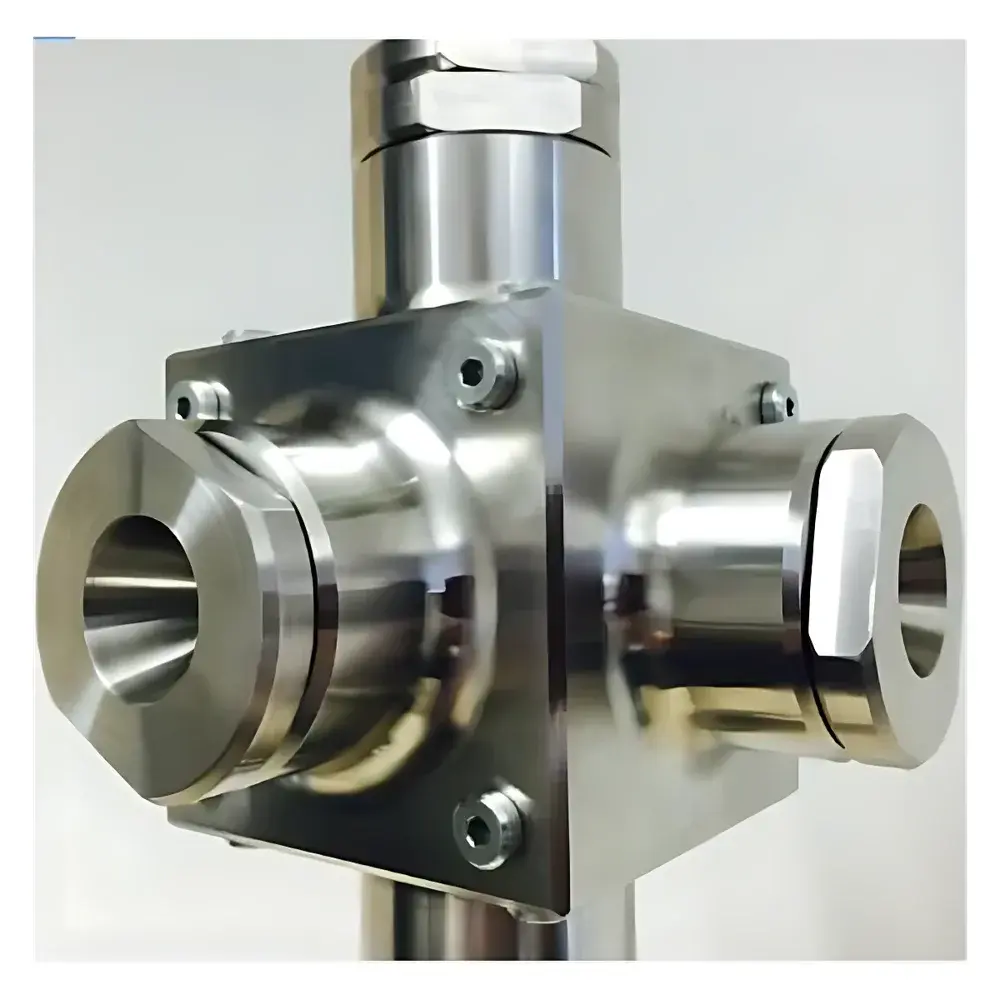
| Sample Chamber Material | Titanium Alloy with Triple Sapphire Windows |
| Compliance | Designed for ISO/IEC 17025-aligned research environments, supports GLP-compliant data traceability |
Overview
The BOROSA L800 High-Temperature High-Pressure Acoustic Levitation System is an engineered platform for contactless, wall-free sample manipulation under precisely controlled thermodynamic conditions. It operates on the physical principle of acoustic radiation force generated by a standing ultrasonic wave field—established between a precision transducer and a concave reflector—to stably suspend millimeter-scale droplets at the pressure node. Unlike conventional levitation methods reliant on electromagnetic or aerodynamic forces, the L800 leverages high-intensity, frequency-tuned ultrasound (typically in the 20–40 kHz range) to achieve stable levitation without mechanical support or container interference. Its integration of a titanium-alloy pressure vessel rated to 20 MPa and temperature-controlled environment (−20 °C to +180 °C) enables experimental simulation of deep-earth geophysical conditions, subsea hydrate formation, or high-pressure catalytic reaction media—making it a critical tool for fundamental studies in phase behavior, interfacial thermodynamics, and non-equilibrium transport phenomena.
Key Features
- Acoustically stabilized levitation in fully sealed, pressure-rated chamber (0.10–20 MPa), eliminating wall-induced nucleation, thermal gradients, or contamination
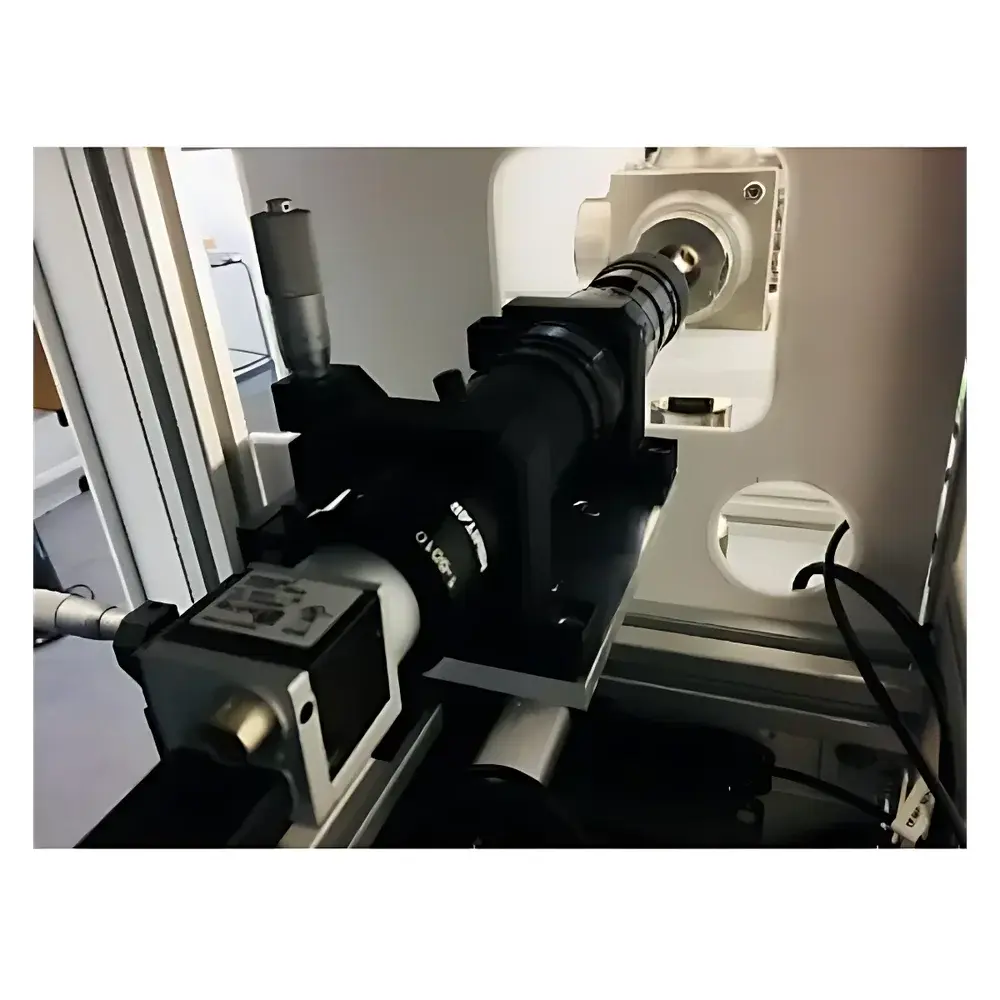
- Triple sapphire optical windows enabling simultaneous multi-angle high-speed imaging (up to 10,000 fps), spectroscopic access (UV–Vis–NIR), and laser-based diagnostics (e.g., Raman, fluorescence)
- Integrated droplet injection via calibrated screw-driven piston pump and fused-silica capillary positioned precisely at the acoustic pressure node
- Real-time, axisymmetric contour analysis of suspended droplets using proprietary software—computing volume, axial/radial diameters, and surface area with sub-pixel resolution
- Thermobaric control with ramp rates up to 5 K/min and 0.2 MPa/min, maintaining droplet positional stability during dynamic transitions
- Passive acoustic isolation architecture minimizing ambient noise coupling; no audible emission during operation—essential for sensitive optical or acoustic measurements
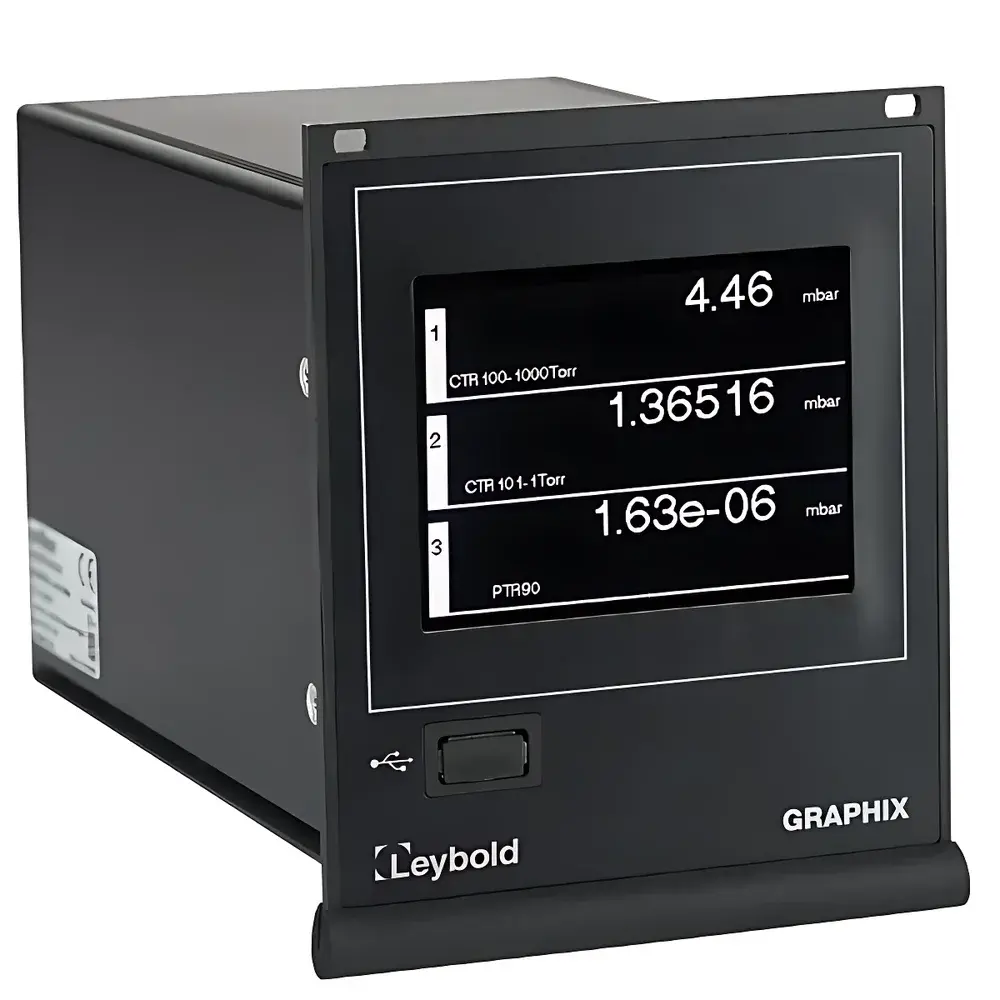
- Modular hardware design compliant with standard laboratory infrastructure: 19″ rack-mountable electronics (frequency generator, broadband power amplifier), touch-enabled 27″ workstation with pre-installed measurement suite
Sample Compatibility & Compliance
The L800 accommodates a broad spectrum of sample states: pure liquids (e.g., water, ethanol, ionic liquids), aqueous and organic solutions (NaCl, PEG, sucrose), colloidal suspensions, polymer melts (PVP), crystalline precursors, and gas-hydrate forming systems (e.g., CO₂–H₂O, CH₄–H₂O). Its inert titanium chamber and chemically resistant sapphire optics ensure compatibility with corrosive, oxidizing, or cryogenic media. The system supports experimental workflows aligned with ASTM D7094 (high-pressure phase equilibrium), ISO 11014 (safety data for pressurized apparatus), and EU Regulation (EC) No 765/2008 for conformity assessment of research instrumentation. All pressure and temperature logging meets traceability requirements for GLP audits; raw time-series datasets include embedded metadata (timestamp, sensor ID, calibration coefficients) required for FDA 21 CFR Part 11–compliant electronic records when deployed in regulated development labs.
Software & Data Management
The proprietary BOROSA Acoustic Levitation Control Software (v4.2+) provides full instrument orchestration and quantitative image analytics. Core modules include automatic droplet detection via edge-enhanced Hough transform, real-time contour fitting using Levenberg–Marquardt optimization, and parametric export of time-resolved volume, diameter, aspect ratio, and centroid position. Diffusion and mass transfer coefficients are derived from Fickian modeling of volume decay curves under controlled partial pressure gradients. All measurement sessions generate structured HDF5 files containing synchronized pressure, temperature, camera trigger, and acoustic drive signals—enabling cross-platform reproducibility and third-party algorithm integration (e.g., Python-based custom fitting, MATLAB batch analysis). Audit trails log user actions, parameter changes, and calibration events; optional encryption and role-based access control support institutional IT security policies.
Applications
- Gas hydrate nucleation kinetics and dissociation thermodynamics under reservoir-relevant P–T conditions
- Homogeneous nucleation thresholds and crystal growth mechanisms in supersaturated solutions without heterogeneous seeding
- Diffusivity and solute partitioning in evaporating microdroplets—critical for pharmaceutical spray drying and atmospheric aerosol modeling
- Gelation onset and network formation dynamics in thermo-responsive polymers (e.g., gelatin, methylcellulose)
- Non-contact melting/solidification of high-reactivity metals or reactive intermetallics
- Nanoparticle self-assembly pathways monitored via in situ scattering or fluorescence correlation spectroscopy
- Phase equilibria mapping of ternary systems (e.g., CO₂–brine–hydrocarbon) relevant to carbon sequestration and enhanced oil recovery
FAQ
What is the maximum and minimum droplet diameter supported?
The L800 reliably levitates spherical or oblate droplets with diameters ranging from 0.7 mm to 4.0 mm, depending on density, viscosity, and acoustic contrast factor relative to the surrounding medium.
How is the droplet introduced into the acoustic node?
A motorized screw-driven piston pump delivers sample through a fused-silica capillary mounted coaxially at the pressure antinode; precise positioning ensures deposition directly at the levitation node prior to acoustic field activation.
Can the system handle particulate-laden fluids or slurries?
Yes—slurries, emulsions, and nanofluids are compatible provided particle size remains below 10% of droplet diameter to avoid acoustic shadowing or node destabilization.
Is convective transport induced or suppressed during experiments?
Natural convection is permitted and quantified; the system does not impose forced gas flow. Controlled P/T ramps generate reproducible buoyancy-driven flows (~0.3 m/s near droplet surface), enabling study of diffusion–convection coupling without external perturbation.
Does the acoustic field interfere with internal mass transport or molecular dynamics?
Empirical validation across >200 test cases—including fluorescence recovery after photobleaching (FRAP) and dynamic light scattering—confirms no measurable perturbation of intradroplet diffusion coefficients or rotational relaxation times under nominal operating conditions.