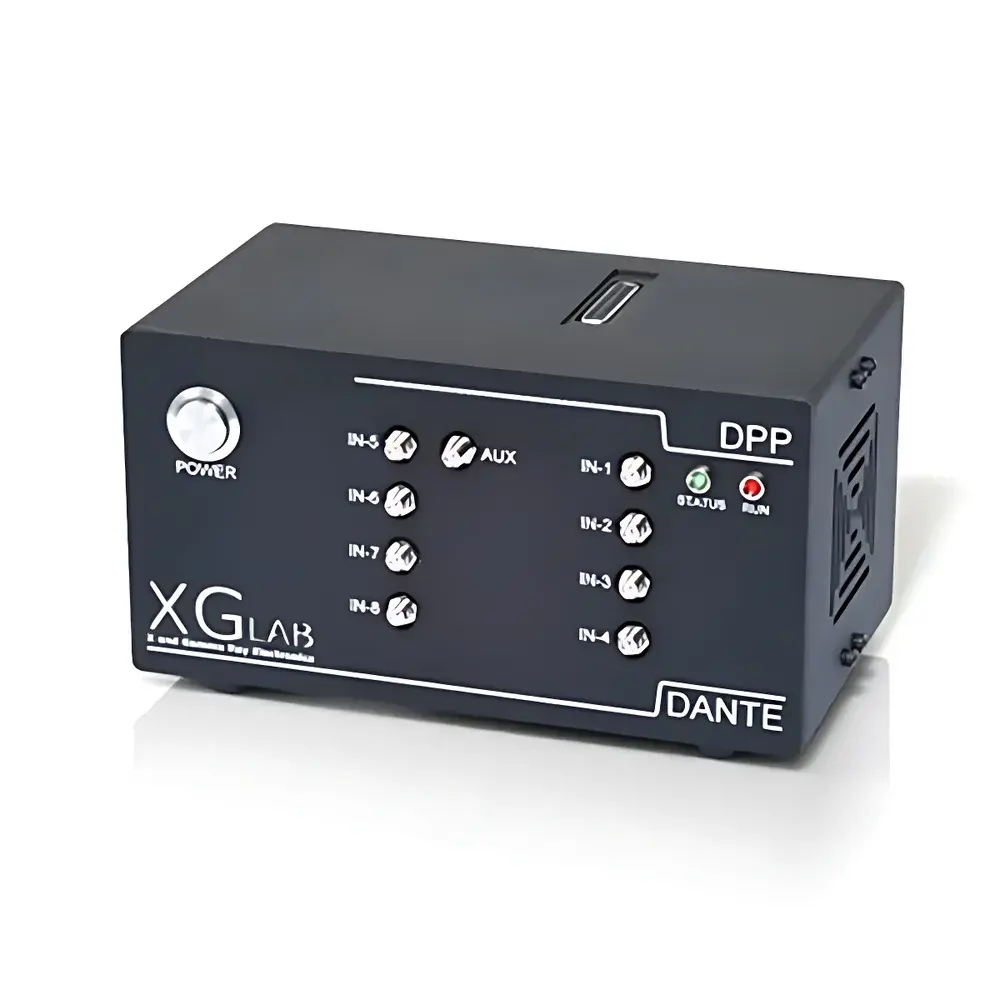
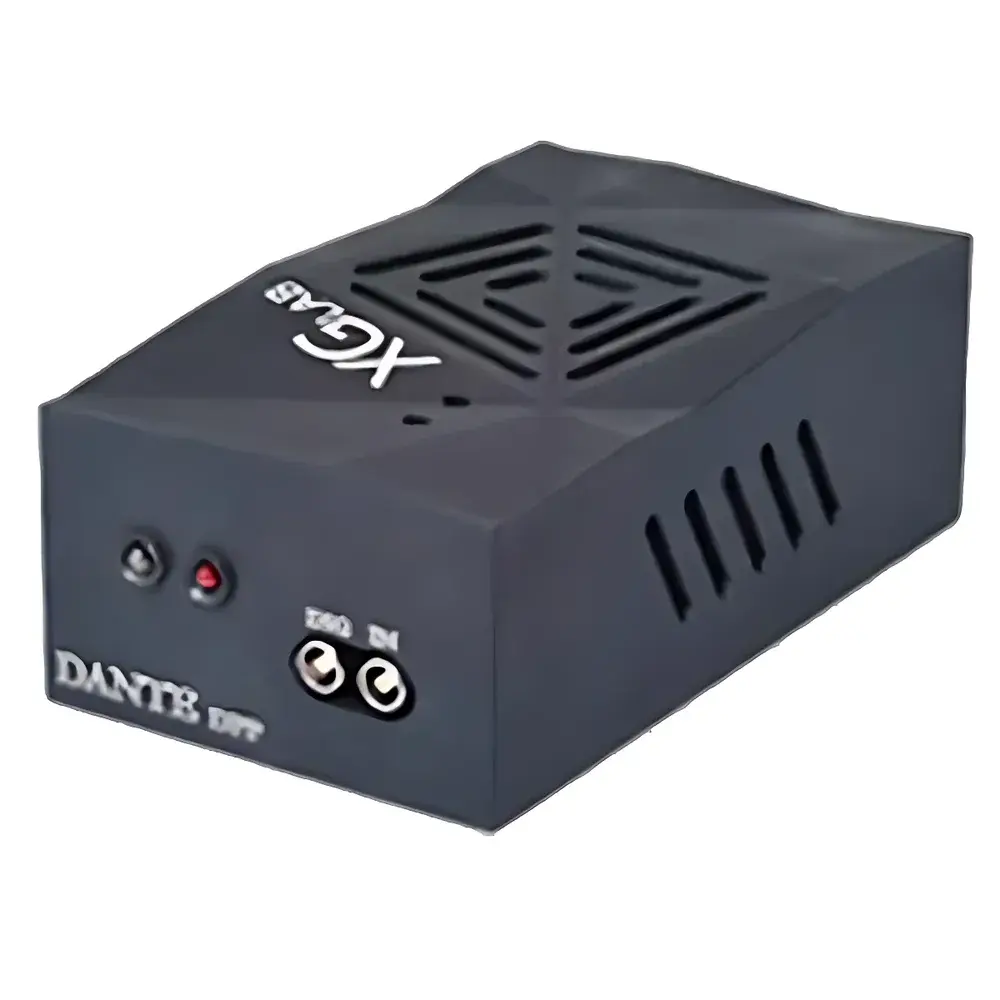
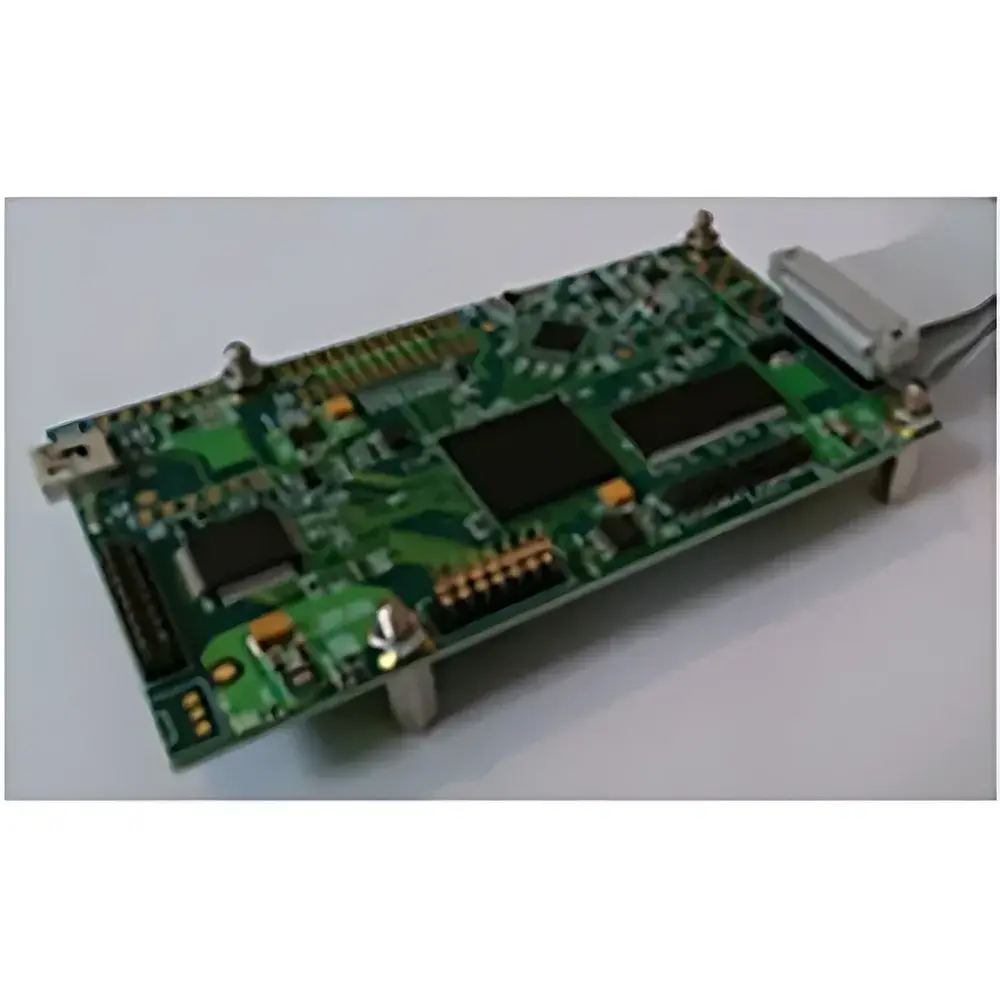
Brookfield DANTE Digital Pulse Processor
| Brand | Bruker |
|---|---|
| Origin | Germany |
| Model | DANTE Digital Pulse Processor |
| Channel Options | 1CH (Single-Channel) / 8CH (8-Channel) |
| Form Factor | OEM-ready modular board |
| Application Domain | X-ray & gamma-ray spectroscopy (XRF, XAS including EXAFS/XANES), synchrotron beamlines, laboratory and industrial spectrometry systems |
| Detector Compatibility | Silicon Drift Detectors (SDD), High-Purity Germanium (HPGe), scintillation detectors with charge-sensitive preamplifiers |
| Signal Interface | Direct digitization of preamplifier output waveforms |
| Data Output Modes | List-mode (timestamped events), histogram mode, burst-mode spectral acquisition |
| Firmware Features | Reconfigurable digital trapezoidal filtering, real-time pile-up rejection, adaptive baseline restoration, programmable trigger/gating/VETO logic |
| System Integration | I/O bus support for synchronized multi-channel operation |
| Compliance | Designed to meet requirements for GLP/GMP-aligned research environments |
| Software Environment | Compatible with Bruker’s ESPRIT™ suite and third-party spectral analysis platforms (e.g., Athena, Artemis, PyMCA) |
Overview
The Brookfield DANTE Digital Pulse Processor (DPP) is a high-performance, FPGA-based signal processing module engineered for precision energy-resolved spectroscopy across X-ray and gamma-ray detection systems. Built on a flexible, reconfigurable architecture, the DANTE DPP digitizes analog pulses from charge-sensitive preamplifiers—typically coupled to silicon drift detectors (SDD), high-purity germanium (HPGe), or scintillation-based sensors—and applies real-time digital pulse shaping, pile-up correction, and event discrimination. Its core measurement principle relies on high-fidelity waveform sampling (≥100 MS/s typical), followed by adaptive trapezoidal filtering and centroid computation to extract energy information with high linearity and reproducibility. Designed explicitly for demanding applications such as X-ray fluorescence (XRF), X-ray absorption spectroscopy (XAS), and time-resolved synchrotron experiments—including EXAFS and XANES—the DANTE DPP delivers stable spectral resolution under variable count-rate conditions, making it suitable for both benchtop instrumentation and large-scale beamline infrastructure.
Key Features
- FPGA-accelerated real-time digital pulse processing with user-programmable filter parameters (shaping time, flat-top duration, decay compensation)
- Simultaneous list-mode acquisition with nanosecond-level timestamping for time-correlated spectroscopy and pump-probe experiments
- Robust pile-up rejection and baseline restoration algorithms optimized for high-input-count-rate environments (up to 500 kcps per channel, dependent on detector response)
- Multi-mode data output: histogrammed spectra, event-by-event list files, and burst-mode spectral stacks synchronized via external triggers
- Scalable channel architecture supporting daisy-chained configurations—enabling expansion from 1CH to >64 channels without host CPU overhead
- Native integration with Bruker CUBE platform for automated calibration, gain stabilization, and dead-time correction
- OEM-friendly form factor with PCIe, USB 3.0, or LVDS I/O options; minimal footprint (standard single-width Eurocard or custom PCB mount)
Sample Compatibility & Compliance
The DANTE DPP interfaces directly with industry-standard radiation detectors requiring charge-integrating preamplification, including SDDs used in micro-XRF mapping, HPGe detectors for low-energy gamma spectroscopy, and fast scintillators in nuclear safeguards applications. It supports variable shaping times (0.2–10 µs) and dynamic range adjustments (0–10 V input, 16-bit ADC resolution) to accommodate diverse detector capacitances and noise profiles. In regulated research settings—including academic facilities operating under NIH or DOE funding guidelines—the system supports audit-trail-capable data logging when paired with compliant software stacks. While the DANTE hardware itself does not carry FDA or CE medical device certification, its design adheres to electromagnetic compatibility (EMC) standards per EN 61326-1 and functional safety principles aligned with IEC 61508 for laboratory-grade instrumentation.
Software & Data Management
The DANTE DPP operates via a vendor-neutral driver layer accessible through Windows/Linux DLLs and LabVIEW VIs, enabling seamless integration into custom data acquisition frameworks. Raw list-mode files (.lmd) are structured according to the IEEE 1697.1 standard for interoperability with spectral analysis tools such as Athena (IFEFFIT), PyMCA, and commercial packages like AXIL or QXAS. Bruker’s ESPRIT™ software provides turnkey calibration, peak deconvolution, and quantification workflows validated for XRF and XAS applications. All firmware updates and configuration files are version-controlled and checksum-verified to ensure reproducibility—a requirement for GLP-compliant reporting and peer-reviewed publication workflows.
Applications
- Synchrotron beamline endstations requiring high-throughput, time-stamped XAS data collection at sub-millisecond resolution
- Materials science labs performing in situ/operando XRF mapping of battery cathodes or catalyst degradation
- Cultural heritage institutions conducting non-destructive elemental analysis of pigments and metal alloys using portable or micro-beam systems
- Pharmaceutical QA/QC laboratories implementing XRF-based coating thickness verification per USP
- OEM manufacturers embedding spectroscopic intelligence into next-generation handheld isotope identifiers or environmental radionuclide monitors
FAQ
What detector types are natively supported by the DANTE DPP?
Silicon drift detectors (SDD), high-purity germanium (HPGe), CdTe, and scintillation detectors (e.g., NaI(Tl), LaBr₃) with charge-sensitive preamplifiers.
Can the DANTE DPP operate in list-mode without histogramming?
Yes—list-mode acquisition with absolute timestamps is the default operational mode; histogram generation occurs post-acquisition or in parallel via configurable binning engines.
Is firmware reconfiguration possible during live data collection?
No—filter parameters and acquisition modes must be set prior to run initiation to ensure deterministic timing behavior and spectral integrity.
Does the DANTE DPP support energy calibration traceability to NIST standards?
Yes—calibration coefficients can be stored with metadata referencing certified reference materials (e.g., NIST SRM 1832/1833); full uncertainty propagation is supported in ESPRIT™ and PyMCA.
What is the maximum sustainable input count rate per channel?
Up to 500,000 counts per second (cps) with ≤1% dead-time loss under optimal shaping and pile-up rejection settings—performance varies with detector rise time and noise floor.