
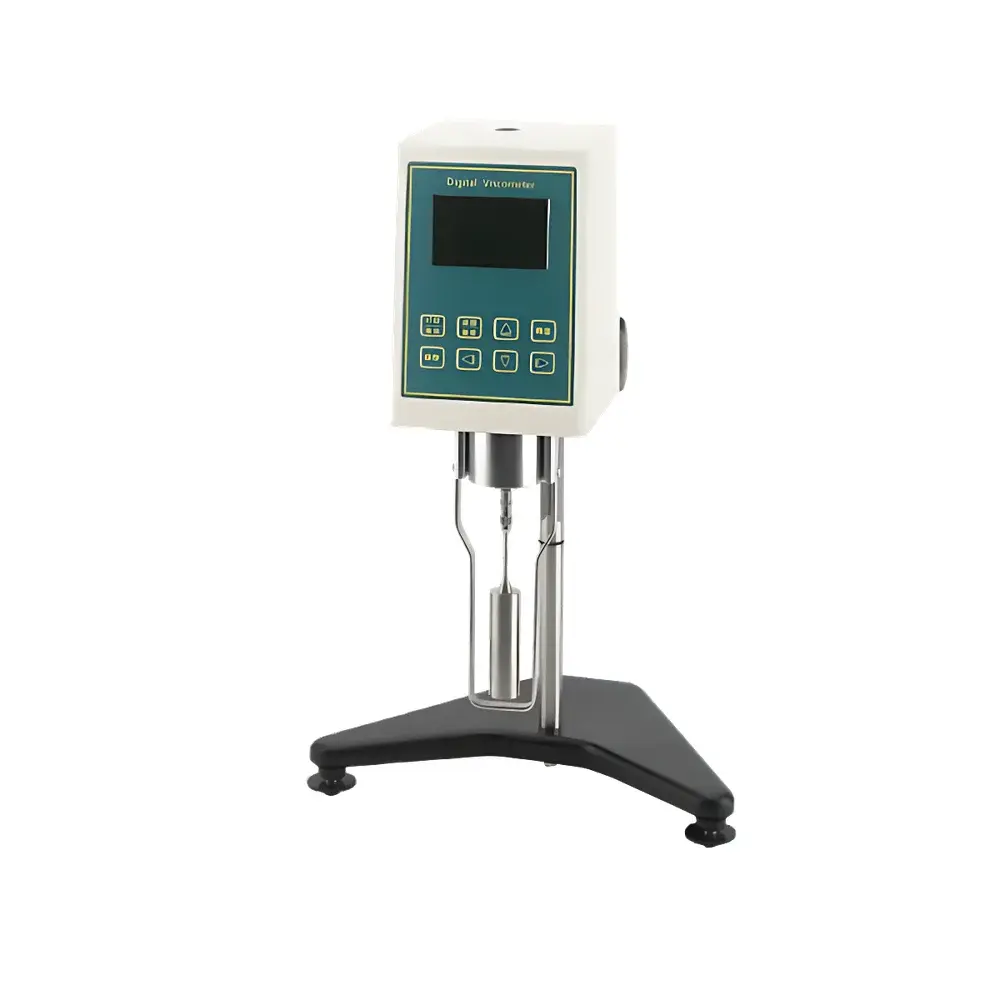
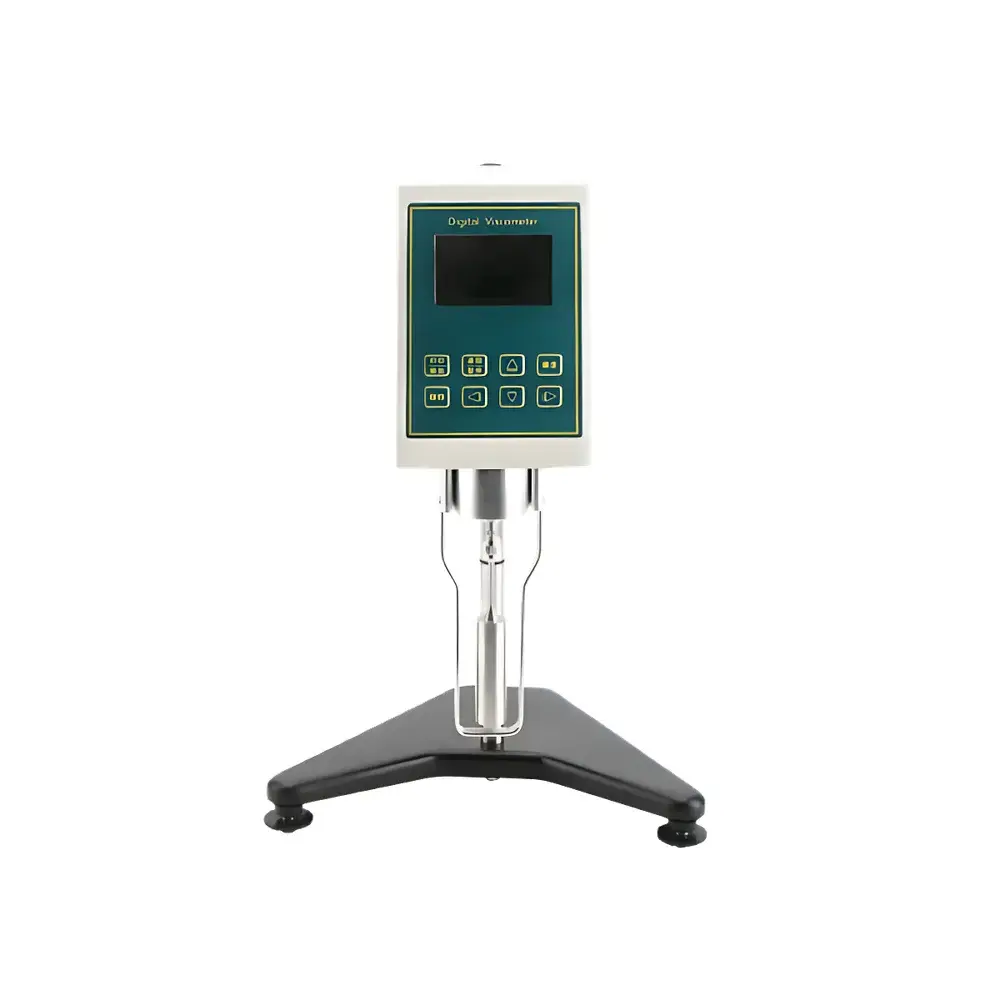
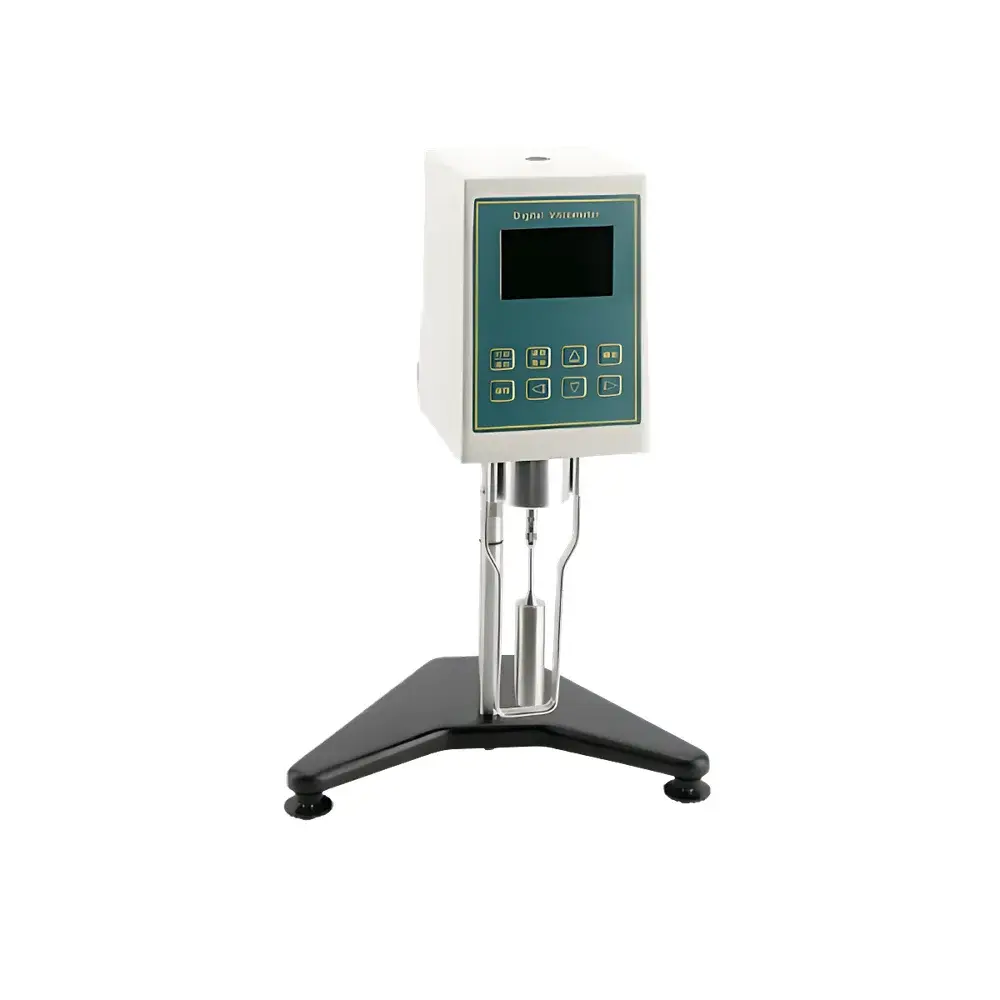
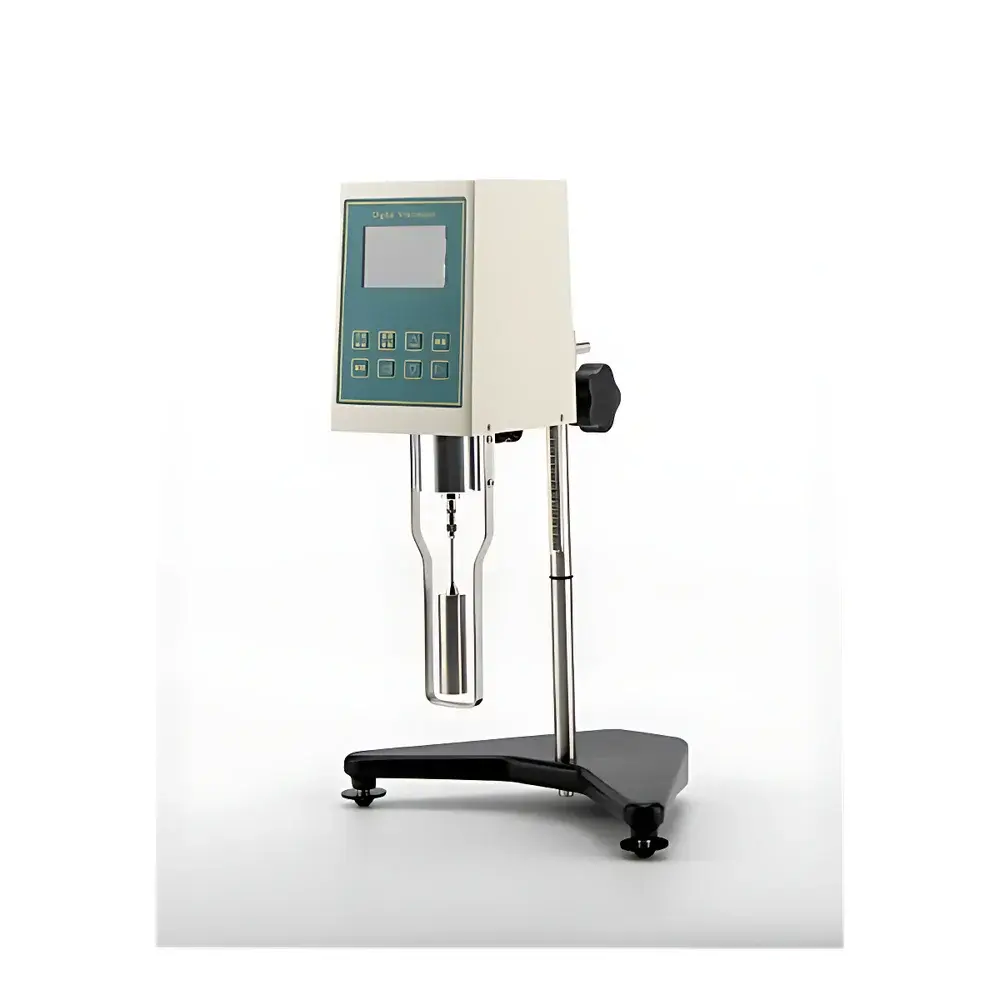
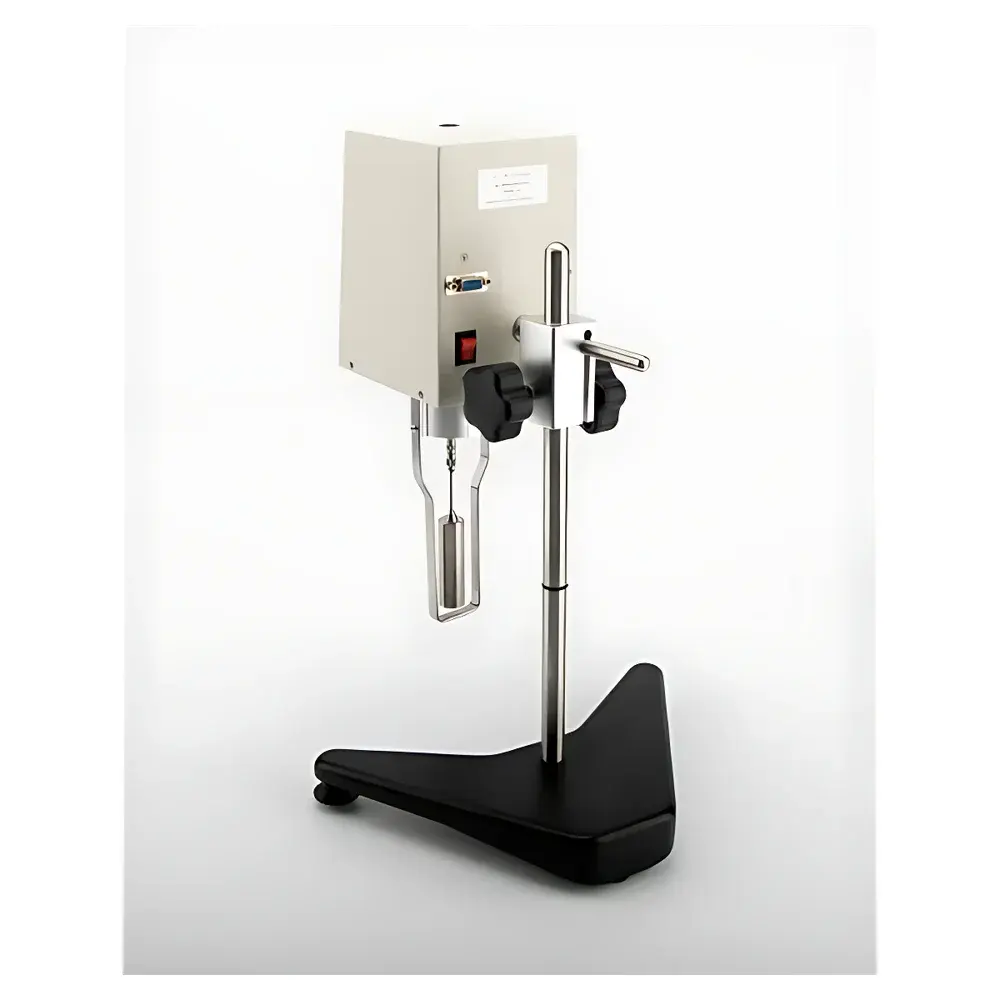
Brookfield DV-Series Color TFT Display Rotational Viscometer
| Brand | SUNNY HENGPING INSTRUMENT |
|---|---|
| Origin | Shanghai, China |
| Manufacturer Type | Direct Manufacturer |
| Instrument Type | Benchtop Rotational Viscometer |
| Operating Environment | Ambient Temperature |
| Viscosity Range | 10–3.2×10⁸ mPa·s (model-dependent) |
| Display | High-Resolution TFT Color Screen |
| Speed Control | Stepless & Stepped (0.1–200 rpm) |
| Rotor Compatibility | Spindles #1–#4 (DV-1/DV-2), R2–R7 (DV-3/DV-4) |
| Accuracy (Newtonian fluids) | ±1% |
| Dimensions (L×W×H) | 325×280×370 mm |
| Optional Accessories | UL Adapter (SP-0), Small Sample Adapter |
Overview
The SUNNY HENGPING DV-Series Color TFT Display Rotational Viscometer is a benchtop-capable, microprocessor-controlled instrument engineered for precision measurement of dynamic viscosity in both Newtonian and non-Newtonian fluids. Based on the Couette principle—where torque required to rotate a spindle at controlled shear rates within a fluid sample is quantified—the system delivers reproducible rheological data under steady-state shear conditions. Designed for routine quality control and R&D laboratories, it operates across ambient temperature environments without external thermostatic control, making it suitable for rapid screening of formulation stability, process consistency, and batch-to-batch comparability. Its modular architecture supports multiple spindle configurations and speed profiles, enabling direct correlation between rotational parameters and apparent viscosity values per ISO 2555 and ASTM D2196 standards.
Key Features
- High-resolution color TFT display with intuitive menu navigation and real-time graphical plotting of viscosity vs. time or temperature (when paired with optional thermal accessories)
- Dual-speed operation modes: stepless (0.1–200 rpm) and stepped (predefined discrete speeds), ensuring flexibility for both coarse screening and fine-resolution characterization
- Multi-spindle compatibility: standard #1–#4 spindles for DV-1/DV-2 models; extended R2–R7 geometry set for DV-3/DV-4, supporting wider shear rate coverage and enhanced low-viscosity sensitivity
- Integrated data logging capability with timestamped output, supporting export of viscosity-time curves and shear-rate-dependent flow behavior analysis
- Rugged aluminum alloy chassis with vibration-dampening base, optimized for long-term mechanical stability and minimal torque drift during extended measurements
- Compliance-ready design: supports GLP/GMP documentation workflows via optional RS-232/USB interface for traceable data transfer and audit trail generation
Sample Compatibility & Compliance
The DV-Series accommodates a broad range of industrial and pharmaceutical materials—including edible oils, polymer melts, latex dispersions, solvent-based coatings, hydrogels, suspensions, and emulsions—without requiring sample dilution or pre-conditioning. When used with the optional UL adapter (SP-0) or small-volume sample cup, as little as 2–4 mL of material can be characterized reliably. All models conform to international metrological requirements outlined in ISO 17025-accredited calibration practices. Measurement uncertainty is validated against NIST-traceable silicone oil standards, and results are compliant with ASTM D1200 (Ford Cup), ISO 2555 (glass capillary), and USP <911> (viscosity of liquids) where applicable. The instrument’s ±1% accuracy specification applies strictly to Newtonian reference fluids measured under controlled ambient conditions (23 ± 2°C, <60% RH).
Software & Data Management
While standalone operation requires no PC connection, the DV-Series supports bidirectional communication via USB or RS-232 interfaces for integration into centralized laboratory information management systems (LIMS). Optional proprietary software enables automated method recall, multi-point shear sweep programming, statistical reporting (mean, SD, CV%), and PDF report generation with embedded instrument ID, operator name, date/time stamp, and calibration certificate references. All electronic records comply with FDA 21 CFR Part 11 requirements when configured with user authentication, electronic signatures, and immutable audit logs—essential for regulated environments including pharmaceutical QC and cosmetic product release testing.
Applications
- Quality assurance of paint and coating formulations: detecting thixotropic recovery, sag resistance, and spray atomization suitability
- Pharmaceutical excipient evaluation: monitoring viscosity changes during dissolution, granulation, or suspension stabilization
- Food texture profiling: quantifying shear-thinning behavior of sauces, dressings, dairy products, and plant-based alternatives
- Polymer processing support: correlating melt viscosity with extrusion pressure, injection molding cycle times, and die swell prediction
- Adhesive and sealant development: assessing open time, green strength build-up, and cure kinetics through time-sweep viscoelastic profiling
- Chemical intermediate verification: confirming batch homogeneity and molecular weight distribution trends via relative viscosity indexing
FAQ
What spindle configurations are supported across the DV-Series models?
DV-1 and DV-2 accept standard spindles #1–#4; DV-3 and DV-4 support high-range R2–R7 spindles, each calibrated for specific viscosity sub-ranges and shear geometries.
Can the instrument measure non-Newtonian fluids accurately?
Yes—it reports apparent viscosity at defined shear rates, enabling construction of flow curves and identification of yield stress, pseudoplasticity, or dilatancy per ASTM D3320.
Is temperature control integrated into the base unit?
No—ambient-temperature operation only. For temperature-dependent studies, external Peltier or water-jacketed sample holders must be used in conjunction with optional thermal probes.
How is calibration verified and maintained?
Calibration is performed using certified viscosity standards traceable to NIST SRM 2490 series; annual recalibration is recommended, with full traceability documentation provided upon request.
Does the device support regulatory compliance for pharmaceutical use?
When equipped with secure software modules and connected peripherals, it meets ALCOA+ data integrity principles and supports 21 CFR Part 11-compliant workflows for GMP-regulated labs.



