
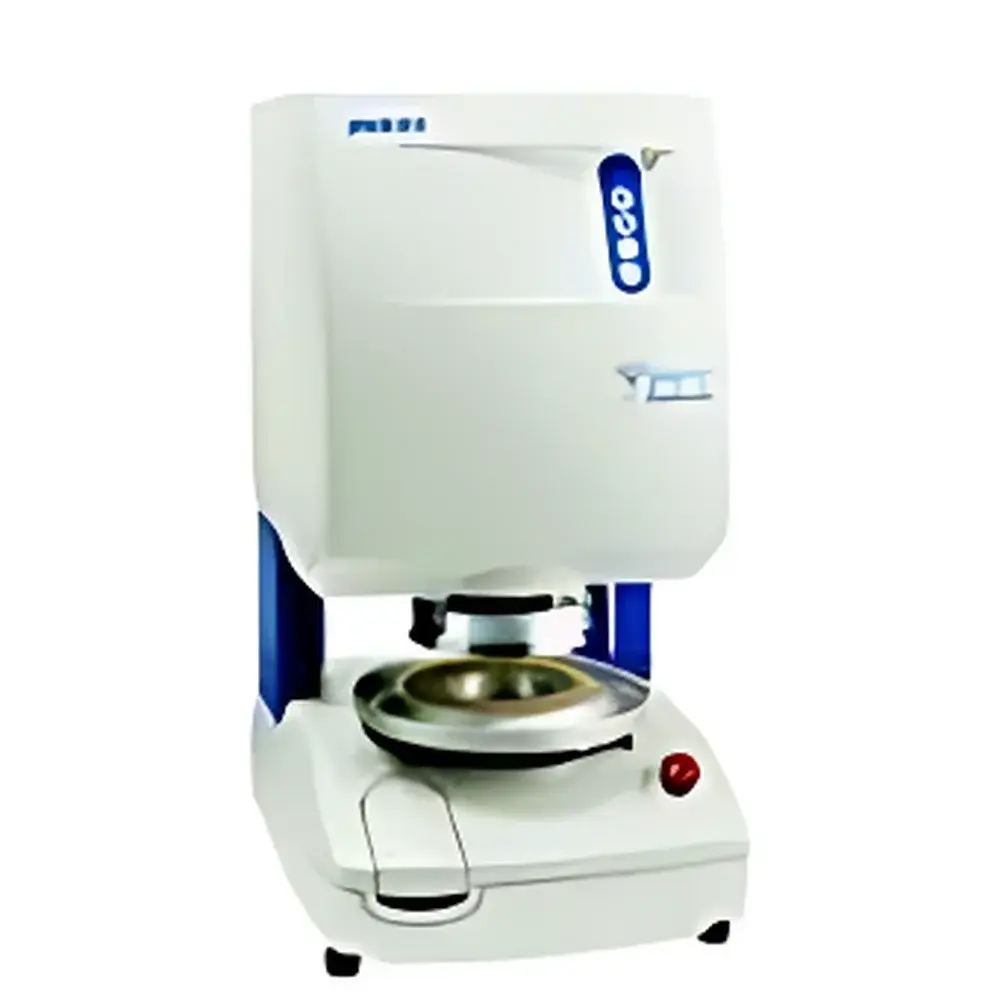
Brookfield PFT Powder Flow Tester
| Brand | Brookfield |
|---|---|
| Origin | USA |
| Model | PFT |
| Vertical Load Capacity | 7 kg |
| Load Accuracy | ±0.6% FSR |
| Axial Speed | 0.1–5 mm/s |
| Displacement Accuracy | ±0.3 mm |
| Torque Range | ±7.0 N·m |
| Torque Accuracy | ±1.2% FSR |
| Hopper Rotation Speed | 1–5 RPH |
| Temperature Sensing Range | −20 °C to 120 °C |
| Relative Humidity Sensing | 10–95% RH (±5% accuracy) |
| Test Modes | Flow Function, Time-Consolidated Flow Function, Wall Friction, Bulk Density |
Overview
The Brookfield PFT Powder Flow Tester is a benchtop shear cell instrument engineered for quantitative evaluation of powder flow behavior under controlled consolidation and shear conditions. Based on the principles of Jenike shear testing, the PFT applies fundamental powder rheology concepts—including yield locus construction, flow function (ff), and wall friction angle—to characterize both cohesive and free-flowing materials. It operates by consolidating a powder sample in a cylindrical shear cell, then subjecting it to controlled axial compression and rotational shear between upper and lower surfaces. The resulting stress–strain data enable derivation of critical design parameters for hoppers, silos, feeders, and chutes—ensuring reliable gravity discharge without ratholing, arching, or flooding. Designed for routine use in quality control laboratories and process development environments, the PFT delivers reproducible, ASTM-compliant shear data without requiring operator expertise in advanced rheological theory.
Key Features
- Integrated axial loading system with 7 kg maximum normal force and ±0.6% full-scale repeatability for precise consolidation pressure control
- Motor-driven shear cell rotation (1–5 revolutions per hour) synchronized with high-resolution torque measurement (±7.0 N·m, ±1.2% FSR)
- Programmable axial displacement rate (0.1–5 mm/s) with ±0.3 mm positional accuracy for consistent shear velocity profiles
- Real-time test progress monitoring including elapsed time, remaining duration, and dynamic status of each test phase
- Dedicated algorithms for identifying stick-slip transitions, peak yield stress, and steady-state shear stress—enabling detection of intermittent flow instabilities common in fine or electrostatic powders
- Onboard environmental sensors for simultaneous recording of temperature (−20 °C to 120 °C) and relative humidity (10–95% RH, ±5% accuracy), supporting moisture-sensitive material studies
- Preconfigured test protocols: Demo mode (8 min), Standard Flow Function (38 min), and customizable time-consolidated sequences for aging or relaxation analysis
Sample Compatibility & Compliance
The PFT accommodates standard Jenike-style shear cells (typically 100 mm diameter) and supports powders ranging from nanoscale pharmaceutical actives to coarse granules >1 mm. It is routinely applied across industries governed by strict regulatory frameworks—including FDA-regulated pharmaceutical manufacturing (aligned with USP & ICH Q5C guidelines), GMP-compliant food ingredient processing, and ISO 4762/ASTM D6393-compliant bulk solids handling design. All test outputs—including flow index, arching dimension (critical hopper outlet size), rathole dimension, hopper half-angle, wall friction angle, and bulk density curves—are traceable to internationally recognized shear cell methodology. Data integrity complies with ALCOA+ principles; audit trails, user authentication, and electronic signature support are available via optional software modules meeting 21 CFR Part 11 requirements.
Software & Data Management
Controlled via Brookfield’s proprietary PFT Software Suite (Windows-based), the instrument enables automated test sequencing, real-time graphing of shear stress vs. normal stress, and batch-wise comparative analysis. Raw torque–displacement and load–displacement datasets are exportable in CSV and Excel formats for integration into LIMS or statistical process control platforms. The software includes built-in calculation engines for deriving flow function (ff = σ₁/σc), cohesion (c), internal friction angle (φ), and hopper design angles per Jenike’s method. Calibration certificates, sensor drift logs, and user action histories are retained in encrypted local databases, supporting GLP/GMP documentation workflows and internal audit readiness.
Applications
- Pharmaceutical formulation: Screening excipient compatibility, predicting tablet press feedability, and validating blend uniformity stability
- Food & beverage: Assessing flow consistency of flour, spices, cocoa powder, and breakfast cereal flakes under varying ambient humidity
- Chemicals & construction: Optimizing cement, fly ash, gypsum, and lime handling systems to prevent bridging in pneumatic conveying lines
- Energy sector: Characterizing biomass pellets and coal fines for storage and feeding reliability in combustion feed systems
- Personal care & cosmetics: Quantifying flow thresholds of talc, zinc oxide, and pigment powders in dry-blend manufacturing
- Industrial equipment design: Providing input data for DEM simulations and hopper geometry optimization using software such as EPRI Silo Design Guide or Jenike & Johanson tools
FAQ
What shear theory does the PFT implement?
It follows the classical Jenike direct shear methodology, generating yield loci from consolidated shear tests to calculate flow function (ff), cohesion, and internal friction angle.
Can the PFT be used for regulatory submissions?
Yes—when operated with validated software, calibrated sensors, and documented procedures, its outputs meet ASTM D6393, ISO 4762, and USP <1174> powder characterization requirements.
Is wall friction measurement included?
Yes—the PFT includes dedicated wall friction testing using standardized metal surfaces (e.g., stainless steel, mild steel, HDPE) to determine effective wall friction angle (δ) for hopper liner selection.
How does humidity affect test results—and how is it managed?
Moisture content significantly influences cohesion and flowability; the integrated RH sensor allows correlation of environmental conditions with measured yield strength, enabling predictive modeling under real-world storage conditions.
Does the system support multi-sample throughput?
While single-sample per test cycle, the PFT’s rapid setup (under 2 min/sample) and automated sequence execution enable unattended batch testing of up to 12 samples per session with minimal operator intervention.



