
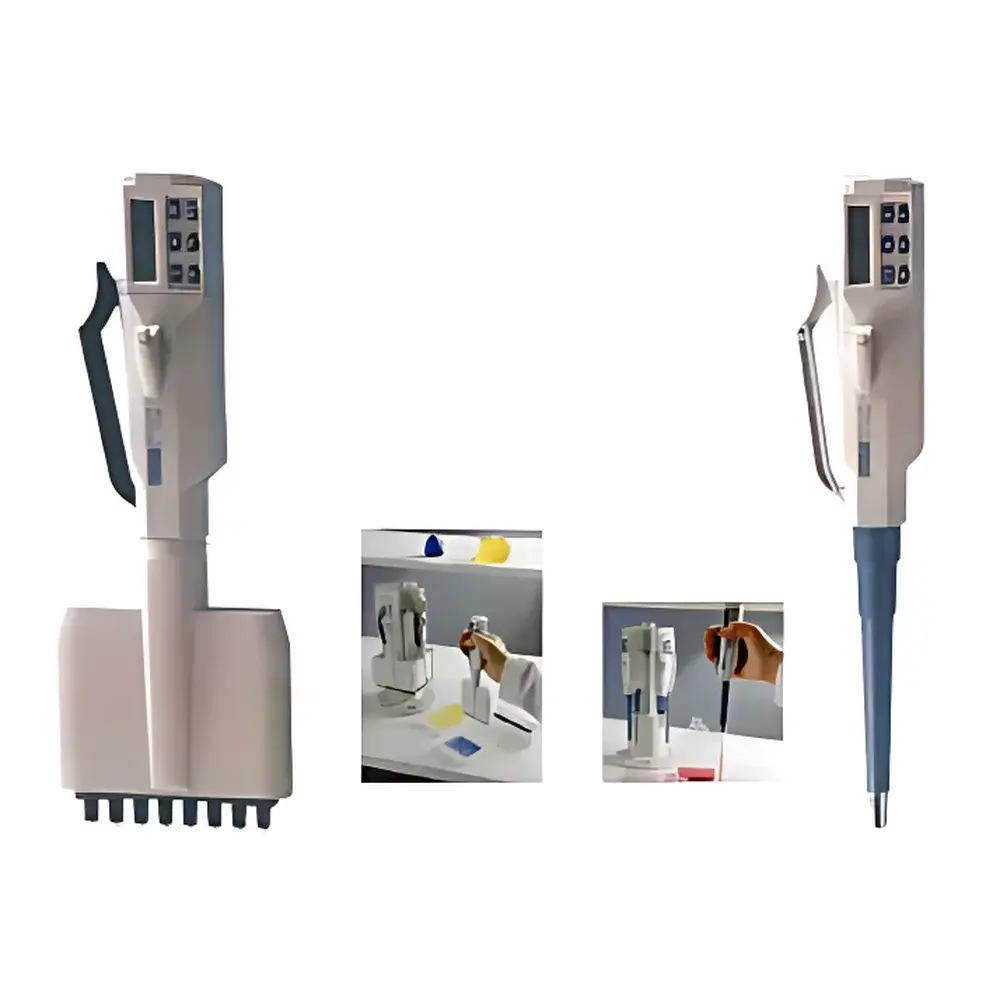
Brookfield Proline Series Electronic Pipettes
| Brand | Sartorius |
|---|---|
| Origin | Imported (Non-China) |
| Model | BPE (Single-Channel) / M-BPE (Multi-Channel) |
| Type | Motorized Electronic Pipette |
| Compliance | ISO 8655-1:2022, ISO 8655-6:2022, GLP/GMP-ready architecture |
| Power | Rechargeable Li-ion battery with docking station |
| Ergonomics | WRULDs-reducing design per ISO 10075-3 |
| Filtration | Integrated conical aerosol barrier filters (5 included per unit) |
| Calibration | User-calibratable via built-in calibration mode |
| Software Interface | Optional PC connectivity for audit trail (21 CFR Part 11 compliant firmware available) |
Overview
The Sartorius Proline Series Electronic Pipettes (BPE for single-channel; M-BPE for multi-channel) are precision-engineered motorized liquid handling instruments designed for high-reproducibility volumetric transfer in regulated laboratory environments. Based on closed-loop DC motor control and optical position sensing, these pipettes deliver consistent aspiration and dispensing across defined volume ranges without operator-dependent mechanical force variability. Unlike manual pipettes, the Proline series employs programmable speed profiles—five discrete aspiration and dispensing velocity settings—to accommodate fluids of varying viscosity (e.g., glycerol solutions, serum, cell suspensions, or ethanol-based reagents), thereby minimizing bubble formation, wall retention, and sample carryover. The system operates under ISO 8655-1:2022 (general requirements) and ISO 8655-6:2022 (performance testing standards), ensuring metrological traceability and inter-laboratory comparability. Its architecture supports Good Laboratory Practice (GLP) and Good Manufacturing Practice (GMP) workflows through configurable user access levels and optional electronic audit trail functionality aligned with FDA 21 CFR Part 11 requirements.
Key Features
- Motor-driven piston actuation with real-time position feedback for repeatable volume delivery (CV ≤ 0.5% at nominal volume)
- Ergonomic grip geometry and low actuation force (<0.8 N trigger load) validated per ISO 10075-3 to mitigate work-related upper limb disorders (WRULDs)
- Five programmable liquid handling speeds—optimized for low-viscosity aqueous buffers, high-viscosity protein solutions, volatile solvents, and viscous polymers
- Integrated conical aerosol barrier filters (hydrophobic PTFE membrane) prevent contamination of internal mechanisms by splashes, aerosols, or vapors
- Rechargeable lithium-ion battery providing ≥ 4,000 pipetting cycles per full charge; docked charging station enables overnight replenishment and firmware updates
- User-accessible calibration mode with adjustable offset correction—no external tools required; traceable to NIST-traceable reference standards
- M-BPE variants support interchangeable 4-, 8-, or 12-channel heads with independent piston alignment per channel—ensuring parallel tip sealing integrity across microtiter plates
Sample Compatibility & Compliance
The Proline Series accommodates a broad operational volume range—from 0.5 µL to 10 mL depending on model configuration—enabling use with diverse sample types including clarified cell lysates, undiluted whole blood, PCR master mixes, organic solvents (e.g., DMSO, acetonitrile), and viscous hydrogels. All models comply with IEC 61000-4 electromagnetic compatibility standards and meet RoHS Directive 2011/65/EU material restrictions. Filter-equipped tips maintain sterility during aseptic transfers, and the conical filter housing is autoclavable (121°C, 20 min) without compromising filtration efficiency. Device firmware supports secure user authentication, session logging, and timestamped calibration records—essential for regulatory submissions under ISO/IEC 17025, CLIA, or pharmaceutical quality systems (ICH Q7).
Software & Data Management
While standalone operation requires no software, optional Sartorius LabX® Pipette Software enables centralized device management, protocol deployment, and electronic record generation. LabX supports role-based permissions, electronic signatures, and export of CSV/Excel-compatible audit logs—including date/time stamps, operator ID, volume settings, speed parameters, and calibration history. When configured with 21 CFR Part 11-compliant firmware, the system provides system-generated electronic signatures, immutable audit trails, and automatic backup to network drives—fully satisfying data integrity expectations for FDA inspections and MHRA audits.
Applications
- High-throughput screening (HTS) workflows requiring rapid, accurate filling of 96-well and 384-well microplates—8-channel M-BPE completes full 96-well plate dispensing in <10 seconds
- qPCR and NGS library preparation where precise low-volume transfers (1–10 µL) minimize reagent waste and improve assay reproducibility
- Cell culture maintenance involving sensitive media additives (e.g., growth factors, antibiotics) requiring gentle, non-shearing dispensing
- Quality control laboratories performing routine calibration verification per ISO/IEC 17025 clause 6.4.10
- Clinical diagnostics labs adhering to CLSI EP15-A3 precision evaluation protocols for pipette performance validation
FAQ
What is the recommended recalibration interval for Proline pipettes?
Calibration frequency must be determined by risk assessment per ISO/IEC 17025; typical practice is quarterly for high-use instruments or after 10,000 cycles—whichever occurs first.
Can the conical filters be reused after autoclaving?
Yes—filters retain >99.99% aerosol retention efficiency after up to five autoclave cycles (121°C, 20 min, 1 bar); visual inspection for discoloration or deformation is advised prior to reuse.
Is firmware update capability available over USB or only via docking station?
Firmware updates require connection to the dedicated charging dock linked to LabX software; direct USB device-mode updates are not supported.
Do M-BPE multi-channel models support variable spacing for non-standard plate formats?
No—channel spacing is fixed at 9 mm (8-channel) or 4.5 mm (12-channel) to match ANSI/SLAS standard microplate footprints; custom spacing adapters are not offered.
How is traceability maintained during field calibration?
Each calibration event generates a unique digital certificate embedded in device memory, including operator ID, reference standard ID, environmental conditions (T/RH), and deviation values—all exportable via LabX.



