
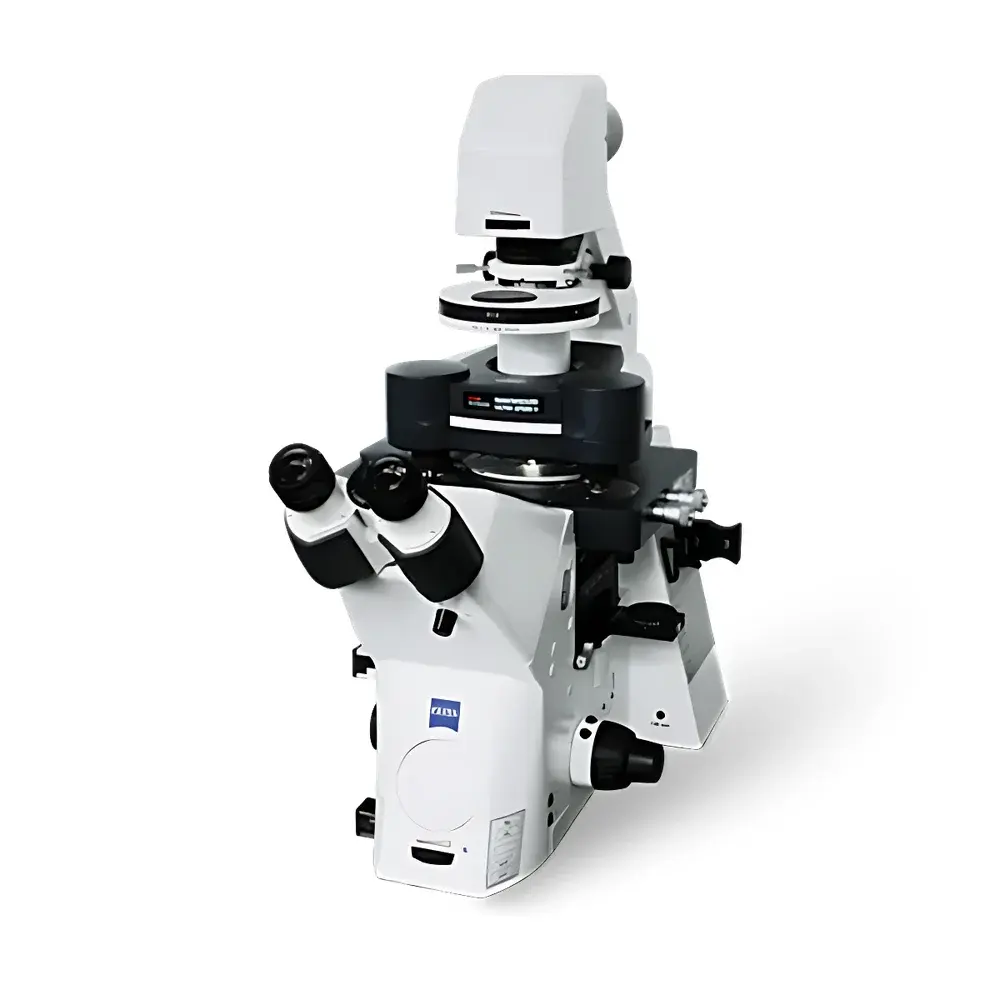
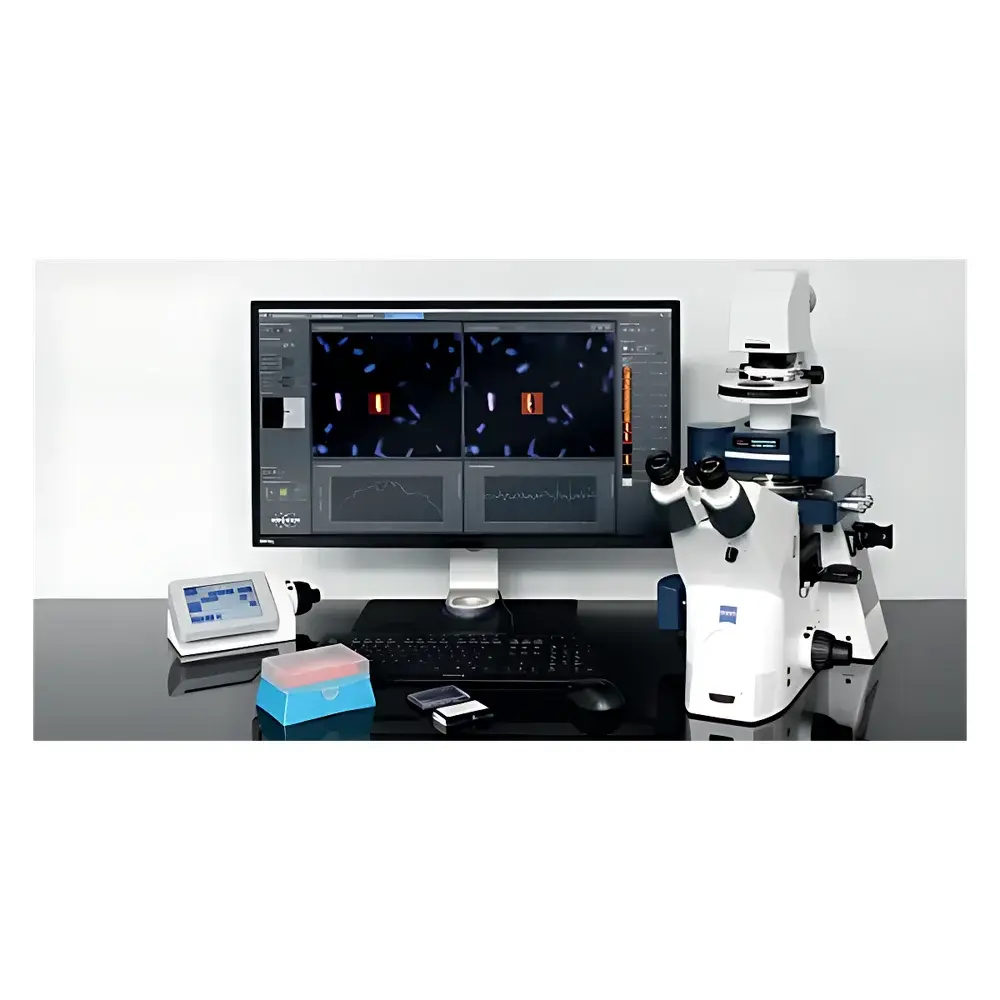
Bruker NanoWizard ULTRA Speed 3 Bio-Atomic Force Microscope
| Brand | Bruker |
|---|---|
| Origin | Germany |
| Model | ULTRA Speed 3 |
| Instrument Type | Biological Atomic Force Microscope |
| Category | Scanning Probe Microscope (SPM) |
| Architecture | Modular, Multi-Functional SPM Platform |
| Compliance | Designed for GLP/GMP-relevant environments with audit-trail-capable software |
| Data Format | Native HDF5 storage with metadata embedding |
| Automation Level | Fully integrated hardware-software automation for unattended operation |
| Software Framework | JPK Instruments’ BioAFM Suite (licensed and co-developed with Bruker) |
| Microscope Integration | Compatible with inverted optical microscopes (e.g., Zeiss Axio Observer, Nikon Ti2, Olympus IX83) |
Overview
The Bruker NanoWizard ULTRA Speed 3 Bio-Atomic Force Microscope is a purpose-engineered scanning probe platform optimized for high-throughput, quantitative nanomechanical and topographical imaging of soft, hydrated biological specimens under physiological conditions. Built upon Bruker’s legacy in BioAFM innovation and co-developed with JPK Instruments’ expertise in life-science SPM, the ULTRA Speed 3 implements a hybrid control architecture combining real-time FPGA-based feedback with deterministic Linux-based data acquisition. Its core measurement principle relies on dynamic mode AFM—including TapMode™, PeakForce Tapping®, and force-volume mapping—enabling simultaneous acquisition of topography, adhesion, deformation, elasticity (via Hertz or Sneddon modeling), and dissipation across millisecond-scale time series. The system operates in liquid environments using closed-loop piezoelectric scanners with sub-nanometer displacement resolution and active drift compensation, ensuring stability over multi-hour acquisitions essential for live-cell dynamics or protein folding studies.
Key Features
- Fully automated setup sequence: one-click cantilever calibration, optical image registration, laser alignment, and photodiode optimization
- DynAsyst™ intelligent parameter optimization: real-time adjustment of setpoint, gain, and drive amplitude during tapping-mode imaging to maintain minimal tip-sample interaction force (<50 pN) and maximize reproducibility across heterogeneous samples
- ScanAsyst®-enabled PeakForce Tapping®: delivers consistent sub-5 nm lateral resolution on fragile biomolecular assemblies without user tuning
- ExperimentPlanner™ workflow engine: scriptable experimental protocols with conditional logic, parameter sweeps, and position lists—enabling overnight, unattended time-lapse series on multiple ROI locations
- ExperimentControl™ web interface: browser-based remote monitoring and intervention via HTTPS-secured connection; supports real-time video streaming of scan progress and live force curves
- Integrated inverted microscope compatibility: motorized XYZ stage synchronization, through-the-lens optical navigation, and fluorescence correlation-ready sample positioning
- HDF5-native data container: self-describing, metadata-rich binary format compliant with FAIR data principles; includes embedded calibration parameters, environmental logs (temperature, humidity), and instrument configuration snapshots
Sample Compatibility & Compliance
The ULTRA Speed 3 is validated for use with aqueous-buffered biological samples including live mammalian cells, bacterial biofilms, supported lipid bilayers, extracellular matrix hydrogels, DNA origami lattices, and purified protein complexes. Sample stages support standard #1.5 coverslips (24 × 50 mm), Petri dishes (35 mm), and custom flow cells with integrated perfusion ports. All fluid cells are chemically resistant to common buffers (PBS, HEPES, Tris), low-conductivity saline solutions (e.g., 50 mM NaCl), and mild detergents. The system meets ISO 14644-1 Class 5 cleanroom operational guidelines when installed with optional vibration isolation and acoustic enclosures. Software complies with FDA 21 CFR Part 11 requirements for electronic records and signatures when configured with role-based access control, full audit trail logging, and digital signature enforcement—making it suitable for regulated QC environments supporting USP , ISO 13485, and ICH Q5C workflows.
Software & Data Management
Data acquisition and analysis are performed using the Bruker BioAFM Software Suite—a modular application built on Qt/C++ with Python API extension support. Core modules include: (1) Acquisition Studio for real-time visualization and parameter modulation; (2) NanoWizard Analysis for batch processing of time-series datasets, including drift correction, thermal noise deconvolution, and elastic modulus mapping; (3) HDF5 Explorer for hierarchical browsing of multi-channel, multi-frame datasets with customizable metadata filtering; and (4) Export Engine supporting automated generation of TIFF/PNG stacks, MP4 time-lapse videos, CSV-formatted cross-section profiles, histogram statistics (mean, SD, skewness), and JSON-serialized mechanical property maps. All exports retain traceable links to raw HDF5 containers and calibration certificates.
Applications
- Time-resolved structural dynamics of membrane proteins in native lipid environments
- Quantitative nanomechanics of hydrogel degradation kinetics under enzymatic stimulation
- In situ monitoring of amyloid fibril nucleation and elongation at single-filament resolution
- Mechanical phenotyping of cancer cell lines across drug treatment timelines
- High-resolution validation of DNA nanostructure fidelity post-annealing
- Correlative AFM–fluorescence imaging of receptor clustering on live T-cells
- Standardized force spectroscopy for biopolymer unfolding (e.g., titin, fibronectin) under physiological buffer conditions
FAQ
Is the ULTRA Speed 3 compatible with third-party inverted microscopes?
Yes—it features standardized mechanical and electrical interfaces for Zeiss, Nikon, Olympus, and Leica inverted platforms, including TTL-triggered synchronization and motorized stage communication via RS-232 or Ethernet.
Does the system support force spectroscopy in liquid with sub-piconewton sensitivity?
Yes—using calibrated V-shaped silicon nitride cantilevers (typical k = 0.01–0.1 N/m) and low-noise current amplification, the system achieves ≤10 pN force resolution in buffered saline at 1 kHz bandwidth.
Can acquired HDF5 files be imported into MATLAB or Python for custom analysis?
Yes—all datasets conform to the NeXus/HDF5 standard with documented group/attribute schema; official Python bindings (h5py + brukenafm) and MATLAB toolboxes are provided under Bruker’s open-source license.
What level of regulatory compliance does the software provide out-of-the-box?
The BioAFM Suite ships with configurable 21 CFR Part 11 mode, including electronic signatures, audit trail export (CSV/XML), session lockout timers, and password complexity enforcement—validated per IQ/OQ protocols available upon request.
How is thermal drift compensated during long-duration imaging sessions?
The system employs dual-sensor drift compensation: real-time Z-piezo position feedback fused with external interferometric stage monitoring, achieving ≤0.5 nm/min vertical drift stability over 4-hour acquisitions in temperature-controlled lab environments (±0.1°C).






