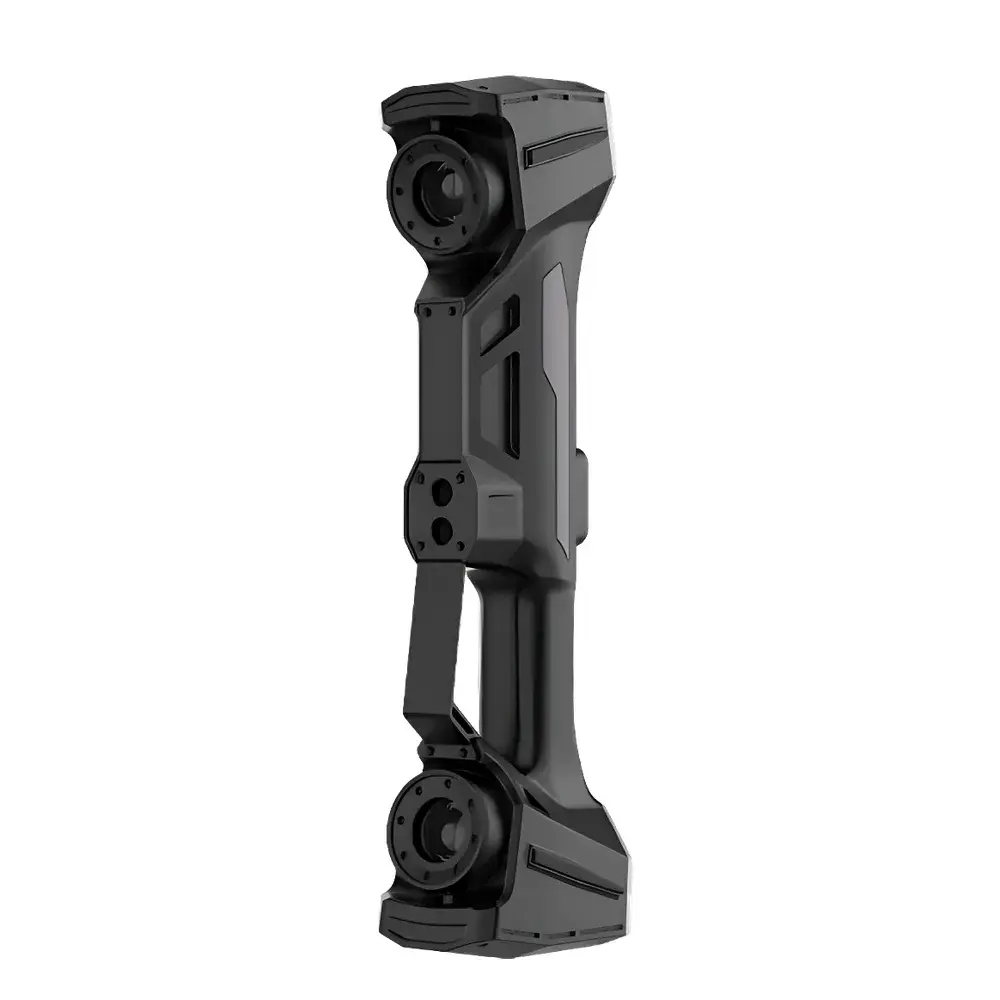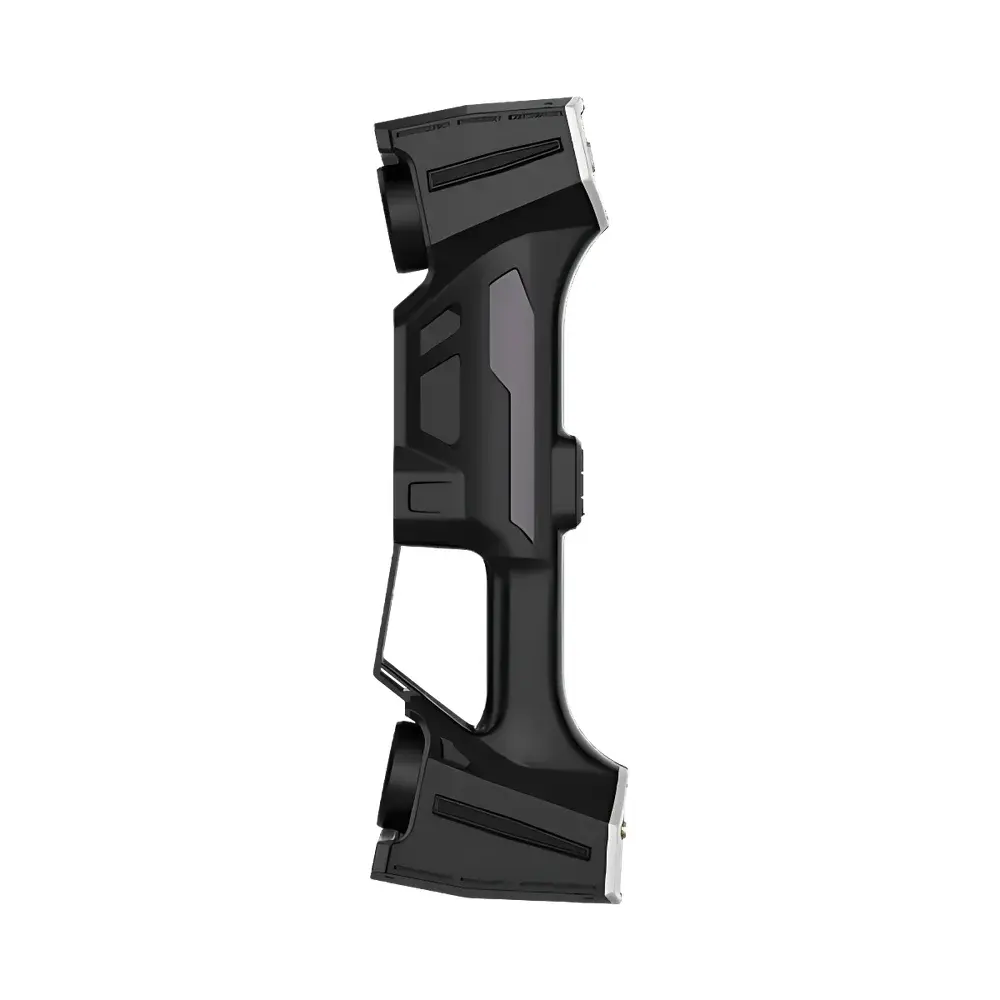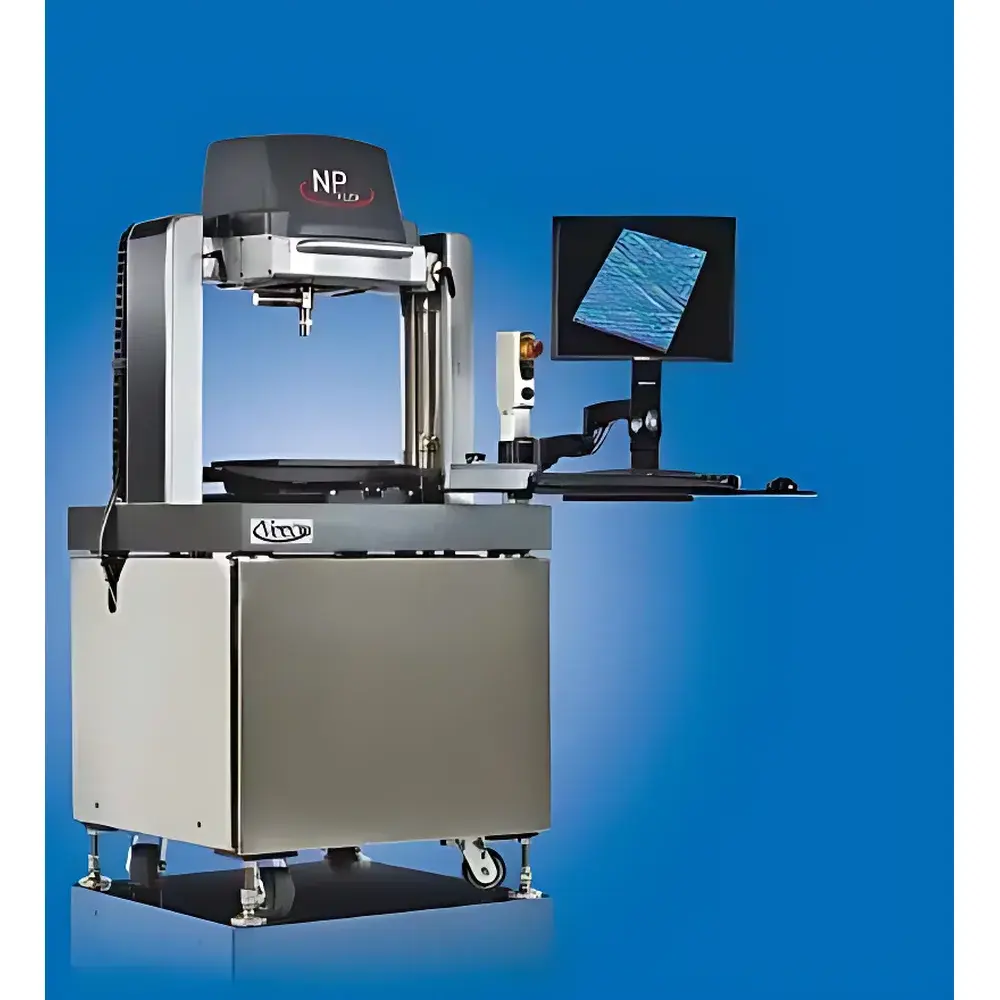
Bruker NPFLEX 3D Non-Contact Optical Profilometer
| Brand | Bruker |
|---|---|
| Origin | USA |
| Model | NPFLEX 3D |
| Product Type | Non-contact Profilometer / Surface Roughness Analyzer |
| Operating Principle | White-Light Interferometry |
| Vertical Resolution | Sub-nanometer |
| Measurement Mode | Full-field 3D Topography |
| Sample Flexibility | Large-format, Angled, and Complex-Geometry Samples |
| Optional Modules | Tilted Measurement Head, Through-Transmissive Media (TTM) Module, Folded-Objective Lens |
Overview
The Bruker NPFLEX 3D is a high-precision, non-contact optical profilometer engineered for comprehensive 3D surface topography measurement of large, geometrically complex, and industrially relevant components. Based on white-light interferometry (WLI), the system captures full-field surface height data with sub-nanometer vertical resolution across each pixel—enabling quantitative analysis of form, waviness, roughness, step height, curvature, and defect morphology without mechanical contact or stylus-induced deformation. Unlike traditional tactile coordinate measuring machines (CMMs) or probe-based profilometers—which acquire linear traces—the NPFLEX 3D delivers areal data in a single acquisition, significantly improving statistical representativeness and reducing measurement uncertainty associated with sampling bias. Its open-gantry architecture and modular design accommodate samples up to 300 mm × 300 mm (customizable), including steep sidewalls, inclined surfaces, and recessed features. The platform integrates decades of Bruker’s expertise in interferometric metrology and large-sample optical engineering, establishing a benchmark for flexibility and fidelity in industrial surface characterization.
Key Features
- Sub-nanometer vertical resolution across full-field 3D topography maps, traceable to NIST-traceable interferometric calibration standards.
- Open龙门-style gantry with motorized X-Y-Z stages and programmable tilt/rotation axes for unrestricted access to large or irregularly shaped parts.
- Optional swiveling measurement head enabling repeatable, high-fidelity profiling of vertical sidewalls, chamfers, and angled surfaces (±45° tilt range).
- Through-Transmissive Media (TTM) module—award-winning technology allowing WLI measurements through dispersive media up to 5 cm thick; compatible with environmental chambers for in-situ thermal testing (–40 °C to +150 °C).
- Folded-objective lens option for measuring concave geometries such as bowl-shaped components, deep cavities, and bottom-of-hole features.
- Automated focus, intensity optimization, and multi-scale stitching algorithms reduce operator dependency and ensure consistent measurement repeatability (Rr < 0.15 nm over 24 h per ISO 25178-6).
Sample Compatibility & Compliance
The NPFLEX 3D supports diverse sample classes encountered in aerospace, automotive powertrain manufacturing, medical device production (e.g., orthopedic implants, stents), semiconductor packaging, and precision optics. It accommodates reflective, semi-transparent, and low-contrast surfaces—including polished metals, silicon wafers, coated polymers, and ceramic substrates—without requiring conductive coating or vacuum environments. All measurement protocols adhere to international surface metrology standards, including ISO 25178 (Geometrical product specifications — Surface texture), ISO 4287 (Profile method — Terms, definitions and surface texture parameters), and ASTM E2923 (Standard Practice for Measuring and Reporting Surface Texture Parameters Using Optical Profilometers). Data integrity complies with FDA 21 CFR Part 11 requirements when deployed with Bruker’s optional audit-trail-enabled software configuration, supporting GLP/GMP-regulated environments.
Software & Data Management
Controlled via Bruker’s proprietary NanoScope Analysis software, the NPFLEX 3D provides an intuitive, workflow-driven interface for measurement planning, real-time visualization, and automated reporting. The software includes ISO-compliant parameter calculation engines (Sa, Sq, Sz, Sdr, Vmp, etc.), advanced filtering (Gaussian, robust Gaussian, spline), grain analysis, defect detection, and cross-platform export (STL, XYZ, CSV, HDF5). Batch processing, script automation (Python API), and integration with MES/QMS systems enable scalable deployment in high-throughput QA/QC labs. Raw interferogram data is preserved alongside processed results, ensuring full traceability and re-analysis capability per ISO/IEC 17025 clause 7.5.2.
Applications
- Aerospace turbine blade inspection: quantifying leading-edge erosion, coating thickness uniformity, and thermal barrier crack propagation.
- Medical implant surface texturing: verifying micro-roughness (Sa < 0.5 µm) and pore interconnectivity for osseointegration validation.
- Automotive cylinder bore cross-hatch analysis: measuring plateau roughness, valley depth distribution, and oil retention capacity.
- Semiconductor packaging: characterizing die attach voids, underfill fillet geometry, and warpage-induced stress relief features.
- Precision optics manufacturing: validating aspheric deviation, mid-spatial frequency errors, and scratch/dig compliance per MIL-PRF-13830B.
FAQ
What is the maximum lateral field of view achievable with standard optics?
Standard objectives support FOVs from 0.13 mm² (100×) to 12.5 mm² (1×); mosaic stitching extends effective area beyond 300 mm × 300 mm.
Can the system measure transparent or translucent materials without TTM?
Yes—standard WLI works on transparent substrates (e.g., glass, sapphire) if interfaces produce sufficient coherence fringes; TTM is required only for measurements *through* thick dispersive media (e.g., encapsulated devices).
Is vibration isolation mandatory for sub-nanometer resolution?
Active or passive vibration isolation is strongly recommended for vertical resolution below 0.3 nm; Bruker offers integrated air-table solutions compliant with ISO 25178-7 Annex A.
How does NPFLEX 3D handle highly sloped or curved surfaces?
The swiveling head option enables dynamic adjustment of incident angle during acquisition; combined with multi-angle focus stacking, it maintains fringe contrast on slopes up to 70°.
Does the system support automated pass/fail inspection against GD&T tolerances?
Yes—via custom scripting and tolerance mapping in NanoScope Analysis, users can define zone-based acceptance criteria aligned with ASME Y14.5 or ISO GPS standards.