
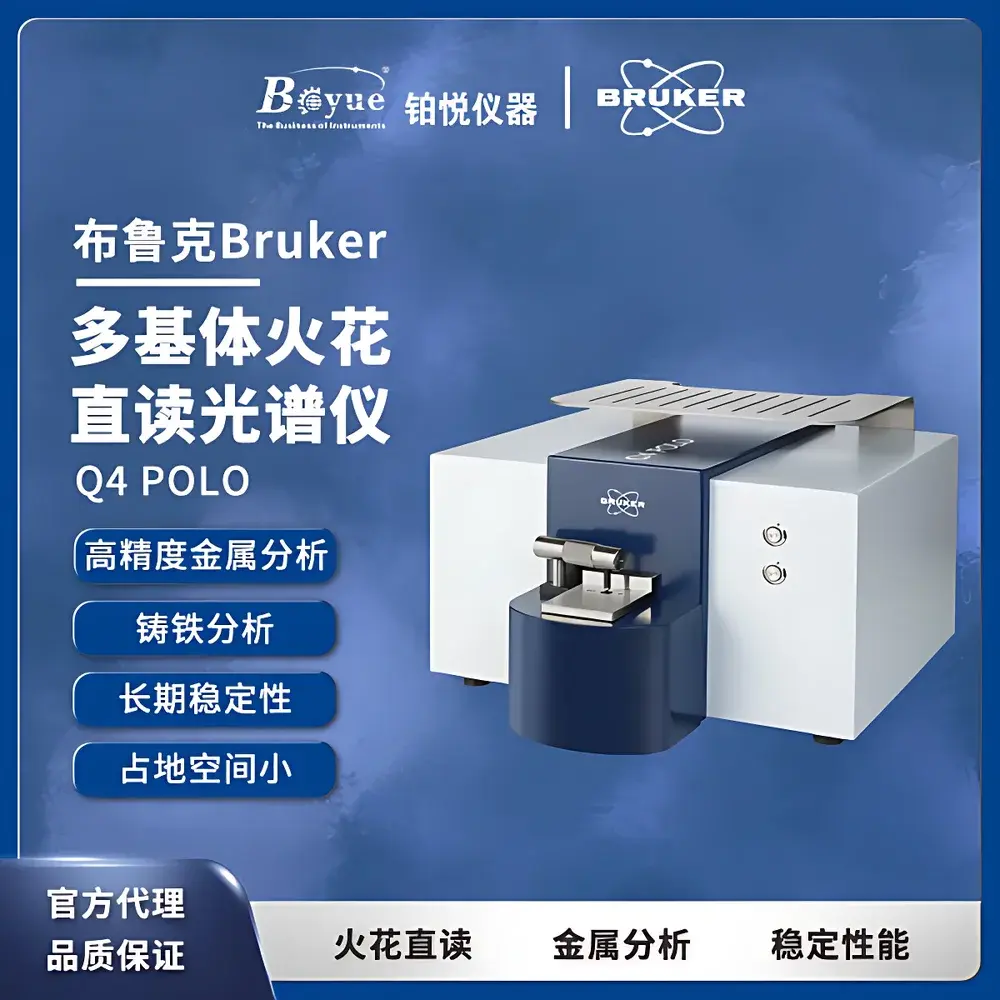
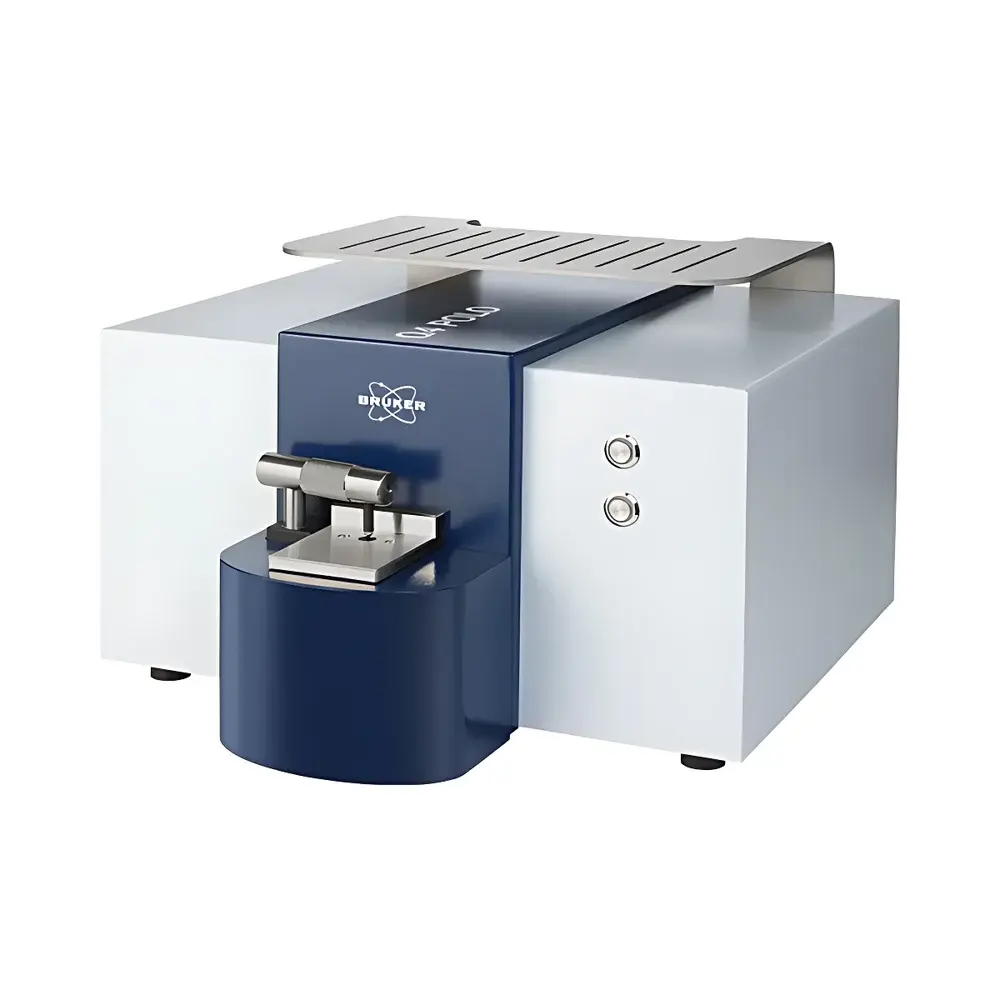
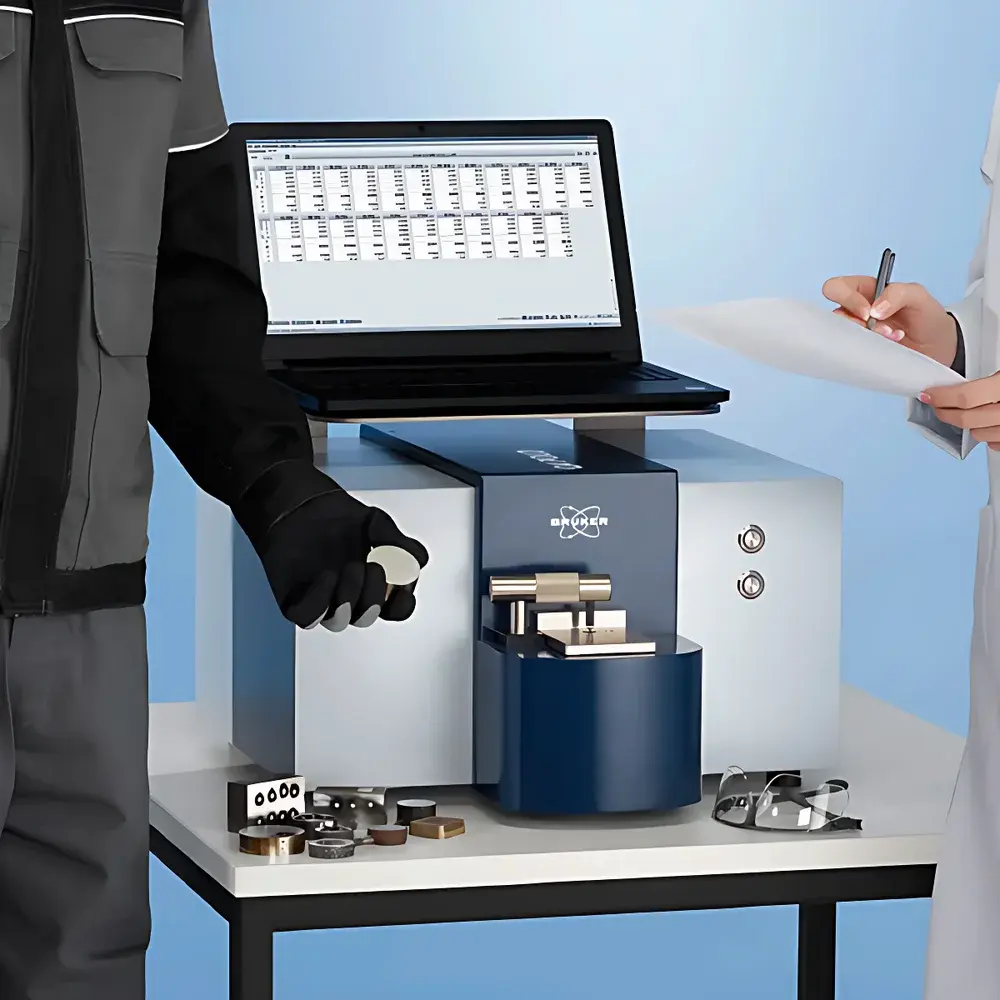
Bruker Q4 POLO Multi-Matrix Spark Optical Emission Spectrometer
| Brand | Bruker |
|---|---|
| Origin | Germany |
| Model | Q4 POLO |
| Instrument Type | Benchtop |
| Excitation Method | Spark |
| Detector Type | Photomultiplier Tube (PMT) |
| Focal Length | 800 mm |
| Grating Groove Density | 3600 lines/mm |
| Wavelength Range | 120–785 nm (dual optical paths: 130–785 nm total coverage) |
| Number of Channels | 128 |
| Optical System | MultiVision™ with argon-purged vacuum UV path |
| Temperature Compensation | AAC™ Active Ambient Compensation |
Overview
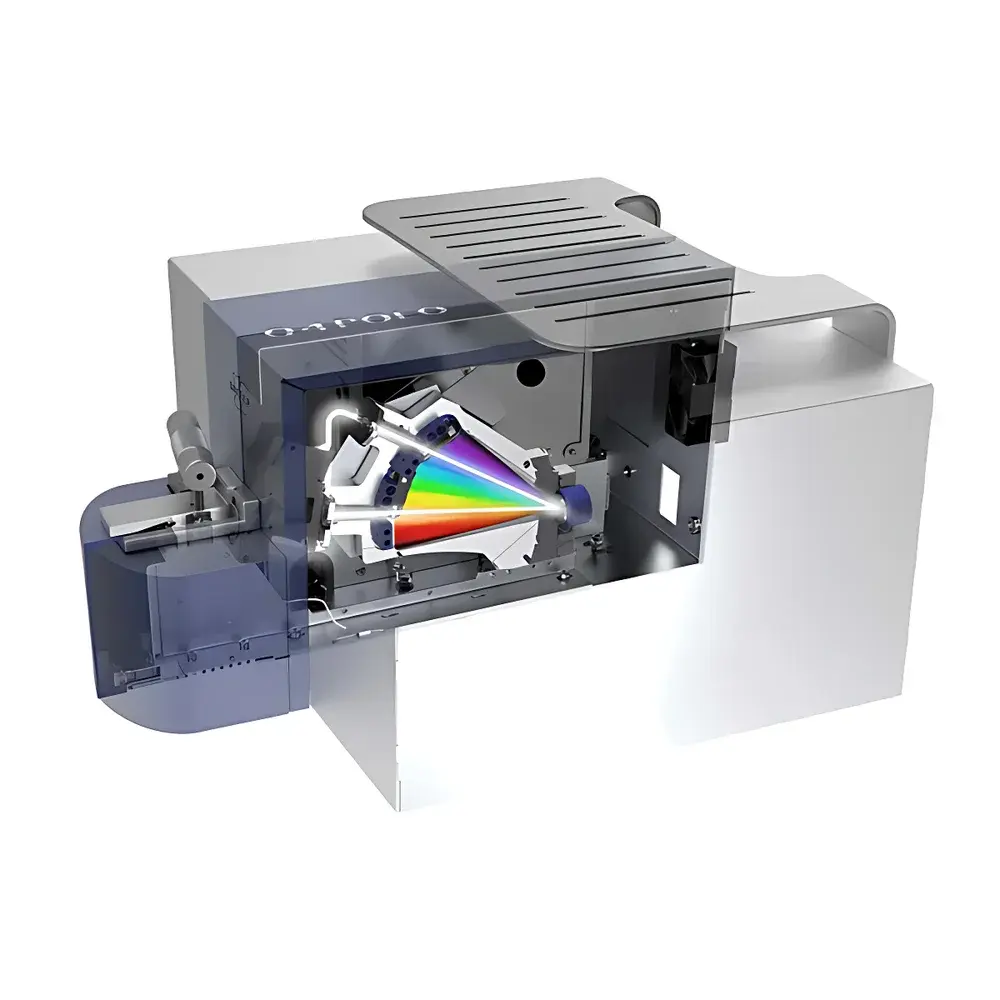
The Bruker Q4 POLO is a benchtop spark optical emission spectrometer (OES) engineered for high-precision, multi-matrix elemental analysis in metallurgical quality control laboratories. It operates on the principle of spark-induced plasma excitation: when a high-voltage spark is discharged across the surface of a conductive solid sample, atoms are vaporized and excited into higher electronic states; upon relaxation, they emit characteristic photons at discrete wavelengths unique to each element. These emissions are dispersed via a high-resolution Czerny-Turner optical system incorporating two independent optical paths—one optimized for vacuum ultraviolet (VUV) transmission (120–190 nm), the other for extended visible/near-UV coverage (190–785 nm)—enabling simultaneous detection of light elements (e.g., C, N, O, P, S, Li, Na) and transition metals across ferrous, non-ferrous, and aluminum-based alloys.
Key Features
- MultiVision™ Optical Architecture: Integrates dual-grating, dual-path optics with fused silica and MgF₂ optical components, maintaining >95% UV transparency over extended service life without vacuum pumping; argon purging replaces traditional vacuum systems, reducing operational complexity and gas consumption by up to 40%.
- AAC™ (Active Ambient Compensation): A real-time thermal stabilization system that continuously monitors and corrects for ambient temperature fluctuations affecting grating alignment and detector gain—critical for sub-ppm nitrogen quantification in low-alloy steels and oxygen determination in copper matrices.
- High-Density PMT Detection: 128 individually adjustable photomultiplier tubes provide true parallel detection with no spectral scanning delay; each channel features analog-to-digital conversion with 16-bit resolution and dynamic background correction.
- Robust Spark Source: Digital-controlled high-frequency spark generator (up to 1 kHz pulse repetition rate) with adjustable energy, current, and pre-spark cleaning cycles—optimized for heterogeneous cast iron, high-carbon steel, and soft aluminum alloys without crater distortion.
- Benchtop Form Factor: Compact footprint (W × D × H: 850 × 720 × 520 mm) with integrated argon manifold, cooling unit, and spark stand—designed for ISO 17025-compliant labs where floor space and infrastructure constraints limit floor-standing instrument deployment.
Sample Compatibility & Compliance
The Q4 POLO supports standardized solid metallic samples conforming to ISO 11577, ASTM E415, and EN 10315: round pins (Ø10–16 mm), flat coupons (≥20 × 20 mm), and machined billets with planar, conductive surfaces. Its spark stand accommodates samples up to 300 mm in diameter and 120 mm in height. The system meets electromagnetic compatibility requirements per EN 61326-1 and safety standards per EN 61010-1. All calibration and validation procedures align with ISO/IEC 17025:2017 clause 7.7 (traceability of measurements), and software audit trails comply with FDA 21 CFR Part 11 requirements for electronic records and signatures when configured with Bruker’s optional GLP/GMP module.
Software & Data Management
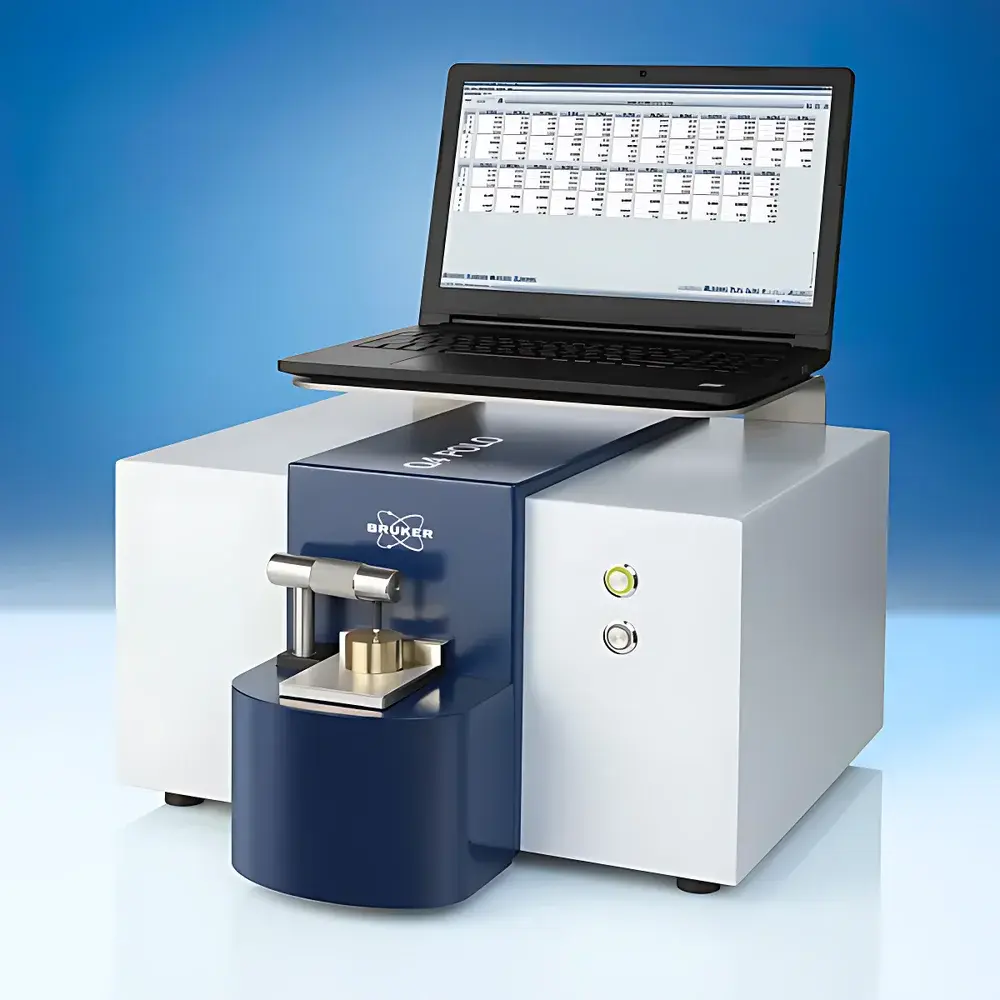
Control and data acquisition are managed via Bruker’s Spark Analyzer Pro v4.x software, a Windows-based platform supporting method creation, multi-matrix calibration (Fe-, Al-, Cu-, Ni-, Ti-, Zn-, Mg-based), and automated grade identification against user-defined libraries (e.g., UNS, EN, ASTM, JIS). The software implements full traceability: every analysis stores raw intensity values, spark parameters, environmental logs (temperature, pressure, argon flow), and operator ID. Data export supports CSV, XML, and LIMS-compatible ASTM E1382 formats. Optional integration with LabWare LIMS or Thermo Fisher SampleManager enables automated result routing and QC flagging based on configurable tolerance bands and statistical process control (SPC) rules.
Applications
- Quantitative analysis of carbon, sulfur, phosphorus, and nitrogen in cast irons and low-alloy steels—critical for ASTM A27, A126, and ISO 21068 compliance.
- Detection of lithium and sodium in aluminum alloys (e.g., 2xxx and 7xxx series) per AMS 4027 and EN 573-3 specifications.
- Oxygen determination in electrolytic tough pitch (ETP) copper and oxygen-free high-conductivity (OFHC) copper—validated against ISO 11576 reference methods.
- Routine grade sorting and scrap metal verification in foundry and recycling facilities, including rapid pass/fail screening against MIL-STD-129 and AS9100 material release criteria.
- Research-grade trace element profiling (down to 0.1 ppm for Cr, Ni, Mo in stainless steels) using certified reference materials (CRMs) such as NIST SRM 2151a and BAM RM 105/106.
FAQ
Does the Q4 POLO require vacuum pumping for VUV analysis?
No—the system uses continuous argon purging of the optical path below 190 nm, eliminating mechanical vacuum pumps and associated maintenance while ensuring stable transmission down to 120 nm.
Can it analyze non-conductive samples like ceramics or coatings?
No—Q4 POLO is designed exclusively for electrically conductive solid metals. Non-conductive materials require alternative techniques such as laser-induced breakdown spectroscopy (LIBS) or X-ray fluorescence (XRF).
What is the typical recalibration interval under routine QC use?
With AAC™ compensation and daily standardization using certified reference samples, recalibration is recommended every 30–90 days depending on workload and matrix variability; full drift correction routines are performed automatically during startup and after extended idle periods.
Is method transfer possible from other Bruker OES platforms?
Yes—calibration files (.cal) and analytical methods (.met) created on Q2 ION, Q6, or Q8 Magnus systems can be imported directly into Spark Analyzer Pro with minor wavelength alignment adjustments.
How is argon consumption monitored and optimized?
Integrated mass flow sensors log real-time argon usage per analysis; software reports average consumption (typically 1.2–1.8 L/min during sparking), and adaptive purge timing reduces idle-mode flow to ≤0.3 L/min without compromising optical stability.
Related Products




