
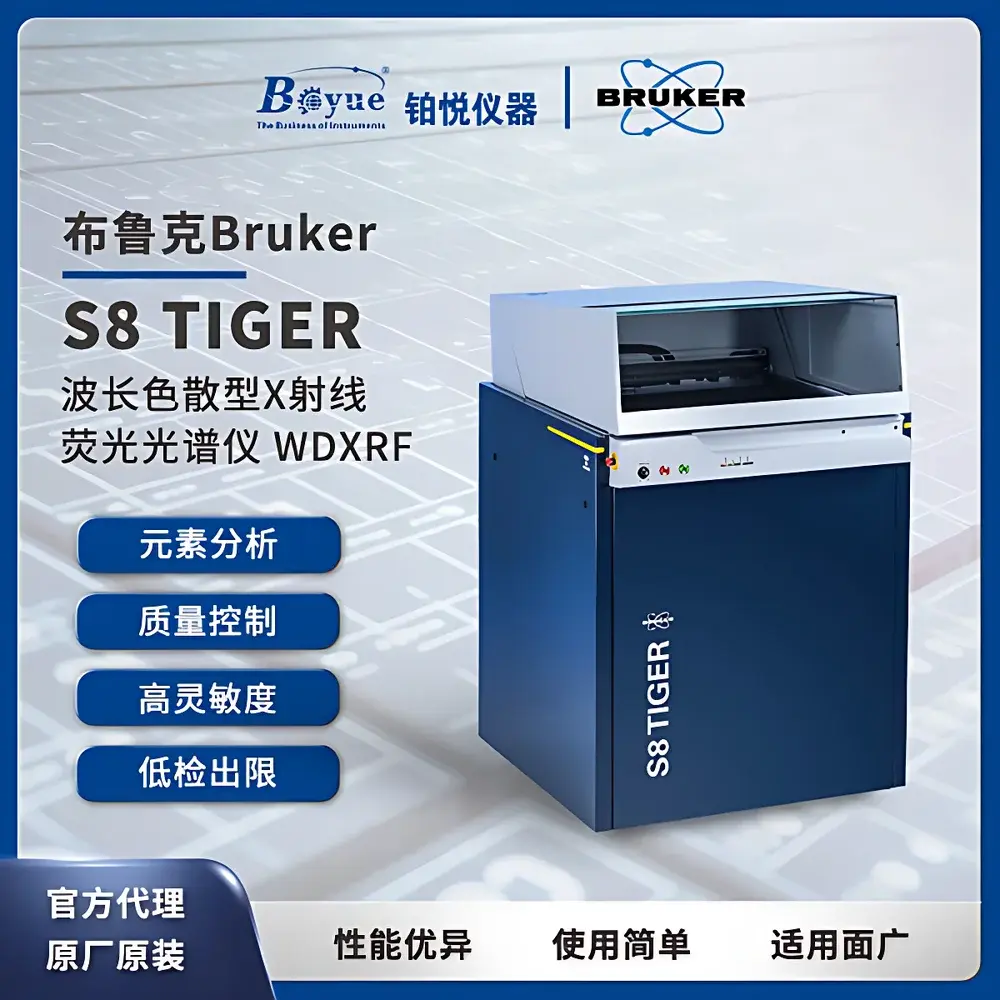
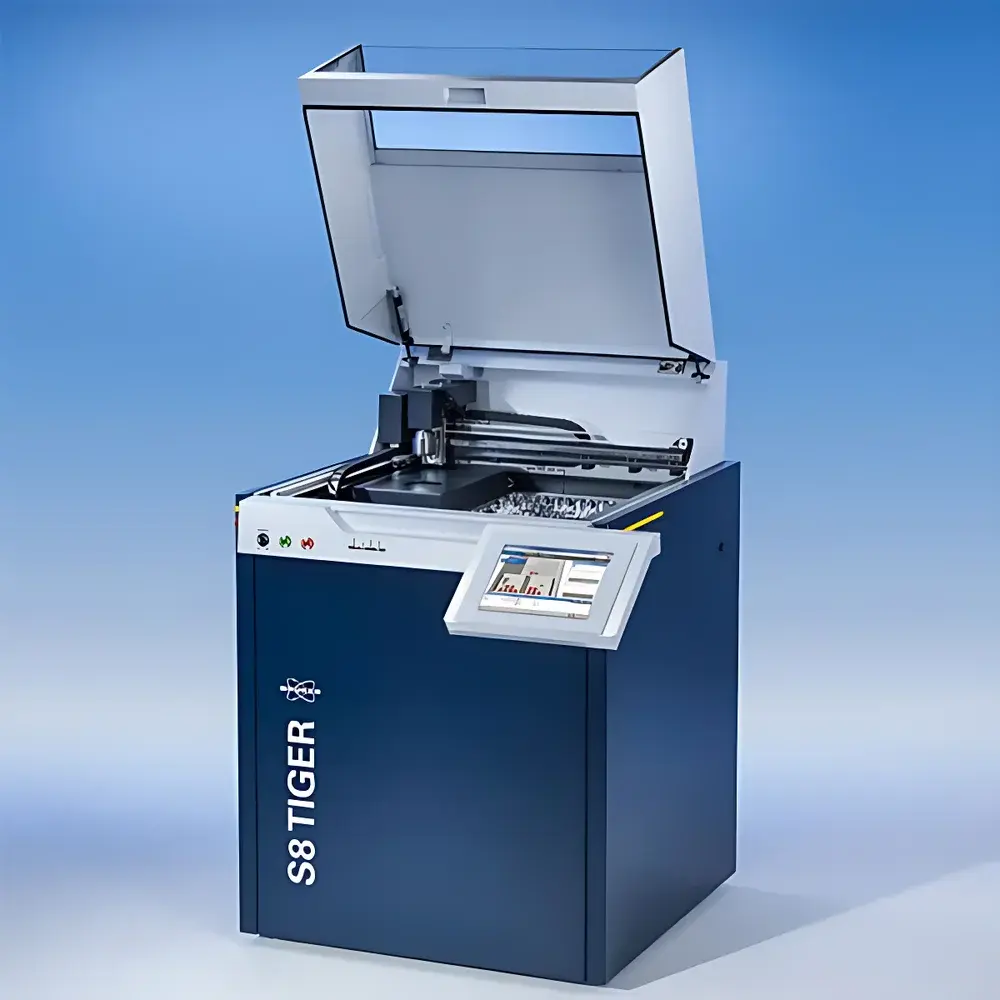
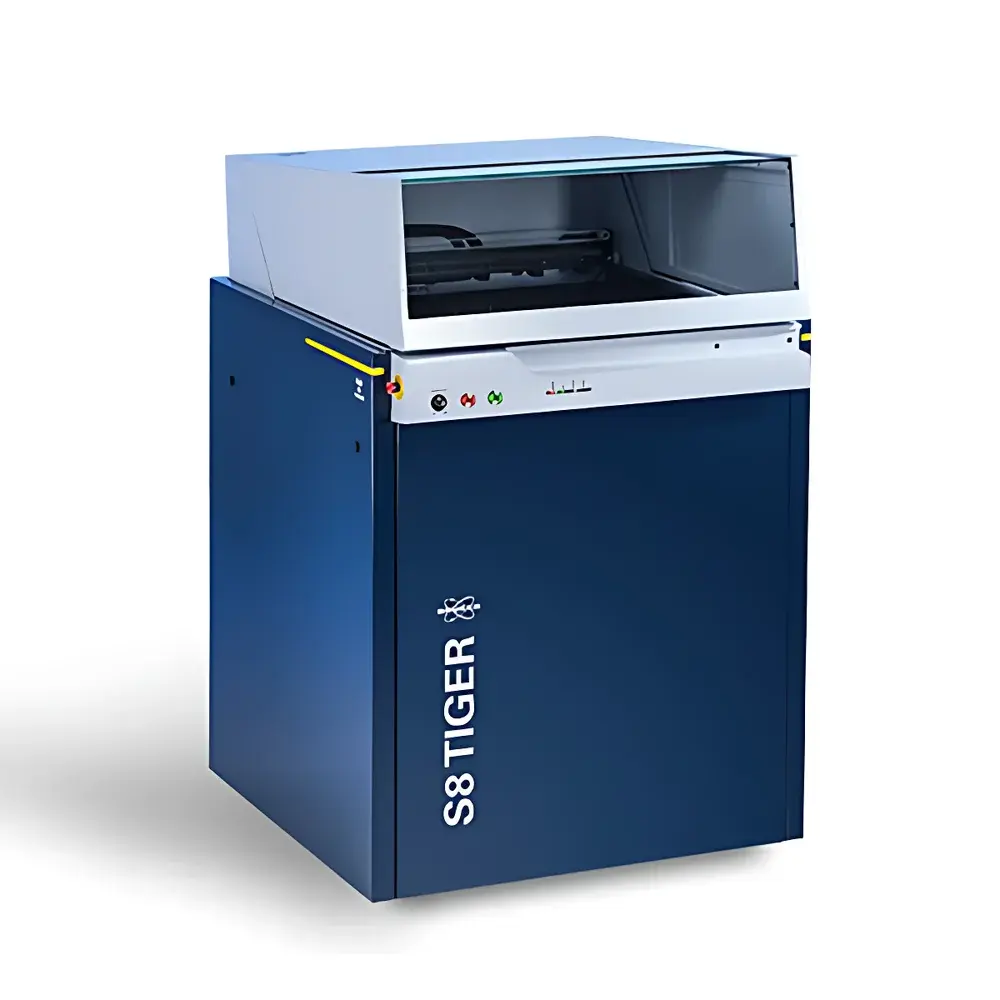
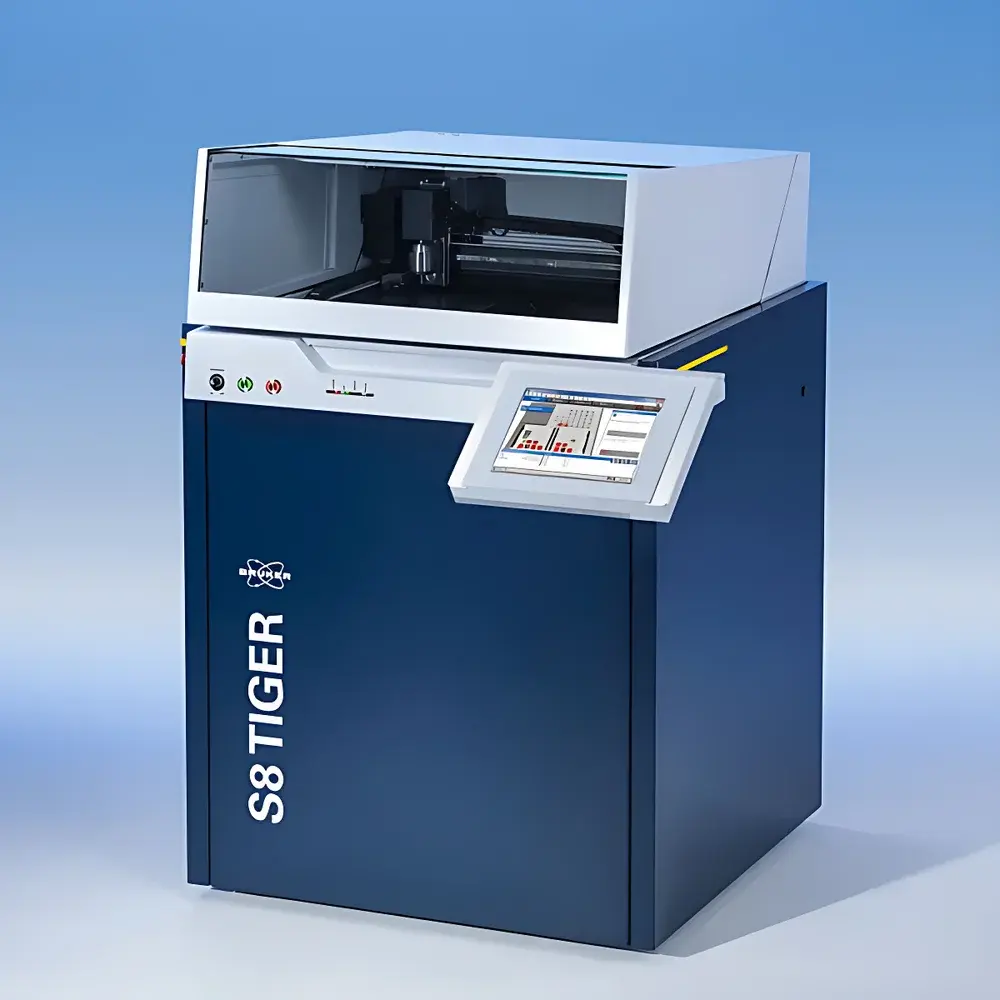
Bruker S8 TIGER High-Performance Wavelength Dispersive X-Ray Fluorescence (WDXRF) Spectrometer
| Brand | Bruker |
|---|---|
| Origin | Germany |
| Model | S8 TIGER |
| Instrument Type | Floor-standing |
| X-ray Tube Power | 1–4 kW |
| Analyzable Elements | F to U (Fluorine to Uranium) |
| Detector Linear Range | 13 Mcps |
| Beryllium Window Thickness | 75 µm |
Overview
The Bruker S8 TIGER is a second-generation, high-performance wavelength dispersive X-ray fluorescence (WDXRF) spectrometer engineered for precision elemental analysis across industrial, research, and regulatory environments. Based on Bragg diffraction of characteristic X-rays from crystalline analyzers, the S8 TIGER delivers exceptional spectral resolution, quantitative accuracy, and long-term stability—critical for compliance-driven applications in cement, mining, metallurgy, petrochemicals, polymers, and advanced materials science. Its core architecture integrates a high-stability X-ray generator with ±0.00005% voltage regulation, a robust goniometric scanning system, and a vacuum- or helium-purged sample chamber optimized for light-element detection (down to fluorine). Unlike energy-dispersive (EDXRF) systems, WDXRF provides superior peak-to-background ratios, lower detection limits, and intrinsically higher mass sensitivity—particularly for overlapping emission lines of adjacent elements in complex matrices.
Key Features
- HighSense™ Technology Platform: Comprising XS-series analyzer crystals (e.g., LiF 220, XS-400, XS-CEM), HighSense X-ray tube, and advanced counting electronics—enabling up to 10× improved sensitivity for trace elements and sub-ppm detection limits (e.g., 0.2 ppm S in gasoline at 100 s, 4 kW).
- XRF² Micro-Beam Analysis System: Delivers 300 µm (FWHM) focused excitation spot size with 100 µm step resolution; supports high-fidelity elemental mapping of heterogeneous samples—including geological sections, battery cathodes, and archaeological artifacts—with WDXRF-grade spectral fidelity.
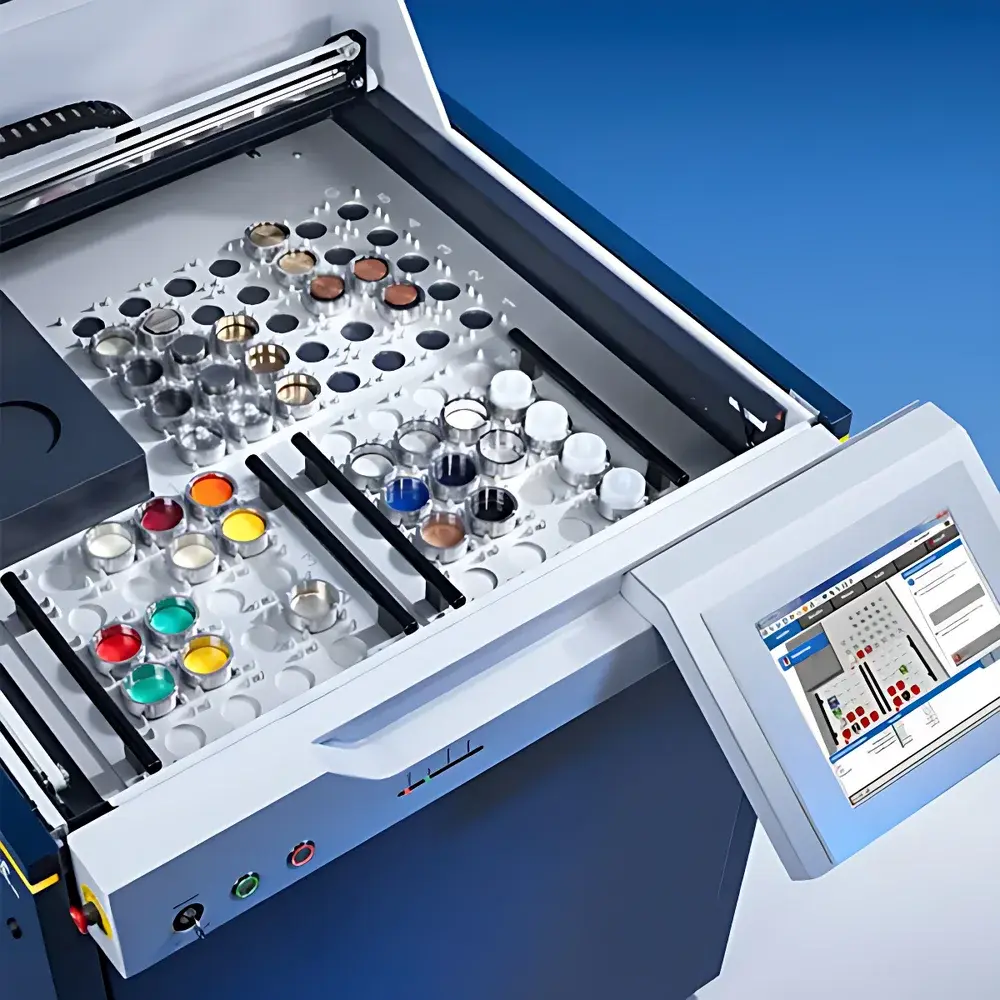
- EZ Ergo Sample Handling: Touchscreen-controlled EasyLoad autosampler accommodates solids, pressed pellets, fused beads, liquids, and powders; automatically identifies sample state to prevent vacuum exposure of volatile or unsealed specimens.
- SampleCare Protection System: Integrates pressure-sensing, temperature monitoring, and beam-shutter interlocks to safeguard optics, detector, and X-ray tube during routine operation—reducing unscheduled downtime and extending service intervals.
- Flexible Excitation Modes: Dual helium purge configurations (low-flow constant-pressure and high-efficiency pulsed mode) enable optimal light-element analysis (F, Na, Mg, Al, Si) while minimizing gas consumption; low-temperature X-ray tube head ensures thermal stability for extended measurements.
Sample Compatibility & Compliance
The S8 TIGER accepts a broad range of sample forms—including bulk solids, loose powders, liquids, thin films, and fused borate beads—without requiring matrix-specific hardware modifications. Its modular sample chamber supports both atmospheric, vacuum, and helium environments, ensuring reliable quantification of light elements (F–Ca) and heavy metals (Pb, U) within a single analytical sequence. The system complies with ISO 2936:2022 (XRF instrumentation specifications), ASTM E1621 (standard practice for WDXRF elemental analysis), and supports full audit trails required under FDA 21 CFR Part 11 and GLP/GMP laboratory frameworks. All calibration and measurement data are timestamped, user-authenticated, and exportable in standardized formats (e.g., ASTM E1301, IUPAC XML).
Software & Data Management
SPECTRA is Bruker’s integrated XRF software suite, providing end-to-end workflow management—from method development and standardization to real-time spectral evaluation and report generation. It features intelligent line selection, automatic background modeling, interference correction (e.g., L-line overlaps), and iterative matrix correction algorithms (Fundamental Parameters + empirical coefficients). QUANT-EXPRESS enables rapid, standards-free semi-quantitative screening of unknown solids and liquids in under two minutes, while retaining full traceability to certified reference materials. Both packages support automated calibration transfer between instruments, multi-user role-based access control, and seamless integration with LIMS via OPC UA or CSV/Excel exports. All raw spectra and processed results are stored in a relational database with version-controlled metadata.
Applications
- Cement & Building Materials: Quantitative analysis of raw meal, clinker, slag, and alternative fuels; sulfur speciation and trace alkali metal monitoring per EN 196-2 and ASTM C114.
- Geology & Mining: Major, minor, and trace element profiling (Be–U) in ores, soils, and drill cores; high-resolution mineralogical fingerprinting using crystal-selective excitation.
- Petrochemicals & Polymers: Sulfur in distillates (ASTM D2622), halogen screening in flame-retardant plastics (IEC 62321), catalyst composition (Ni, V, Fe), and ppm-level contaminants in polyolefins.
- Metallurgy: Alloy grade verification (Fe, Al, Cu, Ti, Ni-based), inclusion analysis in steel, and refractory material certification (Al₂O₃, MgO, Cr₂O₃).
- R&D & Academia: Micro-XRF mapping of battery electrodes (Li, Co, Mn, Ni), cultural heritage artifact provenancing, and nanomaterial compositional heterogeneity assessment.
FAQ
What elements can the S8 TIGER quantify, and what is the lowest detection limit achievable?
The instrument covers F to U (fluorine through uranium) with typical detection limits ranging from 0.1–5 ppm depending on element, matrix, and acquisition time—e.g., 0.2 ppm S in hydrocarbon matrices under optimized helium mode.
Does the S8 TIGER support regulatory-compliant reporting for quality assurance?
Yes—SPECTRA generates 21 CFR Part 11–compliant electronic records, including full audit trails, digital signatures, and immutable method history logs.
Can it analyze liquid samples without risk of contamination or damage?
Yes—EasyLoad auto-detection prevents vacuum application to liquids; SampleCare interlocks halt analysis if abnormal chamber pressure or temperature is detected.
Is micro-area analysis possible, and how does it compare to EDXRF mapping?
Yes—XRF² achieves 300 µm spot size with WDXRF spectral resolution, delivering superior peak separation and lower detection limits for heavy elements compared to conventional EDXRF mapping systems.
How is calibration maintained across multiple instruments or over extended periods?
SPECTRA supports cross-instrument calibration transfer using reference standards and drift correction routines based on internal monitor channels and daily check standards.





