
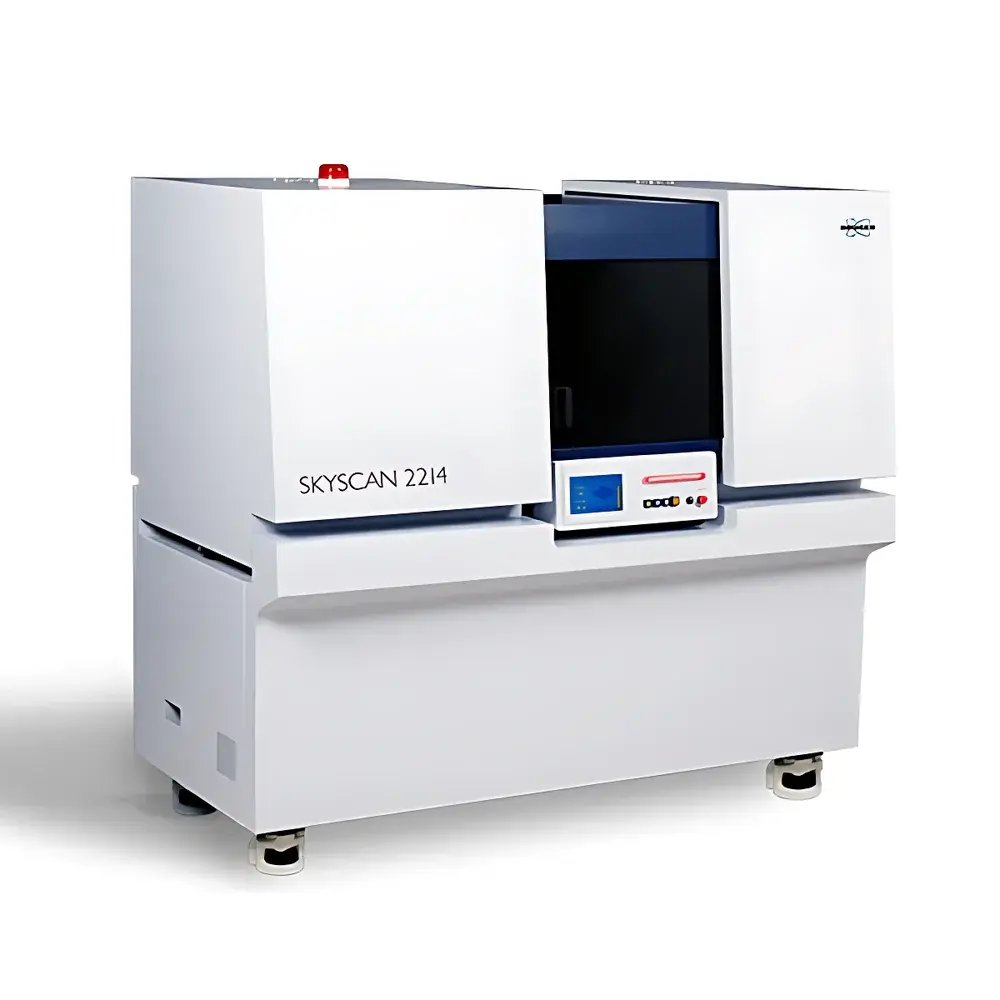
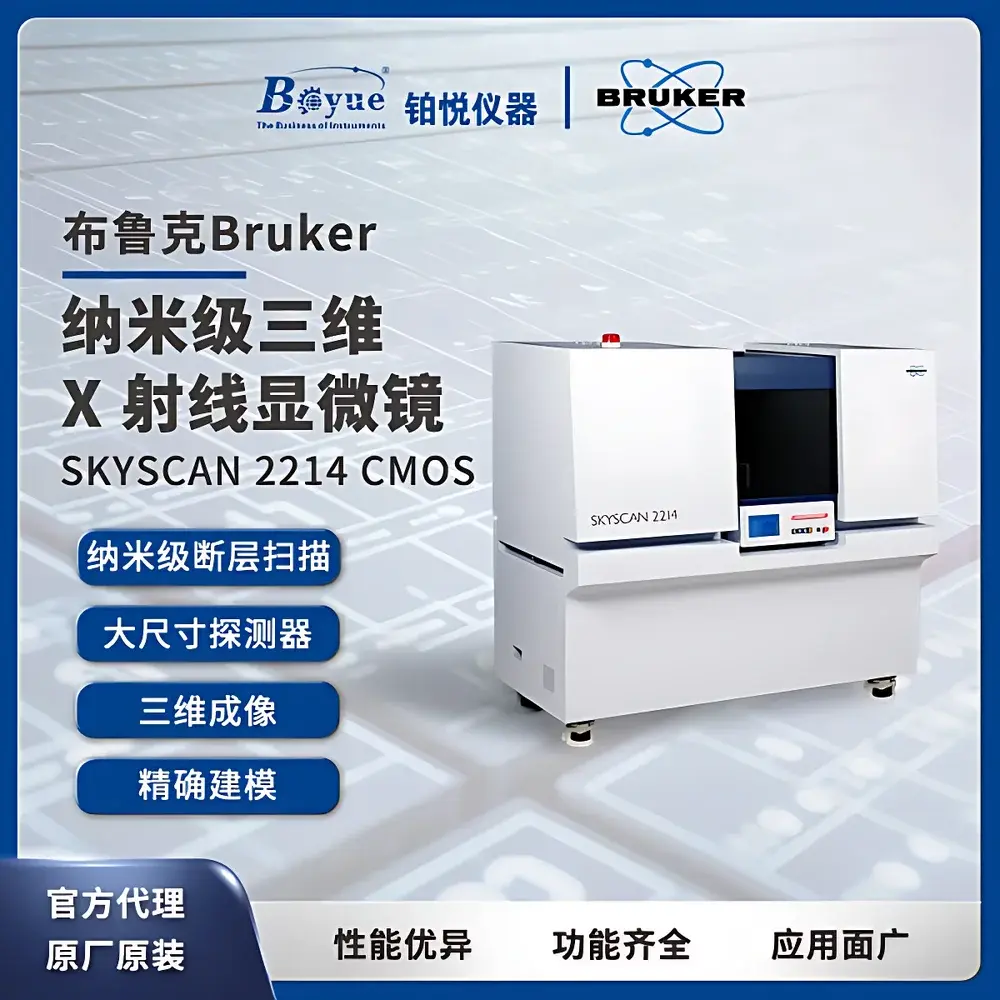
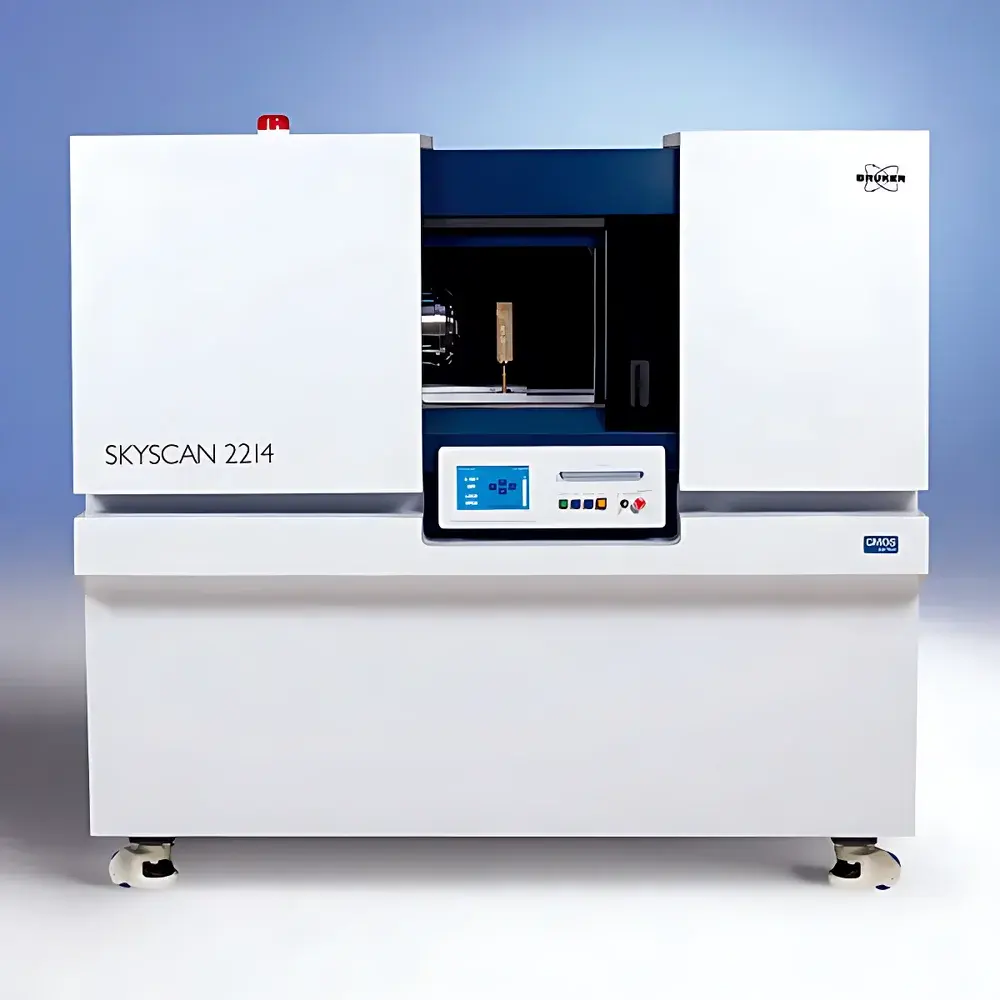
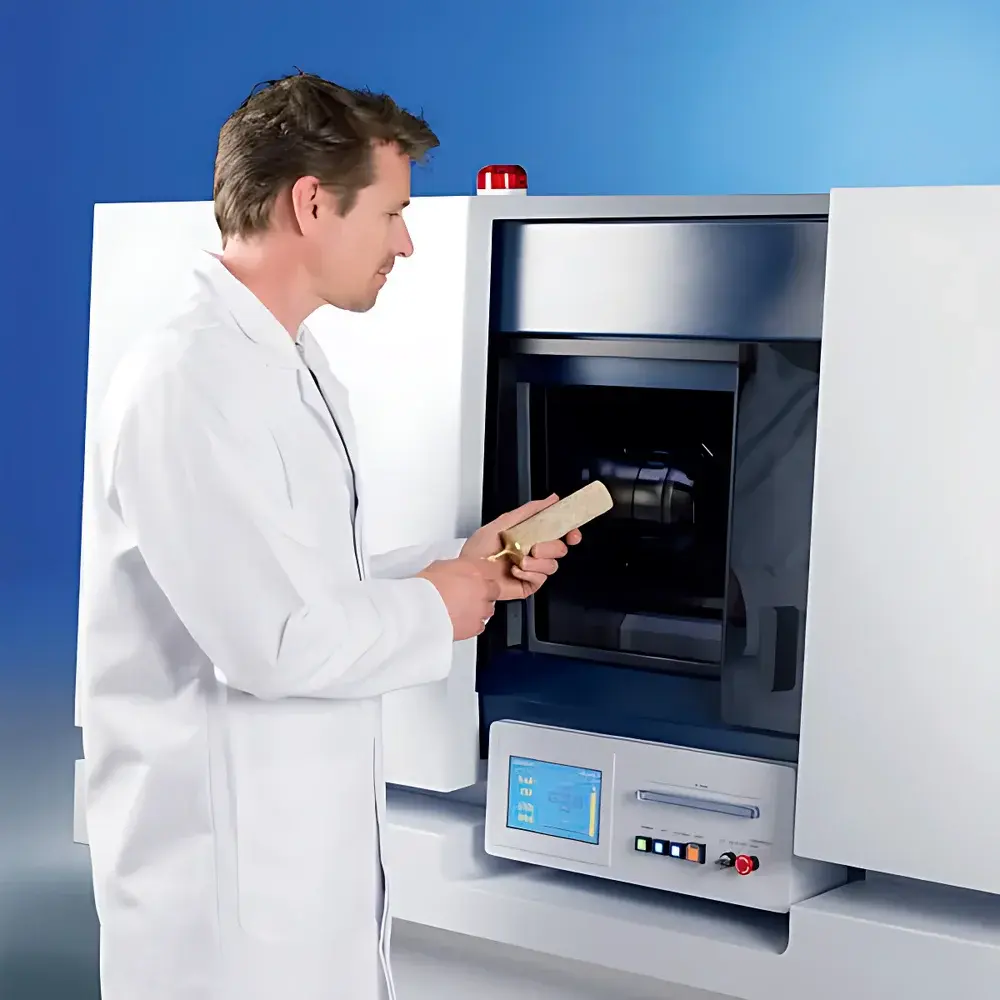
Bruker SKYSCAN 2214 CMOS Nanoscale 3D X-ray Microtomography System
| Brand | Bruker |
|---|---|
| Origin | Germany |
| Manufacturer Type | Authorized Distributor |
| Origin Category | Imported |
| Model | SKYSCAN 2214 CMOS |
| Price | USD 280,000 (FOB Hamburg) |
Overview
The Bruker SKYSCAN 2214 CMOS is a high-performance, laboratory-based nanoscale X-ray microtomography (nano-CT) system engineered for non-destructive 3D internal structure characterization across a broad range of sample sizes—from sub-millimeter biological specimens to objects exceeding 300 mm in diameter. Utilizing cone-beam geometry and phase-contrast–enhanced absorption tomography, the system delivers true isotropic spatial resolution down to <500 nm in reconstructed 3D volumes. Its core architecture integrates an open-type, water-cooled nano-focus X-ray source with dual cathode options (tungsten and LaB6), a modular sCMOS detector suite comprising three high-resolution CMOS cameras and one large-area flat-panel detector, and a precision air-bearing rotation stage capable of handling samples up to 20 kg. Designed for quantitative volumetric analysis under controlled mechanical, thermal, or environmental conditions, the SKYSCAN 2214 serves as a foundational platform for preclinical imaging, materials science, geoscience, energy storage research, and advanced manufacturing QA/QC.
Key Features
- Open-type, pump-enabled nano-focus X-ray source with diamond exit window; adjustable acceleration voltage from 20–160 kV and maximum power output of 16 W
- Dual-cathode configuration: tungsten filament for high-penetration imaging up to 160 kV (spot size ≤800 nm); LaB6 cathode for high-resolution operation at 20–100 kV (spot size <500 nm)
- Modular sCMOS detector system: three interchangeable high-sensitivity CMOS cameras (including 16 Mp large-format sensor) plus one 6-Mp flat-panel detector—automatically selectable via software interface
- Multi-position acquisition mode: each CMOS camera supports on-axis and two offset positions, enabling field-of-view doubling with automated image stitching and intensity correction
- Precision sample stage: air-bearing rotary stage with ±0.001° angular reproducibility; accommodates samples up to Ø300 mm and 20 kg; integrated XYZ translation and tilt adjustment
- In situ capability: fully integrated mechanical testing stages (up to 4400 N compression / 440 N tension), programmable heating/cooling stages (–30 °C to +80 °C), and DEBEN-compatible adapter kit—all auto-recognized and synchronized via native software
Sample Compatibility & Compliance
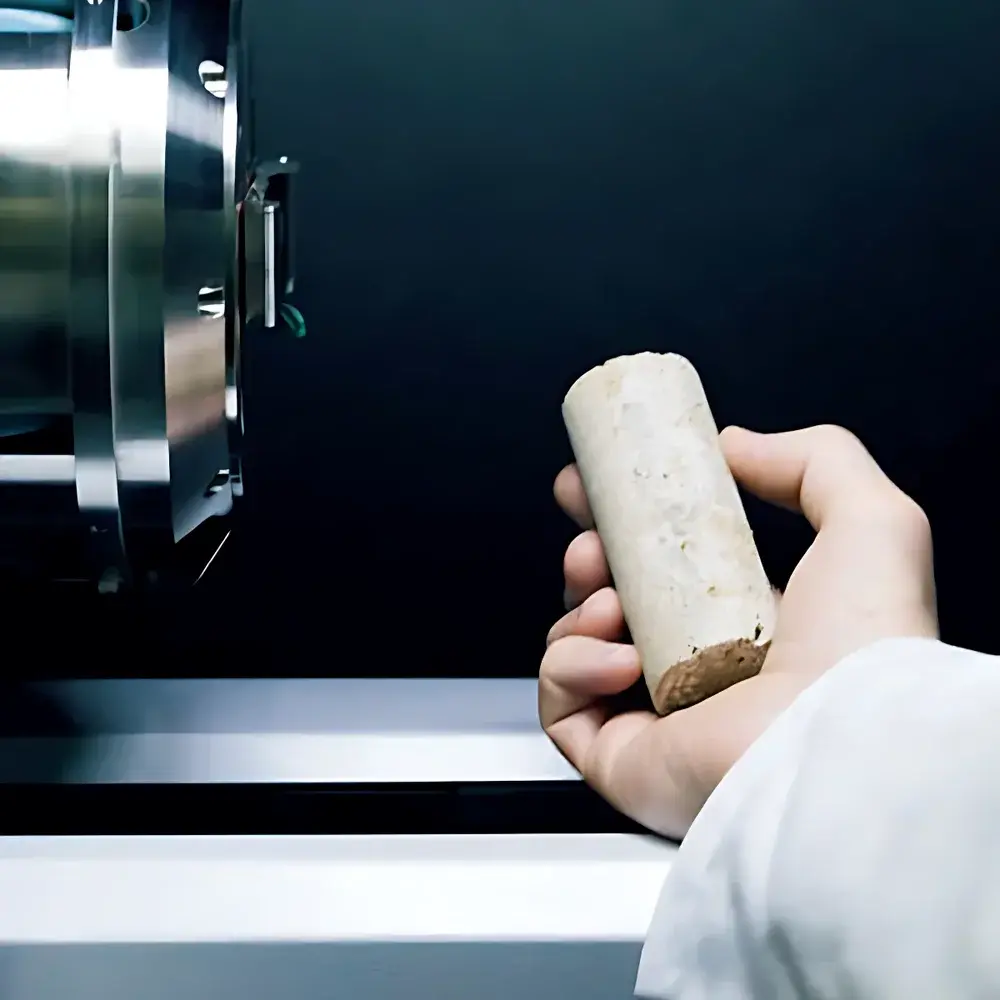
The SKYSCAN 2214 supports diverse sample classes without destructive sectioning or metal coating—including geological cores, composite laminates, lithium-ion battery electrodes, proton exchange membrane fuel cells, microelectronics assemblies, fossilized botanical specimens, murine lung tissue, and mineralized bone scaffolds. Its flexible source-detector geometry enables optimization of contrast-to-noise ratio and spatial resolution per specimen density and size. The system complies with ISO 12504 (non-destructive testing—X-ray computed tomography), ASTM E1441 (standard guide for computed tomography), and supports audit-ready data workflows aligned with GLP and GMP principles. All acquisition metadata—including source parameters, geometric calibration coefficients, and detector gain maps—are embedded into raw projection files (TIFF format) and preserved throughout reconstruction and analysis.
Software & Data Management
The SKYSCAN 2214 operates exclusively within Bruker’s 3D.SUITE software environment—a validated, GPU-accelerated platform comprising five tightly coupled modules: SKYSCAN Control (experiment planning, real-time preview, and parameter automation); NRecon (filtered back-projection and iterative reconstruction with ring artifact suppression and beam-hardening correction); DataViewer (slice-by-slice inspection and volume navigation); CTAn (quantitative morphometry, threshold-based segmentation, Euler number calculation, fractal dimension analysis, anisotropy tensor mapping, Boolean operations, and custom scripting via Python API); and CTVol (GPU-accelerated surface rendering, mesh generation, STL export for 3D printing, and multi-volume registration). All modules enforce strict version control, user-level access permissions, and full electronic lab notebook (ELN) integration. Audit trails record operator identity, timestamp, parameter changes, and processing steps—meeting FDA 21 CFR Part 11 requirements when deployed with validated IT infrastructure.
Applications
- Geoscience & Petrophysics: Pore-network quantification in shale matrix, carbonate diagenesis modeling, fluid flow simulation inputs, and digital rock physics validation
- Energy Materials: In operando electrode degradation tracking in Li-ion batteries, catalyst layer porosity analysis in PEMFCs, and binder distribution mapping in solid-state electrolytes
- Bioimaging & Preclinical Research: Osteocyte lacuno-canalicular network reconstruction, vascular corrosion casting analysis, tumor angiogenesis assessment, and pulmonary alveolar architecture quantification
- Materials Engineering: Defect detection in additively manufactured alloys, fiber orientation analysis in carbon-fiber composites, and interfacial delamination mapping in bonded joints
- Botany & Paleontology: Non-invasive seed germination monitoring, root-soil interaction studies, and high-fidelity fossil morphology digitization without physical extraction
FAQ
What is the minimum achievable voxel size in practice?
The system achieves isotropic voxel sizes down to 250 nm under optimal conditions (LaB6 cathode, small FOV, high magnification, and extended exposure), verified using JIMA resolution test patterns and NIST-traceable step wedges.
Can the SKYSCAN 2214 perform time-resolved (4D) tomography?
Yes—when paired with programmable in situ stages and automated scan sequencing, it supports dynamic acquisition protocols with temporal resolution limited only by detector readout speed and mechanical stability (typically ≥10 min per time point for high-SNR reconstructions).
Is phase-retrieval reconstruction supported?
Yes—Paganin-type and single-distance propagation-based phase retrieval algorithms are integrated into NRecon, enabling enhanced soft-tissue contrast in low-absorption samples such as polymers and unstained biological tissues.
Does the system support automated batch processing for multiple samples?
Yes—SKYSCAN Control includes a queue manager for unattended multi-sample runs, with configurable error handling, email notifications, and post-acquisition macro execution for standardized reconstruction and analysis pipelines.
What level of technical support and software maintenance is included?
Bruker provides comprehensive remote diagnostics, annual preventive maintenance visits by certified field engineers, and guaranteed biannual software updates with documented change logs and backward-compatible file format preservation.
Related Products





