
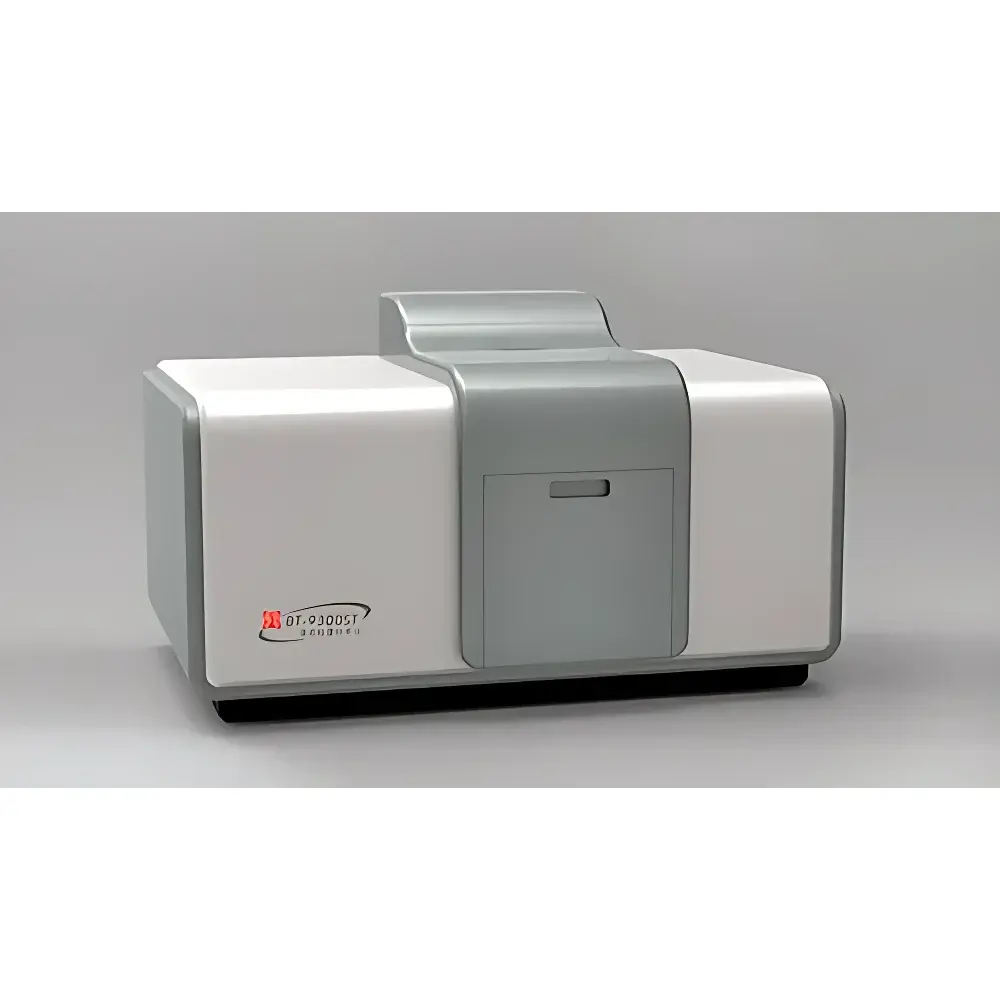
BT-9300ST Laser Diffraction Particle Size Analyzer by BETTER
| Key | Brand: BETTER (KJ Group) |
|---|---|
| Origin | Liaoning, China |
| Model | BT-9300ST |
| Measurement Range | 0.1–1000 µm |
| Repeatability Error | ≤1% (D50, GB Standard Reference Material) |
| Accuracy Error | ≤1% (D50, GB Standard Reference Material) |
| Measurement Principle | Mie Scattering Theory |
| Sampling Rate | 3500 Hz |
| Measurement Time | ≤10 s |
| Optical System | Dual-lens with Auto-alignment |
| Detector Channels | 86 |
| Laser Source | Imported Semiconductor Laser |
| Circulation Tank Volume | 600 mL |
| Ultrasonic Power | 50 W |
| Flow Rate | 3000–8000 mL/min |
| Operating System | Windows XP/7/8/10 |
| Interface | USB 2.0/3.0 |
| Dew Point Monitoring | Integrated |
| Dimensions | 660 × 420 × 320 mm |
| Weight | 38 kg |
Overview
The BT-9300ST Laser Diffraction Particle Size Analyzer is an industrial-grade instrument engineered for high-precision, high-reproducibility particle size distribution (PSD) analysis across R&D laboratories and QC environments. Based on first-principles Mie scattering theory—rigorously validated for spherical and near-spherical particles—the system quantifies angular intensity distribution of laser light scattered by a dispersed particulate sample in suspension or aerosol phase. Its dual-lens optical architecture, comprising imported Japanese composite lens assemblies, extends dynamic range while minimizing optical aberration and signal loss at extreme forward and backward scattering angles. With 86 individually calibrated photodetector elements covering a full angular span from ~0.02° to ~140°, the BT-9300ST captures fine-grained scattering signatures essential for resolving unimodal, bimodal, and complex multimodal distributions without user-defined peak assumptions. The system operates under ISO 13320:2020 compliance guidelines for laser diffraction methodology and supports traceable calibration using NIST-traceable standard reference materials (e.g., NIST SRM 1963, SRM 2800).
Key Features
- Dual-lens optical design with auto-alignment mechanism ensures consistent beam positioning and eliminates manual recalibration drift over extended operation cycles.
- High-speed data acquisition at 3500 samples per second enables statistical robustness—outlier rejection via real-time signal averaging reduces influence of transient agglomerates or air bubbles.
- Integrated dispersion module includes programmable ultrasonication (50 W), variable-speed magnetic stirring, automatic water intake/drainage, and self-cleaning rinse protocol—fully synchronized with measurement SOPs.
- Optimized flow dynamics (3000–8000 mL/min adjustable) maintain laminar, particle-free transport through the measurement zone, minimizing shear-induced breakage or reagglomeration.
- Embedded dew point sensor monitors ambient humidity within the optical path enclosure, preventing condensation-related signal noise during long-duration or high-humidity operation.
- Full USB 2.0/3.0 interface compatibility ensures seamless integration into existing LIMS or ELN infrastructure with minimal driver dependency.
Sample Compatibility & Compliance
The BT-9300ST accommodates a broad spectrum of dry powders, aqueous suspensions, and organic solvent-based dispersions—including those requiring inert atmosphere handling (optional upgrade). It has been verified for routine use with ASTM D4294 (elemental analysis support), ISO 8503-2 (surface profile correlation), and USP (pharmaceutical particle sizing). All measurement SOPs are configurable with audit-trail logging, supporting GLP and GMP workflows compliant with FDA 21 CFR Part 11 requirements when deployed with validated software configuration. Instrument performance verification follows ISO/IEC 17025 principles using certified reference materials; D50 repeatability and accuracy are routinely confirmed at ≤1% relative standard deviation against GBW(E)130009 and equivalent national standards.
Software & Data Management
BETTER Particle Analysis Suite v4.x provides intuitive workflow-driven control—from method setup and dispersion optimization to report generation and batch comparison. Raw scattering data is stored in HDF5 format for long-term archival integrity and third-party algorithm interoperability. Batch processing supports up to 999 sequential measurements with automated pass/fail criteria based on pre-set D10/D50/D90 tolerances. Export options include CSV, XML, PDF, and image-embedded reports compliant with internal QA documentation standards. Software validation packages—including IQ/OQ documentation templates and electronic signature modules—are available upon request for regulated environments.
Applications
This analyzer serves critical quality control and process development functions across diverse sectors: mineral processing (calcium carbonate, kaolin, barite, bentonite); advanced ceramics (zirconia, silicon carbide, alumina feedstocks); battery materials (cathode precursors, graphite anodes, LiFePO₄); catalysts and functional pigments; pharmaceutical excipients and active ingredients; food-grade starches and dairy powders; and environmental monitoring (sediment grain analysis, wastewater sludge characterization). Its ability to resolve submicron features down to 0.1 µm—combined with macro-range coverage up to 1000 µm—makes it suitable for both nanomaterial synthesis validation and coarse grinding endpoint detection.
FAQ
Does the BT-9300ST support non-aqueous dispersion media?
Yes—its circulation system can be upgraded to handle alcohols, acetone, xylene, and other low-surface-tension solvents with optional corrosion-resistant wetted components.
Is the instrument compatible with automated sample introduction systems?
It supports third-party autosamplers via TTL trigger I/O and RS-232 command protocol; integration requires custom scripting or OEM collaboration.
How often does the optical alignment require verification?
The auto-alignment system performs continuous real-time correction; manual verification is recommended only after physical relocation or service intervention.
Can raw scattering data be exported for external Mie inversion modeling?
Yes—full-angle intensity arrays (86 channels) are exportable in ASCII or HDF5 format, preserving detector-specific gain and offset metadata.
What regulatory documentation is provided for GMP validation?
Factory-issued IQ/OQ protocols, calibration certificates traceable to CNAS-accredited labs, and software validation summary reports are included with enterprise-tier purchase agreements.



