
BUCHI Multivapor P-6 Parallel Evaporator
| Brand | BUCHI |
|---|---|
| Origin | Switzerland |
| Manufacturer | BUCHI AG |
| Type | Imported |
| Model | P-6 |
| Capacity | 6 × 150 mL |
| Ultimate Vacuum | 1 mbar |
| Rotation Speed | 0–370 rpm |
| Temperature Range | 20–95 °C |
| Temperature Control Accuracy | ±3 °C (max) |
| Condenser Cooling Surface Area | 1700 cm² |
| Power Consumption | 800 W |
| Electrical Supply | 100–240 V, 50–60 Hz |
| Wetted Materials | PETP (or PEEK), PTFE, PFA, Borosilicate Glass |
Overview
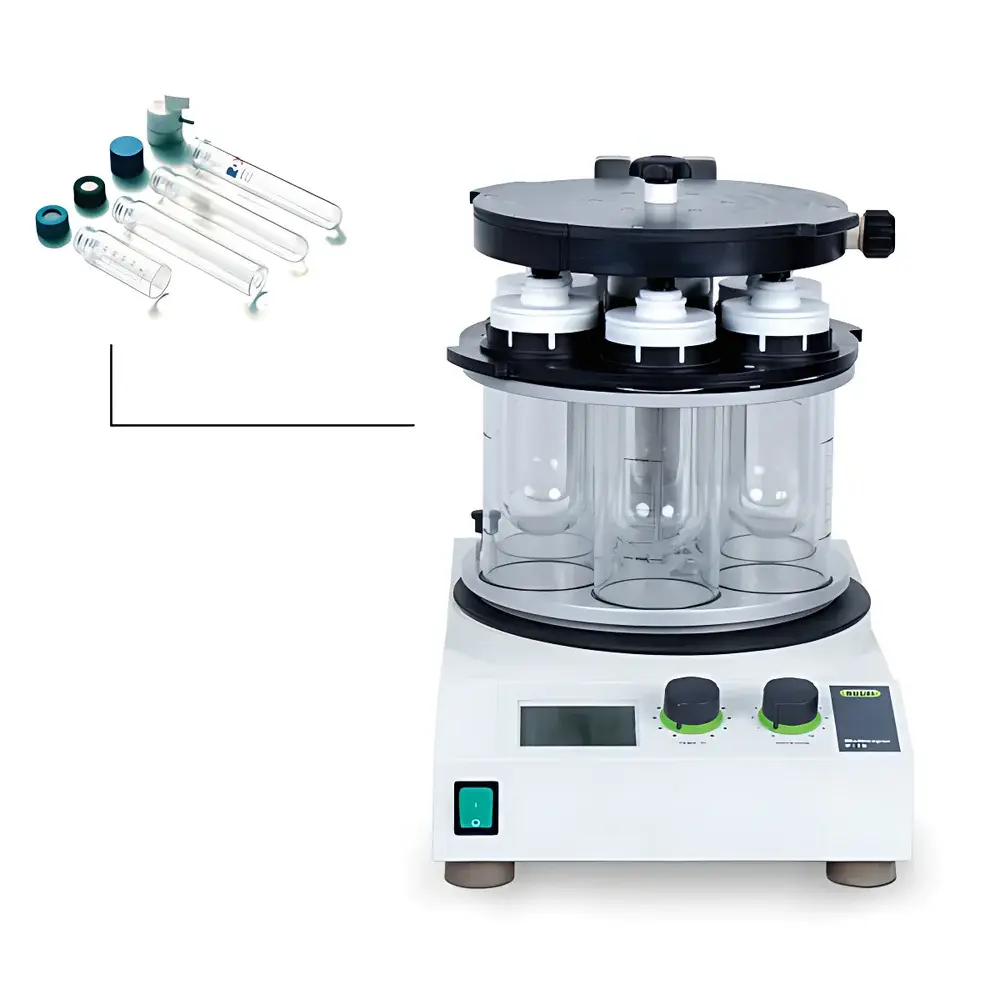
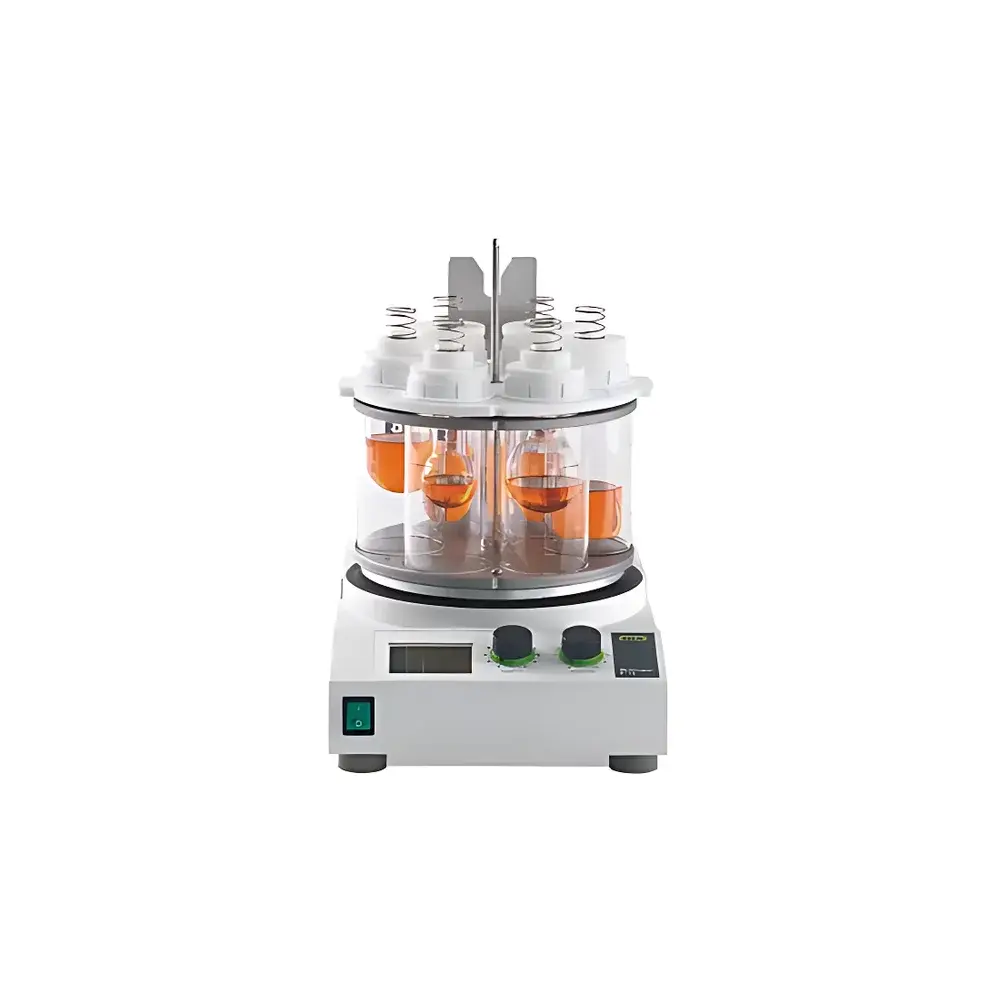
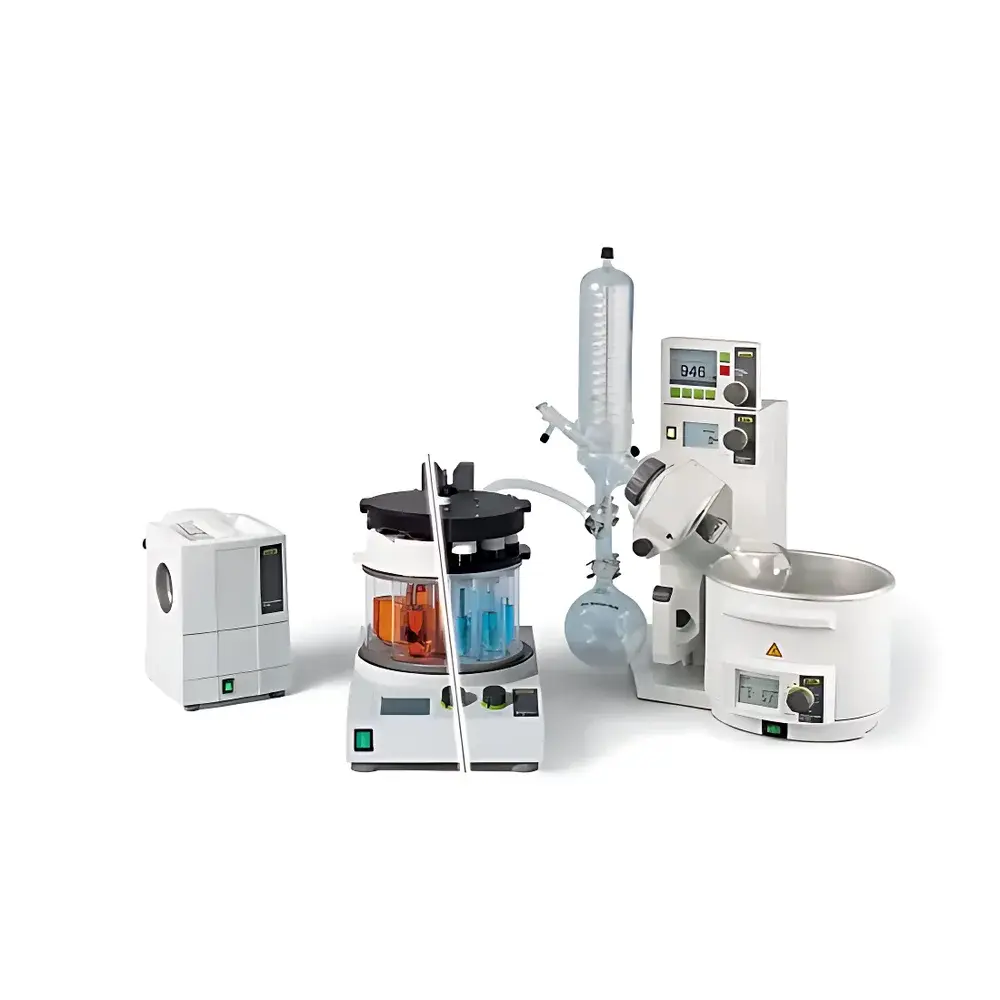
The BUCHI Multivapor P-6 is a compact, benchtop parallel evaporation system engineered for high-throughput solvent removal under controlled vacuum conditions. Unlike conventional rotary evaporators that process one sample at a time, the P-6 enables simultaneous, independent evaporation of up to six samples—each sealed in its own vessel—within a single thermal and vacuum environment. Its operation relies on controlled rotary motion, precise temperature regulation, and optimized vapor transfer dynamics to ensure reproducible concentration or drying outcomes. Designed specifically for laboratories seeking scalability without spatial compromise, the P-6 integrates seamlessly with BUCHI Rotavapor systems via shared condensation and vacuum infrastructure—eliminating redundant hardware while maintaining full sample isolation. This architecture supports ISO 14000-aligned green lab practices by replacing nitrogen blow-down methods with energy-efficient vacuum-based evaporation, reducing solvent emissions and compressed gas dependency.
Key Features
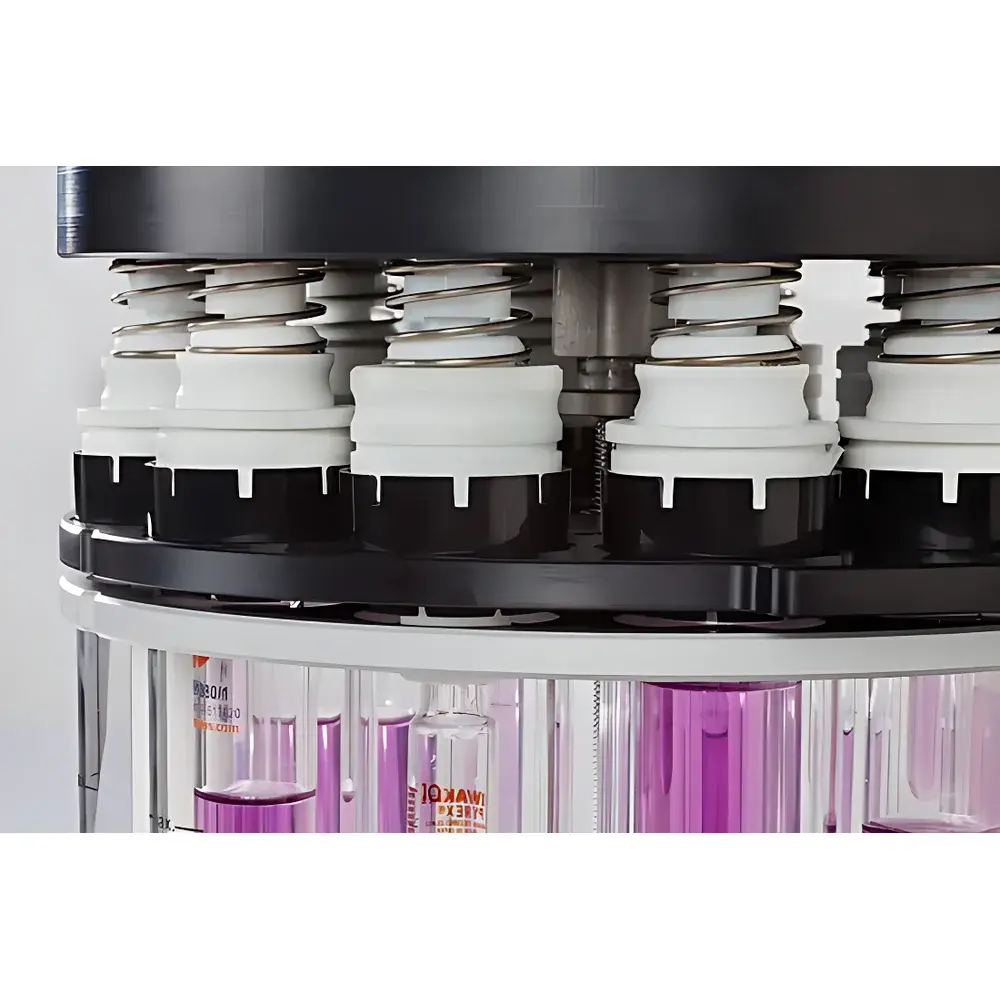
- Parallel processing of up to six 150 mL samples under individually sealed conditions—preventing cross-contamination and enabling method harmonization across replicates.
- Integrated vacuum interface compatible with external vacuum sources (e.g., V-800/V-810 vacuum controllers or I-300/I-300 Pro systems) for automated pressure ramping and endpoint detection.
- Precise temperature control (20–95 °C) with ±3 °C maximum deviation, achieved via PID-regulated heating bath and optional immersion temperature probe for direct sample monitoring.
- Variable rotation speed (0–370 rpm) optimized for viscous or foaming solvents, minimizing bumping and ensuring uniform film formation across flask surfaces.
- High-efficiency condenser with 1700 cm² active cooling area—designed for rapid vapor recondensation and minimal backstreaming during multi-solvent evaporation sequences.
- Chemically resistant wetted materials including borosilicate glass, PTFE, PFA, and PETP (or PEEK)—ensuring compatibility with aggressive organic solvents, acids, and bases per ASTM D5237 and ISO 8513 guidelines.
- Compact footprint (W × D × H ≈ 450 × 420 × 380 mm) suitable for standard fume hoods or benchtop integration without requiring dedicated utility islands.
Sample Compatibility & Compliance
The Multivapor P-6 accommodates standard 150 mL round-bottom flasks (RBFs) and custom vessels with interchangeable adapters. It supports aqueous, polar aprotic (e.g., DMF, DMSO), and low-boiling organic solvents (e.g., dichloromethane, ethyl acetate, hexane). All fluid-path components comply with USP Class VI biocompatibility standards and EU Regulation (EC) No 1935/2004 for food-contact materials. When operated with validated vacuum controllers and documented SOPs, the system meets GLP audit requirements for traceability, including manual log entries for batch records. While not intrinsically 21 CFR Part 11 compliant, its integration with BUCHI’s LabX software (via optional I-300 Pro controller) enables electronic signatures, audit trails, and user access controls required for regulated QC/QA environments.
Software & Data Management
Standalone operation requires no software; however, when paired with the I-300 Pro vacuum controller and LabX LIMS-ready platform, the P-6 supports fully traceable method execution. LabX provides centralized method storage, real-time parameter logging (temperature, vacuum level, rotation speed), automatic report generation (PDF/CSV), and secure user authentication. All data are timestamped and stored with immutable audit trails—fully aligned with ALCOA+ principles (Attributable, Legible, Contemporaneous, Original, Accurate, Complete, Consistent, Enduring, Available). Method templates can be exported/imported between instruments, facilitating cross-site protocol harmonization in multi-laboratory organizations.
Applications
- High-throughput sample preparation prior to GC-MS, LC-MS, or NMR analysis—particularly in environmental testing (EPA Method 505, 525.3), pharmaceutical impurity profiling (ICH Q5), and food safety screening (AOAC 2007.01).
- Concentration of natural product extracts, peptide solutions, or polymer fractions where thermal degradation must be minimized through gentle, vacuum-assisted removal.
- Lyophilization pre-concentration steps in biopharmaceutical development, supporting DOE-driven optimization of buffer exchange efficiency.
- Residue-on-evaporation (ROE) testing per USP and Ph. Eur. 2.4.24, where parallel processing ensures statistical robustness across replicate batches.
- Educational labs requiring scalable, safe solvent recovery workflows compliant with institutional EH&S policies and ANSI Z9.5 laboratory ventilation standards.
FAQ
Can the Multivapor P-6 operate independently without a Rotavapor system?
Yes—the P-6 includes its own heating bath, rotation drive, and vacuum interface. It functions as a complete stand-alone parallel evaporator. Integration with Rotavapor units is optional and intended to maximize existing infrastructure utilization.
What vacuum pump specifications are recommended for optimal performance?
A two-stage diaphragm pump capable of sustaining ≤1 mbar ultimate vacuum (e.g., BUCHI V-800 with gas ballast) is recommended. For solvent mixtures with high water content, a cold trap or secondary condenser is advised to protect pump integrity.
Is method validation support available from BUCHI?
BUCHI provides IQ/OQ documentation templates and application notes covering repeatability (RSD <3% for evaporation rate across six channels) and temperature uniformity mapping—supporting internal validation per ISO/IEC 17025 Clause 7.2.2.
How often does maintenance require calibration of the temperature sensor?
Annual verification against a NIST-traceable reference thermometer is recommended. The integrated PT100 sensor maintains stability within ±0.5 °C over 12 months under typical use conditions.
Are replacement parts such as flasks or seals supplied with material certifications?
Yes—glassware and polymer components ship with CoA (Certificate of Analysis) confirming compliance with USP , ISO 10993-5 cytotoxicity, and RoHS 2011/65/EU directives.
Related Products



