
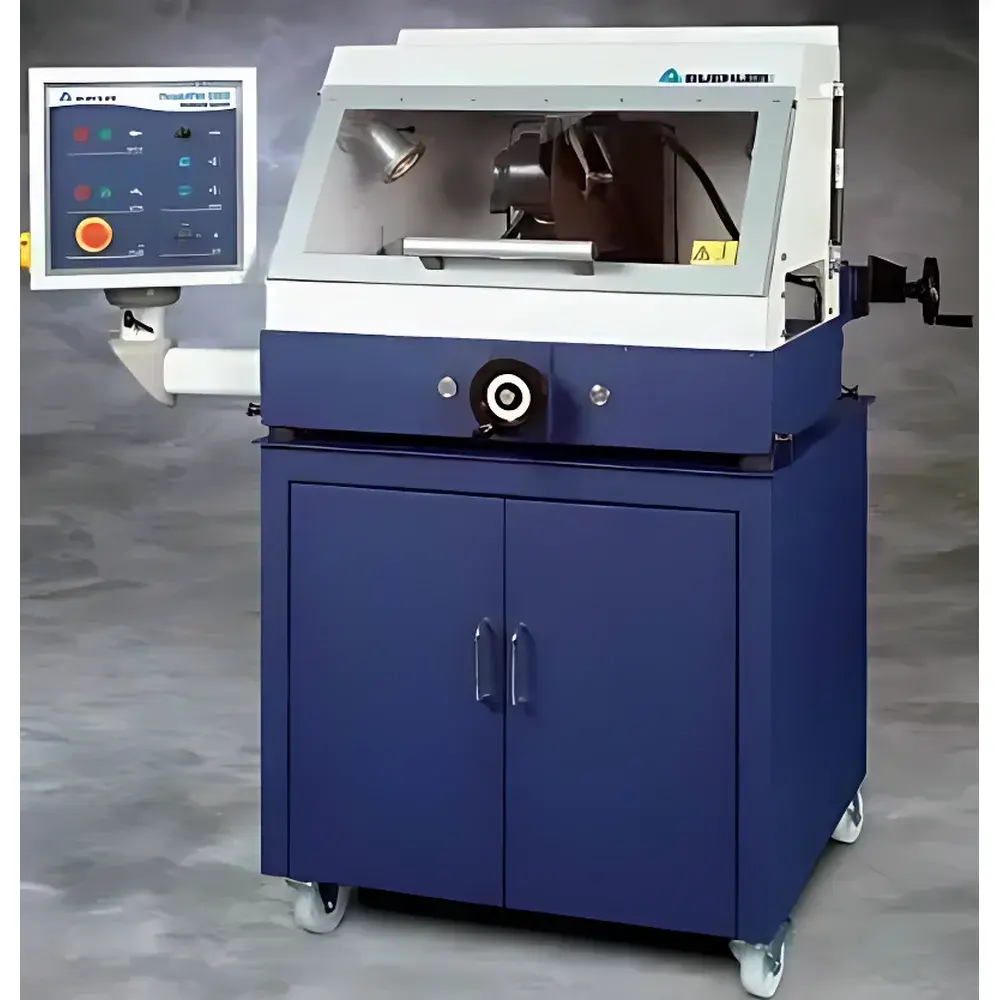
Buehler PowerMet 3000 Precision Abrasive Cut-Off Machine (Discontinued)
| Brand | Buehler |
|---|---|
| Origin | USA |
| Model | PowerMet 3000 |
| Motor Power | 5.5 kW |
| Blade Diameter | 356 mm (14″) |
| Maximum Cutting Capacity | 120 mm diameter |
| Spindle Speed | 1400 rpm |
| Worktable Travel (X-axis) | 120 mm |
| Worktable Travel (Y-axis) | 220 mm |
| Max Sample Height | 90 mm |
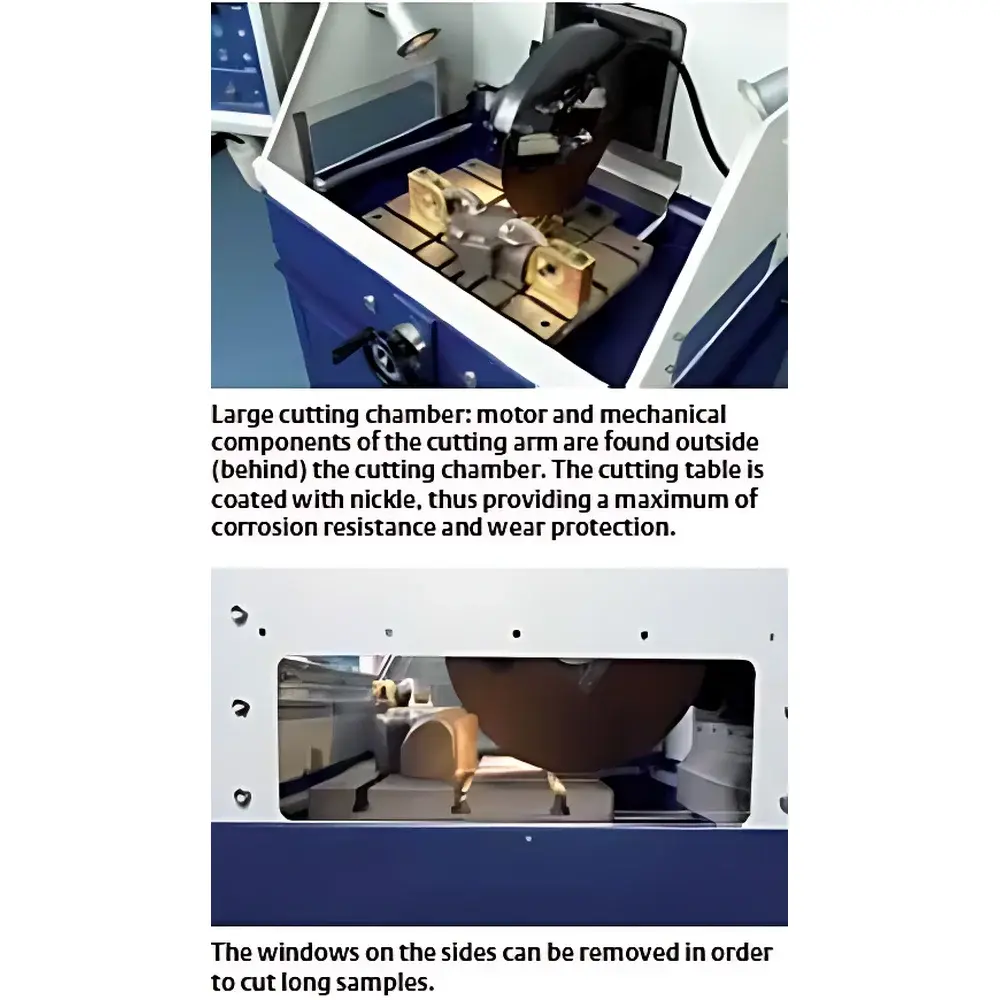
| Cutting Chamber Dimensions | 410 mm × 310 mm (W × D) |
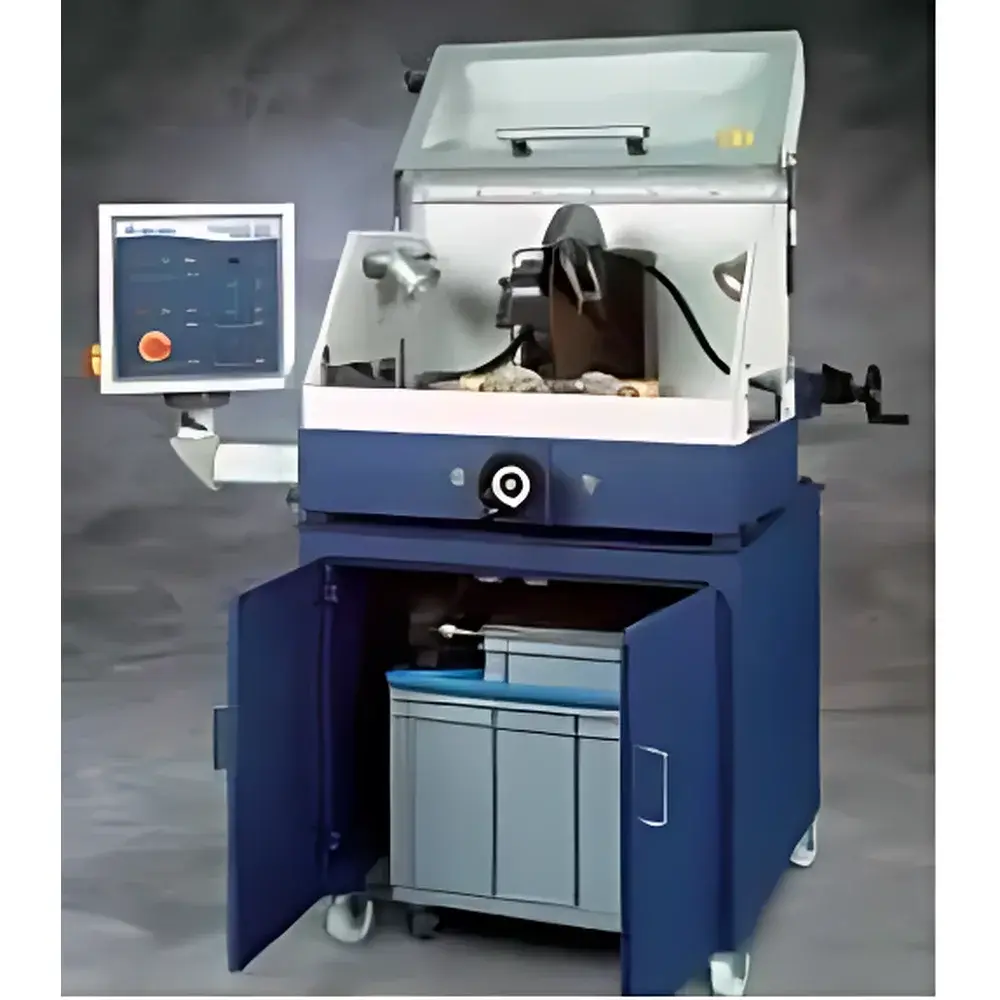
| Cooling System Capacity | 90 L, triple-stage filtration |
| Power Supply | 400 V / 50 Hz / 3-phase |
| Net Weight | 400 kg |
| Overall Dimensions | 1540 mm × 1010 mm × 700 mm (W × D × H) |
| Safety Features | Emergency stop button, interlocked mechanical guard lock |
| Worktable | Stainless steel with 12 mm DIN-standard T-slots |
| Housing Material | Flame-retardant, corrosion-resistant glass-reinforced polymer |
| Base Construction | Heavy-duty cast aluminum |
Overview
The Buehler PowerMet 3000 is a high-power, precision abrasive cut-off machine engineered for demanding metallurgical and materials science laboratories. Designed around the principle of controlled mechanical abrasion using rotating bonded abrasive wheels, it delivers reproducible, low-deformation sectioning of metallic and non-metallic specimens—including ferrous alloys, aluminum, titanium, composites, ceramics, and polymers. Its robust architecture supports consistent kerf width control, minimal thermal distortion, and high geometric fidelity—critical prerequisites for subsequent metallographic preparation, microstructural analysis, or mechanical testing. Though officially discontinued, the PowerMet 3000 remains widely referenced in laboratory SOPs and ASTM E3, ISO 148-1, and EN 10365-compliant sample preparation workflows due to its documented performance stability and long-term serviceability.
Key Features
- 5.5 kW industrial-grade motor delivering high torque at 1400 rpm—optimized for rapid material removal while maintaining blade life and cut surface integrity.
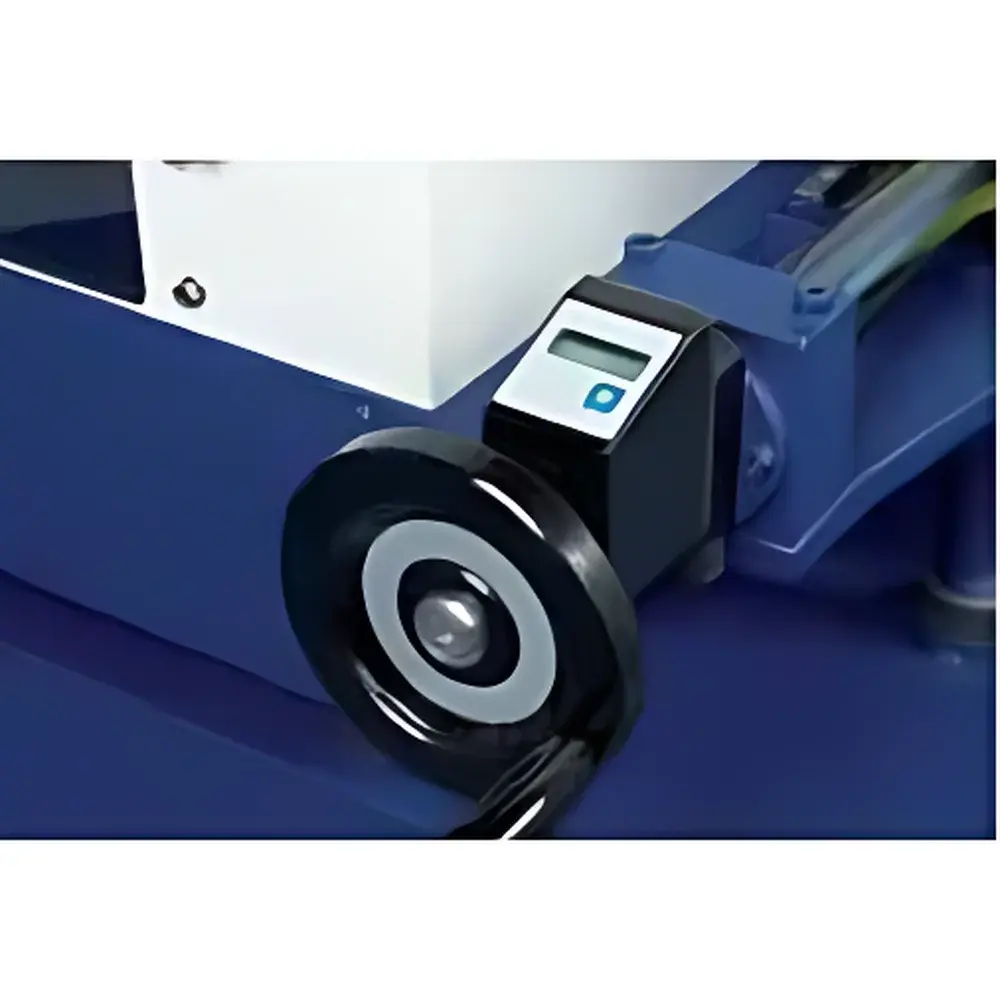
- Three-axis manual positioning system (X, Y, Z) with calibrated micrometer dials for repeatable specimen alignment and multi-step serial sectioning.
- Large cutting chamber (410 × 310 mm W × D) accommodating oversized or irregularly shaped samples; side-loading window enables longitudinal placement of elongated components.
- Heavy-duty cast aluminum base with vibration-damping mass ensures operational stability during high-load cutting cycles.
- Stainless steel worktable featuring 12 mm DIN-standard T-slots for secure mounting of modular fixturing systems—including vise clamps, rotary holders, and custom jigs.
- Triple-stage recirculating coolant system (90 L capacity) with particulate, magnetic, and depth filtration—reducing thermal damage, extending wheel life, and minimizing operator exposure to aerosolized debris.
- Full-enclosure housing constructed from flame-retardant, glass-fiber-reinforced polymer—providing acoustic attenuation, splash containment, and chemical resistance to common coolants and cleaning agents.
- Integrated LED lighting system with independent power control and wide-angle optics for real-time visual monitoring of the cut zone without opening the guard.
- Dual-safety interlock: mechanical guard lock synchronized with electrical cutoff, plus an accessible emergency stop button compliant with IEC 60204-1.
Sample Compatibility & Compliance
The PowerMet 3000 accommodates a broad spectrum of specimen geometries and material classes. Standard abrasive wheels—including silicon carbide, aluminum oxide, and diamond-impregnated variants—are compatible via ISO 40/ISO 50 arbor mounting. The machine supports sectioning of hardened steels (up to 65 HRC), aerospace-grade titanium alloys (Ti-6Al-4V), aluminum matrix composites, graphite electrodes, and brittle ceramics—provided appropriate wheel selection and feed rate parameters are applied. It conforms to key international safety and performance standards, including ANSI B11.19 (machine safeguarding), EN 61000-6-2/6-4 (EMC), and OSHA 1910.212 (machine guarding requirements). Its design facilitates GLP-compliant documentation when integrated into validated lab workflows requiring traceable sectioning parameters.
Software & Data Management
As a manually operated, hardware-centric platform, the PowerMet 3000 does not incorporate embedded software or digital data logging. However, its mechanical repeatability and tactile feedback enable integration into paper-based or LIMS-linked procedural records. Operators may document critical parameters—including wheel type, coolant composition, cut sequence number, and final specimen dimensions—in standardized metallographic logbooks or electronic batch records. Optional mechanical auto-feed units (sold separately) introduce programmable Z-axis descent profiles, supporting semi-automated protocols aligned with internal QA/QC procedures. All safety interlocks generate verifiable mechanical/electrical state transitions suitable for audit trails under FDA 21 CFR Part 11–aligned environments when paired with external validation documentation.
Applications
- Routine sectioning of as-cast, forged, or heat-treated metallographic specimens prior to mounting, grinding, and polishing.
- Preparation of tensile, Charpy, and fatigue test coupons per ASTM E8, E23, and E466 specifications.
- Dimensional reduction of additively manufactured parts for cross-sectional microstructure evaluation.
- Cutting of geological core samples, refractory bricks, and composite laminates where minimal delamination or matrix pull-out is required.
- Serial sectioning for 3D reconstruction studies, failure analysis, and coating thickness assessment.
- High-throughput sample division in contract testing laboratories operating under ISO/IEC 17025-accredited scopes.
FAQ
Is the PowerMet 3000 still supported by Buehler for service or spare parts?
Buehler maintains limited legacy parts inventory and offers third-party certified field service for discontinued models; availability varies by region and component.
What coolant types are compatible with the triple-stage filtration system?
Water-soluble oil emulsions, synthetic coolants, and semi-synthetic formulations meeting ISO 6743-7 classification are recommended; glycol-based fluids require verification of filter media compatibility.
Can the PowerMet 3000 be retrofitted with CNC or digital position readouts?
No factory retrofit path exists; however, third-party linear encoders and analog-to-digital interface modules have been implemented by qualified engineering partners under risk-assessed modifications.
Does the machine meet CE marking requirements for use in EU laboratories?
Yes—the final production units shipped with CE certification under Machinery Directive 2006/42/EC and Low Voltage Directive 2014/35/EU.
What is the typical maintenance interval for the recirculating coolant system?
Filter cartridges require replacement every 200–300 operating hours; full coolant exchange is advised biannually or after 1,000 liters of cumulative throughput, whichever occurs first.



