
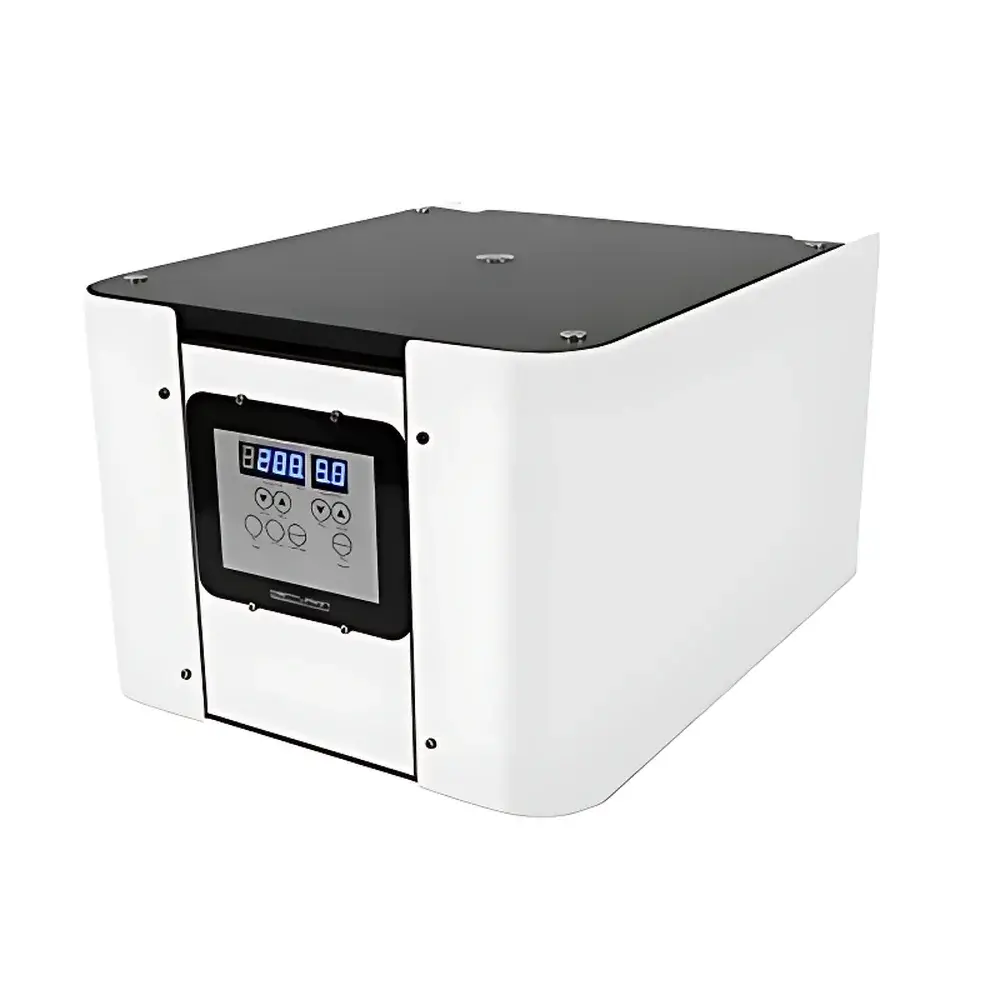
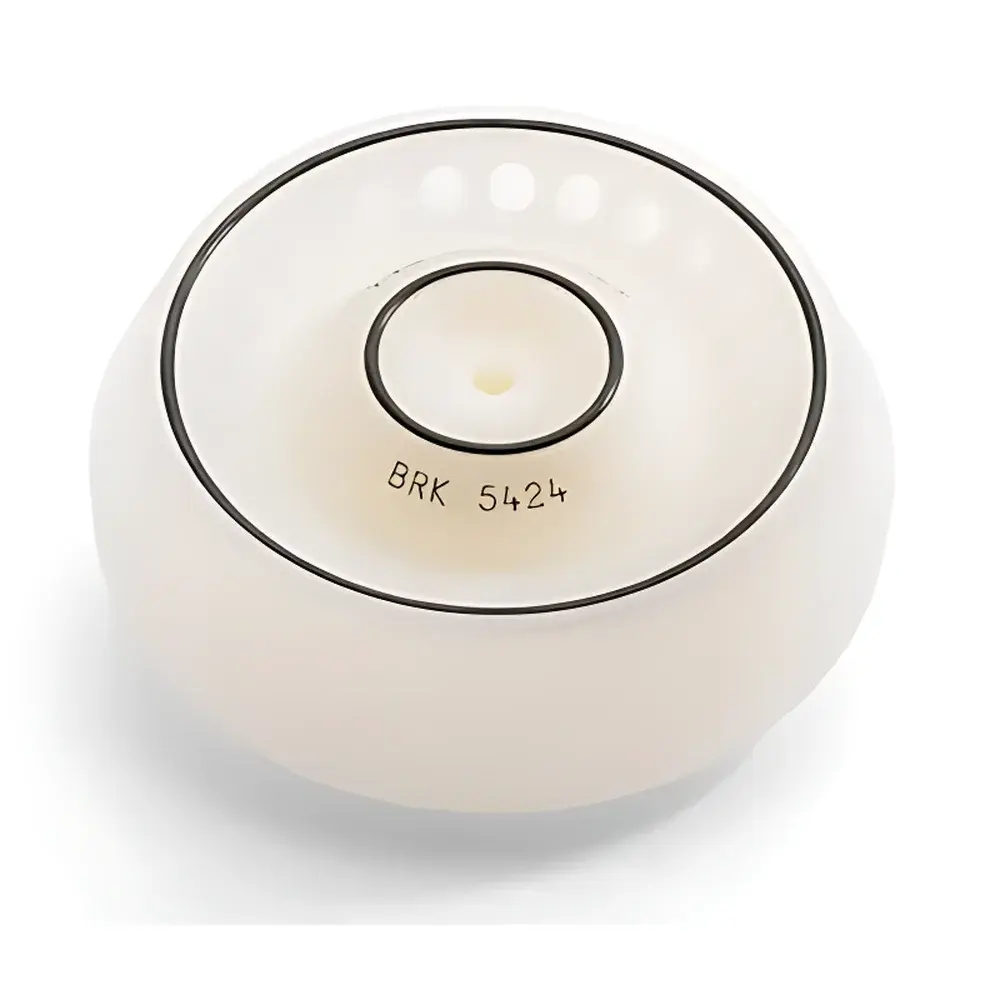
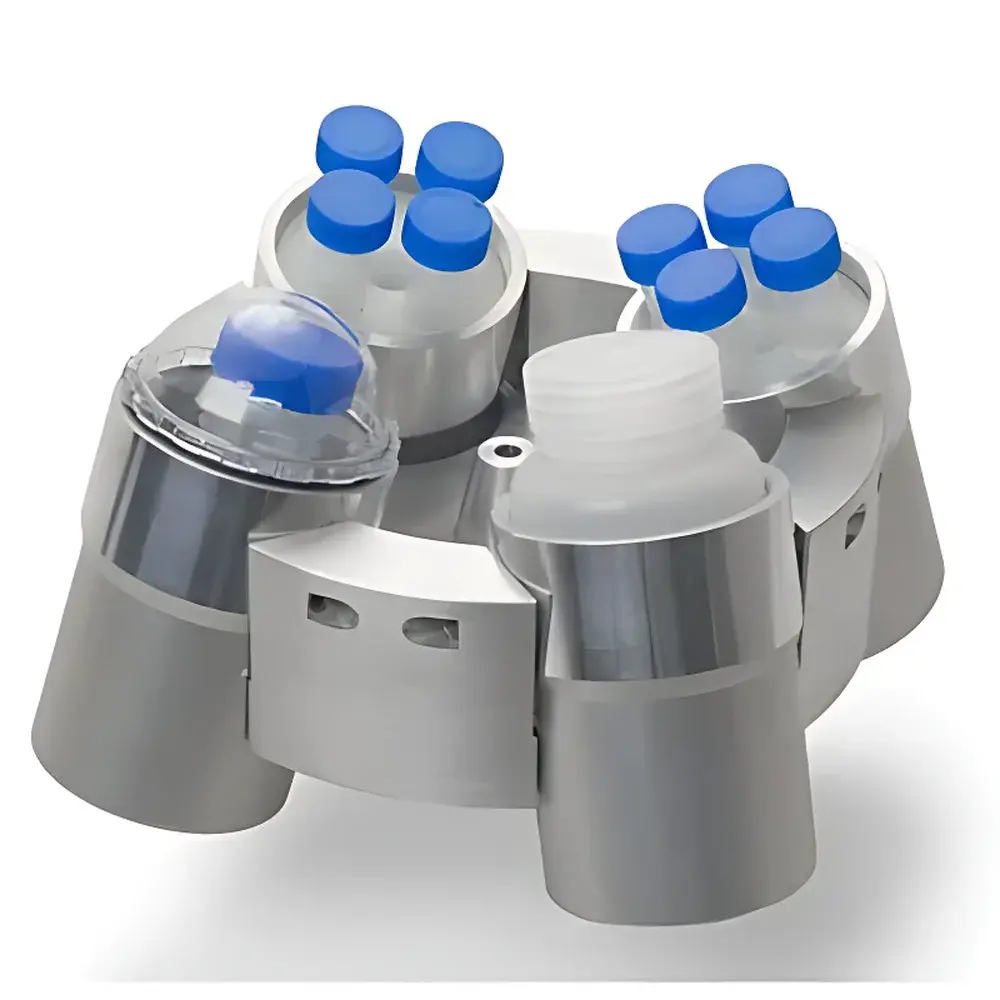
Centurion CR4000R Benchtop High-Speed Refrigerated Centrifuge
| Brand | Centurion Scientific |
|---|---|
| Origin | United Kingdom |
| Model | CR4000 / CR4000R |
| Type | Benchtop Refrigerated Centrifuge |
| Speed Range | 500–15,000 rpm |
| Max RCF | 22,000 × g |
| Max Capacity | 4 × 250 mL |
| Acceleration/Deceleration | 10-step programmable |
| Timer | 0–99 min (continuous mode available) |
| Noise Level | <60 dB(A) |
| Dimensions (CR4000R) | 31 × 45 × 63 cm |
| Weight (CR4000R, no rotor) | 62 kg |
| Power Consumption (CR4000R) | 690 W |
| Temperature Range (CR4000R) | –20 °C to +40 °C |
| Compliance | CE, IEC 61010-1, ISO 13485 (for in vitro diagnostic use where applicable) |
Overview
The Centurion CR4000R is a high-performance benchtop refrigerated centrifuge engineered for precision separation of biological and clinical samples under controlled thermal conditions. Based on fixed-angle and horizontal rotor configurations, it employs a brushless DC motor coupled with a closed-loop speed control system to deliver stable rotational dynamics across its full operating range (500–15,000 rpm). Its refrigeration module maintains sample integrity by sustaining temperatures from –20 °C to +40 °C during operation—critical for heat-sensitive analytes such as enzymes, nucleic acids, and primary cell suspensions. Designed for routine laboratory workflows in molecular biology, clinical diagnostics, and biopharmaceutical QC, the CR4000R supports GMP-aligned processes through traceable parameter logging, audit-ready operational history, and hardware-level safety interlocks.
Key Features
- Refrigerated operation with independent temperature control and real-time monitoring via blue LED display
- 10-step programmable acceleration and deceleration profiles to minimize sample disturbance during spin-up/spin-down
- Dual-mode speed selection: user-selectable display and setpoint in either rpm or RCF (×g), facilitating method transfer across instruments
- Stainless steel centrifuge chamber and corrosion-resistant aluminum alloy housing for long-term durability and ease of decontamination
- Four-point mechanical lid locking system with integrated lid position sensor—machine will not initiate rotation unless fully engaged
- Active imbalance detection with automatic rotor deceleration and audible/visual alarm; self-resetting after correction
- Integrated overspeed protection sensor and motor overheat detection circuitry compliant with IEC 61010-1 safety standards
- Precision speed control: ±10 rpm accuracy, ±1 rpm repeatability across all loads and temperature conditions
- Noise emission <60 dB(A) at 1 m distance—suitable for shared laboratory environments without acoustic enclosures
Sample Compatibility & Compliance
The CR4000R accommodates a broad spectrum of tube formats and vessel types, including microcentrifuge tubes (0.2–2.2 mL), PCR strips, conical tubes (15–100 mL), and 250 mL bottles via optional horizontal rotors. It supports standard biosafety level 2 (BSL-2) containment practices when used with sealed rotors and aerosol-tight tube caps. All rotor models are certified to EN 61010-2-020 for centrifuge-specific safety and undergo fatigue testing per ISO 15707. The instrument meets CE marking requirements for electrical safety and electromagnetic compatibility (EMC Directive 2014/30/EU). For regulated environments, its firmware supports GLP/GMP documentation needs through timestamped run logs, operator ID fields (when integrated with external authentication), and non-volatile memory retention of up to 100 completed runs.
Software & Data Management
While the CR4000R operates as a standalone instrument with intuitive front-panel controls, its embedded firmware enables seamless integration into LIMS or ELN platforms via RS-232 or optional USB-to-serial interface. Each run record includes date/time stamp, rotor ID, speed/RCF, temperature, duration, acceleration/deceleration profile, and final brake status. Audit trails comply with FDA 21 CFR Part 11 requirements when paired with validated third-party data capture software. User-defined programs (up to 10 stored protocols) include configurable hold times, pause points, and auto-restart logic for overnight processing. All parameters are protected by password-secured access levels (Operator, Supervisor, Service).
Applications
- Isolation of subcellular organelles (mitochondria, lysosomes, nuclei) using differential centrifugation protocols
- Clarification of bacterial and yeast lysates prior to chromatographic purification or SDS-PAGE analysis
- Concentration and pelleting of extracellular vesicles (exosomes) from serum, plasma, or conditioned media
- Routine blood fractionation (serum/plasma separation) in clinical chemistry and hematology labs
- High-speed pelleting of PCR products, plasmid preps, and RNA samples requiring cold preservation
- Preparative centrifugation of microtiter plates for ELISA wash steps and cell-based assay workflows
- Processing of cytology specimens using centrifugal cytospin adapters for uniform monolayer preparation
FAQ
What is the minimum and maximum operating temperature range for the CR4000R?
The refrigerated unit maintains a stable chamber temperature between –20 °C and +40 °C, with typical ramp rates of ≤15 min from ambient to –20 °C under full load.
Can the CR4000R be used for ultracentrifugation applications?
No—the CR4000R is classified as a high-speed centrifuge (max 15,000 rpm, 22,000 × g) and does not meet the performance criteria for ultracentrifugation (>50,000 rpm or >100,000 × g).
Are rotor certifications included with each purchase?
Yes—every rotor shipped with the CR4000R carries an individual calibration certificate verifying maximum rated speed, RCF, and balance tolerance, traceable to UKAS-accredited metrology laboratories.
Does the instrument support remote monitoring or network connectivity?
Native Ethernet or Wi-Fi is not built-in; however, RS-232 output allows connection to centralized lab monitoring systems via serial-to-Ethernet converters compatible with Modbus RTU or ASCII protocols.
How often does the refrigeration system require maintenance?
Under normal usage (≤8 hrs/day), the sealed refrigerant circuit requires no scheduled servicing for 5 years; annual verification of condenser coil cleanliness and door gasket integrity is recommended.



