
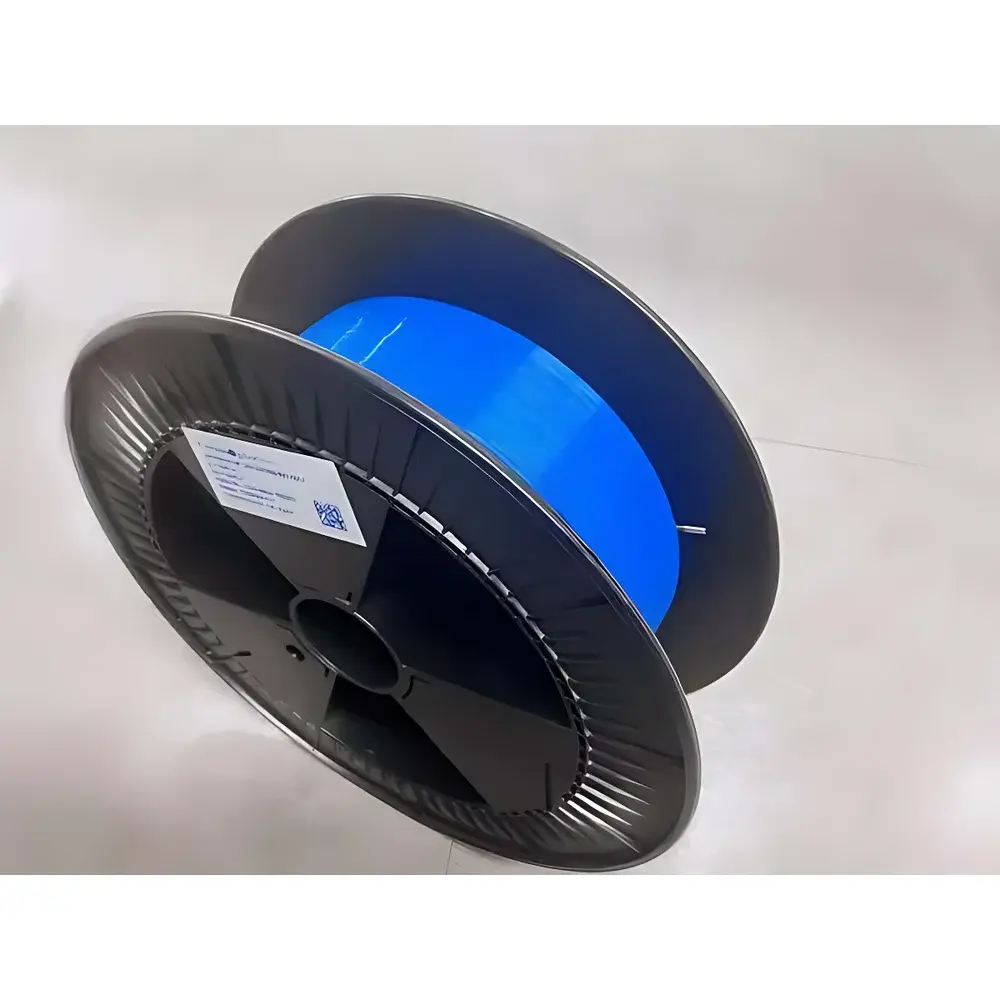
CeramOptec Ho:YAG Laser Delivery Fiber
| Brand | CeramOptec |
|---|---|
| Origin | Imported |
| Manufacturer Type | Authorized Distributor |
| Component Category | Optical Fiber for Medical Laser Delivery |
| Core/Cladding/Outer Diameter (e.g., WF200/240/265/400HBLT) | 200/240/265/400 µm |
| Numerical Aperture | 0.22 |
| OH⁻ Content | <1 ppm |
| Tensile Strength | ≥100 kpsi |
| Laser Damage Threshold | Optimized for 2100 nm Pulsed Ho:YAG Systems |
| Coating | Blue-Tinted Hard Polymer Clad (HBLT) or Polyimide (PI) Options Available |
Overview
CeramOptec Ho:YAG Laser Delivery Fibers are engineered high-performance optical fibers designed exclusively for reliable, low-loss transmission of pulsed holmium-doped yttrium aluminum garnet (Ho:YAG) laser radiation at the clinically critical 2100 nm wavelength. Unlike generic silica fibers, these fibers incorporate ultra-low hydroxyl (OH⁻) content (<1 ppm), precision-controlled numerical aperture (NA = 0.22), and mechanically robust hard polymer cladding or high-temperature polyimide coatings—enabling stable beam delivery under demanding urological, orthopedic, and soft-tissue ablation procedures. The fiber architecture adheres to strict medical device material biocompatibility standards (ISO 10993-1, -5, -10) and is validated for repeated sterilization cycles including autoclaving and ethylene oxide (EtO) exposure. Designed for integration with FDA-cleared Ho:YAG laser systems (e.g., Lumenis Pulse™, Olympus URF-V, Dornier Medilas H, Convergent LaserSystems), these fibers serve as a critical link between laser source and handpiece, maintaining spatial mode fidelity and minimizing thermal loading at the distal tip.
Key Features
- Ultra-low OH⁻ content (<1 ppm) ensures minimal absorption at 2100 nm, maximizing power throughput and reducing thermal lensing effects during high-repetition-rate operation (up to 40 Hz).
- Consistent NA = 0.22 across all standard configurations enables predictable beam divergence and optimal coupling efficiency with commercial Ho:YAG laser resonators and articulated arms.
- Hard polymer clad (HBLT) or polyimide-coated variants provide mechanical durability: tensile strength ≥100 kpsi, bend radius tolerance down to 35 mm (for 400 µm core), and resistance to kinking during endoscopic maneuvering.
- Biocompatibility verified per ISO 10993-1 (biological evaluation), ISO 10993-5 (cytotoxicity), and ISO 10993-10 (irritation/sensitization); documentation supplied with each batch for regulatory traceability.
- Distal termination options include cleaved, polished, or angle-polished (8°) ferrules compatible with standard SMA-905, FC/PC, or proprietary urological handpieces.
- Batch-specific laser-induced damage threshold (LIDT) testing performed at 2100 nm, 350 µs pulse width, 10 Hz repetition rate—reported in certified test reports.
Sample Compatibility & Compliance
These fibers are qualified for use with Ho:YAG lasers operating within the 2090–2110 nm spectral band, pulse energies from 0.2 J to 3.0 J, and peak powers up to 10 kW. They comply with IEC 60601-2-22 (medical electrical equipment – particular requirements for laser equipment) for optical safety classification and meet RoHS 3 and REACH Annex XVII substance restrictions. All fibers undergo 100% visual inspection (per MIL-STD-883 Method 2010), core concentricity verification (≤0.5 µm), and attenuation profiling across 1900–2200 nm. Documentation packages include Certificate of Conformance, Biocompatibility Summary Report, Mechanical Test Report (ASTM F1717), and LIDT validation data—supporting QSR 21 CFR Part 820 and ISO 13485 quality system audits.
Software & Data Management
While the fiber itself is a passive optical component, its performance metrics—including spectral attenuation curves, NA distribution maps, and batch-level LIDT values—are archived in CeramOptec’s secure, ISO 27001-certified digital repository. Traceability data (lot number, draw date, coating type, test parameters) is encoded in GS1-compliant 2D DataMatrix labels affixed to each spool. For OEM integration, CeramOptec provides structured XML metadata feeds compatible with enterprise PLM (e.g., Siemens Teamcenter) and QMS platforms (e.g., MasterControl, Veeva Vault), supporting automated revision control and change management per FDA 21 CFR Part 11 requirements for electronic records.
Applications
- Urological lithotripsy: Fragmentation of calcium oxalate monohydrate, uric acid, cystine, and struvite calculi with >95% stone-free rates reported in multicenter clinical studies (J Urol 2022;207:1243–1251).
- Arthroscopic soft-tissue ablation: Precise resection of meniscal tissue, synovium, and cartilage with minimal thermal spread (<0.5 mm coagulation zone at 1.0 J/pulse).
- ENT and pulmonary interventions: Polypectomy, turbinate reduction, and airway stenosis management using flexible bronchoscopic or laryngoscopic delivery.
- Preclinical research: In vitro photothermal ablation modeling, ex vivo tissue interaction studies, and laser-tissue interaction benchmarking per ASTM F2132-21 protocols.
FAQ
What is the maximum recommended pulse energy for WF550/600/635/800HBLT fiber?
For clinical safety and longevity, pulse energy should not exceed 2.5 J when used with 350 µs pulses at ≤20 Hz repetition rate. Higher energies require polyimide-coated variants and active cooling protocols.
Can this fiber be resterilized between procedures?
Yes—HBLT-coated fibers tolerate up to 5 cycles of EtO sterilization; polyimide-coated versions support ≥10 autoclave cycles (134°C, 3 min). Reuse must follow hospital infection control policies and documented fiber integrity checks.
Is there a difference in beam profile between cleaved and angle-polished terminations?
Angle-polished (8°) terminations reduce back-reflection by >30 dB, improving laser cavity stability and minimizing feedback-induced mode instability—critical for high-precision ablation tasks.
Do you provide custom lengths or connectorization?
Yes—standard lengths range from 2.5 m to 5.0 m; custom lengths (±10 mm tolerance), SMA-905, FC/PC, or OEM-specific connectors are available under NRE-supported engineering agreements.
How is fiber aging monitored in clinical practice?
We recommend periodic spectral attenuation measurement at 2100 nm using a calibrated FTIR spectrometer; a >15% increase in insertion loss indicates end-of-life and necessitates replacement per ISO 15223-1 labeling guidance.



