
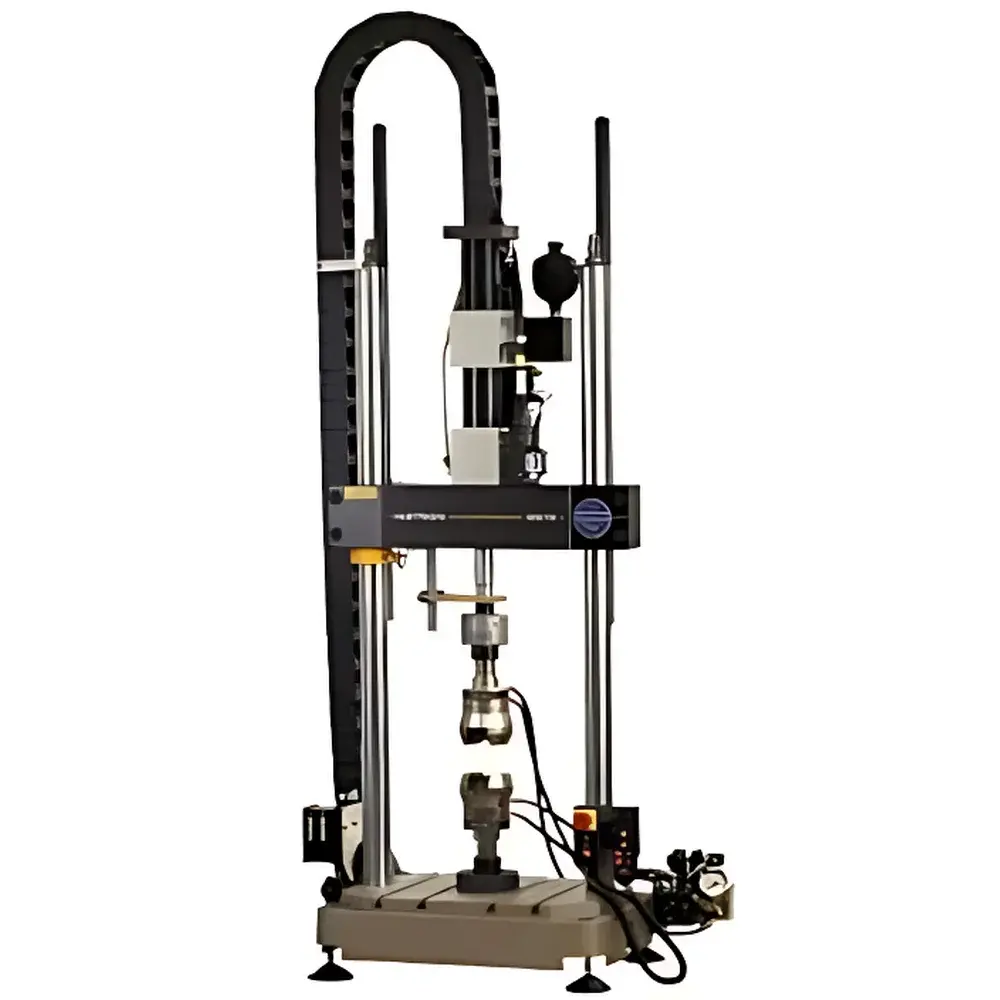
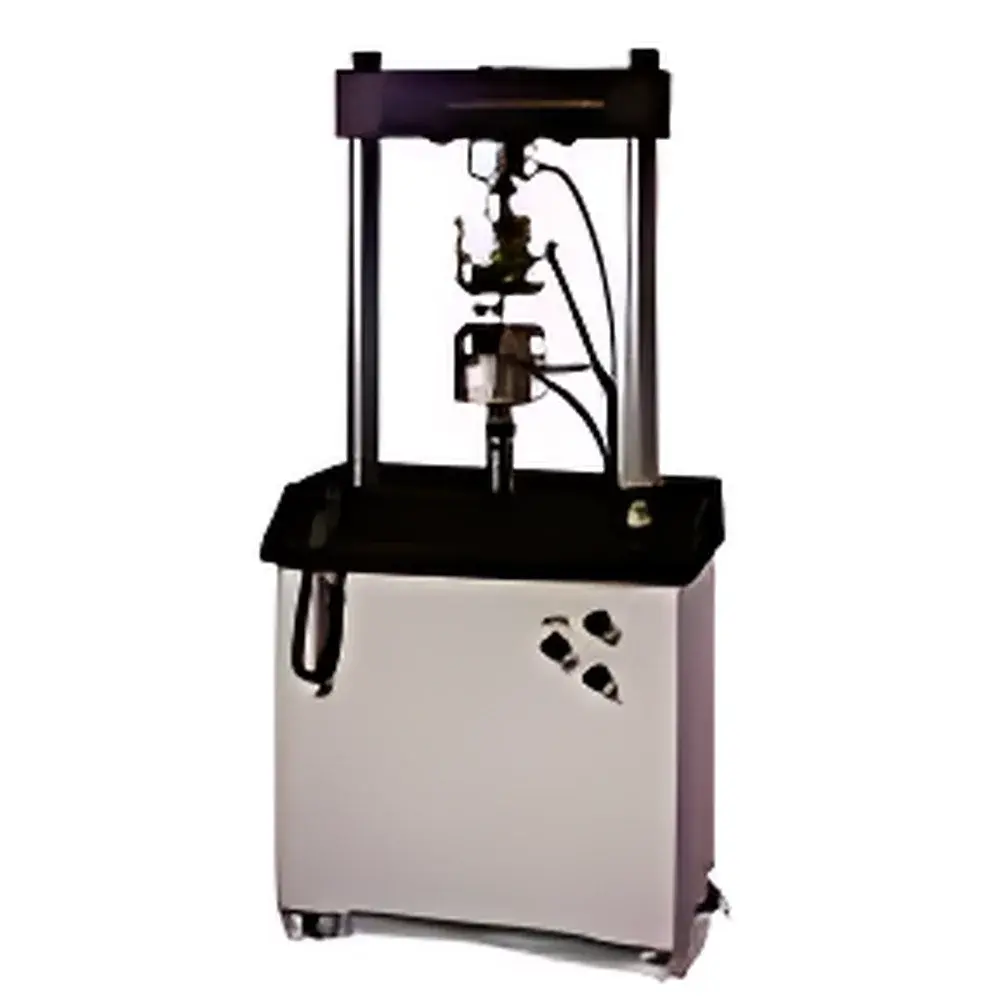
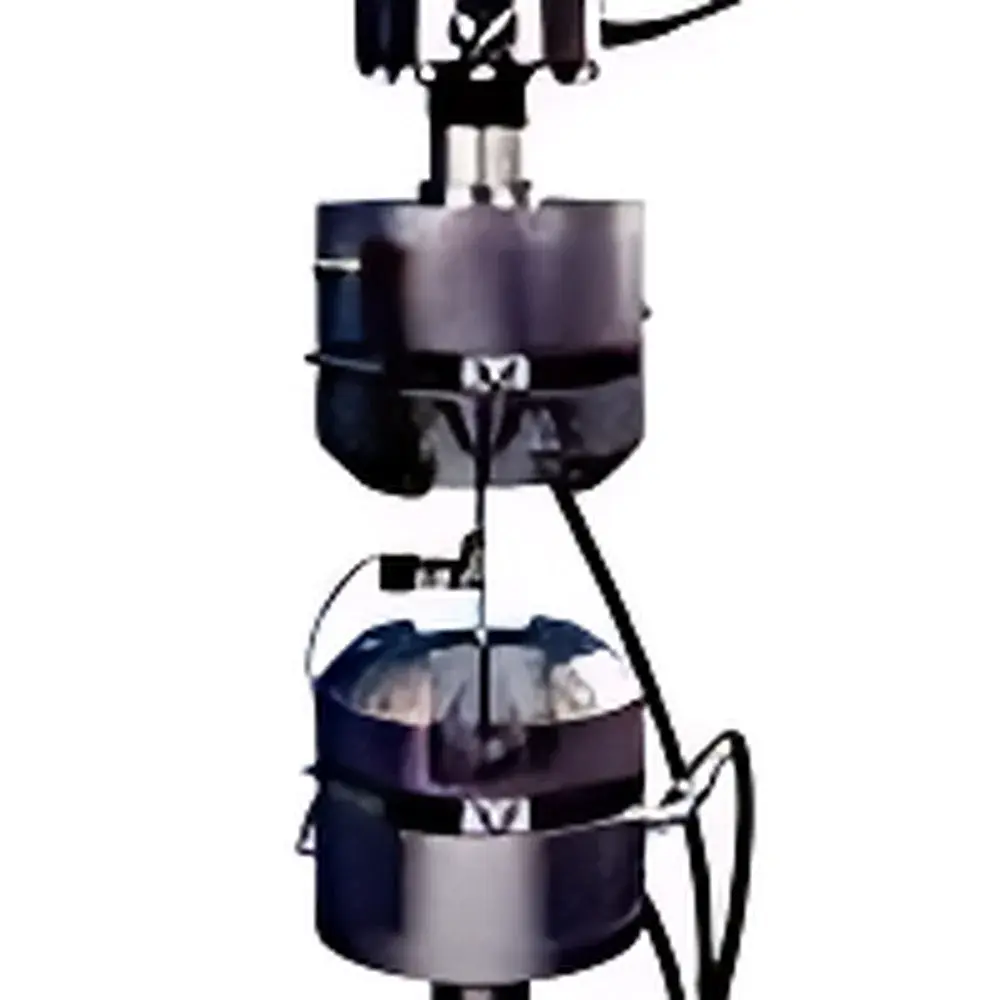
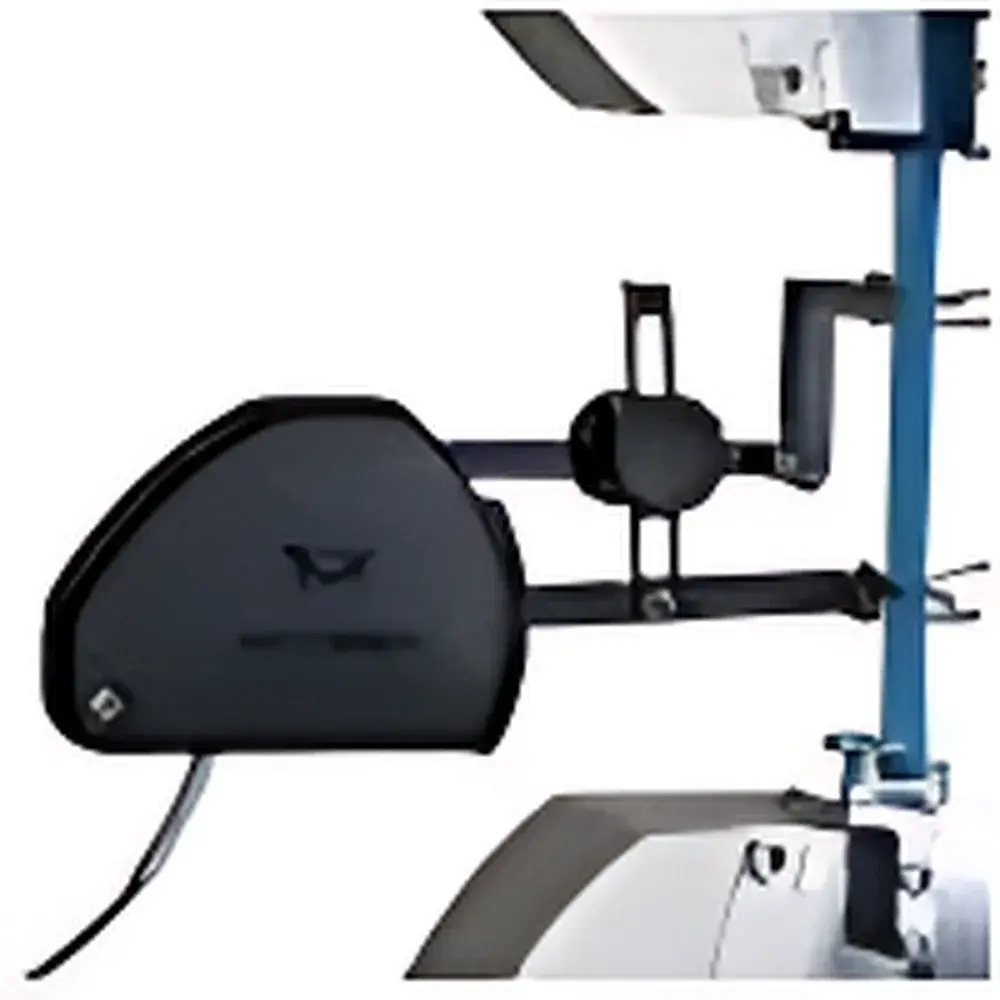
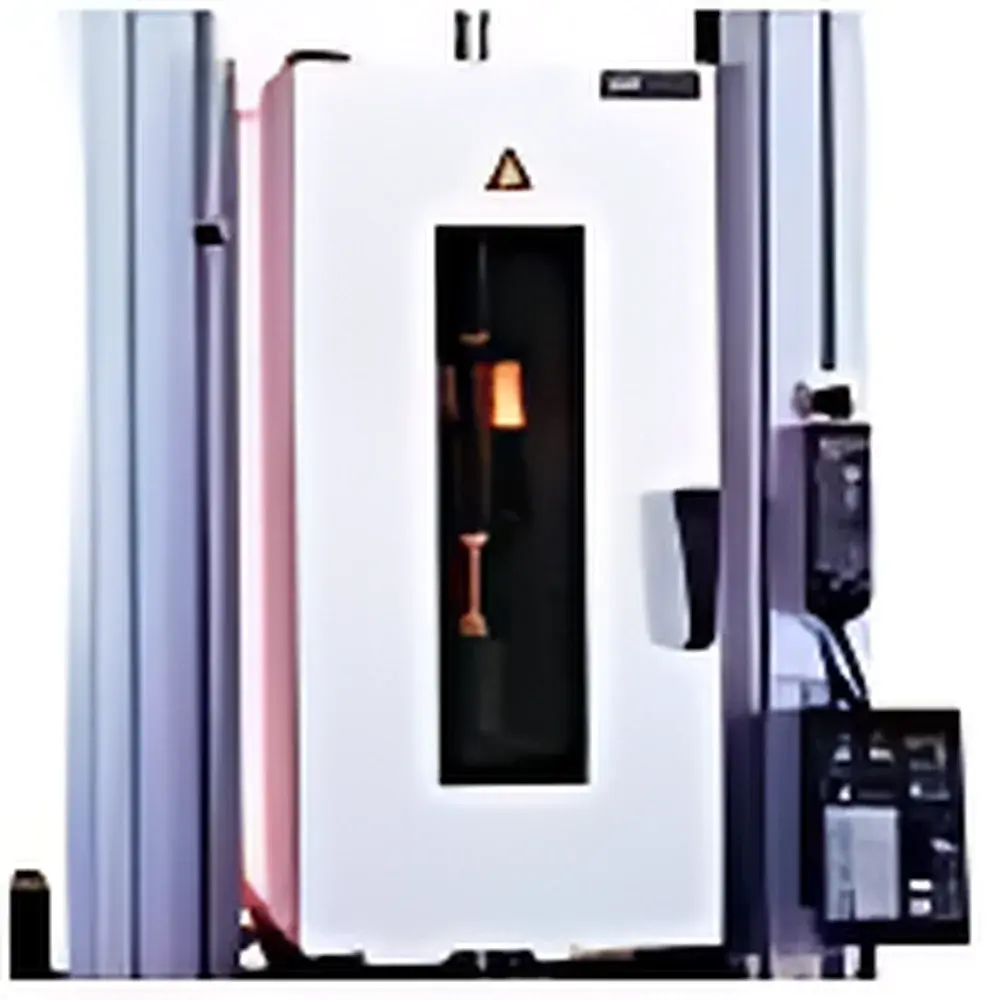
INSTRON 8801 Electro-Hydraulic Servo Fatigue Testing System
| Brand | INSTRON |
|---|---|
| Origin | United Kingdom |
| Model | 8801 |
| Maximum Test Force | ±100 kN |
| Frequency Range | 0.1–50 Hz |
| Host Weight | 500 kg |
| Controller | INSTRON 8800 Digital Controller |
| Load Cell Technology | Dynacell™ |
| Software Platforms | Bluehill® (static), WaveMatrix™ (cyclic) |
| Compliance | ASTM E4, E8, E606, E647, ISO 1099, ISO 6892-1, BS 7270, EN 6072 |
Overview
The INSTRON 8801 Electro-Hydraulic Servo Fatigue Testing System is a high-precision, dual-actuator materials testing platform engineered for rigorous static and dynamic mechanical characterization. Based on closed-loop electro-hydraulic servo control architecture, the system delivers precise force, displacement, and strain regulation across a broad frequency spectrum—from quasi-static loading up to 50 Hz sinusoidal or complex waveform cycling. Its modular mechanical frame supports both standard and extra-high-stroke configurations, enabling full-scale evaluation of structural components, aerospace alloys, biomedical implants, and advanced composites under controlled thermal-mechanical boundary conditions. Designed in accordance with fundamental principles of fracture mechanics and fatigue life prediction, the 8801 integrates seamlessly into laboratories operating under GLP, GMP, or ISO/IEC 17025-accredited quality frameworks.
Key Features
- ±100 kN axial load capacity with high stiffness frame (≥1.2 MN/mm) and sub-micron alignment repeatability
- Dynacell™ integrated load cell technology—patented inertial compensation eliminates parasitic loads from fixture mass and acceleration effects during high-frequency cycling
- 8800 Series digital controller featuring real-time adaptive PID tuning, 10 kHz sampling rate, and deterministic loop timing for waveform fidelity at 50 Hz
- Modular hydraulic power unit (HPU) with pressure-regulated servo valves, low-noise pump design, and integrated oil conditioning (filtration, cooling, level monitoring)
- Standard test space accommodates specimens up to 1,200 mm in height; optional extended-height frames support large-scale component testing
- Interlocked safety architecture compliant with ISO 13857 and IEC 61508 SIL2 requirements, including emergency stop circuits, hydraulic pressure dump valves, and position-limit hard stops
Sample Compatibility & Compliance
The 8801 accommodates a wide range of specimen geometries—including round, rectangular, notched, compact tension (CT), middle-crack tension (M(T)), and single-edge notched bend (SENB) configurations—via interchangeable grip systems (pneumatic, wedge, hydraulic, or thread-type). It supports standardized test methods per ASTM E606 (strain-controlled fatigue), ASTM E647 (crack growth rate), ASTM E466 (force-controlled constant amplitude), and ISO 1099 (fatigue testing of metallic materials). All hardware and firmware are validated for traceable calibration in accordance with ISO/IEC 17025 and NIST-traceable reference standards. The system meets electromagnetic compatibility (EMC) requirements per EN 61326-1 and is CE-marked for use in EU-based research and industrial QA/QC environments.
Software & Data Management
Control and data acquisition are managed through INSTRON’s Bluehill® Universal software for static tests (tensile, compression, flexure, shear) and WaveMatrix™ for advanced cyclic protocols—including block loading, spectrum loading, thermomechanical fatigue (TMF), and crack propagation tracking. Both platforms support audit-trail logging, electronic signatures, and 21 CFR Part 11-compliant user access controls. Raw data streams are captured at ≥1 kHz with synchronized analog inputs (e.g., extensometer, thermocouple, acoustic emission channels). Export formats include CSV, XML, and INSTRON’s native .iqw format, compatible with MATLAB®, Python-based post-processing pipelines, and third-party S-N curve analysis tools. Calibration certificates and system verification reports are digitally archived with time-stamped metadata.
Applications
The 8801 serves as a core platform for R&D and certification testing in aerospace (turbine disk, landing gear, fastener fatigue), automotive (chassis components, suspension arms, weld joints), energy (wind turbine blade root sections, nuclear cladding), and biomedical (orthopedic implant endurance, dental alloy fatigue). It enables high-cycle fatigue (HCF) studies above 10⁶ cycles and low-cycle fatigue (LCF) regimes down to <10⁴ cycles, with accurate hysteresis loop quantification and in-situ strain mapping when coupled with digital image correlation (DIC) systems. Its robust architecture supports integration with environmental chambers (−100°C to +1,000°C), vacuum enclosures, and corrosion cells for multi-physics degradation modeling.
FAQ
What is the minimum resolvable force resolution at ±100 kN full scale?
Force resolution is ≤0.02% of full scale (±20 N), verified per ASTM E4 Annex A3 using calibrated deadweight standards.
Can the 8801 perform thermomechanical fatigue (TMF) testing?
Yes—when integrated with a programmable environmental chamber and synchronized thermal control module, the system executes out-of-phase or in-phase TMF waveforms with temperature ramp rates up to 50°C/min.
Is remote monitoring and diagnostics supported?
The 8800 controller includes embedded Ethernet connectivity and INSTRON Connect™ web interface for real-time status viewing, alarm notifications, and secure firmware updates via HTTPS.
Does the system comply with FDA 21 CFR Part 11 for regulated biocompatibility testing?
Bluehill® and WaveMatrix™ software versions 4.0+ provide full Part 11 compliance—including audit trails, role-based permissions, electronic signatures, and data integrity validation reports.
What maintenance intervals are recommended for the hydraulic power unit?
Oil analysis and filter replacement every 2,000 operational hours or annually (whichever occurs first); full HPU service—including valve recalibration and accumulator precharge verification—is recommended every 10,000 hours.



