
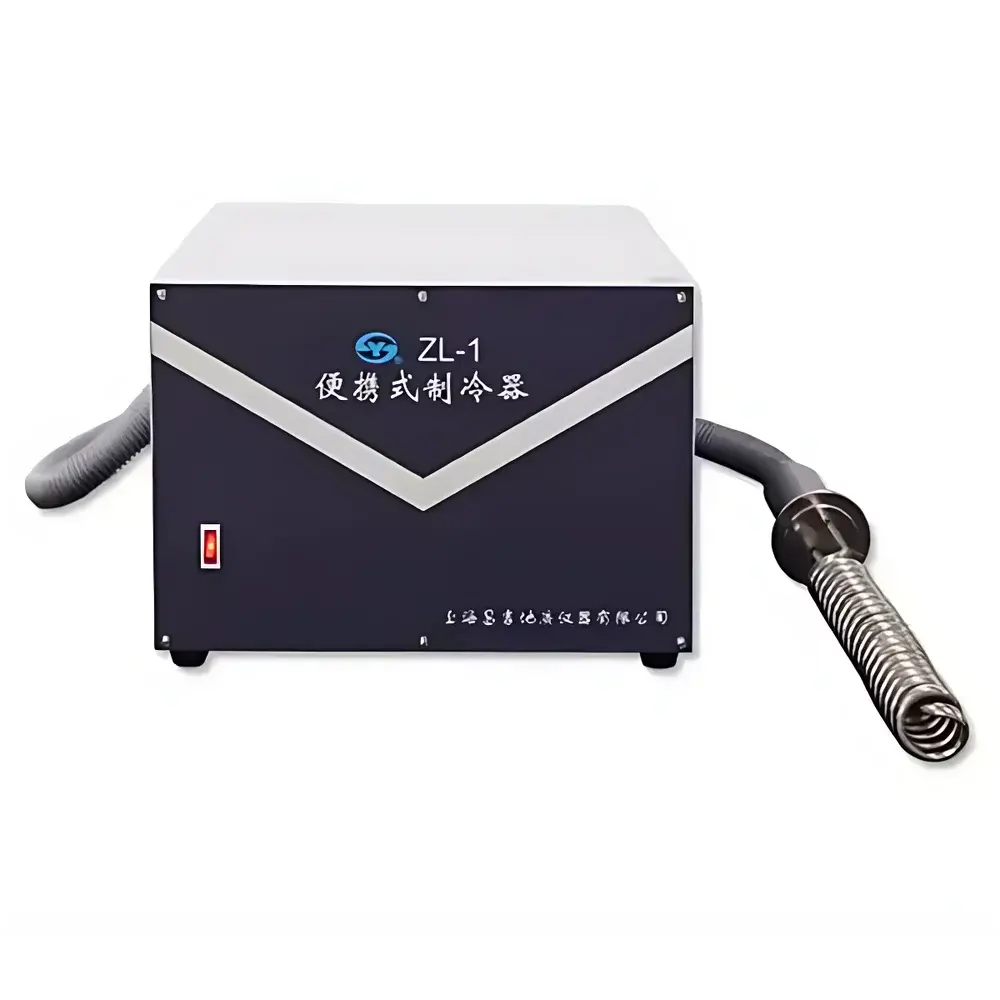
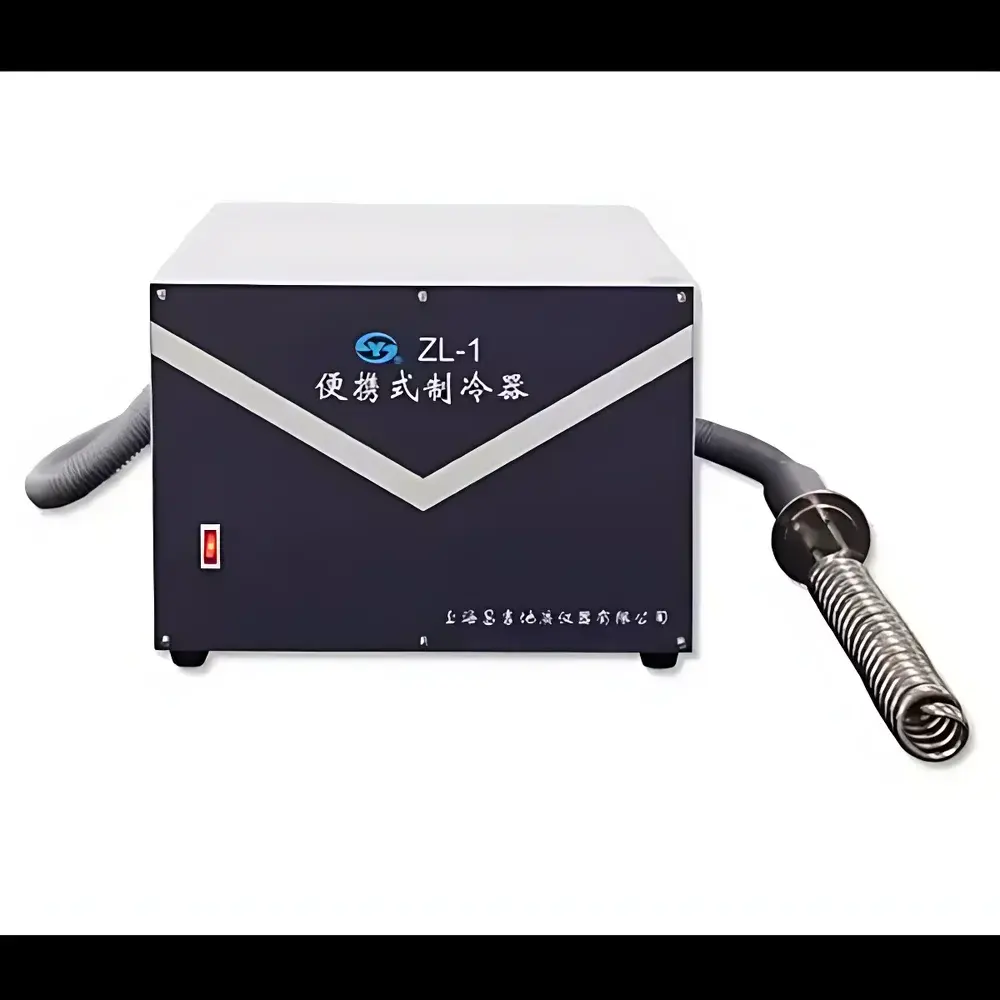
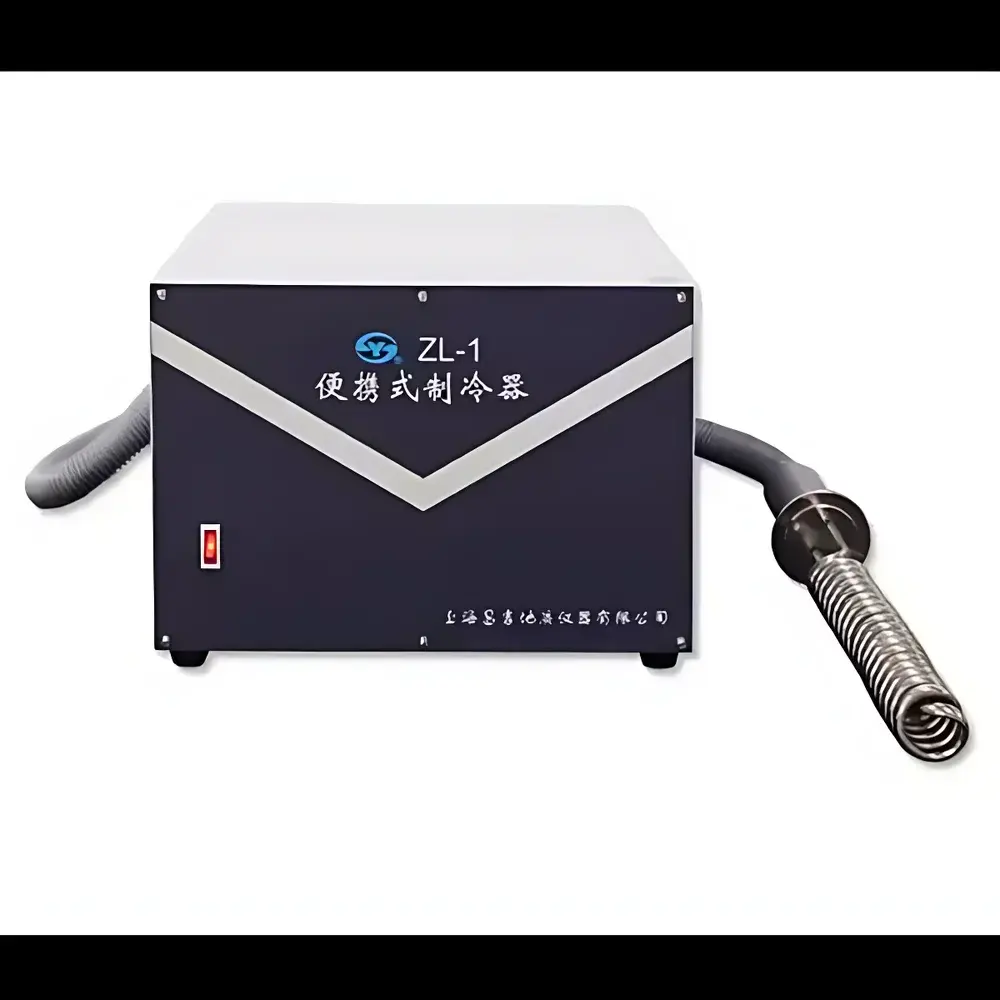
Changji Instruments ZL-1 Portable Immersion Chiller
| Brand | Changji Instruments |
|---|---|
| Origin | Shanghai, China |
| Manufacturer Type | Authorized Distributor |
| Country of Origin | China |
| Model | ZL-1 |
| Power Supply | AC 220 V ±10%, 50 Hz |
| Total Power Consumption | 200 W |
| Compressor Type | Hermetic Refrigeration Compressor |
| Refrigerant | R-134a (Environmentally Friendly) |
Overview
The Changji Instruments ZL-1 Portable Immersion Chiller is an engineered solution for precise, on-demand temperature control in laboratory-scale liquid baths. Designed specifically to address ambient temperature drift in analytical and physical testing environments—particularly where ambient conditions exceed required test temperatures—the ZL-1 operates on a direct-contact immersion principle. It utilizes a hermetically sealed refrigeration system with R-134a refrigerant to deliver rapid thermal transfer directly into the test medium via a stainless-steel immersion probe. Unlike recirculating chillers or external bath coolers, the ZL-1 eliminates secondary heat exchange losses and minimizes thermal lag, making it especially suitable for applications requiring responsive, localized cooling within open or semi-enclosed vessels. Its compact footprint and low-mass construction allow seamless integration into benchtop workflows without dedicated utility connections beyond standard AC power.
Key Features
- Compact, lightweight design optimized for portability and space-constrained laboratories.
- Direct immersion cooling architecture ensures fast thermal response and high energy efficiency.
- Hermetic compressor delivers stable, low-vibration operation with extended service life and minimal maintenance requirements.
- R-134a refrigerant complies with international environmental standards (Montreal Protocol Annex A, Group II), ensuring ozone depletion potential (ODP) = 0 and low global warming potential (GWP ≈ 1430).
- Integrated thermal safety cutoff prevents dry-run operation and overheating during transient load conditions.
- Universal compatibility with standard laboratory glassware and metal bath vessels (minimum internal diameter ≥ 80 mm recommended for optimal circulation).
Sample Compatibility & Compliance
The ZL-1 is compatible with aqueous solutions, organic solvents (excluding highly volatile or corrosive media such as concentrated acids, halogenated hydrocarbons, or sodium hypochlorite), and silicone-based thermal fluids commonly used in viscosity and density testing. It is routinely deployed alongside Changji’s DV series rotational viscometers, SYD-265 series kinematic viscosity testers, and SH0168 foam stability analyzers—all of which require controlled bath temperatures per ASTM D445, ISO 3104, and GB/T 265. While the ZL-1 itself is not certified to UL/CSA or CE for standalone safety compliance, its electrical design conforms to IEC 61010-1:2010 (Edition 3) for laboratory equipment, and its refrigerant handling follows ISO 5149-2:2014 guidelines for hermetic systems. Users operating under GLP or GMP frameworks may incorporate ZL-1 operational logs and temperature verification records into audit-ready documentation packages.
Software & Data Management
The ZL-1 operates as a stand-alone analog-controlled chiller without embedded microprocessors or digital interfaces. Temperature regulation is achieved manually via front-panel adjustment of cooling output intensity—not setpoint-based PID control. As such, it does not generate electronic data logs, lack USB/Ethernet connectivity, and is not compliant with FDA 21 CFR Part 11 for electronic records. However, when paired with externally calibrated PT100 probes and third-party data loggers (e.g., Omega OM-DAQPRO-5300 or Testo 176 T4), users can document bath temperature profiles over time to satisfy ISO/IEC 17025 traceability requirements. Routine calibration verification is recommended at least quarterly using NIST-traceable reference thermometers.
Applications
- Supplemental cooling for rotational viscometry (e.g., Brookfield-type measurements requiring bath stabilization at 25 °C, 40 °C, or 100 °C).
- Thermal conditioning of kinematic viscosity baths per ASTM D445 and ISO 3104.
- Temperature control in petroleum product foam stability tests (ASTM D892, GB/T 12579).
- Stabilization of density measurement baths for ASTM D1298 and ISO 3675.
- General-purpose lab cooling for calorimetry pre-equilibration, reagent storage baths, or sample pre-chilling prior to chromatographic injection.
FAQ
Can the ZL-1 be used with flammable solvents such as acetone or ethanol?
Yes—provided the solvent is non-corrosive and has a flash point above 35 °C. Direct immersion is not recommended for low-flash-point solvents (<20 °C) due to potential vapor accumulation near the compressor housing.
What is the minimum bath volume required for effective operation?
A minimum working volume of 1.5 L is advised to ensure adequate thermal mass and prevent rapid temperature overshoot; smaller volumes may result in unstable regulation.
Is the ZL-1 suitable for continuous 24/7 operation?
It is rated for intermittent duty cycles up to 8 hours per day. Continuous operation requires periodic shutdown (≥30 min every 6 h) to mitigate compressor thermal stress.
Does the unit include a built-in temperature sensor or display?
No—temperature monitoring must be performed externally using a calibrated probe and readout device.
Can the immersion probe be cleaned with isopropyl alcohol?
Yes—the stainless-steel probe surface is chemically resistant to IPA, ethanol, and mild aqueous detergents; avoid abrasive cleaning agents or ultrasonic baths.



