
Chemtrix 3D-Printed Flow Reactor System
| Brand | Chemtrix |
|---|---|
| Origin | Germany |
| Model | 3D-Printed |
| Temperature Range | −100 to 300 °C |
| Pressure Range | 0–100 bar |
| Reaction Volume Options | 1, 2, 4, 8 mL |
| Number of Reaction Units | 4 |
| Flow Rate | 12.5–200 mL/min (up to 12 kg/h) |
| Wetted Materials | 316L Stainless Steel |
| Manufacturing Process | Selective Laser Melting (SLM) |
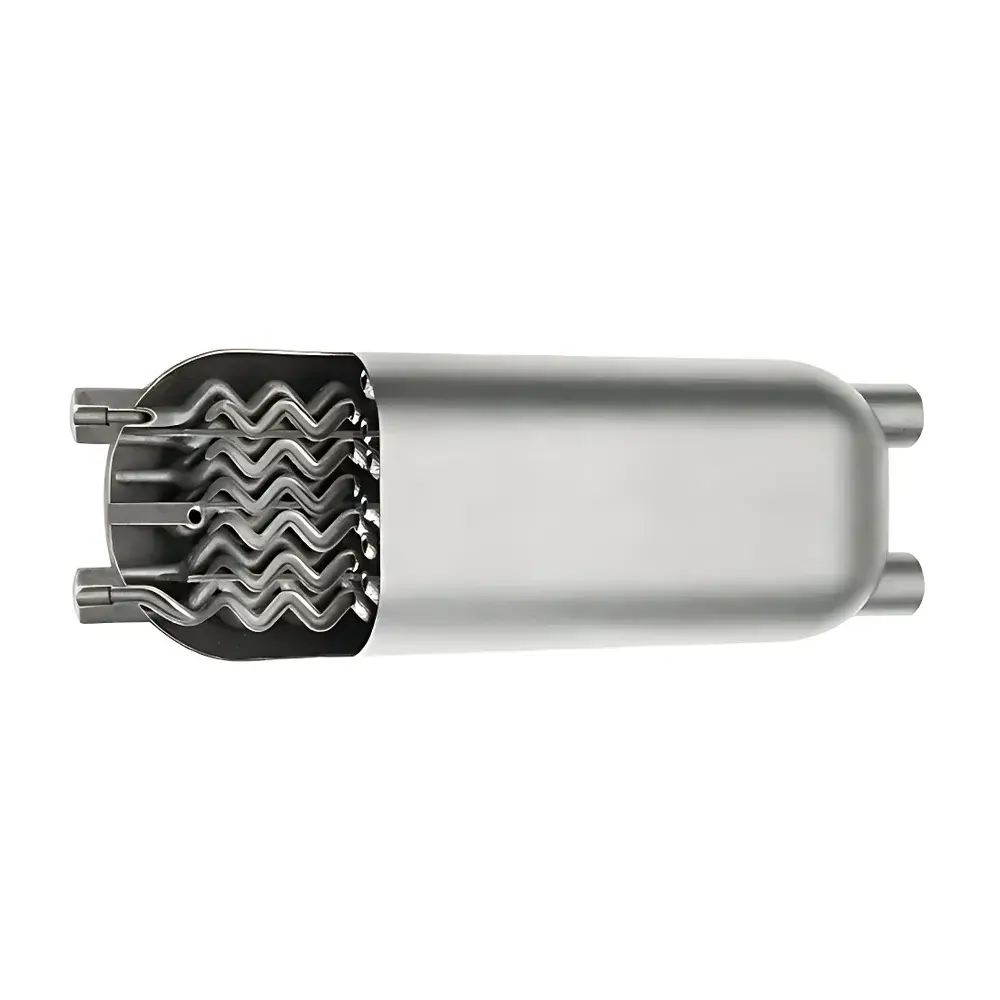
| Channel Geometry | Zig-Zag Microstructured Flow Path |
Overview
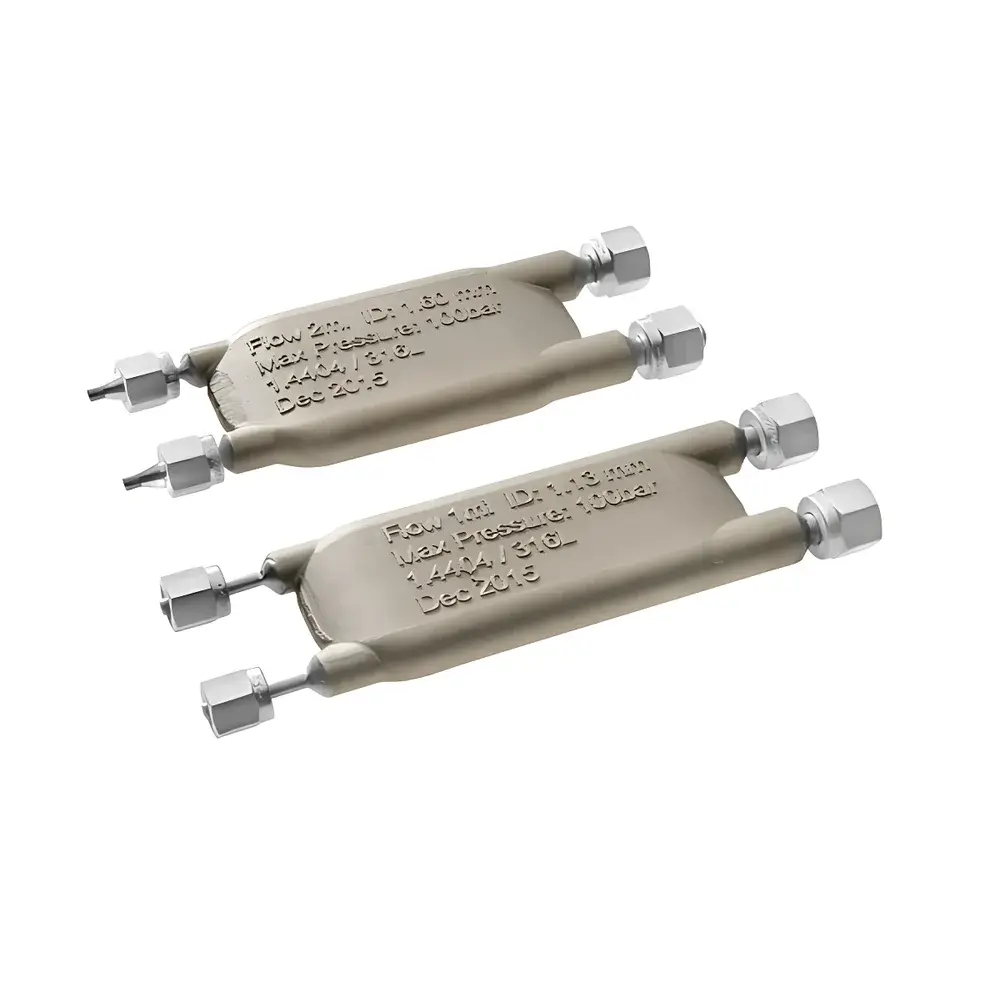
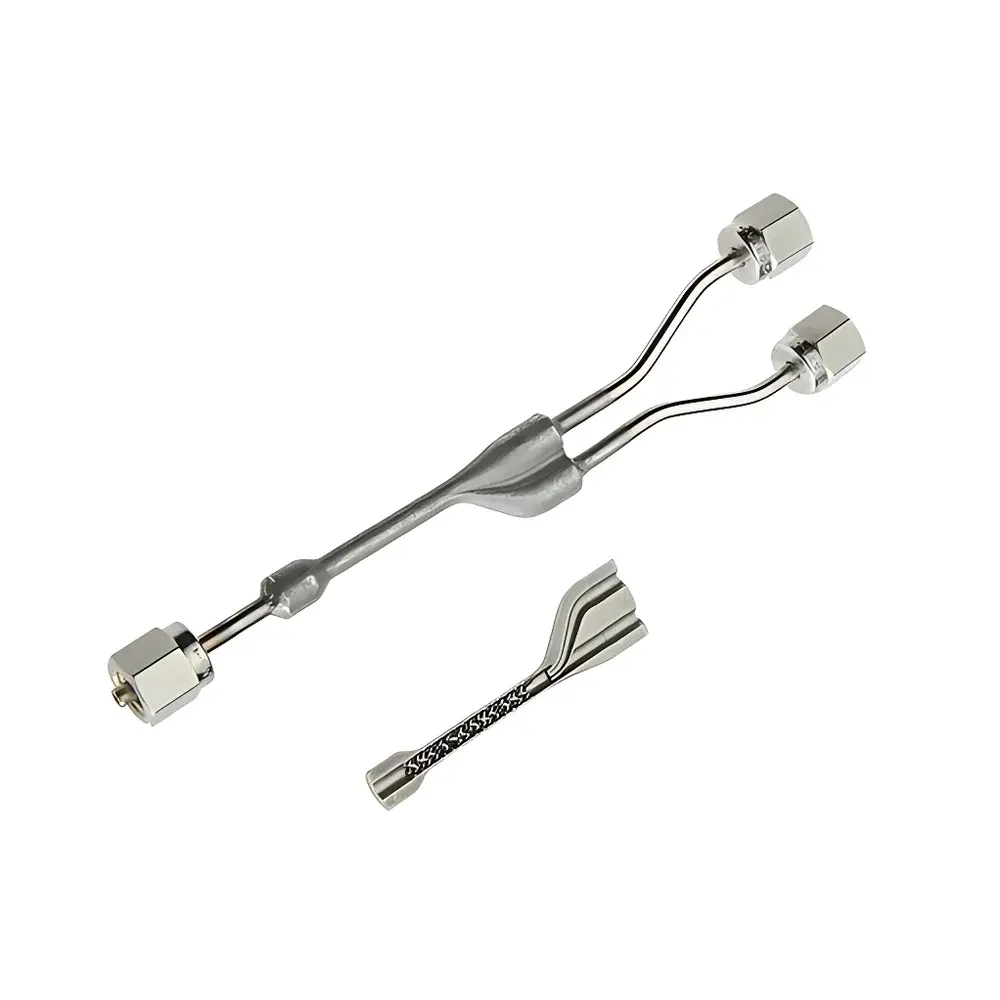
The Chemtrix 3D-Printed Flow Reactor System is an engineered platform for continuous-flow chemical synthesis under precisely controlled thermal and pressure conditions. Built using additive manufacturing via Selective Laser Melting (SLM), each reactor module is fabricated from biocompatible, corrosion-resistant 316L stainless steel—ensuring mechanical integrity across extreme operating windows from −100 °C to 300 °C and up to 100 bar. The core architecture features a zig-zag microchannel geometry optimized for enhanced radial mixing, minimized axial dispersion, and uniform residence time distribution—critical parameters for reproducible kinetic studies and scalable reaction development. Unlike conventional batch or fixed-geometry flow reactors, this system enables modular configuration: up to four identical or functionally differentiated units can be arranged in series (for multi-step cascades) or parallel (for throughput scaling or parameter screening), supporting both exploratory lab-scale investigation and pre-pilot process validation.
Key Features
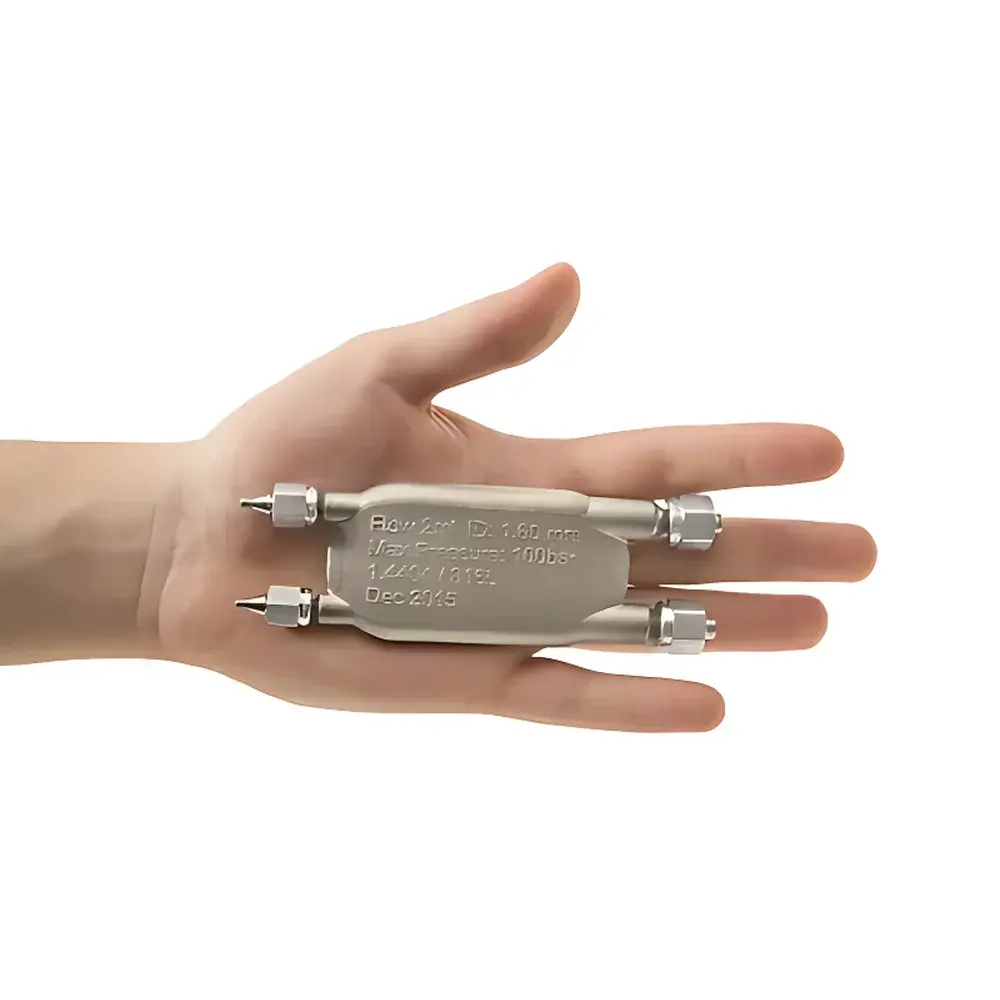
- Modular design with four interchangeable reaction units—each available in discrete internal volumes (1 mL, 2 mL, 4 mL, and 8 mL)—enabling systematic volume-to-residence-time mapping.
- Zig-zag flow path geometry manufactured via SLM ensures high surface-area-to-volume ratio, promoting rapid heat exchange and efficient mass transfer without compromising pressure drop predictability.
- Full compatibility with cryogenic cooling (down to −100 °C) and high-temperature operation (up to 300 °C), validated for use with aggressive reagents including strong acids, halogenated solvents, and organometallic precursors.
- Seamless integration with standard HPLC-grade fluidic components (e.g., Swagelok fittings, PTFE/PEEK tubing) and third-party pumps, back-pressure regulators, and in-line analytics (FTIR, UV-Vis).
- German-engineered construction adhering to DIN EN ISO 9001-certified manufacturing protocols; all wetted surfaces electropolished to Ra < 0.4 µm for reduced fouling and improved cleanability.
Sample Compatibility & Compliance
The reactor system accommodates homogeneous liquid-phase reactions, gas–liquid hydrogenations, photochemical transformations (when coupled with external LED arrays), and heterogeneous catalysis using packed-bed inserts. Its 316L stainless steel construction complies with ASTM A276 and EN 10088-1 standards for corrosion resistance in acidic and chloride-containing media. The design supports GLP-compliant operation when integrated with audit-trail-capable control software and calibrated temperature/pressure transducers traceable to NIST standards. While not intrinsically rated for ATEX Zone 1 deployment, it may be operated in certified fume hoods or explosion-proof enclosures per IEC 60079-10-1 guidelines when handling flammable solvents at elevated temperatures.
Software & Data Management
The Chemtrix 3D-Printed Flow Reactor operates as a hardware-agnostic platform—no proprietary controller is required. Users typically interface via industry-standard PID controllers (e.g., Eurotherm, Watlow) or programmable logic controllers (PLCs) configured for ramp-hold profiles, cascade temperature-pressure coupling, or feed-forward flow compensation. All operational parameters—including real-time temperature gradients across the reactor length, inlet/outlet pressure differentials, and cumulative mass flow—are logged in CSV or HDF5 format for post-acquisition analysis in MATLAB, Python (Pandas/NumPy), or commercial process modeling tools (Aspen Custom Modeler, gPROMS). When deployed in regulated environments (e.g., pharmaceutical API route scouting), data integrity is maintained through 21 CFR Part 11–compliant electronic signatures and immutable audit trails when paired with validated SCADA systems.
Applications
- Process feasibility assessment of exothermic nitration, diazotization, or Grignard addition—where precise thermal management prevents runaway events.
- Rapid screening of catalyst loading, residence time, and stoichiometric ratios in multi-variable DoE campaigns.
- Development of telescoped synthetic sequences (e.g., A + B → P₁; P₁ + C → P₂) without intermediate isolation—reducing solvent waste and handling risk.
- Scale-up correlation studies from mL/min to kg/h flow rates using geometrically similar reactor modules—supporting QbD-aligned technology transfer.
- Safe handling of thermally unstable intermediates (e.g., diazo compounds, acyl nitrates) via sub-second residence time control at cryogenic conditions.
FAQ
Can the reactor modules be cleaned in place (CIP) without disassembly?
Yes—each unit is designed for full CIP using compatible solvents and pressurized nitrogen purge; recommended cleaning cycles follow ASTM E2656 protocols for residual carryover validation.
Is custom channel geometry available beyond the standard zig-zag layout?
Yes—Chemtrix offers bespoke SLM design services under NDA; typical lead time for validated custom modules is 8–12 weeks from CAD approval.
What is the maximum achievable Reynolds number within the 1 mL module at full flow?
At 200 mL/min and 25 °C with methanol, Re ≈ 2,100—confirming transitional laminar-to-turbulent flow behavior suitable for mixing-sensitive reactions.
Are replacement seals and O-rings supplied with the system?
Standard Viton and Kalrez sealing kits are included; material compatibility matrices for alternative elastomers (e.g., EPDM, FFKM) are provided upon request.
Does the system support integration with real-time reaction calorimetry?
Yes—reactor manifolds include dedicated thermocouple ports (Type K, 0.5 mm diameter) aligned with axial temperature gradient measurement per ISO 11357-7 for reaction enthalpy estimation.



