
Chemtrix Labtrix Start Glass Microchannel Reactor
| Brand | Chemtrix |
|---|---|
| Origin | Netherlands |
| Model | Labtrix Start |
| Flow Rate | 0.1–100 µL/min |
| Reaction Volume | 1–19.5 µL |
| Channel Dimensions | 120 µm × 300 µm |
| Max Operating Pressure | 20 bar |
| Temperature Range | −20 to 195 °C |
| Wetted Materials | Borosilicate Glass, PTFE, ETFE, FFKM |
| Dimensions (W×D×H) | 1000 × 800 × 150 mm |
Overview
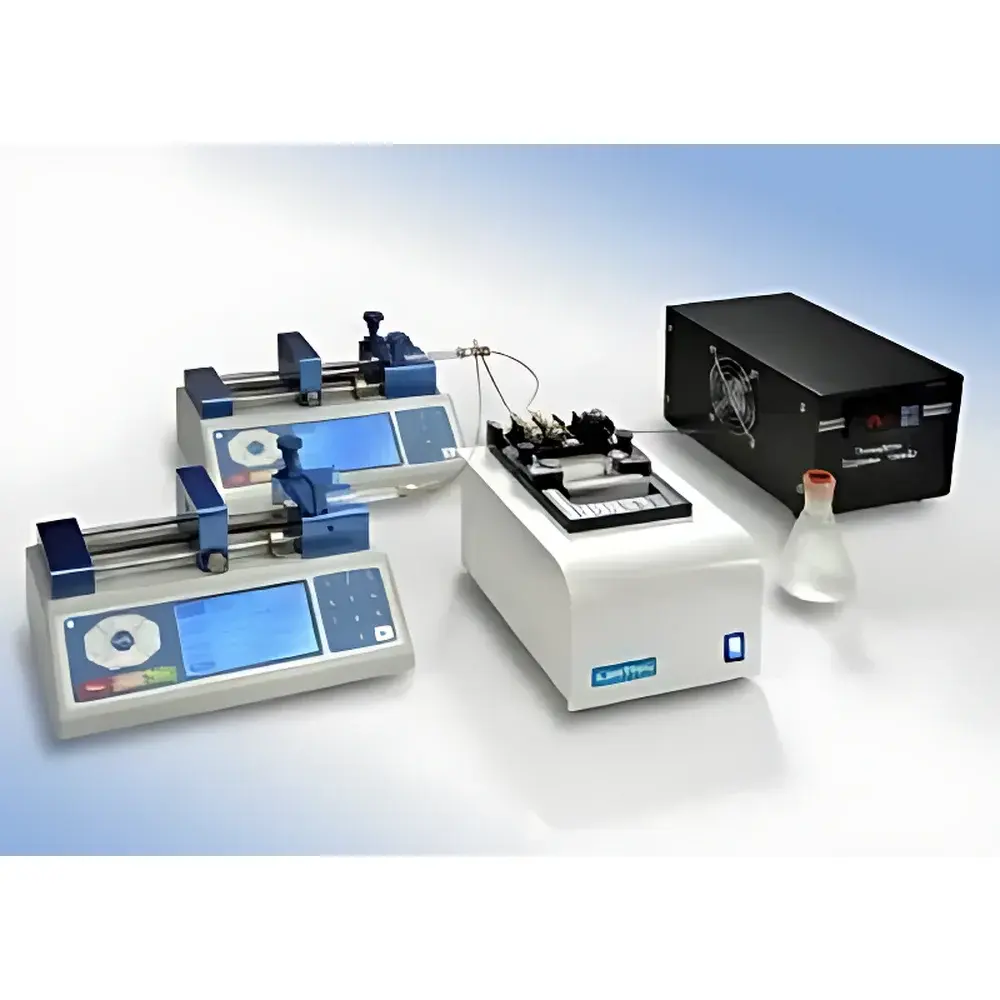
The Chemtrix Labtrix Start is a benchtop, manually operated glass microchannel reactor designed for rapid screening and feasibility assessment of continuous flow chemical reactions in academic laboratories, pharmaceutical R&D departments, and fine chemical development units. Engineered on the principle of laminar flow-based mass and heat transfer enhancement within precisely fabricated microfluidic channels, the Labtrix Start enables precise control over residence time, mixing efficiency, temperature, and stoichiometry—key parameters governing reaction selectivity, yield, and reproducibility. Its all-glass fluidic path (borosilicate 3.3) ensures exceptional chemical compatibility with aggressive reagents—including strong acids, bases, halogenated solvents, and organometallics—while delivering optical transparency for real-time visual monitoring and in-line spectroscopic integration (e.g., UV-Vis, FTIR). Unlike batch reactors subject to thermal gradients and mixing limitations, the Labtrix Start leverages high surface-area-to-volume ratios (>10,000 m²/m³) to achieve near-instantaneous heat exchange and sub-millisecond mixing—critical for exothermic, kinetically sensitive, or hazardous transformations.
Key Features
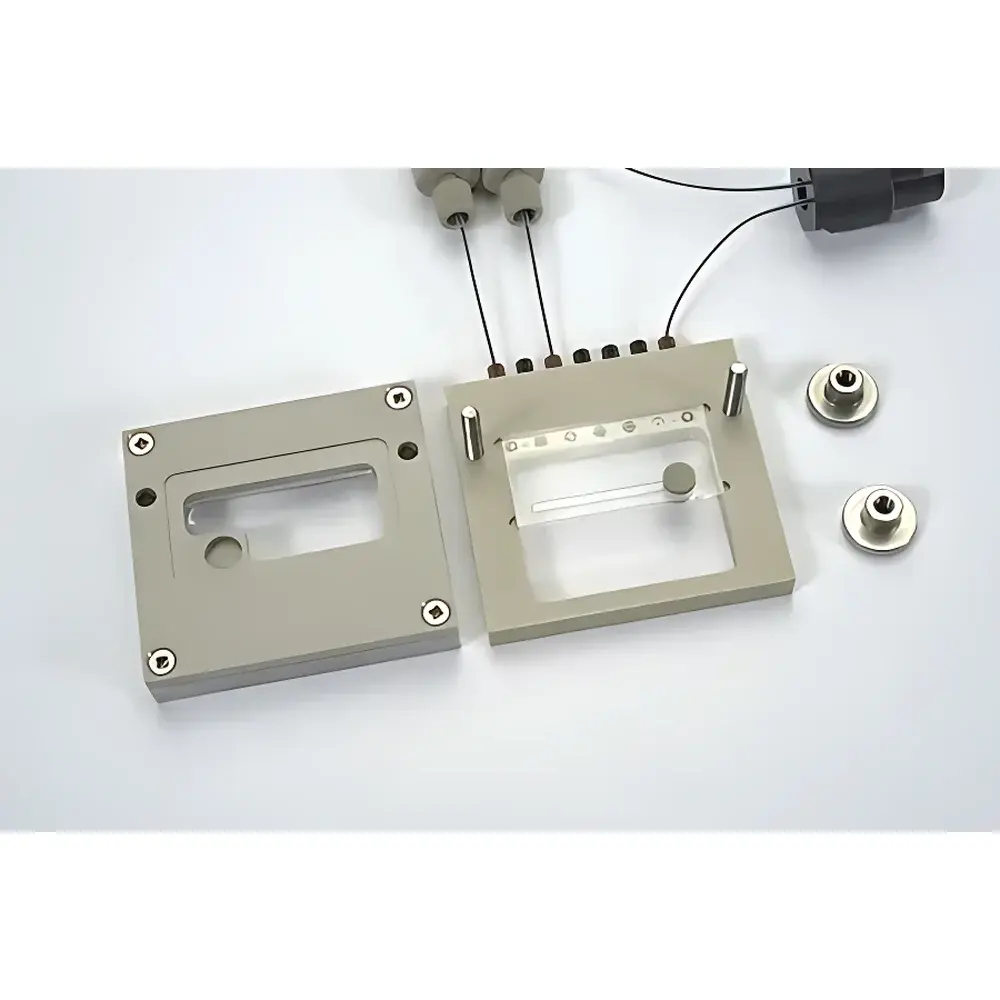
- Glass microfluidic chip with defined channel geometry (120 µm × 300 µm cross-section) enabling predictable laminar flow behavior and calculable residence time distribution
- Modular, plug-and-play architecture with standardized Swagelok®-compatible fittings and pre-aligned tubing connections for rapid system assembly and reconfiguration
- Integrated temperature control via external circulator-compatible jacketed manifold; supports operation from −20 °C to +195 °C with ±0.5 °C stability
- Pressure-rated up to 20 bar, facilitating reactions under elevated pressure conditions (e.g., hydrogenations, supercritical CO₂-assisted synthesis)
- Low dead volume (1–19.5 µL per chip) minimizing reagent consumption—ideal for precious catalysts, isotopically labeled compounds, or toxic intermediates
- Scalable platform: identical fluidic principles and kinetic data generated on Labtrix Start are directly transferable to Chemtrix’s Protrix (pilot scale) and KiloFlow (production scale) systems under ISO 9001-certified process validation frameworks
Sample Compatibility & Compliance
The Labtrix Start accommodates a broad spectrum of liquid-phase chemistries, including but not limited to: nucleophilic substitutions, Suzuki-Miyaura couplings, diazotizations, nitration, photochemical cyclizations, and enzymatic transformations. Its wetted materials—high-purity borosilicate glass, PTFE, ETFE, and perfluoroelastomer (FFKM)—meet USP Class VI and FDA 21 CFR Part 177 requirements for contact with pharmaceutical intermediates. The system complies with CE marking directives (2014/30/EU EMC, 2014/35/EU LVD) and supports GLP/GMP-aligned documentation practices through traceable calibration logs, audit-ready operational records, and optional electronic lab notebook (ELN) integration. While not intrinsically rated for ATEX/IECEx environments, it may be deployed in certified fume hoods for handling Class I flammable vapors per NFPA 45 guidelines.
Software & Data Management
The Labtrix Start operates as a hardware-controlled platform without embedded firmware or proprietary software—intentionally designed for full integration into existing laboratory automation ecosystems. Flow rates are regulated via externally connected syringe or HPLC pumps (e.g., Teledyne ISCO, Thermo Fisher Accela), while temperature and pressure are monitored using third-party calibrated sensors (e.g., Omega PX409, Vaisala HMP7). All process variables are logged via user-defined SCADA or LabVIEW interfaces, supporting CSV export, timestamped metadata tagging, and alignment with electronic quality management systems (eQMS). For regulatory submissions, raw sensor outputs and pump profiles satisfy ALCOA+ data integrity criteria when paired with 21 CFR Part 11-compliant audit trail modules.
Applications
- Rapid reaction scouting across solvent, stoichiometry, temperature, and residence time matrices
- Kinetic profiling of fast reactions (t₁/₂ < 1 s) inaccessible in conventional stirred tanks
- Safety-critical synthesis of unstable intermediates (e.g., diazonium salts, acyl nitrates) with milligram-scale containment
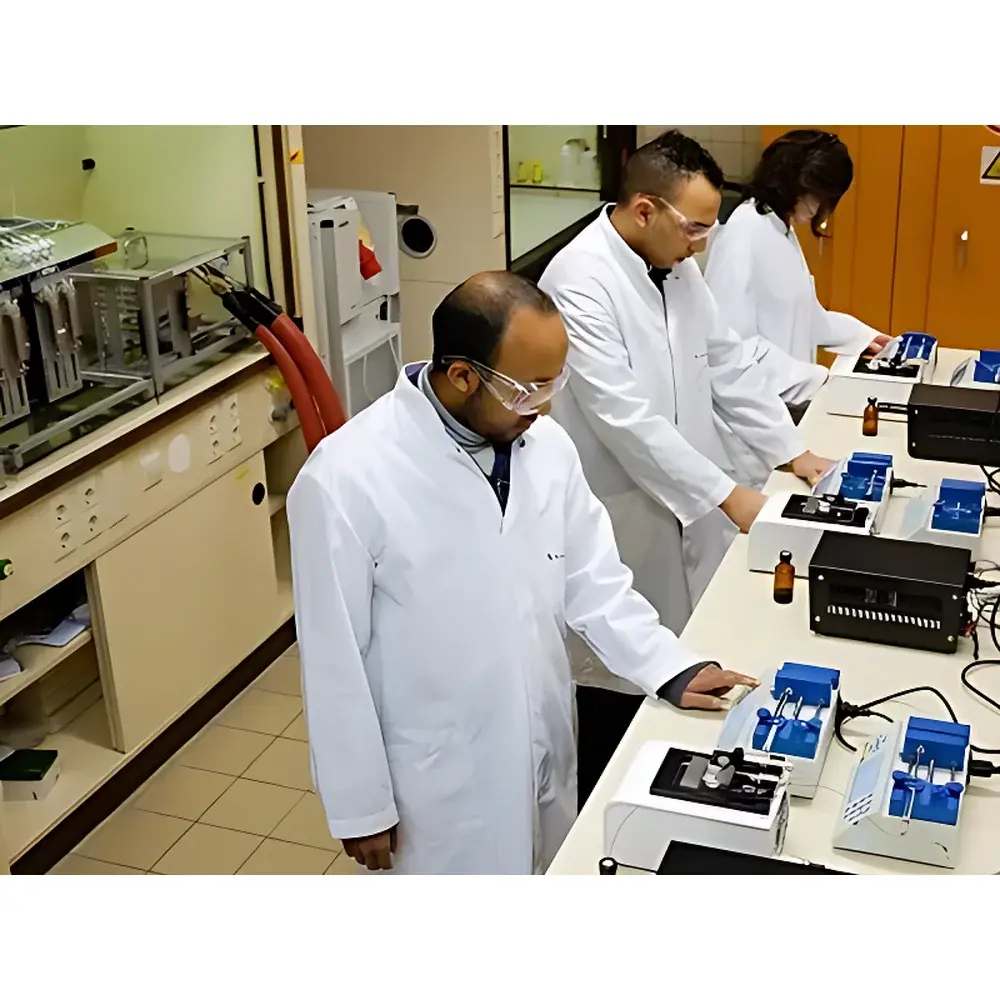
- Teaching core concepts of residence time distribution, Péclet number, and Damköhler number in undergraduate chemical engineering curricula
- Process validation support for QbD (Quality by Design) initiatives in API development per ICH Q5, Q8, and Q9
- Multi-step cascade synthesis via serial chip configuration or integrated quenching zones
FAQ
Is the Labtrix Start suitable for solid-handling or heterogeneous catalysis?
The standard Labtrix Start chip is optimized for homogeneous liquid-phase reactions. For slurries or immobilized catalysts, Chemtrix offers the Labtrix S-series with packed-bed inserts or custom etched structures—subject to particle size ≤10 µm and solids loading <2 wt%.
Can I integrate inline analytics such as FTIR or Raman?
Yes—its optical-grade glass body permits direct coupling to flow cells with standard SMA905 or FC/PC fiber interfaces. Typical path lengths range from 10–50 µm for absorption measurements.
What maintenance is required for long-term reliability?
Routine inspection of PTFE sealing surfaces and periodic replacement of ETFE tubing (recommended every 6 months under continuous use); no consumable chips—glass reactors are chemically inert and indefinitely reusable with proper cleaning protocols (e.g., piranha solution, ultrasonication in acetone).
Does Chemtrix provide application support for method development?
Yes—Chemtrix R&D (based at the University of Hull, UK) offers fee-for-service feasibility studies, kinetic modeling, and scale-up advisory aligned with ASTM E2917 and ISO 13320 standards.



