
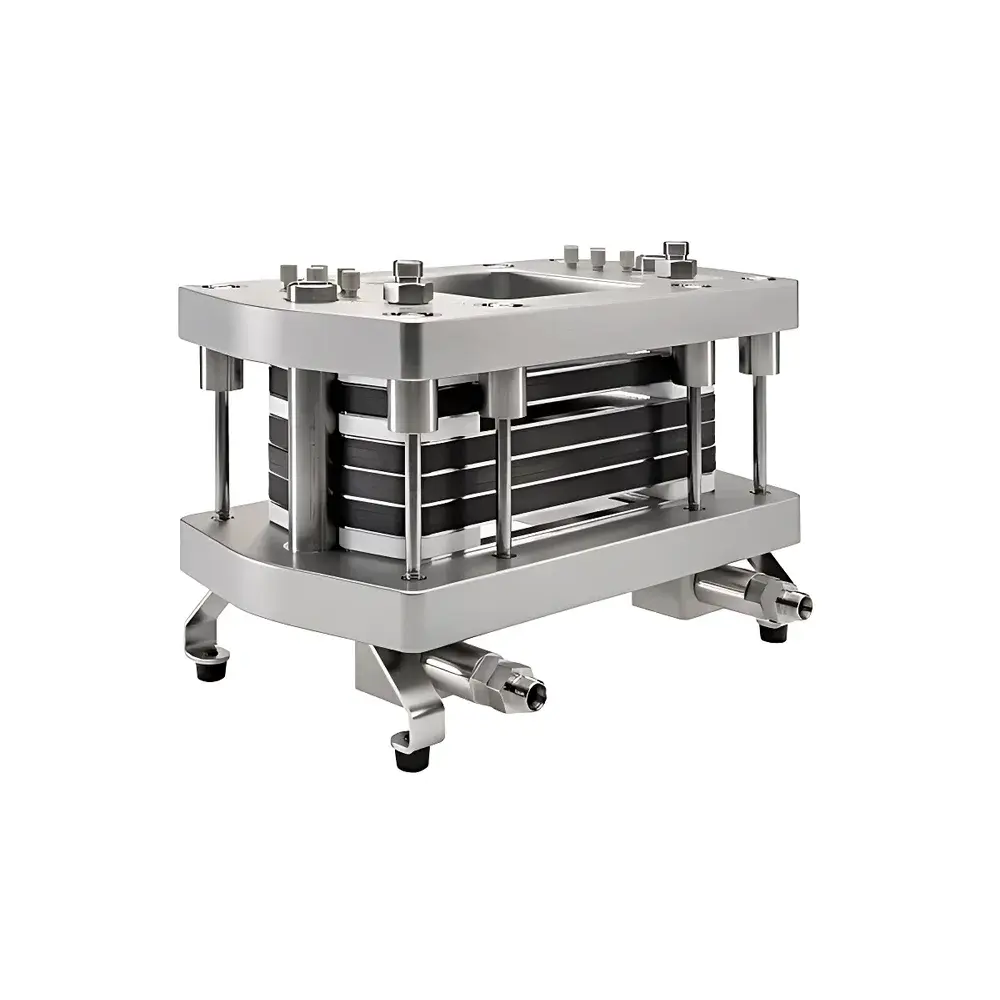
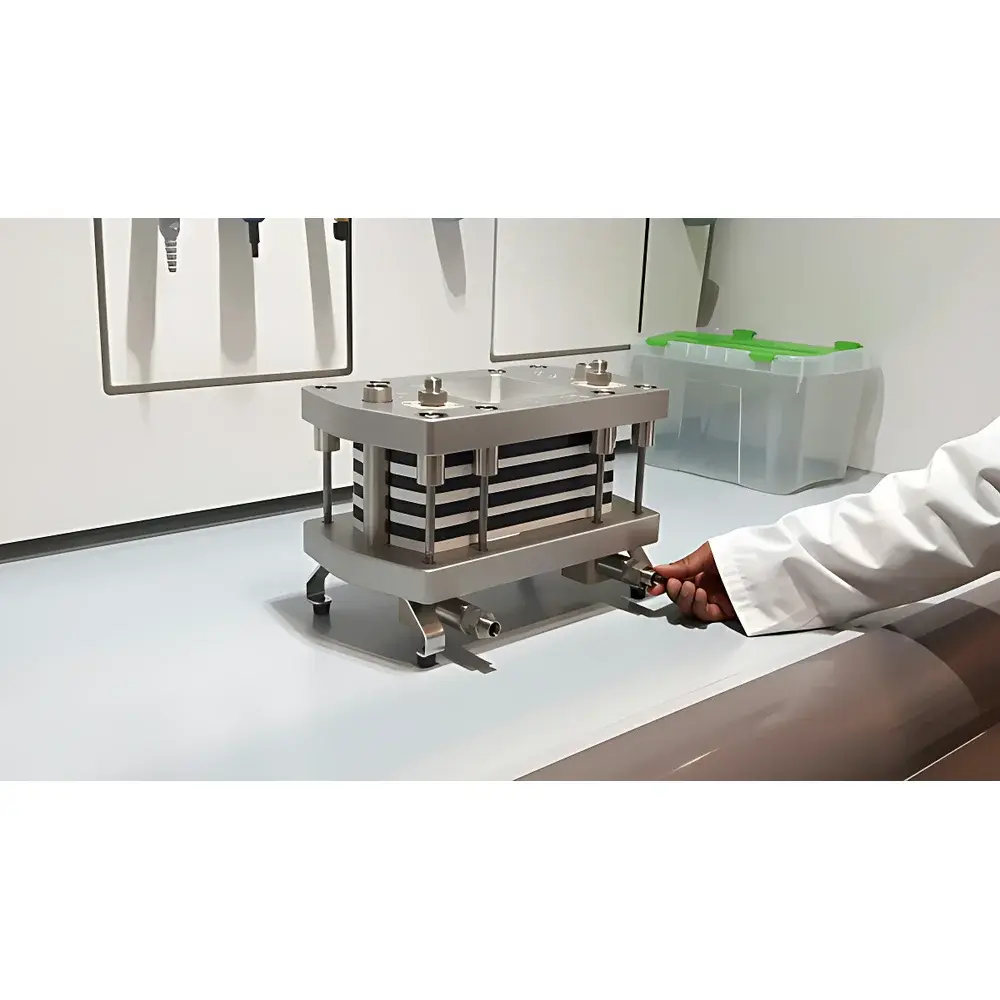
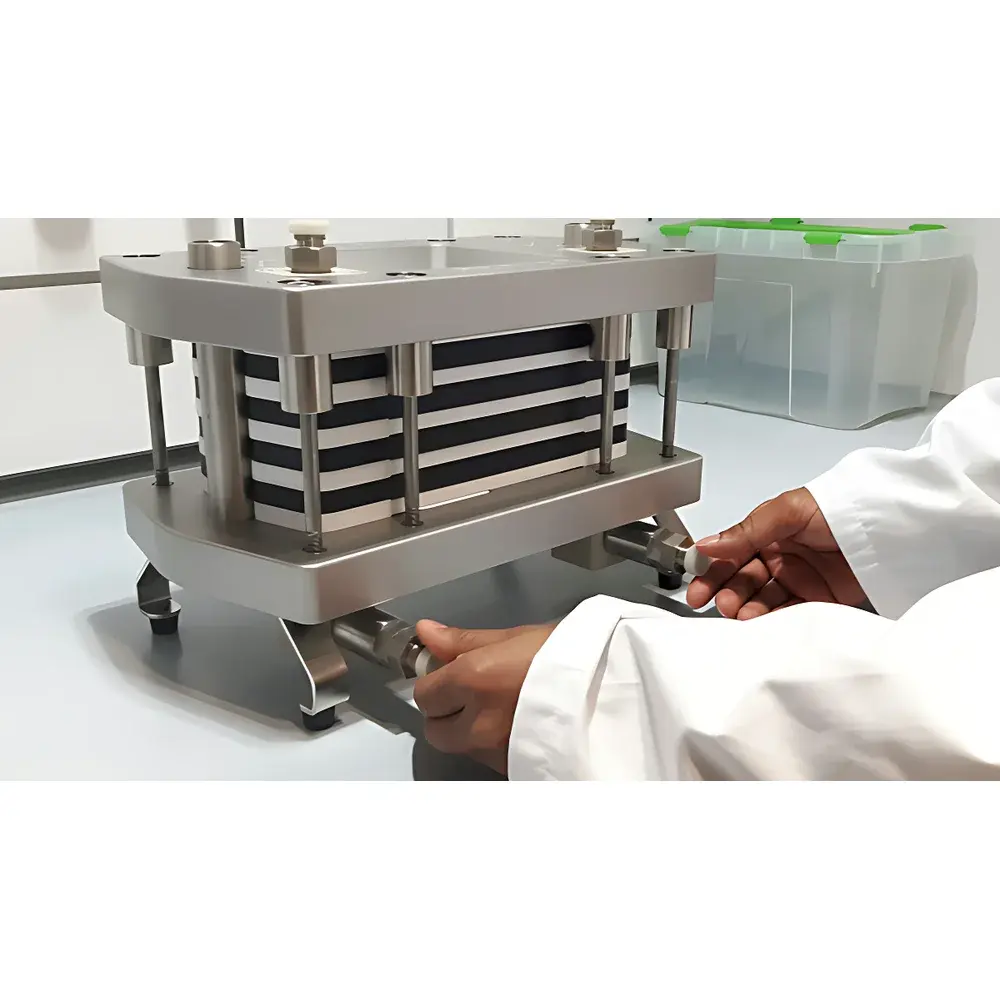
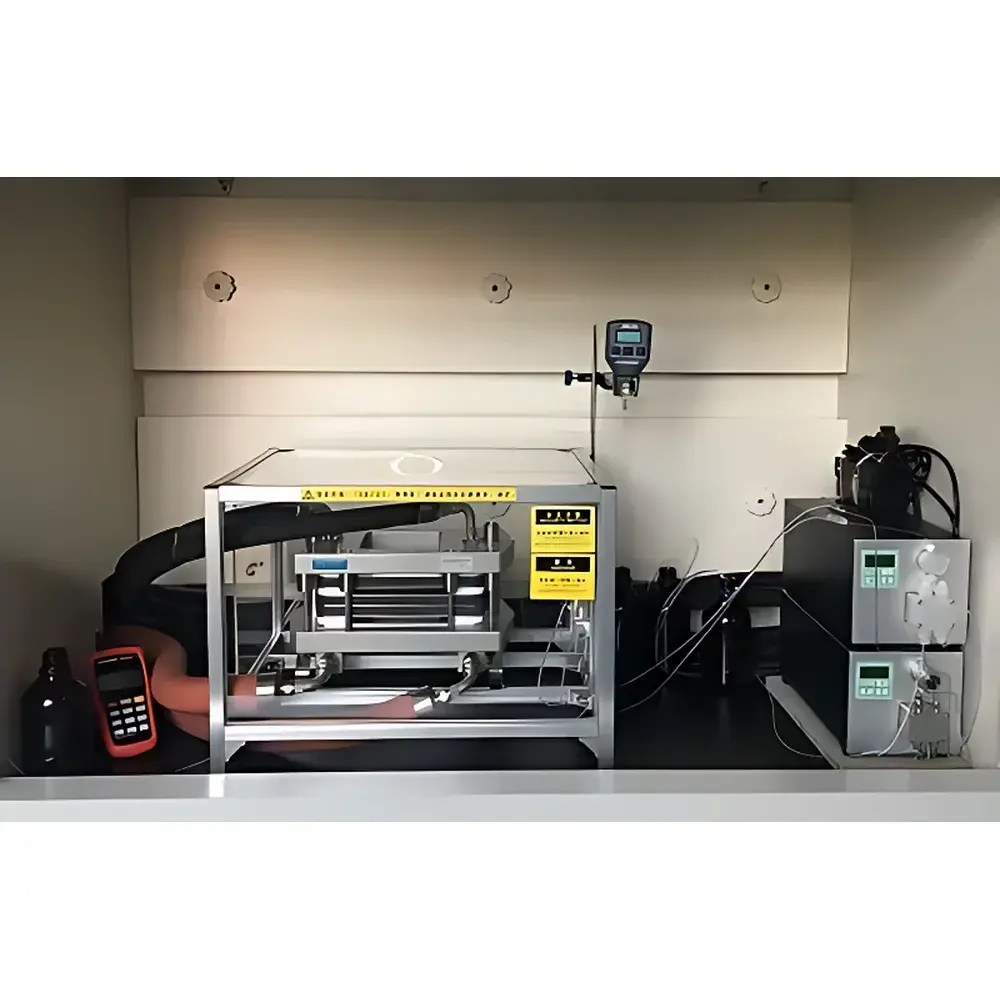
Chemtrix Protrix® Microchannel Reactor
| Brand | Chemtrix |
|---|---|
| Origin | Germany |
| Model | Protrix® |
| Construction Material | Sintered Silicon Carbide (SiC) |
| Operating Pressure | Up to 25 bar |
| Temperature Range | –30 °C to +150 °C |
| Flow Rate | 0.2–20 mL/min (up to 1.2 kg/h) |
| Reaction Volume | 1–13.5 mL |
| Channel Dimensions | 1.0×1.0 mm (preheating & mixing), 1.4×1.4 mm (reaction) |
| Wetted Materials | PTFE, FFKM, SiC |
| Dimensions (W×D×H) | 350×200×250 mm |
| Regulatory Status | FDA-compliant construction materials |
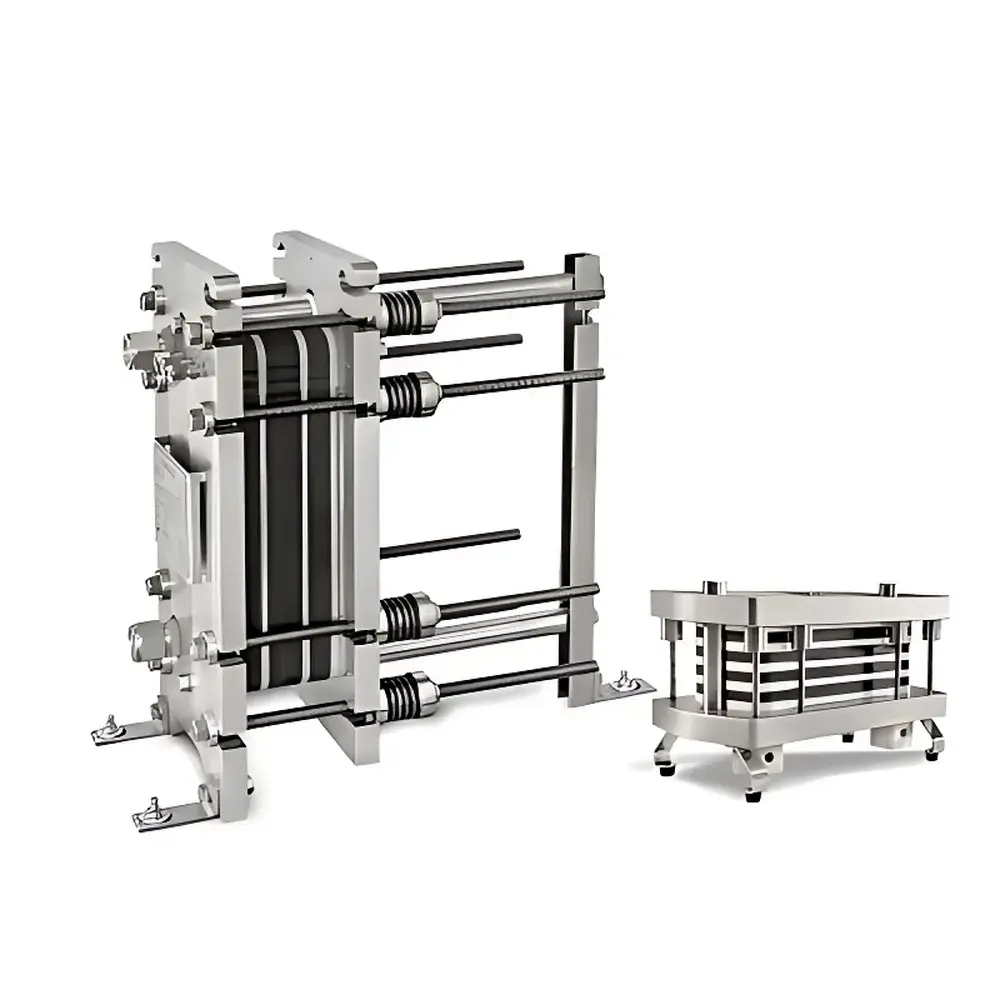
| Scalability | Direct linear scale-up to Plantrix MR555 (340× volumetric increase) |
Overview
The Chemtrix Protrix® Microchannel Reactor is an engineered continuous-flow chemical synthesis platform designed for safe, precise, and scalable process development in academic, pharmaceutical, and fine chemical laboratories. Based on monolithic sintered silicon carbide (SiC) fabricated via pressureless sintering—a technology licensed from 3M™—the Protrix integrates high-efficiency thermal management and chemically inert reaction pathways within a single, robust ceramic structure. Its core architecture employs microstructured flow channels that enable rapid heat transfer (high surface-area-to-volume ratio) and near-instantaneous mixing via diffusion-dominated laminar flow, ensuring exceptional temperature control and residence time distribution (RTD) uniformity. This design fundamentally supports kinetic studies, exothermic reaction handling, and photochemical or cryogenic transformations under tightly controlled conditions—making it particularly suited for reactions involving hazardous reagents, unstable intermediates, or narrow operational windows. Unlike batch reactors, the Protrix operates exclusively in continuous mode, eliminating accumulation risks and enabling real-time parameter optimization during early-stage route scouting.
Key Features
- Monolithic sintered silicon carbide (SiC) body with integrated heat exchange and reaction channels—no gaskets, welds, or seals in the fluid path.
- Chemically inert wetted surfaces (PTFE, FFKM elastomers, and SiC) compatible with strong acids (e.g., HNO₃, H₂SO₄), halogenated solvents, organometallics, and highly basic media.
- Thermal stability across –30 °C to +150 °C; capable of rapid heating/cooling ramp rates (>50 °C/min) due to low thermal mass and high thermal conductivity (~120 W/m·K).
- Modular manifold interface supporting multiple inlet configurations (2–4 streams), optional inline quenching, and integration with syringe or HPLC-style pumps.
- Pressure-rated to 25 bar, enabling superheated solvent operation and gas-liquid reactions (e.g., hydrogenations, chlorinations) with back-pressure regulation.
- Compact footprint (350×200×250 mm) designed for benchtop use inside standard fume hoods—no external cooling jackets or chillers required for most applications.
Sample Compatibility & Compliance
The Protrix accommodates a broad spectrum of homogeneous and heterogeneous reaction systems, including but not limited to: nucleophilic substitutions (SNAr, SN2), Grignard additions, diazotizations, nitration, sulfonation, lithiations, and catalytic cross-couplings (Suzuki, Heck). Its SiC/FFKM/PTFE fluidic circuit meets USP Class VI and FDA-recommended material guidelines for equipment used in API intermediate synthesis. While the reactor itself does not carry CE or UL certification as a standalone electrical device (it is pump- and controller-agnostic), its construction materials and dimensional tolerances conform to ISO 9001 manufacturing protocols. When operated with validated peristaltic or syringe pump systems and documented SOPs, the platform supports GLP-compliant feasibility studies and Stage 1–2 process development aligned with ICH Q5, Q7, and Q11 principles.
Software & Data Management
The Protrix is hardware-agnostic and intended for integration with third-party control systems—including LabVIEW-based DAQ platforms, PLC-driven pump controllers, or commercial flow chemistry software suites (e.g., Vapourtec ISIS, Syrris Asia). Users configure flow rates, temperature setpoints, and pressure limits externally; the reactor provides no embedded firmware or touchscreen interface. However, its deterministic hydrodynamics and repeatable RTD profiles (<±2% inter-run variance at fixed flow/temperature) ensure high data fidelity for kinetic modeling (e.g., using MATLAB or Python-based PFR simulation tools). All operational parameters—including timestamps, flow rate logs, and thermocouple readings—can be captured via standard analog/digital I/O channels, supporting 21 CFR Part 11–compliant audit trails when paired with validated electronic lab notebooks (ELNs) such as LabArchives or IDBS E-WorkBook.
Applications
- Rapid screening of reaction parameters (temperature, stoichiometry, residence time) for route selection and impurity profiling.
- Safe execution of highly exothermic or explosive transformations (e.g., nitration of aromatics, azide chemistry) at gram-scale without thermal runaway risk.
- Development of continuous downstream processing trains—coupled with inline IR/UV monitoring, liquid–liquid extraction modules, or automated fraction collection.
- Generation of engineering data (heat transfer coefficients, mass transfer coefficients, activation energies) required for first-principles scale-up to Plantrix MR555 pilot plants.
- Support of Quality-by-Design (QbD) initiatives through Design of Experiments (DoE) workflows with tight multivariate control.
FAQ
Is the Protrix reactor compatible with corrosive reagents such as oleum or anhydrous HF?
Yes—the sintered SiC body and FFKM/PTFE sealing system exhibit exceptional resistance to aggressive inorganic acids and halogenated compounds under static and dynamic flow conditions.
Can the Protrix be used for solid-handling or slurry-based reactions?
No—it is optimized for homogeneous liquid-phase and gas–liquid reactions; suspended solids >5 µm may cause channel fouling and are not recommended.
What is the typical residence time range achievable with the Protrix at maximum flow?
At 20 mL/min and 13.5 mL total volume, nominal residence time is ~40.5 seconds; minimum residence time (at 1 mL volume, 20 mL/min) is ~3 seconds—adjustable via segment selection or flow splitting.
Does Chemtrix provide validation documentation for GMP environments?
Chemtrix supplies material certifications (RoHS, REACH, USP Class VI), dimensional inspection reports, and pressure test records; full IQ/OQ/PQ protocols must be developed by end users per site-specific regulatory requirements.
How is thermal calibration performed across the operating temperature range?
Users perform calibration using NIST-traceable PT100 sensors inserted into dedicated thermowell ports; Chemtrix provides channel-specific thermal gradient maps derived from CFD simulations and empirical validation datasets.
Related Products



