ChemTron 15010/15020/13000 Digital Temperature & Humidity Monitoring System
| Brand | JULABO-Chemtron |
|---|---|
| Origin | Germany |
| Model | 15010 / 15020 / 13000 |
| Temperature Range | −50 °C to +70 °C |
| Humidity Range (15020 only) | 1–99 % RH |
| Temperature Resolution | 0.1 °C / 0.1 °F |
| Humidity Resolution | 1 % RH |
| Time Resolution | 1 minute |
| Temperature Accuracy | ±0.5 °C (15010), ±1.0 °C (15020 & 13000) |
| Humidity Accuracy | ±4 % RH (35–75 % RH), ±5 % RH (outside range) |
| Data Storage | Up to 24 million records on removable microSD card (up to 4 GB) |
| Sensor Cable Length | 2–3 m |
| Response Time (T₉₀) | 10 s |
| Power Supply | 1–2 × 1.5 V AAA alkaline batteries |
| Enclosure Dimensions | 94–98 × 110 × 21–25 mm (plastic, white or black) |
Overview
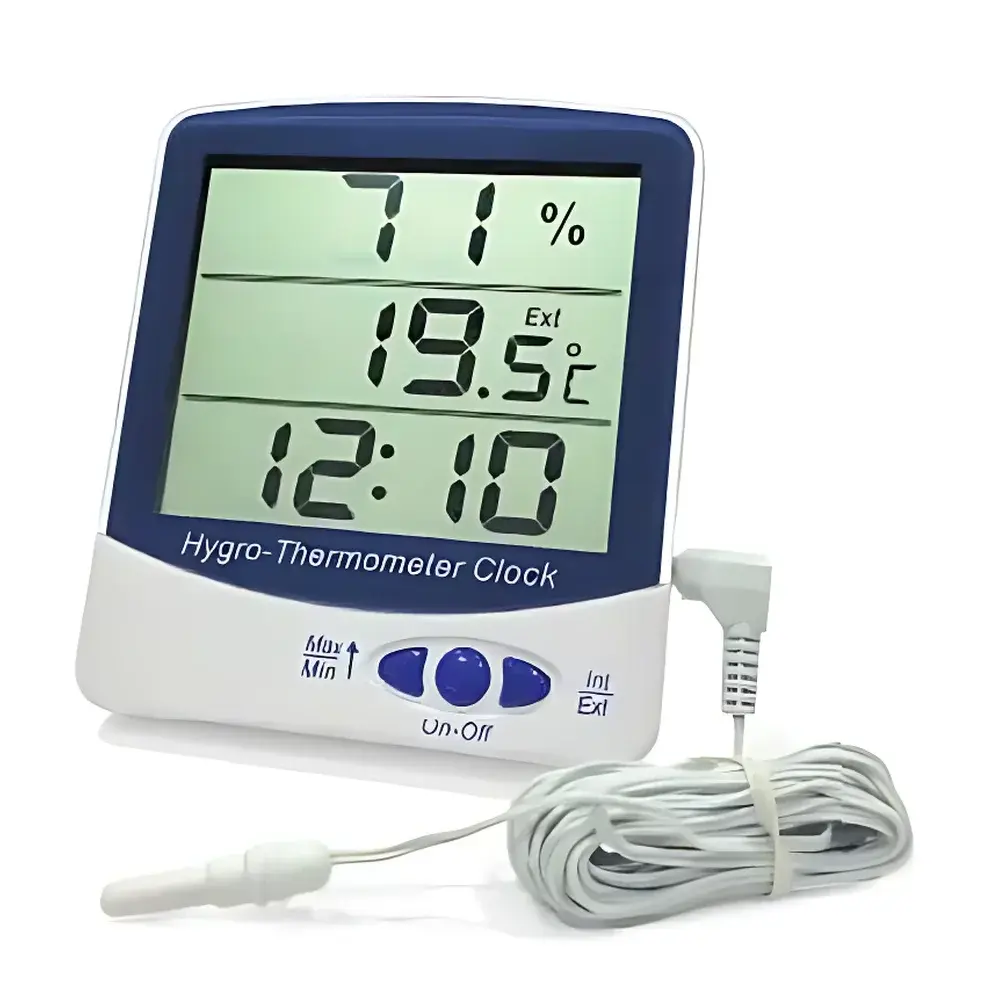
The ChemTron 15010, 15020, and 13000 series are precision digital temperature and humidity monitoring systems engineered for continuous environmental surveillance in regulated laboratory, pharmaceutical, and cold-chain storage environments. Designed and manufactured under JULABO-Chemtron’s quality framework in Germany, these instruments employ high-stability NTC thermistors and capacitive polymer humidity sensors (15020 only) to deliver traceable, repeatable measurements compliant with routine environmental monitoring requirements. Each model supports contact-based measurement via integrated or external probes—optimized for use inside incubators, refrigerated cabinets, ultra-low temperature freezers (−50 °C), stability chambers, and transport validation scenarios. The 15010 is a dedicated temperature logger with extended memory and USB interface; the 15020 adds dual-channel relative humidity monitoring with internal/external sensor capability; the 13000 provides compact, battery-powered real-time monitoring with configurable alarm thresholds and freeze-point detection. All units operate independently of network infrastructure and maintain time-synchronized logging without external clock synchronization.
Key Features
- Triple-model flexibility: 15010 (temperature-only logging), 15020 (temperature + humidity, dual-sensor), 13000 (compact real-time monitor with alarm output)
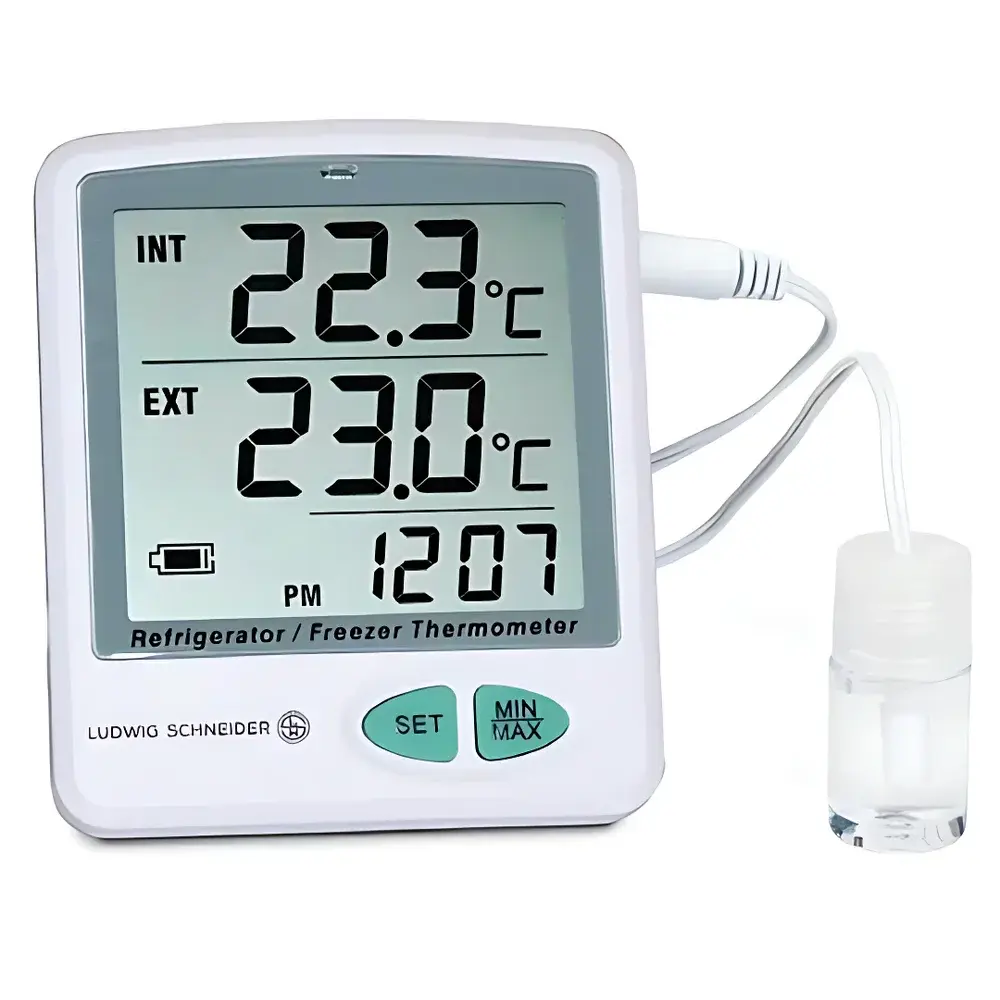
- Extended-range external probe support: −50 °C to +70 °C, compatible with glycol-filled thermal buffer bottles (30 mL or 5 mL) to ensure representative chamber air temperature measurement during door openings
- High-capacity local data storage: Up to 24 million timestamped records on user-replaceable microSD cards (up to 4 GB); no cloud dependency or subscription required
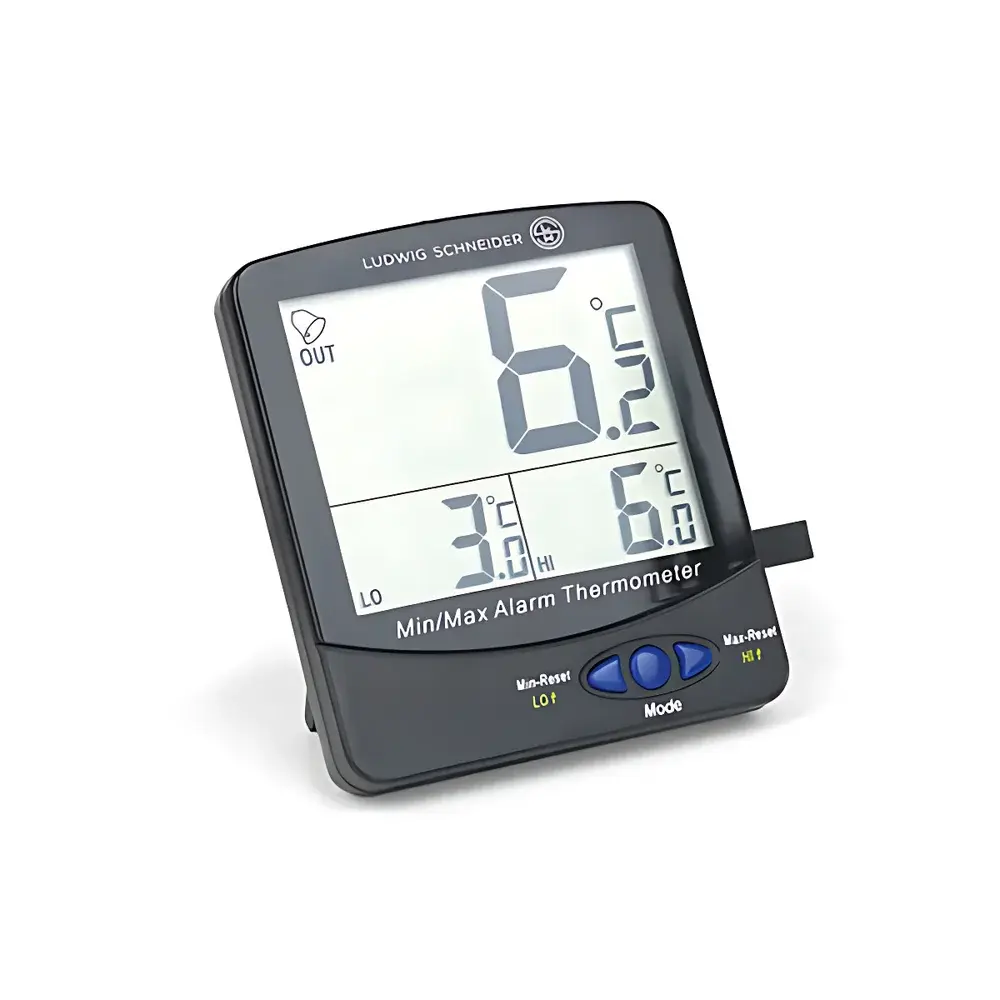
- Configurable alarm logic: High/low temperature and humidity thresholds with adjustable duration (e.g., 2-minute sustained deviation required for 15020 alarm activation)
- GLP-compliant operation: Automatic date/time stamping, min/max value retention, reset-protected memory, and audit-ready data export via USB (15010) or SD card readout
- Robust mechanical design: IP54-rated plastic housing (white for 15010/15020, black for 13000), foldable stand for benchtop or wall-mount orientation, and low-power consumption enabling >12 months of operation on standard AAA batteries
Sample Compatibility & Compliance
These monitors are validated for use with standard glycol-based thermal buffers per ASTM E2810 and ISO 14644-3 guidance for stability-indicating temperature measurement in controlled environments. The external probe configuration—paired with 30 mL or 5 mL glycol-filled plastic vials—ensures thermal mass equivalence and eliminates transient air-temperature artifacts during cabinet access. Units meet IEC 61000-4 electromagnetic compatibility standards and are CE-marked for use within the European Economic Area. While not FDA 21 CFR Part 11–certified out-of-the-box, all models support ALCOA+ data integrity principles when deployed with documented procedures: attributable (user-defined ID entry), legible (clear LCD display), contemporaneous (real-time timestamping), original (unmodified SD card files), accurate (factory-calibrated at −20 °C, +4 °C, and +37 °C), complete (full record retention), consistent (sequential logging), enduring (non-volatile storage), and available (readable via standard FAT32 file system). They are routinely deployed in GxP environments under site-specific SOPs for warehouse mapping, fridge/freezer qualification, and stability study chamber monitoring.
Software & Data Management
Data retrieval is performed via direct USB connection (15010) or microSD card extraction (all models), supporting CSV and plain-text export formats compatible with Microsoft Excel, LabArchives, and LIMS platforms. No proprietary software installation is required—files open natively with timestamp columns (YYYY-MM-DD HH:MM:SS), channel identifiers (T_int, T_ext, RH), and unit metadata. The 15010 includes onboard USB mass-storage mode; the 15020 and 13000 support manual export through standard card readers. Calibration certificates (traceable to PTB or UKAS-accredited labs) are supplied with each instrument, listing as-found/as-left values at three reference points. Firmware updates—delivered via SD card—are version-locked and require physical confirmation to prevent unauthorized modification, aligning with Annex 11 risk-based validation expectations.
Applications
- Pharmaceutical cold chain validation: Continuous monitoring of vaccine refrigerators (2–8 °C), freezer storage (−20 °C or −70 °C), and transport shippers
- Biological sample integrity assurance: Long-term tracking in −80 °C ultra-low temperature freezers and liquid nitrogen vapor-phase storage
- Environmental chamber qualification: Mapping temperature uniformity and recovery after door opening in stability testing cabinets (ICH Q1/Q5)
- Microbiology lab incubator verification: Real-time detection of drift exceeding ±0.5 °C from setpoint across multiple zones
- Archive and museum climate control: Passive logging of ambient RH fluctuations to assess mold-risk thresholds (≥65 % RH)
- Academic research cold rooms: Unattended multi-week temperature profiling in −10 °C to +5 °C environments
FAQ
Are these instruments suitable for ISO 17025-accredited laboratories?
Yes—when operated within documented calibration intervals (recommended annually), with full traceability to national standards, and integrated into a laboratory’s measurement uncertainty budget.
Can the external probe be immersed in liquid or sterilized?
No—the NTC probes are rated for ambient air or glycol-buffered measurement only; direct immersion or autoclaving will damage sensor integrity.
Is time synchronization possible across multiple units?
No—each device maintains its own RTC (real-time clock) with ±2 seconds/month drift; synchronized logging requires post-hoc alignment using common event markers (e.g., door-open timestamps).
What is the recommended recalibration interval?
Annual calibration is advised per ISO/IEC 17025 and EU GMP Annex 15; field verification using certified dry-well or humidity generator is recommended before critical qualification runs.
Do the units support Modbus or Ethernet connectivity?
No—these are standalone, battery-operated loggers with no network interface; for centralized monitoring, integrate via SD card batch import or third-party gateway solutions.
Can the alarm output trigger external devices (e.g., sirens or PLCs)?
Only the 13000 model offers a dry-contact alarm relay; the 15010 and 15020 provide visual/audible alerts only.