
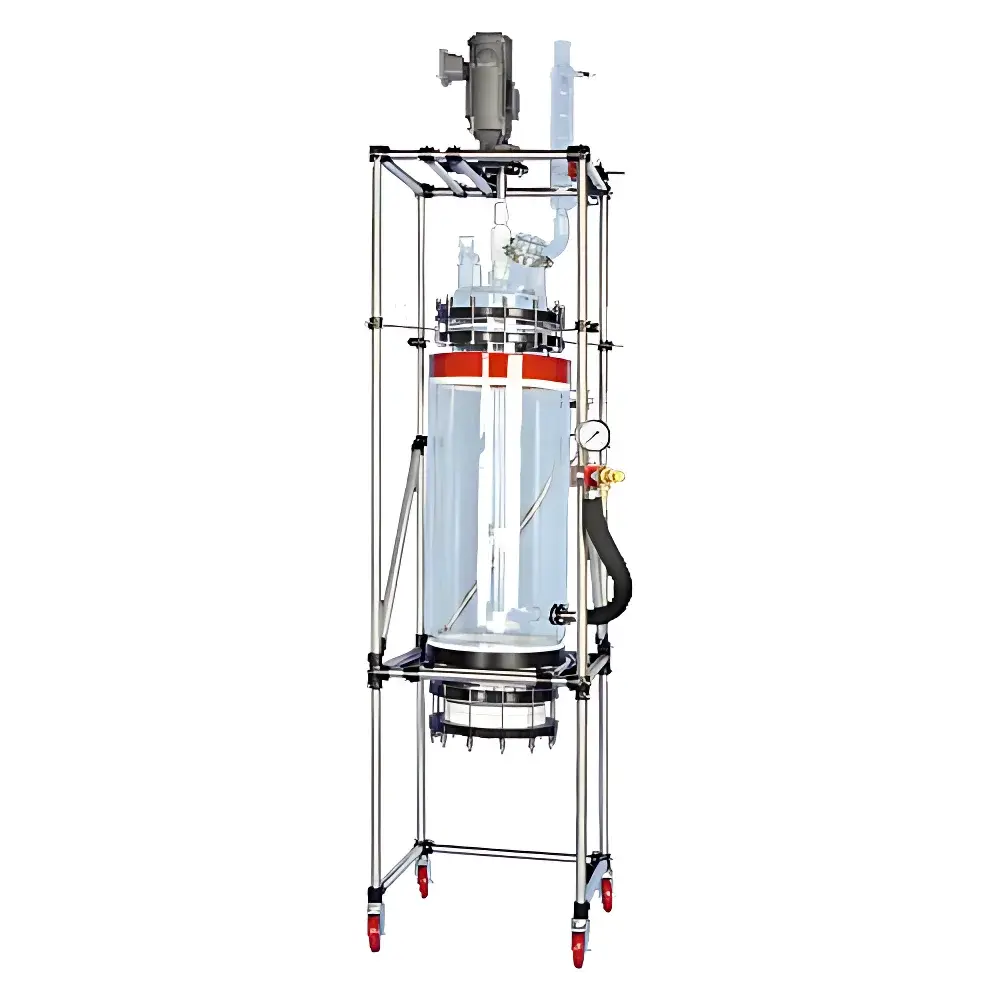
ChemTron Glass Filtration Reactor
| Brand | ChemTron |
|---|---|
| Origin | Germany |
| Model | Glass Filtration Reactor |
| Vessel Capacity | 6 L |
| Construction Material | Borosilicate Glass 3.3 (DIN ISO 3585) |
| Maximum Operating Pressure | 25 bar (gauge) |
| Vacuum Rating | ≤ 0.1 mbar (absolute) |
| Filtration Interface | ACE SAFE™ Threaded or Standard Ground-Glass Joint |
| Temperature Control | Jacketed (Dual-Zone: Reaction + Filtration Zone) |
| Drive System | Top-Mounted Digital Stirrer with Mechanical Seal |
| Compliance | CE, PED 2014/68/EU, ISO 9001 Certified Manufacturing Support |
Overview
The ChemTron Glass Filtration Reactor is an integrated, pressure-rated laboratory-scale synthesis and solid–liquid separation platform engineered for high-integrity chemical process development. Based on the Couette–Taylor flow principle for homogeneous mixing and leveraging a bottom-integrated filtration module, this reactor enables sequential or concurrent reaction, crystallization, and filtration within a single, sealed glass vessel—eliminating intermediate transfers, minimizing operator exposure, and preserving sample integrity. Constructed entirely from DIN-certified borosilicate glass 3.3, it supports both pressurized filtration (up to 25 bar) and deep vacuum operation (down to 0.1 mbar), making it suitable for air- or moisture-sensitive chemistries, hydrogenations, catalytic reactions, and controlled crystallizations where thermal and mechanical stability are critical.
Key Features
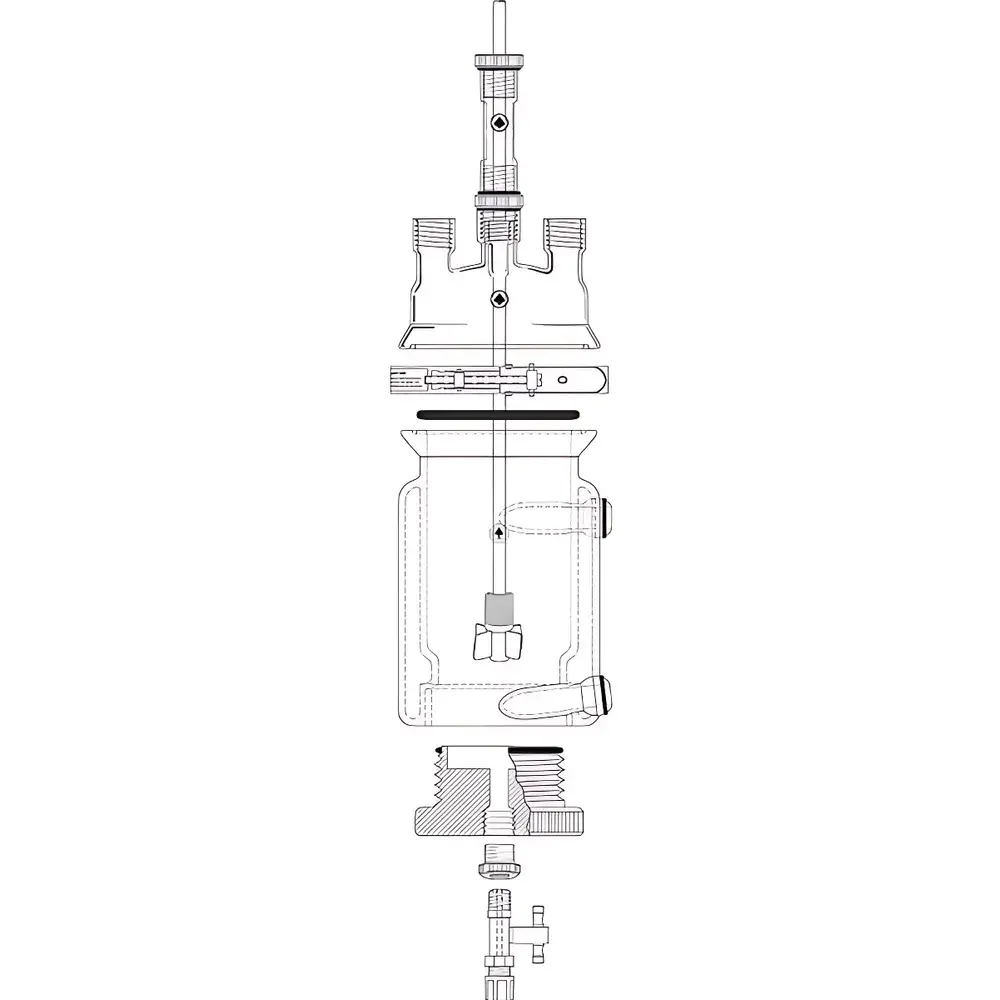
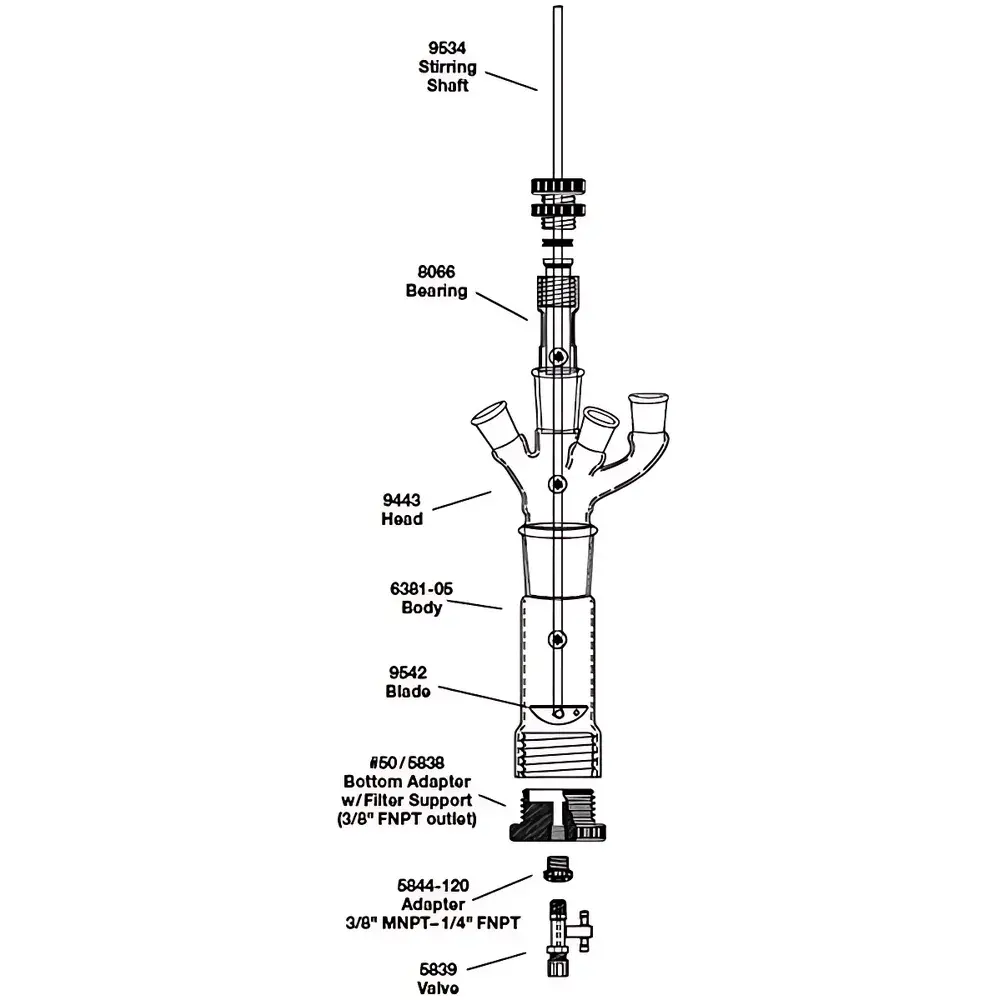
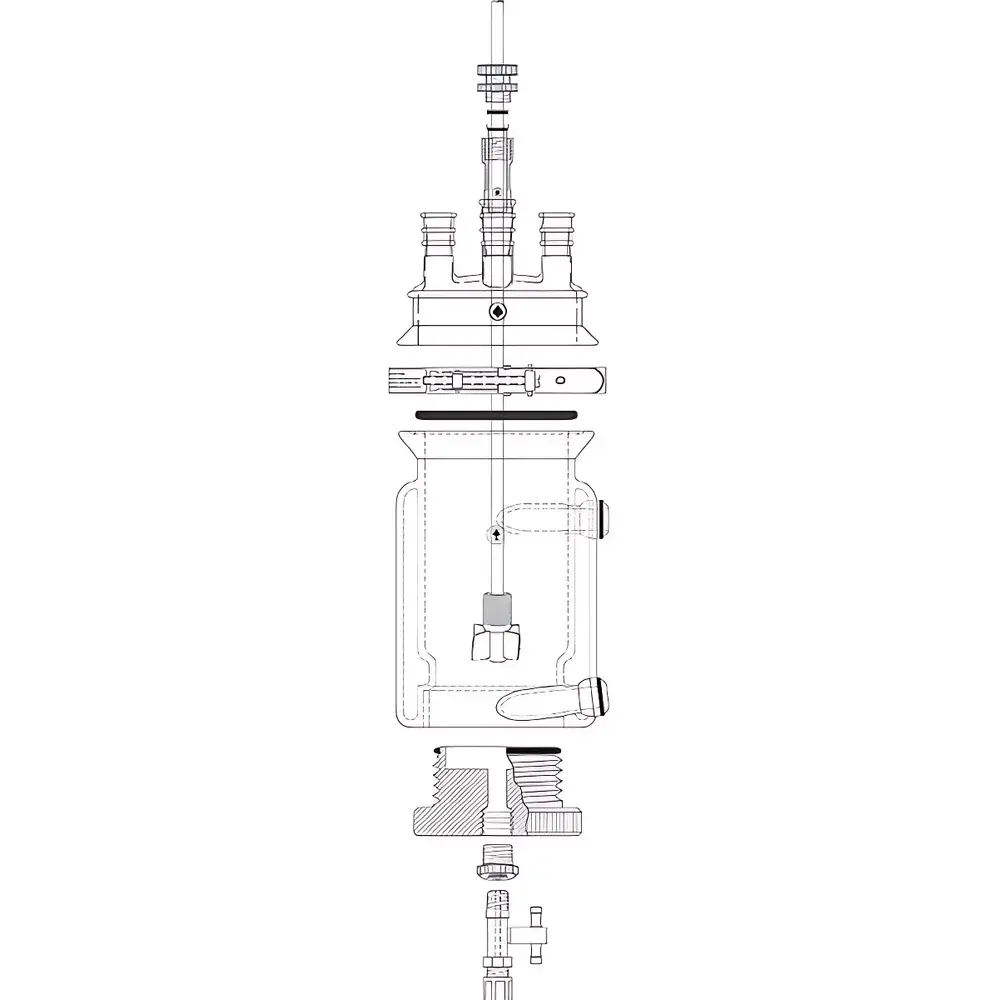
- Monolithic glass construction with ACE SAFE™ threaded interfaces: All flanged connections feature dual O-ring seals at thread termini, enabling leak-tight performance under simultaneous positive pressure and vacuum conditions.
- Modular filtration base: PTFE adapter with ACE SAFE™ threading secures filter discs (sintered glass, polyethylene, or cellulose) without alignment tools; proprietary raised support ring ensures full active filtration area utilization while preventing lateral displacement or channeling.
- Dual-mode discharge options: Bottom outlet with ACE-threaded collection flask (for inert-atmosphere liquid transfer) or side-port discharge—both compatible with automated valve actuation and gravimetric endpoint detection.
- Full-jacket temperature control: Double-walled jacket envelops both reaction volume and filtration zone; thermally isolated zones prevent localized cooling during filtration that could trigger unintended nucleation or clogging.
- Intelligent drive system: Top-mounted digital stirrer with torque-sensing motor, hermetically sealed mechanical bearing, and real-time feedback of RPM, torque, power consumption, and thermal load.
- Standardized interface ecosystem: All fluidic, thermal, and electrical ports conform to ACE SAFE™ quick-connect standards—ensuring interchangeability, rapid maintenance, and field-replaceable components without vessel disassembly.
Sample Compatibility & Compliance
The reactor accommodates heterogeneous slurries, viscous polymer solutions, nanoparticle suspensions, and thermally labile intermediates. Filter disc options include sintered borosilicate glass (pore sizes: 10–100 µm), hydrophobic PTFE membranes (0.2–5.0 µm), and disposable cellulose ester filters—each validated for extractables-free operation per USP . The system complies with PED 2014/68/EU for pressure equipment, CE marking for electromagnetic compatibility (EMC Directive 2014/30/EU), and ISO 9001 traceability protocols. Optional GLP-compliant data logging meets FDA 21 CFR Part 11 requirements for audit trails, electronic signatures, and parameter change history.
Software & Data Management
Integrated control via ChemTron SynthControl™ software (Windows-based) coordinates stirring, jacket temperature (±0.1 °C), pressure/vacuum setpoints, and discharge sequencing. All operational parameters—including torque (mN·m), temperature (°C), absolute pressure (mbar), and time—are timestamped and logged at user-defined intervals (100 ms–10 s). Real-time overlay plots support correlation analysis (e.g., torque vs. crystallization onset); raw data exports to CSV, MATLAB (.mat), or ASTM E2500-compliant XML formats. Optional OPC UA server enables integration into LabVantage or DeltaV DCS environments.
Applications
- Pharmaceutical process intensification: In-situ crystallization followed by pressure-assisted cake washing and solvent exchange in API purification.
- Heterogeneous catalysis screening: Catalyst recovery and reuse across multiple reaction cycles without manual filtration.
- Materials science: Controlled precipitation of MOFs, perovskites, or quantum dots with inline particle size monitoring via optional inline turbidity probe.
- Agrochemical formulation: Solvent-free melt crystallization of active ingredients under nitrogen blanket with residual solvent quantification via headspace GC coupling.
- Academic methodology development: Teaching unit operations—reaction kinetics, mass transfer limitations, and filtration resistance modeling—in a single apparatus.
FAQ
Can the reactor be used for exothermic reactions requiring rapid quenching?
Yes—the jacket supports both heating (up to 200 °C with silicone oil) and rapid cooling (down to –40 °C with ethylene glycol/water mixtures), with dynamic PID tuning to maintain ±0.3 °C setpoint deviation during heat release events.
Is validation documentation available for GMP manufacturing environments?
Factory-supplied IQ/OQ protocols, material traceability certificates (EN 10204 3.1), and pressure test reports (hydrostatic at 1.5× MAWP) are included; PQ support provided upon request.
How is filter integrity verified post-operation?
A built-in bubble point test routine applies incremental pressure while monitoring gas flow through wetted membrane; pass/fail criteria align with ASTM F316-11 for pore size verification.
What maintenance intervals are recommended for the mechanical seal and O-rings?
O-rings require replacement every 12 months or after 500 autoclave cycles; mechanical seal service life exceeds 5,000 operating hours under typical organic solvent conditions—logbook tracking is embedded in SynthControl™.
Are custom geometry vessels supported beyond the standard 6 L configuration?
Yes—ChemTron offers bespoke designs from 100 mL to 50 L, including conical bottoms, baffled jackets, and integrated sight glasses with calibrated volume markings per ISO 4787.



