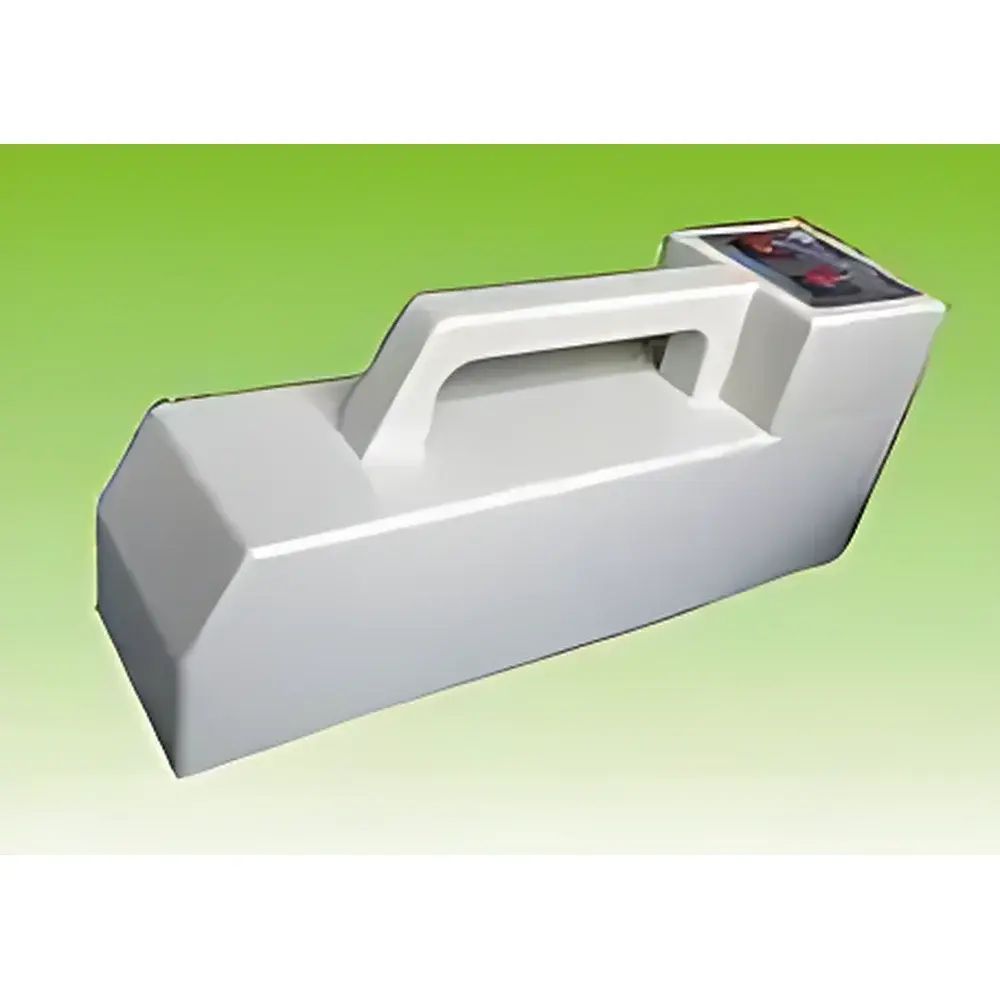
Chu Ding ZF-5 Portable UV Transilluminator
| Brand | Chu Ding |
|---|---|
| Origin | Shanghai, China |
| Manufacturer Type | Authorized Distributor |
| Country of Origin | China |
| Model | ZF-5 |
| Pricing | Available Upon Request |
| Power Supply | AC 220 V ±10%, 50 Hz |
| UV Wavelength Options | Single-band: 254 nm, 302 nm, or 365 nm |
| Dual-band | 254 nm & 365 nm (302 nm optional) |
| UV Filter Dimensions | 200 mm × 50 mm |
| Unit Dimensions | 280 mm × 70 mm × 120 mm |
| Weight | <1.2 kg |
Overview
The Chu Ding ZF-5 Portable UV Transilluminator is a compact, hand-carried instrument engineered for rapid, on-the-spot visualization and documentation of nucleic acid and protein samples stained with UV-active dyes—including ethidium bromide (EtBr), SYBR® Safe, GelRed®, and similar fluorophores. It operates on the principle of ultraviolet-induced fluorescence: when exposed to short- or long-wave UV radiation, these dyes absorb photons and re-emit visible light, enabling real-time detection of DNA/RNA bands in agarose or polyacrylamide gels, as well as fluorescently labeled proteins, metabolites, or thin-layer chromatography (TLC) plates. Designed for field-deployable and benchtop flexibility, the ZF-5 eliminates reliance on fixed darkroom infrastructure while maintaining optical performance aligned with laboratory-grade transilluminators. Its dual-wavelength capability (254 nm + 365 nm) supports both high-sensitivity nucleic acid detection and low-photodamage visualization—critical for downstream applications such as gel excision, cloning, and PCR product verification.
Key Features
- Lightweight portable design (≤1.2 kg) with integrated ergonomic handle and low-profile footprint (280 × 70 × 120 mm), optimized for mobile labs, teaching environments, and clinical point-of-use settings.
- High-intensity UV output using imported quartz-housed lamps, delivering stable irradiance across selected wavelengths—254 nm for maximum DNA/RNA sensitivity, 365 nm for reduced sample degradation and safer handling.
- Interchangeable single- or dual-band configuration: standard dual-band (254/365 nm) with optional 302 nm filter upgrade; all filters conform to ISO 10934-1 spectral transmission specifications for UV transilluminators.
- 200 mm × 50 mm rectangular UV filter area—sufficient to accommodate standard mini-gels (e.g., 8 × 10 cm) and multiple TLC plates simultaneously without spatial compromise.
- Integrated safety features including automatic lamp shutdown after 15 minutes of continuous operation, recessed lamp housing to minimize stray UV exposure, and CE-compliant electrical isolation per IEC 61010-1.
Sample Compatibility & Compliance
The ZF-5 supports visualization of a broad range of biomolecular and chemical samples, including but not limited to: double- and single-stranded DNA/RNA fragments (10 bp–20 kb), SDS-PAGE and native PAGE gels containing Coomassie- or silver-stained proteins, TLC plates developed with fluorescent indicators (e.g., fluorescein, anisaldehyde/H2SO4), and pharmaceutical intermediates exhibiting native or derivatized fluorescence. It complies with international safety and performance benchmarks applicable to UV-based analytical instrumentation, including ISO 15223-1 (symbols for medical devices), EN 62471 (photobiological safety of lamps), and ASTM D7213 (standard practice for UV visualization of nucleic acids). While not classified as a medical device under FDA 21 CFR Part 820, its operational parameters meet GLP-aligned documentation requirements for electrophoresis QC workflows.
Software & Data Management
As a standalone optical visualization tool, the ZF-5 does not incorporate embedded firmware or proprietary software. However, it is fully compatible with third-party digital imaging systems—including USB-connected scientific CMOS cameras (e.g., Sony IMX series), DSLR setups with UV-transmitting lenses (e.g., Nikon UV-Nikkor), and document scanners equipped with UV illumination modules. When integrated into regulated environments, users may apply audit-trail-capable image acquisition platforms compliant with FDA 21 CFR Part 11 (e.g., ImageLab™, AlphaView SA, or open-source Fiji/ImageJ with timestamped metadata logging) to ensure traceability of gel documentation events.
Applications
- Molecular biology: Rapid confirmation of PCR amplification products, restriction digest patterns, and CRISPR editing outcomes directly post-electrophoresis.
- Clinical diagnostics: Visual screening of pathogen-specific amplicons in resource-limited or decentralized testing sites where darkroom access is unavailable.
- Pharmaceutical QA/QC: Identity testing of fluorescent-tagged reference standards, purity assessment of alkaloids and steroidal compounds via TLC, and verification of vitamin B2 (riboflavin) content in formulations.
- Food safety: Detection of aflatoxin B1 in grain extracts using immunoaffinity column–TLC coupling, and screening of synthetic food dyes (e.g., tartrazine, sunset yellow) in beverages and confectionery.
- Forensic science: Visualization of latent biological stains treated with luminol or fluorescein derivatives, supporting chain-of-custody documentation in crime scene analysis kits.
FAQ
Is the ZF-5 suitable for quantitative densitometry?
No—the ZF-5 is designed for qualitative and semi-quantitative band detection only. For optical density calibration and linear response quantification, a calibrated CCD-based gel documentation system with controlled exposure time and background subtraction is required.
Can I use the ZF-5 with ethidium bromide-free dyes like SYBR® Gold?
Yes—its 302 nm and 365 nm emission profiles align with the excitation maxima of most commercial nucleic acid stains. Refer to dye-specific absorption spectra to select optimal wavelength mode.
Does the unit include UV-blocking eyewear or gloves?
No—personal protective equipment must be sourced separately. ANSI Z87.1-rated UV-blocking goggles and nitrile gloves with UV attenuation certification are strongly recommended during operation.
What is the expected lamp lifetime under standard usage conditions?
Rated minimum service life is 1,500 hours at nominal voltage; output intensity degrades gradually over time and should be verified annually using a NIST-traceable UV radiometer.
Is the ZF-5 compatible with battery power sources?
Not natively—the device requires AC 220 V ±10% input. For field deployment, integration with a pure-sine-wave inverter (≥300 W capacity) powered by a 12 V deep-cycle battery is feasible but requires external voltage regulation.