
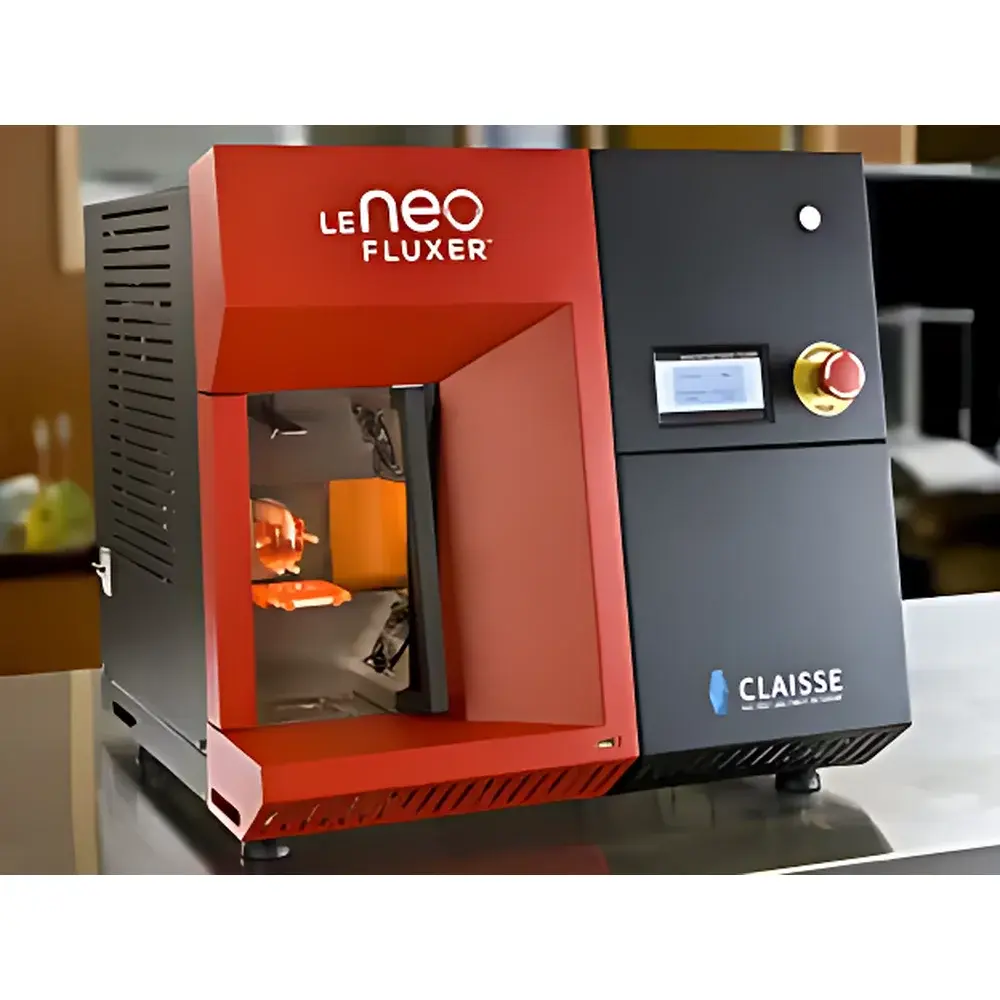
CLAISSE LeNeo Fully Automated Fusion Machine
| Brand | Claisse |
|---|---|
| Origin | Canada |
| Model | LeNeo |
| Dimensions (L×W×D) | 53 × 58 × 55 cm |
| Temperature Control Accuracy | ±1 °C |
| Maximum Operating Temperature | 1250 °C |
| Sample Throughput | 4–5 samples per hour |
| Temperature Sensing | R-type thermocouple (furnace cavity) + N-type thermocouple (insulation layer monitoring) |
| Heating Technology | Advanced resistive heating system |
| Application Scope | XRF fused bead preparation, AA/ICP solution digestion support, wet chemistry sample dissolution |
Overview
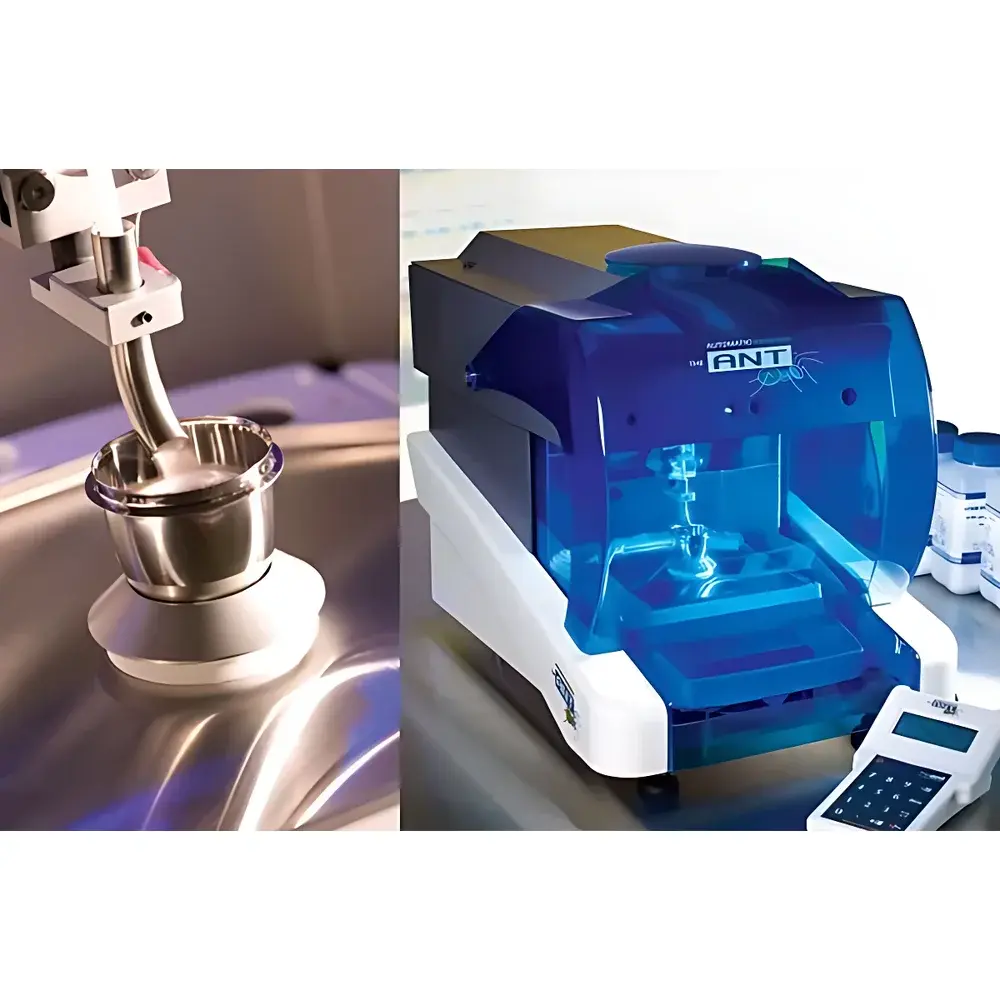
The CLAISSE LeNeo Fully Automated Fusion Machine is an industrial-grade, benchtop fusion system engineered for high-precision preparation of homogeneous glass beads for wavelength-dispersive (WDXRF) and energy-dispersive (EDXRF) X-ray fluorescence analysis. Based on the fundamental principle of flux-assisted alkaline fusion—where powdered solid samples are mixed with lithium tetraborate or lithium metaborate fluxes and melted at controlled high temperatures—the LeNeo ensures complete dissolution, oxidation, and homogenization of refractory matrices including silicates, oxides, ores, slags, cements, and geological materials. Its fully automated sequence integrates crucible handling, precise flux dosing (optional with external dispenser), programmable ramp-soak profiles, controlled rotation during fusion, and gravity-fed automatic casting into platinum-gold or graphite molds. Designed and manufactured in Quebec, Canada, the LeNeo complies with ISO 9001 quality management standards and meets key safety requirements outlined in IEC 61010-1 for laboratory electrical equipment.
Key Features
- Fully automated fusion cycle—from flux addition and crucible loading to melt homogenization, rotation control, and mold casting—minimizing operator intervention and inter-sample variability.
- Dual thermocouple architecture: An R-type thermocouple directly monitors molten cavity temperature with ±1 °C accuracy, while a separate N-type thermocouple embedded within the insulation layer ensures thermal stability and detects potential heat loss or insulation degradation.
- Robust resistive heating system delivering stable, repeatable performance up to 1250 °C, optimized for rapid thermal response and long-term calibration retention.
- Compact footprint (53 × 58 × 55 cm) with integrated fume extraction interface compatible with standard laboratory ducted or recirculating hoods.
- Programmable fusion protocols supporting multi-step temperature ramps, dynamic rotation speed adjustment (0–30 rpm), and customizable hold times—enabling method development for challenging matrices such as high-alumina bauxites or chromium-rich stainless steel slags.
- Comprehensive safety architecture including overtemperature cutoff, door interlock, emergency stop, and real-time thermal anomaly detection via firmware-level diagnostics.
Sample Compatibility & Compliance
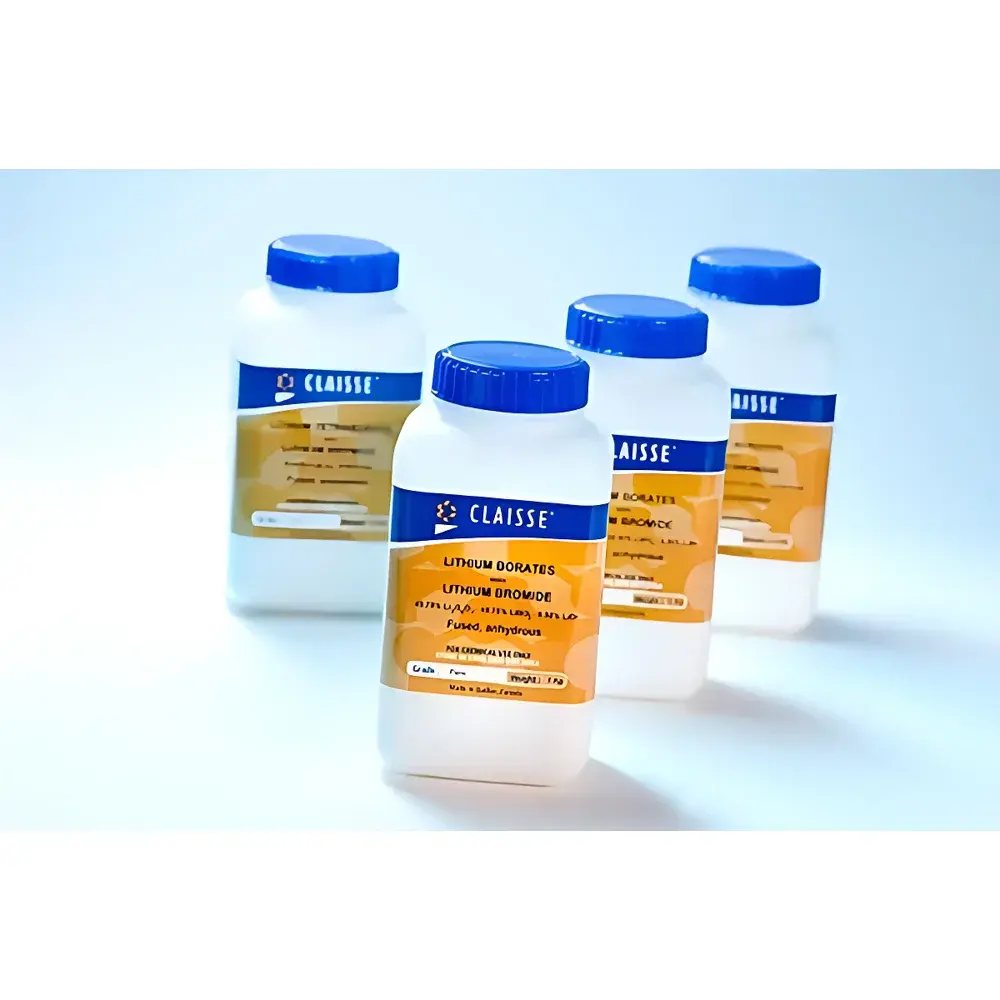
The LeNeo accommodates standard 30–35 g Pt-Au (95:5) or Pt-Au (90:10) crucibles and supports mold-based casting for 32–40 mm diameter fused beads. It is validated for use with common fusion fluxes (e.g., Li₂B₄O₇, LiBO₂, mixtures with NH₄NO₃ oxidant) and compatible with sample-to-flux ratios ranging from 1:5 to 1:12. The system meets ASTM D5630 (ash content determination), ISO 8295 (polymer ash fusion), and ISO 12677 (cement XRF fusion preparation) requirements. All operational logs—including temperature profiles, cycle timestamps, and error codes—are timestamped and stored locally for GLP/GMP audit readiness. Optional software modules support 21 CFR Part 11-compliant electronic signatures and audit trail generation.
Software & Data Management
The LeNeo operates via an embedded Linux-based controller with a 7-inch capacitive touchscreen HMI. Firmware supports up to 99 user-defined methods, each storing full thermal profiles, rotation parameters, and safety thresholds. USB export enables transfer of cycle reports (CSV/PDF) containing peak temperature, dwell time, cooling rate, and pass/fail status per sample. When integrated with CLAISSE’s optional FusionLink™ PC software, users gain remote monitoring, centralized method deployment across multiple instruments, and automated report archiving linked to LIMS identifiers. All data fields adhere to ASTM E1447 metadata conventions for analytical sample preparation traceability.
Applications
- XRF quantitative analysis of cement raw meals, clinker, and finished products per ISO 29581-2.
- Geochemical mapping of exploration drill cores and soil samples using fused-bead calibration curves.
- Metallurgical process control for ferroalloys, nickel laterites, and copper concentrates where heterogeneity demands complete matrix dissolution.
- Preparation of digestates for subsequent AA or ICP-OES/MS analysis—particularly for elements bound in spinel phases or silicate lattices resistant to acid leaching.
- Reference material certification workflows requiring certified homogeneity and stoichiometric reproducibility across ≥100 replicate beads.
FAQ
What crucible materials are supported?
The LeNeo is configured for Pt-Au (95:5 or 90:10) crucibles; graphite crucibles may be used for specific low-melting-point applications under validated protocols.
Is external flux dispensing integrated?
Flux addition is manual by default; however, the system features mechanical and electrical interfaces for third-party volumetric or gravimetric dispensers (e.g., METTLER TOLEDO AutoChem or Sartorius CMA series).
Can the LeNeo be used for acid digestion support?
While not a microwave or hot-block digester, the LeNeo’s high-temperature capability enables open-vessel fusion-dissolution hybrid protocols—for example, pre-fusing refractory residues prior to HNO₃/HF attack in ICP sample prep.
How is calibration verified?
CLAISSE recommends quarterly verification using NIST-traceable reference materials (e.g., NIST SRM 278, GBW 07103) and annual factory recalibration of thermocouples and power delivery circuits.
Does the system support network connectivity?
Ethernet and Wi-Fi (802.11n) are available for firmware updates and remote diagnostics; data export remains USB-host or optional FusionLink™ TCP/IP integration.



