
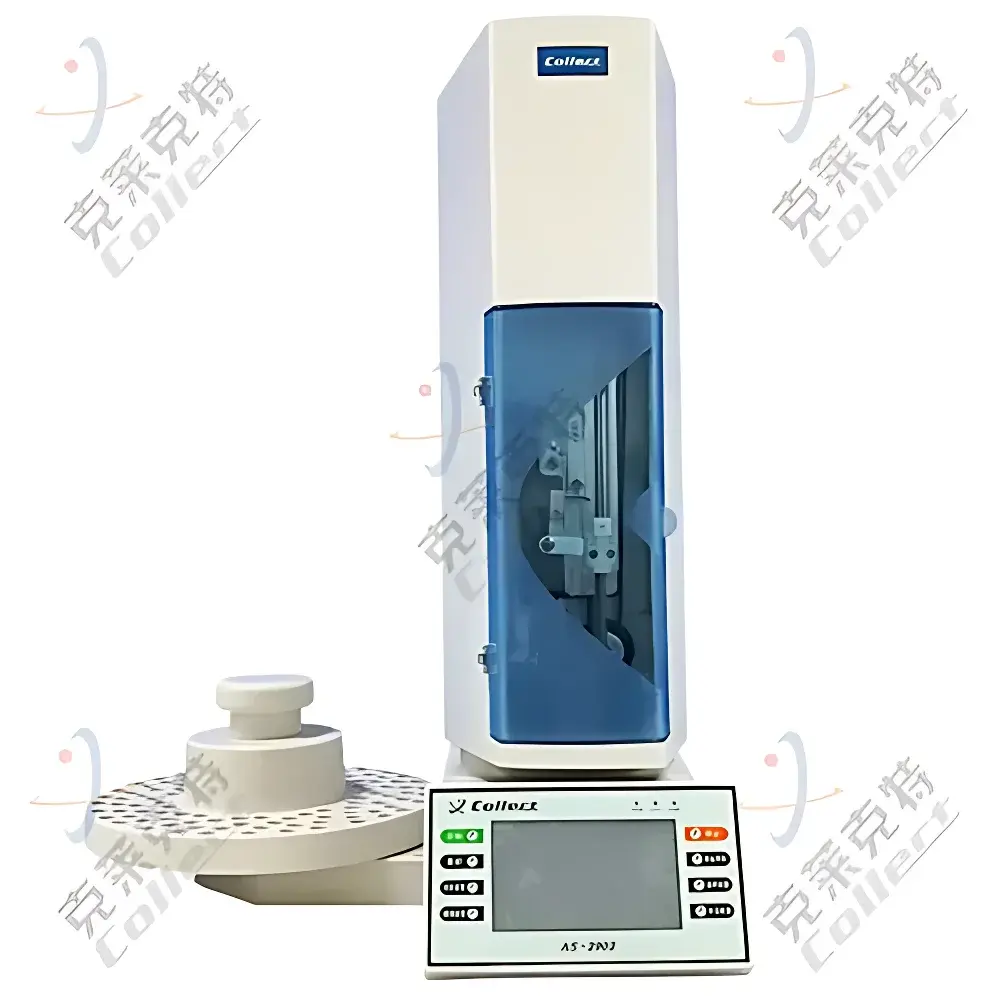
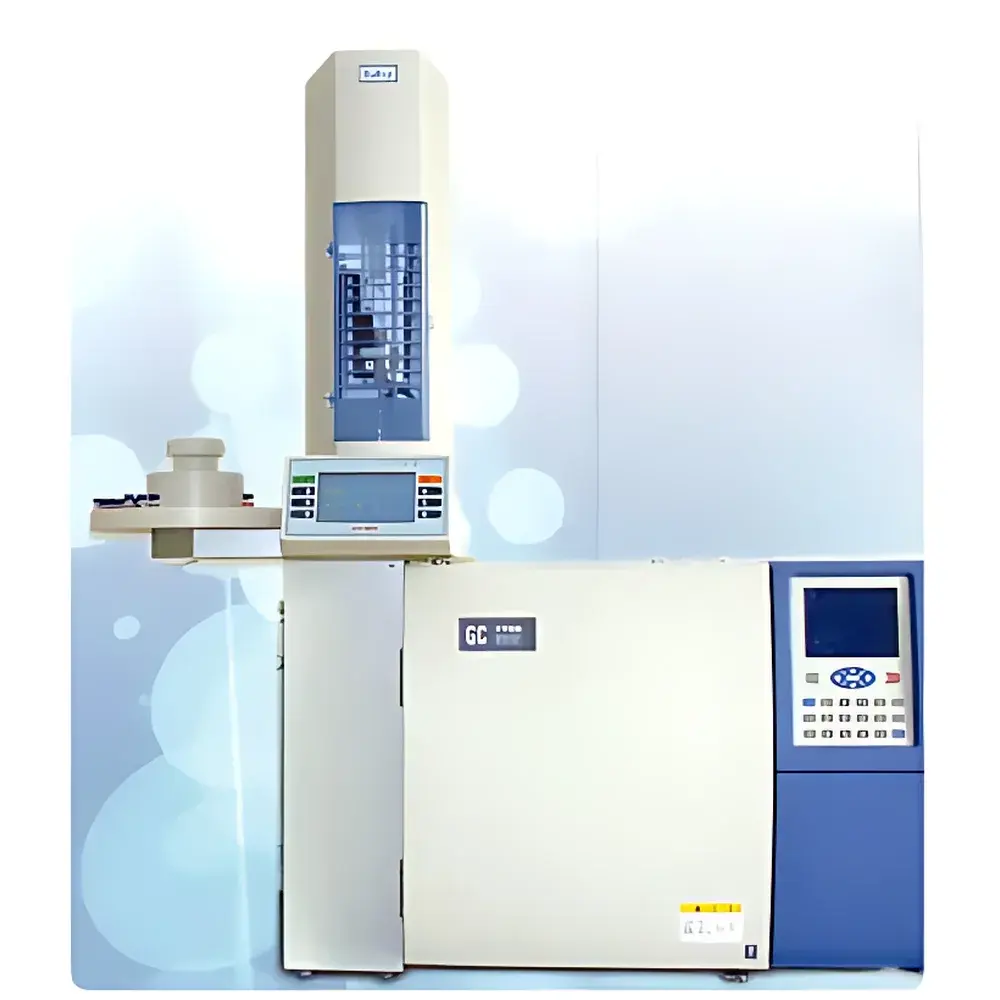
Clarete AS-2902-160 Multifunctional Liquid Autosampler for Gas Chromatography
| Brand | Clarete |
|---|---|
| Origin | Henan, China |
| Manufacturer Type | OEM Manufacturer |
| Instrument Type | GC Autosampler |
| Max Sample Capacity | 160 positions |
| Minimum Injection Volume | 0.1 µL |
| Optional Quantitative Loop Volumes | 1, 5, 10, 25, 50, 100, 250, 500 µL |
| Positioning Accuracy | ±0.1 mm |
| Sample Tray Drive Mechanism | Rotary Carousel |
| Needle Wash Mode | Internal & External Wall Rinse (Unlimited Cycles) |
| Repeat Injection Capability | Unlimited Sequential Injections |
Overview
The Clarete AS-2902-160 is a precision-engineered multifunctional liquid autosampler designed specifically for integration with gas chromatography (GC) systems in analytical laboratories. It operates on a rotary carousel architecture, enabling reliable, high-throughput sample introduction via syringe-based liquid injection. The instrument implements closed-loop positional control using stepper motors with integrated optical encoders—ensuring traceable motion accuracy of ±0.1 mm across all 160 sample positions. Its core function is to automate the sequential aspiration, precise metering, needle washing, and controlled delivery of liquid samples into GC inlet ports—including split/splitless, PTV, and cold-on-column configurations. This eliminates manual variability inherent in handheld syringe injections while maintaining compatibility with standard GC timing protocols and pressure/temperature event synchronization.
Key Features
- Rotary carousel design with 160-position capacity, supporting interchangeable trays (15-, 110-, and 120-position variants available)
- Sub-microliter quantitative capability: minimum programmable injection volume of 0.1 µL, supported by eight selectable fixed-volume quantitative loops (1–500 µL)
- Dual-stage needle wash system: independent solvent channels for internal lumen and external surface rinsing, configurable for unlimited cycles per injection
- Real-time motion monitoring via encoder feedback on all motorized axes—ensuring long-term positional repeatability and diagnostic traceability
- Industrial-grade 7-inch capacitive touchscreen interface with multi-language support (English, Chinese, Spanish, German, French), compliant with IEC 61000-4 EMC standards
- Full GC synchronization via multiple communication protocols: RS-232, USB 2.0, and optional Ethernet TCP/IP for remote command execution and status polling
- Unattended operation mode: supports continuous 24-hour sequencing with automatic tray indexing, loop priming, and fault recovery routines
- Modular mechanical architecture: compact footprint (W × D × H: 320 × 480 × 360 mm), lightweight aluminum chassis, and tool-free access to syringe drive and wash station
Sample Compatibility & Compliance
The AS-2902-160 accommodates standard 1.5 mL and 2.0 mL conical-bottom vials (12 × 32 mm), as well as 4 mL glass or polypropylene vials with crimp or screw caps. It handles aqueous, organic, and mildly corrosive solvents (e.g., methanol, acetonitrile, dichloromethane, hexane) within ISO 8573-1 Class 4 purity limits. The system meets general laboratory safety requirements per IEC 61010-1:2010 and complies with electromagnetic compatibility directives (EN 61326-1). While not certified for GMP environments out-of-the-box, its architecture supports audit-ready operation when configured with electronic logbook export, user-access-level permissions, and time-stamped sequence execution records—enabling alignment with GLP documentation practices and FDA 21 CFR Part 11 data integrity principles where local validation procedures are applied.
Software & Data Management
The embedded firmware provides full sequence programming via the onboard HMI or external PC client (Windows 10/11 compatible). Users define injection order, loop selection, wash cycles, dwell times, and GC trigger delays. All method parameters and run logs are stored in non-volatile memory with timestamped entries. Raw sequence files (.seq) export in plain-text CSV format for third-party LIMS integration. Audit trail functionality includes operator ID tagging, parameter change history, and failed-injection event logging—facilitating root-cause analysis during method transfer or regulatory review. No cloud connectivity is implemented; data remains fully under local administrative control.
Applications
This autosampler is routinely deployed in environmental testing labs for VOC analysis in water and soil extracts (EPA Method 502.2, 8260D), petrochemical QA/QC for hydrocarbon profiling (ASTM D3606, D5599), food safety screening for pesticide residues (AOAC 2007.01), and pharmaceutical residual solvent quantification (ICH Q2(R2), USP ). Its flexibility in loop selection and wash depth makes it suitable for both high-concentration calibration standards and low-level trace analysis requiring carryover suppression below 0.05%.
FAQ
Is the AS-2902-160 compatible with Agilent, Thermo Fisher, and Shimadzu GC systems?
Yes—it supports hardware-level handshake via RS-232 and software-level command mapping for all major GC platforms through vendor-specific protocol libraries.
Can the instrument perform derivatization or mixing prior to injection?
No—this is a dedicated liquid autosampler without integrated reagent dispensing or incubation modules. It performs only aspiration, metering, washing, and injection.
What maintenance intervals are recommended for the syringe drive and wash valves?
Syringe plunger seals require replacement every 10,000 injections; wash valve cartridges every 50,000 rinse cycles. Preventive maintenance kits and service bulletins are available directly from Clarete’s technical support team.
Does the system support electronic signatures for 21 CFR Part 11 compliance?
The base firmware does not include digital signature infrastructure; however, validated third-party middleware solutions can be integrated to meet ALCOA+ data governance requirements in regulated environments.
How is carryover performance validated during installation qualification?
Carryover testing follows ASTM E2656-19 guidelines using a high-concentration standard followed by blank injections; typical results show ≤0.03% carryover after two post-injection washes with appropriate solvents.




