
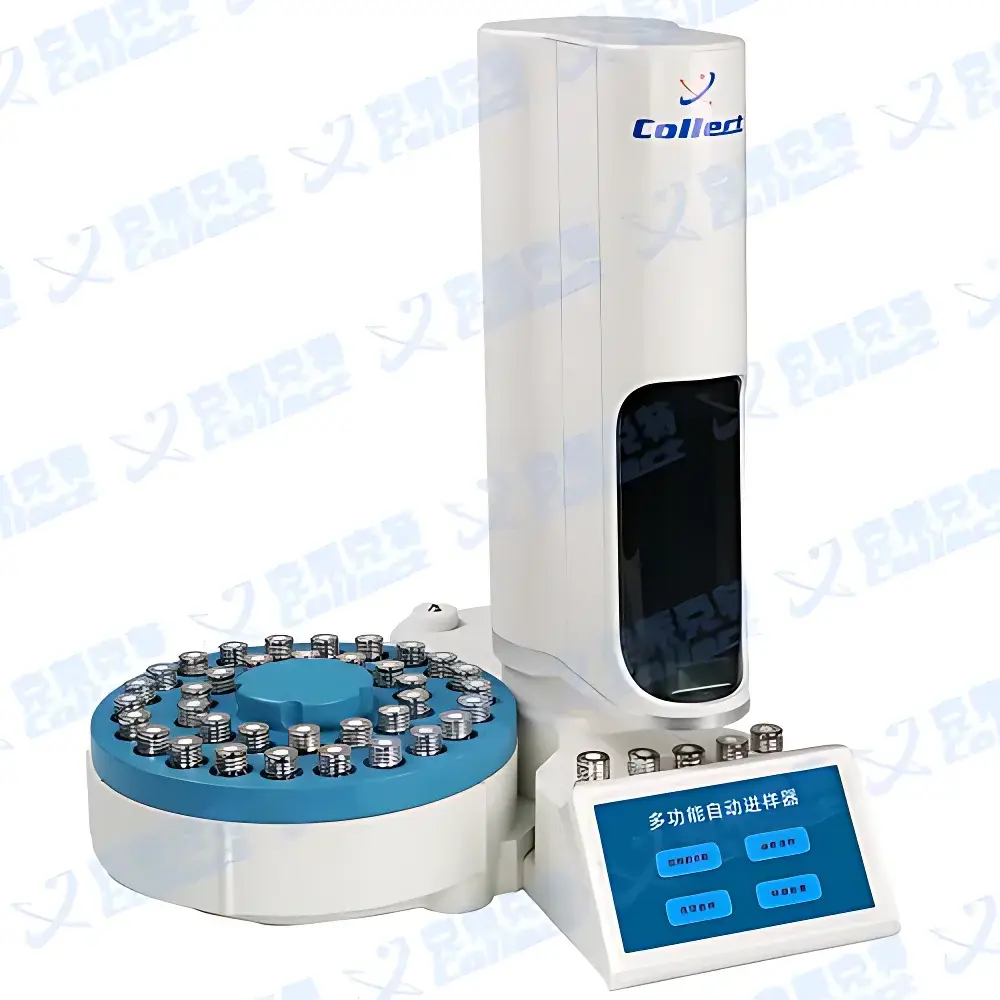
Clarete AS-3901ASF Fully Automated Solid-Phase Microextraction (SPME) Autosampler
| Brand | Clarete |
|---|---|
| Origin | Henan, China |
| Manufacturer Type | OEM Manufacturer |
| Country of Origin | China |
| Model | AS-3901ASF |
| Instrument Type | GC Autosampler |
| Max Injection Volume | 500 µL |
| Min Injection Volume | 0.1 µL |
| Quantitative Loop Volumes | 1, 5, 10, 25, 50, 100, 250, 500 µL (user-selectable) |
| Positioning Accuracy | < 0.3 mm |
| Motion Mechanism | Rotary Carousel |
| Needle Wash | Internal & External Wall Cleaning, Unlimited Cycles |
| Repeat Injection Capability | Unlimited |
Overview
The Clarete AS-3901ASF is a fully automated, modular autosampling platform engineered for high-precision sample introduction and integrated sample preparation in gas chromatography (GC) workflows. Unlike conventional single-function autosamplers, the AS-3901ASF implements a unified robotic architecture capable of executing three distinct operational modes—liquid-phase injection, solid-phase microextraction (SPME), and automated standard solution preparation—within a single instrument footprint. Its core measurement principle relies on precise syringe-based fluid handling combined with thermally controlled SPME fiber manipulation and programmable dilution kinetics. Designed for compatibility with major GC systems—including Agilent, Thermo Fisher, Shimadzu, and PerkinElmer—the system operates without occupying the GC inlet port during SPME desorption, enabling concurrent dual-inlet operation. The platform adheres to fundamental principles of analytical reproducibility: volumetric accuracy governed by calibrated loop selection and syringe displacement control; thermal stability ensured via PID-regulated heating blocks with ±1 °C uniformity; and mechanical repeatability achieved through high-resolution stepper motor actuation and optical position feedback.
Key Features
- Triple-mode functionality: seamless switching between liquid injection, SPME extraction/desorption, and multi-step standard solution preparation via modular hardware reconfiguration
- 6.5-inch capacitive touchscreen interface with customizable method templates, real-time status monitoring, and audit-trail-enabled parameter logging
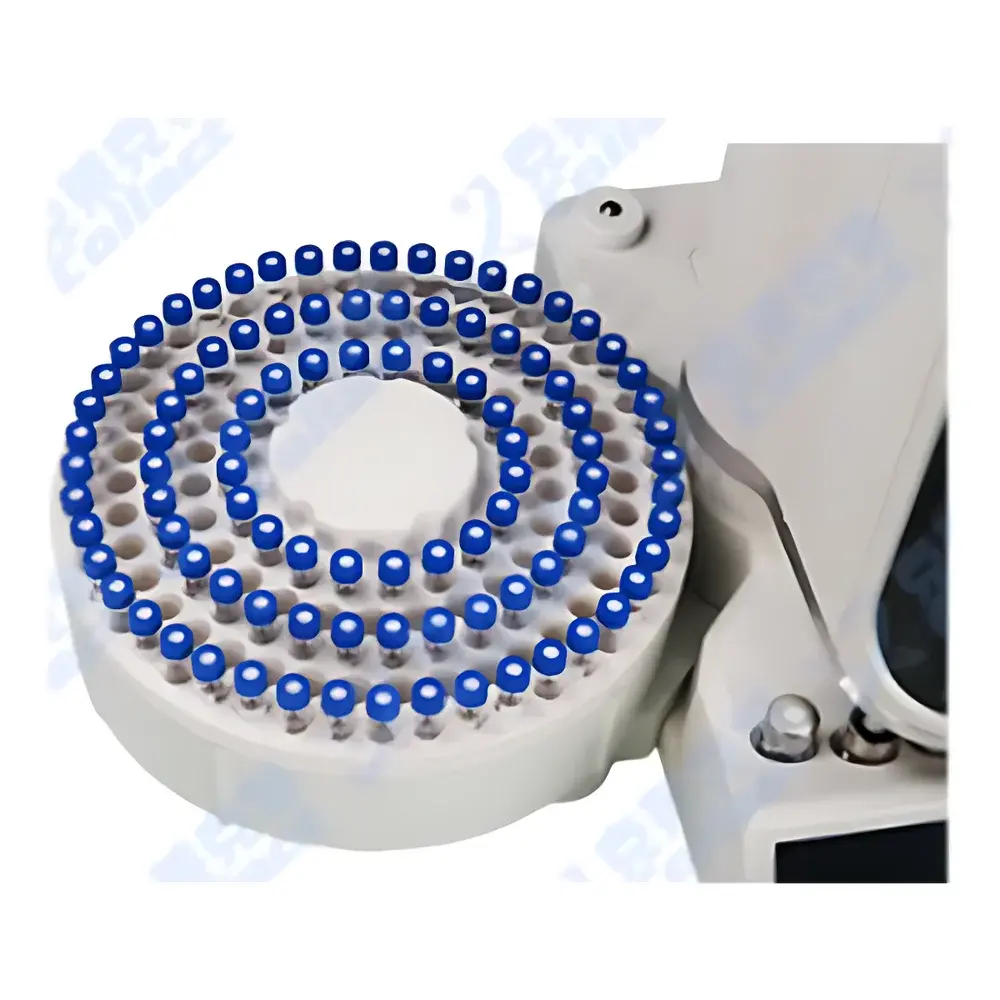
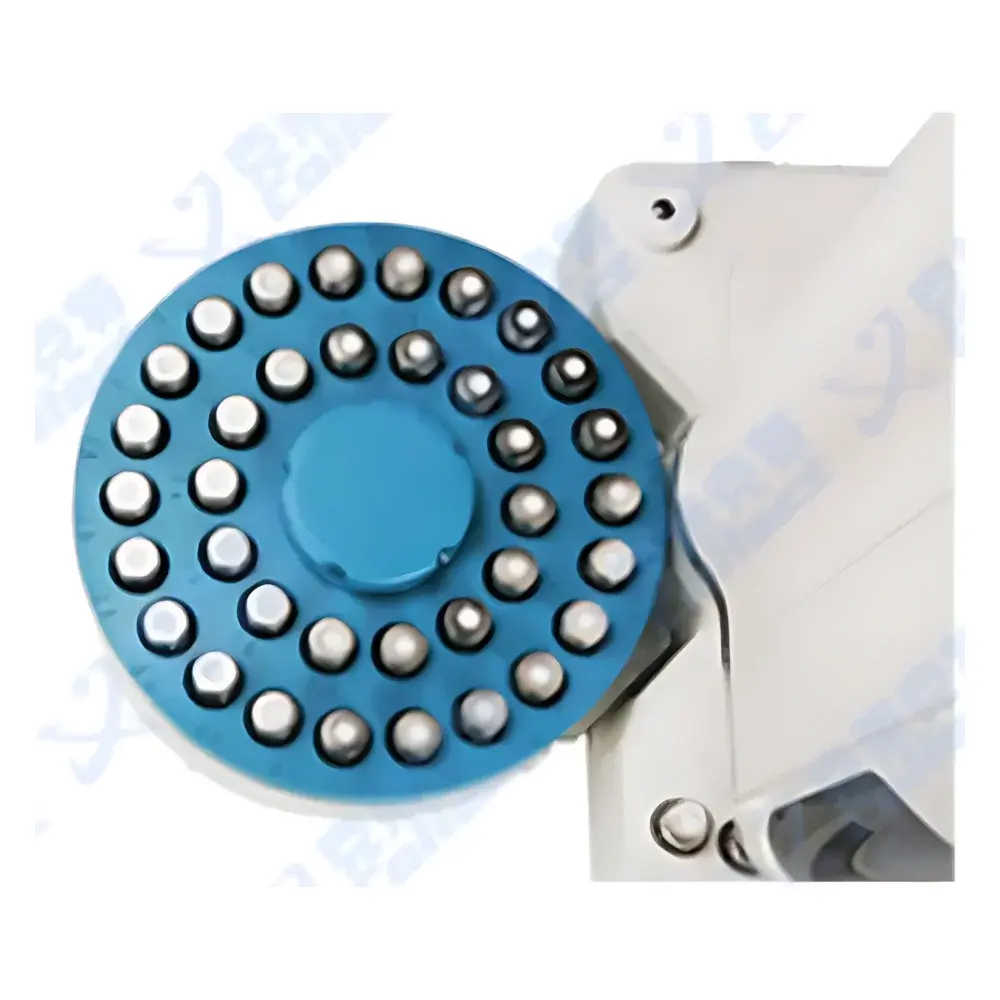
- Rotary carousel architecture supporting up to 160 × 2 mL vials (liquid mode) or 36 × 10/20 mL vials (SPME mode), with independent temperature-controlled zones
- Programmable needle insertion depth (2–40 mm), adjustable dwell times pre/post-injection, and user-defined wash cycles with internal/external rinse capability
- SPME-specific modules including fiber aging station (RT–350 °C, 0–60 min), heated sample incubation block (RT–150 °C, 0–240 min), and magnetically stirred heating platform (0–1500 rpm)
- Automated standard dilution engine supporting up to 10 stock solutions, 15-point gradient series, and single-step dilution factors up to 200× with final volume control to 2 mL
Sample Compatibility & Compliance
The AS-3901ASF accommodates diverse sample matrices—including aqueous, organic, semi-solid, and volatile headspace phases—across environmental, food safety, clinical toxicology, and forensic applications. Its SPME module supports commercial fibers (e.g., PDMS, CAR/PDMS, DVB/CAR/PDMS) and enables both headspace and direct immersion extractions with programmable fiber insertion depth and agitation control. From a regulatory standpoint, the system supports GLP/GMP-aligned workflows: all method parameters, sequence logs, and calibration records are timestamped and exportable in CSV format; manual intervention points are minimized to reduce operator-induced variability; and hardware-level interlocks prevent invalid configurations (e.g., mismatched loop volume vs. target concentration). While not certified to ISO/IEC 17025 or FDA 21 CFR Part 11 out-of-the-box, its deterministic execution model and full parameter traceability provide a foundation for laboratory-specific validation per ASTM D7217 (SPME), USP , or ISO 17025 Clause 7.7.
Software & Data Management
Control is managed via embedded Linux-based firmware with a browser-accessible configuration portal (HTTP/HTTPS). Method development occurs through hierarchical scripting: global settings (temperature ramps, motion profiles), sequence definitions (vial mapping, loop selection), and step-level logic (conditional branching based on sensor feedback). All operations generate immutable log files containing timestamps, motor encoder counts, thermocouple readings, and syringe position data—retained for ≥30 days onboard and exportable via USB or Ethernet. No proprietary runtime environment is required; raw logs integrate with LIMS platforms via RESTful API endpoints. Audit trail functionality complies with ALCOA+ principles: attributable, legible, contemporaneous, original, accurate, complete, consistent, enduring, and available.
Applications
- Environmental analysis: quantification of VOCs and SVOCs in water, soil leachates, and air samples using headspace SPME-GC/MS
- Food and beverage testing: residual pesticide screening in fruits/vegetables and flavor compound profiling in wines and spirits
- Clinical research: therapeutic drug monitoring via plasma protein binding studies using direct-immersion SPME
- Forensic toxicology: rapid confirmation of illicit substances in biological fluids with automated calibration curve generation
- Method development labs: comparative evaluation of fiber chemistries, extraction kinetics, and matrix effects under tightly controlled thermal and agitation conditions
FAQ
Does the AS-3901ASF require dedicated GC inlet modifications for SPME desorption?
No. The system uses a universal fiber transfer arm that inserts the SPME fiber directly into standard split/splitless inlets without hardware adaptation.
Can the instrument perform simultaneous liquid injection and SPME on the same GC run?
Yes—via dual-inlet support: one inlet configured for direct liquid injection, the other for thermal desorption of the SPME fiber.
Is fiber carryover mitigated during sequential SPME analyses?
Yes. The system executes automated fiber bake-out (up to 350 °C) and nitrogen purging between extractions, with configurable bake time and flow rate.
What validation documentation is provided with the system?
Factory calibration certificates for syringe linearity (0.1–500 µL), temperature uniformity across all heated zones, and positioning repeatability (<0.3 mm) are included. IQ/OQ protocols are available upon request.
How is software update integrity ensured?
Firmware updates are cryptographically signed and validated prior to installation; rollback capability preserves previous stable versions.





