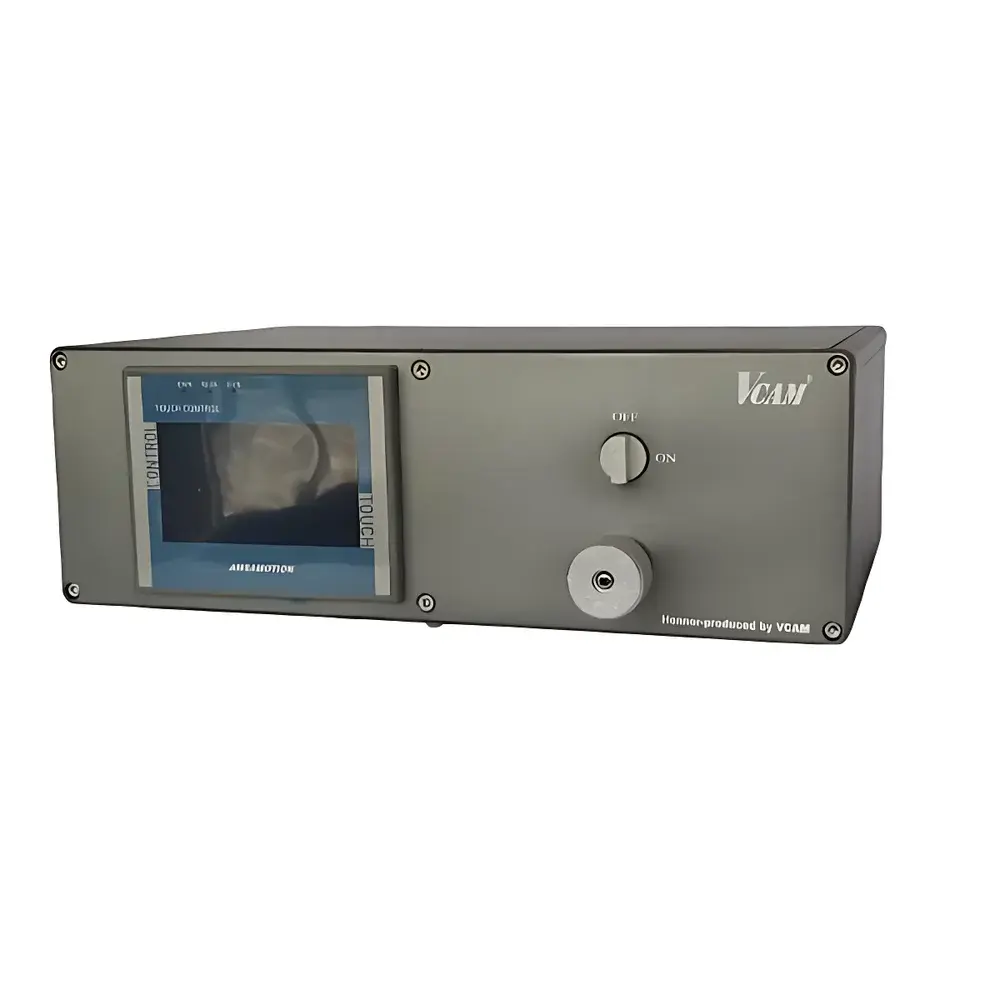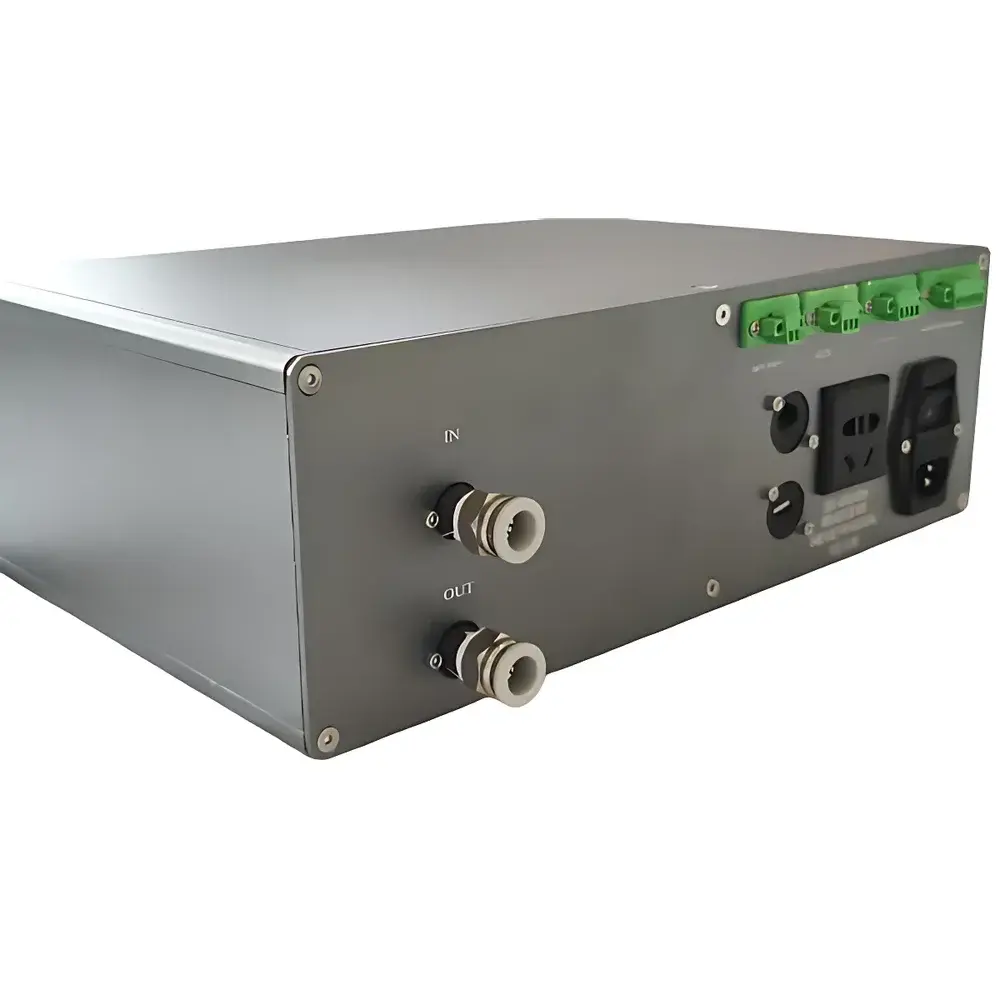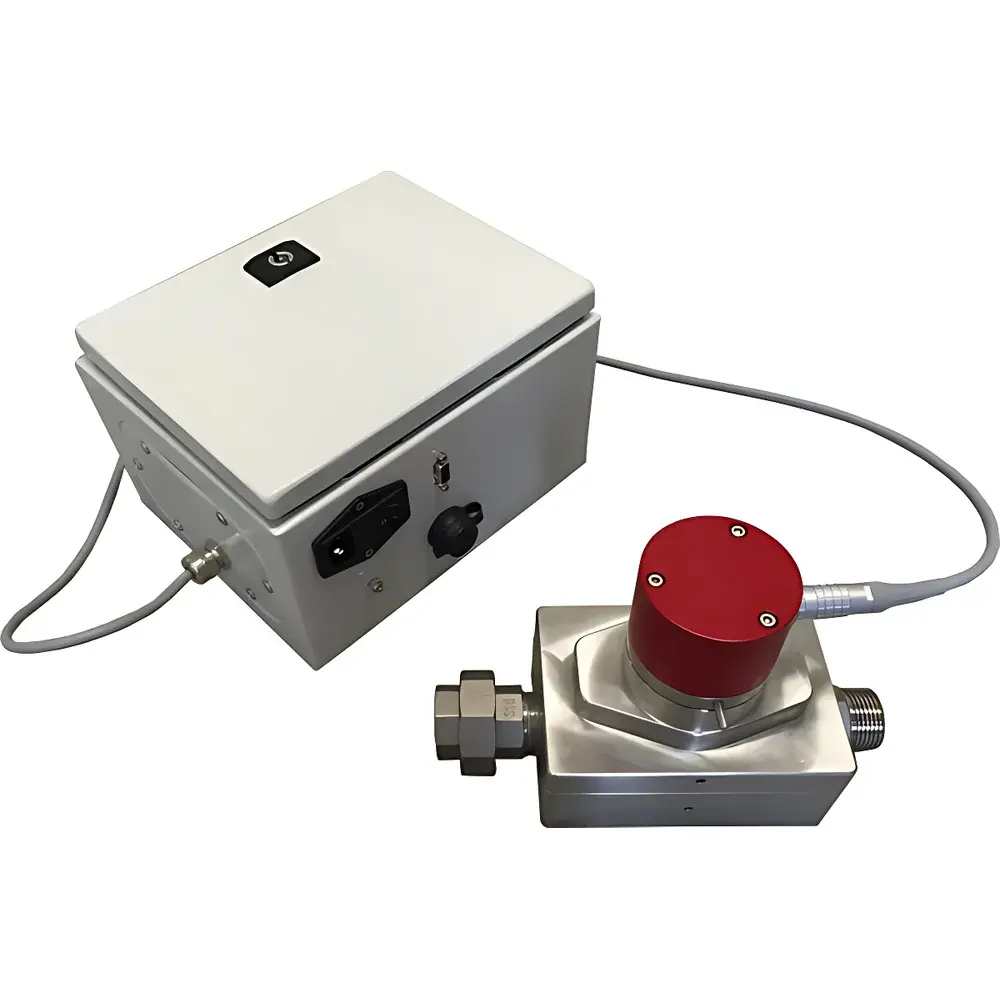
CMC OilQSens Online Oil Quality Monitoring System
| Brand | CMC |
|---|---|
| Origin | Germany |
| Model | OilQSens |
| Conductivity Range | 0.1–20,000 pS/m (Transformer Grade: 0.1–50 pS/m) |
| Dielectric Constant Range | 1.0–5.0 |
| Temperature Range | −10 °C to +70 °C |
| Sensitivity | 0.01 pS/m (conductivity), 1×10⁻⁶ (dielectric constant) |
| Accuracy | ±1% of reading ±0.5 pS/m (conductivity), ±1% ±0.0001 (dielectric constant) |
| Response Time | <45 s |
| Max Process Pressure | 60 barg @ 20 °C |
| Sensor Material | Stainless steel flow cell & fittings, aluminum sensor head |
| Communication Interfaces | RS232, LAN, WLAN, RS485, Profibus, Modbus, GSM (optional) |
| Power Supply | 90–264 VAC / 50–60 Hz or 24 VDC (optional) |
| Dimensions & Weight | Sensor: Ø70 × H103 mm, 2.70 kg |
| Communication Module | 87 × 110 × 30 mm, 0.25 kg |
| Control Unit | 210 × 250 × 165 mm, 4.45 kg |
| Software | WSens (optional) |
Overview
The CMC OilQSens Online Oil Quality Monitoring System is an industrial-grade, real-time dielectric sensor platform engineered for continuous in-line assessment of insulating oil condition in high-voltage power equipment. Operating on the fundamental principles of broadband dielectric spectroscopy and low-frequency conductance measurement, OilQSens quantifies three core physical parameters—electrical conductivity (σ), relative permittivity (εr), and temperature—simultaneously and synchronously. These parameters are intrinsically linked to key degradation indicators: water ingress, oxidation byproducts (e.g., organic acids and soaps), particulate contamination (including cellulose fibers), and ionic dissolution—all of which alter the oil’s bulk dielectric behavior. Unlike offline sampling methods such as Dissolved Gas Analysis (DGA), which inherently introduce temporal blind spots between discrete measurements, OilQSens delivers uninterrupted, second-resolution monitoring from commissioning onward. Its adaptive neural-network-based temperature compensation algorithm corrects for thermal drift across the full operating range (−10 °C to +70 °C), enabling stable baseline tracking over years of service. The system meets the foundational metrological requirements for condition-based maintenance (CBM) in accordance with IEC 60296, IEC 60422, and IEEE C57.106, and supports traceable data acquisition for GLP/GMP-aligned asset management frameworks.
Key Features
- Sub-picosecond-level conductivity resolution: capable of detecting changes down to 0.01 pS/m, with full-scale range spanning 0.1–20,000 pS/m (configurable for transformer-grade oils: 0.1–50 pS/m)
- High-fidelity relative permittivity measurement (1.0–5.0) with ±1% accuracy and 1×10⁻⁶ sensitivity—enabling quantitative discrimination of free vs. dissolved water phases
- Integrated temperature sensing with 0.1 K resolution and active compensation, eliminating thermal artifacts in dielectric parameter derivation
- Dedicated calculation engine for derived indices: loss factor tan δ (per IEC 61620, using low-voltage AC square-wave excitation), estimated breakdown voltage, and moisture saturation level
- Robust mechanical architecture: stainless steel flow cell rated to 60 barg at 20 °C; aluminum sensor head with IP67-rated sealing; 3 m shielded cable (extendable)
- Multi-protocol communication stack: native support for RS232, Ethernet (LAN/WLAN), RS485, Profibus DP, Modbus RTU/TCP, and optional GSM telemetry for remote or off-grid deployment
Sample Compatibility & Compliance
OilQSens is validated for use with mineral-based, synthetic ester, and silicone-based insulating oils employed in power transformers, high-voltage circuit breakers, bushings, and tap changers. It complies with electromagnetic compatibility (EMC) standards EN 61000-6-2 (immunity) and EN 61000-6-4 (emission), and carries CE marking per the EU Machinery Directive 2006/42/EC. All electrical interfaces conform to IEC 61000-4 series surge and ESD test protocols. Data integrity and audit readiness are supported through optional WSens software with configurable user roles, electronic signatures, and 21 CFR Part 11–compliant audit trails. Calibration certificates are traceable to national metrology institutes (PTB, NPL) via CMC’s ISO/IEC 17025-accredited calibration laboratory.
Software & Data Management
The optional WSens software provides a web-native interface accessible via standard browsers (Chrome, Edge, Firefox) without client-side installation. It enables real-time dashboard visualization of σ, εr, T, tan δ, and trend-derived alerts (e.g., rate-of-change thresholds, deviation from historical baselines). Historical datasets are stored in SQLite or SQL Server databases with configurable retention policies (default: 12 months). Alarms can trigger email/SMS notifications, OPC UA server publishing, or integration into SCADA systems via Modbus TCP or MQTT. All raw and processed data are exportable in CSV, PDF report, or XML formats compliant with IEC 61850-7-420 (condition monitoring for transformers). Firmware updates are delivered over secure HTTPS with SHA-256 signature verification.
Applications
- Early detection of insulation oil degradation in oil-immersed power transformers—identifying acid number rise, sludge formation, and oxidation prior to measurable DGA gas evolution
- Continuous monitoring of moisture ingress in sealed or conservator-type transformers, correlating εr shifts with ASTM D1533-compliant Karl Fischer equivalence
- Assessment of filter efficiency in on-load oil regeneration systems via real-time conductivity step-response analysis during filtration cycles
- Validation of oil reclamation processes by tracking conductivity decay kinetics post-treatment
- Supporting predictive maintenance programs aligned with ISO 55001 and IEEE Std 1410 for critical substation assets
- Remote health monitoring of offshore wind farm transformers where physical access is constrained and maintenance windows are infrequent
FAQ
What is the minimum detectable conductivity change?
OilQSens achieves a resolution of 0.01 pS/m, with guaranteed accuracy of ±1% of reading or ±0.5 pS/m—whichever is greater.
Does OilQSens require periodic recalibration?
No routine recalibration is required under normal operating conditions. The system features auto-zero referencing and long-term stability verified per IEC 60296 Annex D. Optional annual verification against certified reference oils is recommended for regulatory compliance.
Can OilQSens be installed on pressurized piping systems?
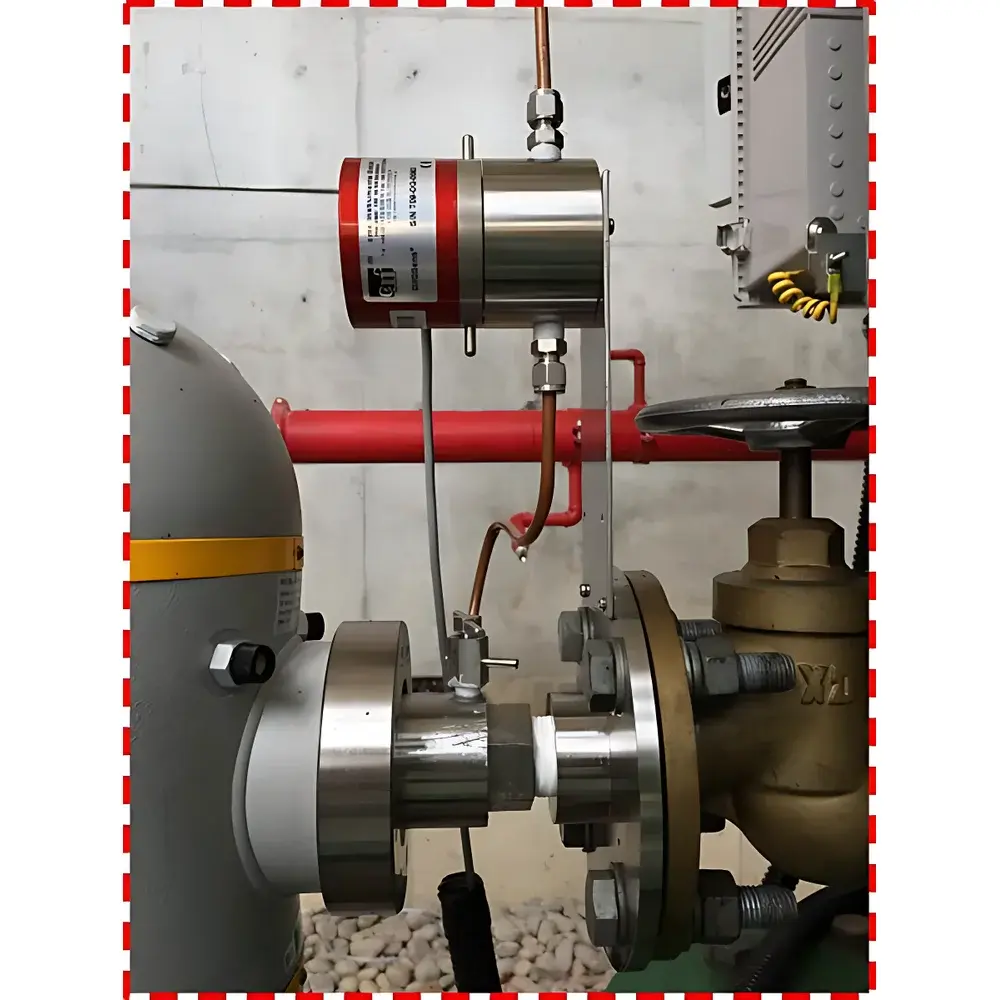
Yes—the flow cell is rated for continuous operation up to 60 barg at 20 °C. For higher pressures or temperatures, custom pressure housings and thermal sleeves are available upon request.
Is the sensor compatible with biodegradable ester oils?
Yes. OilQSens has been tested and validated with MIDEL 7131, BioTemp, and Envirotemp FR3 fluids per ASTM D6871 and IEC 62770 specifications.
How is data security ensured in network-connected deployments?
All network communications use TLS 1.2+ encryption. WSens implements role-based access control (RBAC), session timeout, and hardware-enforced secure boot. No default passwords are shipped; initial setup mandates strong credential generation.
Related Products