CMC TMA-210-P P₂O₅-Based Trace Moisture Analyzer for Corrosive & Combustible Gases
| Origin | Germany |
|---|---|
| Manufacturer Type | Authorized Distributor |
| Origin Category | Imported |
| Model | TMA-210-P |
| Price Range | USD 7,000 – 14,000 |
Overview
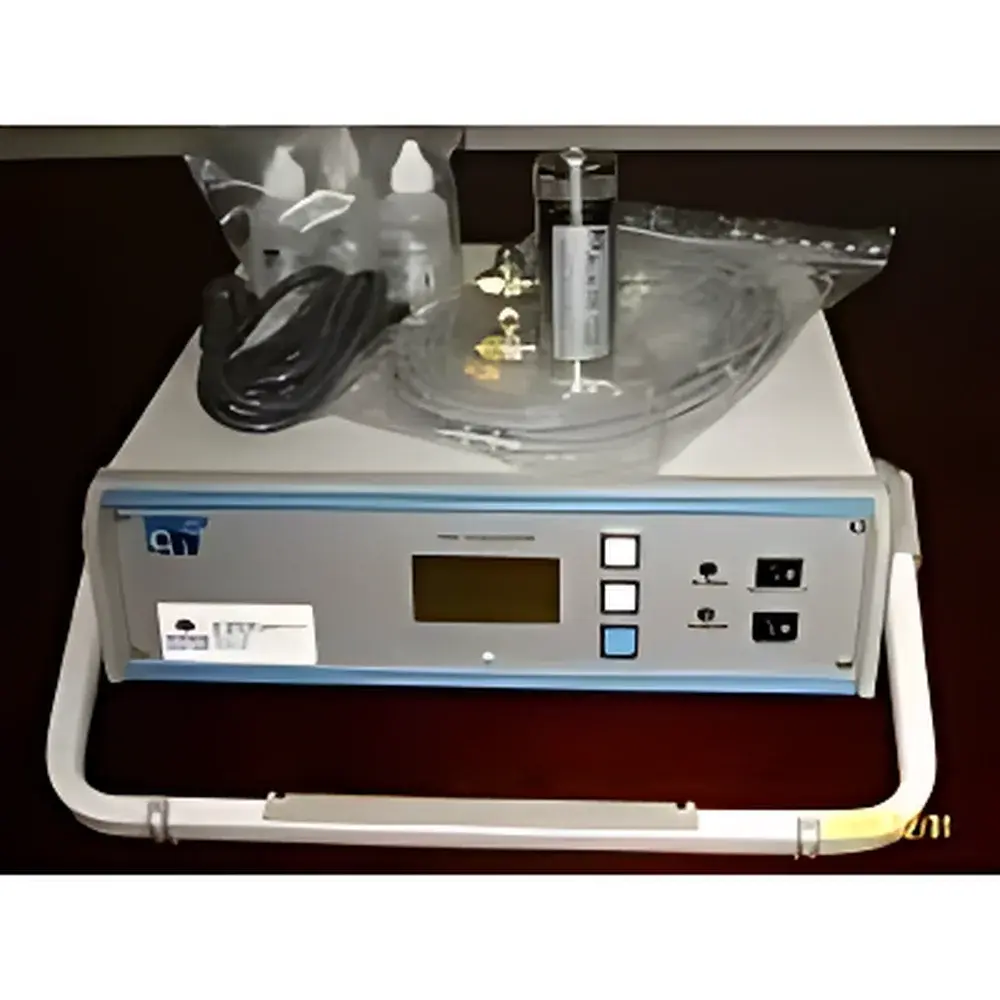
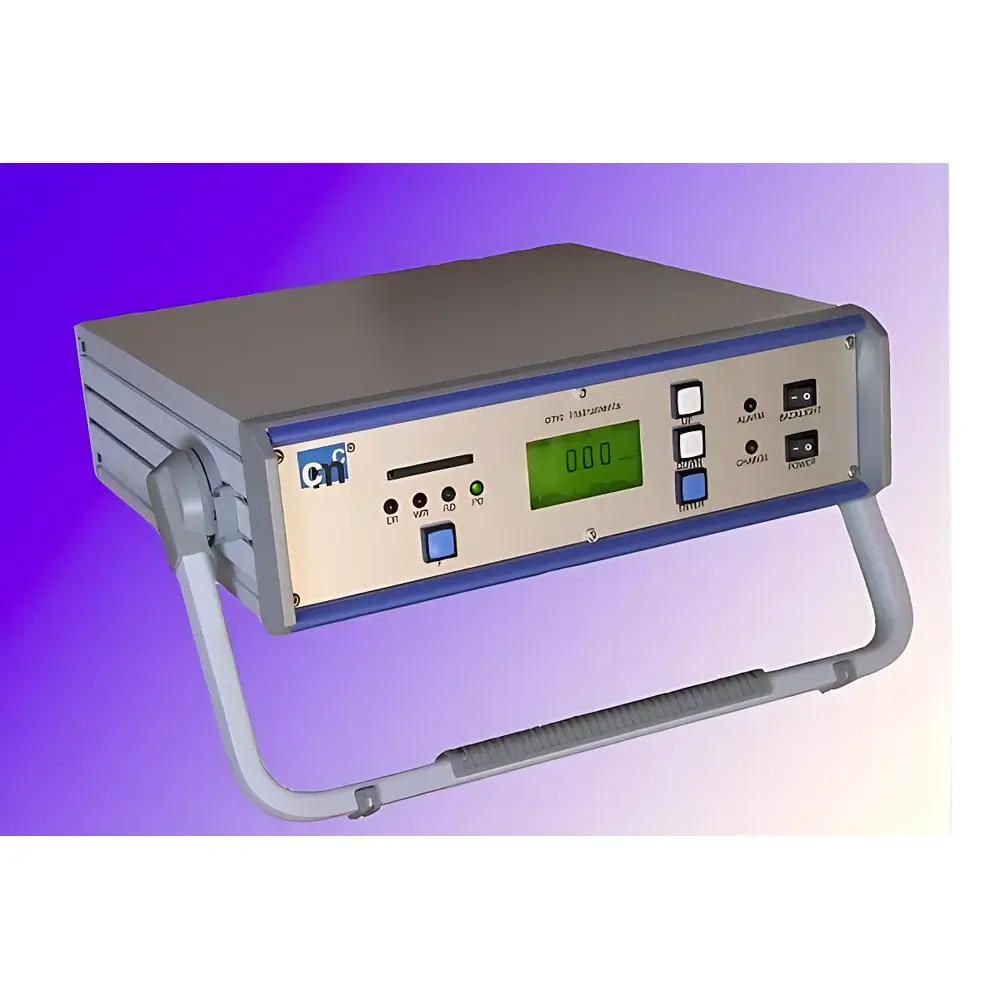
The CMC TMA-210-P is a high-stability, laboratory-grade trace moisture analyzer engineered for continuous, absolute measurement of water vapor in aggressive and flammable process gases. It employs the well-established phosphorus pentoxide (P₂O₅) electrolytic sensing principle — a primary reference method recognized for its metrological traceability and absence of calibration drift under stable operating conditions. In this technique, moisture in the sample gas is irreversibly absorbed by a thin, hygroscopic film of phosphoric acid (H₃PO₄) coated between two parallel electrodes (typically Pt or Rh wire) housed within a fused-silica cylindrical cell. An applied DC voltage drives electrolysis of the absorbed water into hydrogen and oxygen; the resulting current is stoichiometrically proportional to the mass flow rate of water entering the sensor. This fundamental Faraday-based relationship ensures direct, linear, and calibration-free quantification — eliminating the need for periodic span or zero adjustments typical of optical or capacitive alternatives. The instrument is specifically designed for deployment in demanding industrial environments where gas purity, safety integrity, and long-term measurement stability are critical — including semiconductor bulk gas delivery, specialty chemical synthesis, cryogenic air separation, and high-purity hydrogen infrastructure.
Key Features
- True absolute measurement principle: No reliance on calibration standards or reference gases — inherent accuracy derived from Faraday’s law of electrolysis
- P₂O₅ sensor architecture with fused-silica cell and noble-metal electrodes (Pt/Rh), optimized for resistance to corrosion by Cl₂, HCl, SO₂, H₂S, HF, and other acidic or oxidizing gases
- Auto-ranging detection across four user-selectable spans: 0–10 ppm, 0–100 ppm, 0–1000 ppm, and 0–2500 ppm v/v — dynamically switched based on signal magnitude
- Full microprocessor control with built-in self-diagnostic routines at power-on and during operation (e.g., sensor impedance check, electrolyte integrity verification)
- NAMUR-compliant electrical interface: 1 alarm relay (SPDT, 250 VAC/5 A), configurable 4–20 mA or 0–10 V analog output with user-defined scaling and damping
- Integrated rechargeable lead-acid battery (8 W typical consumption) enabling portable or backup operation; also supports universal AC input (80–230 VAC, 50–60 Hz)
- Backlit LCD display with intuitive menu navigation, real-time ppm reading, status indicators, and event logging capability
Sample Compatibility & Compliance
The TMA-210-P demonstrates broad compatibility with inert, reactive, and corrosive gases — validated for use with He, Ne, Ar, Kr, Xe, N₂, O₂, O₃, H₂, D₂, CO₂, CH₄, C₂H₂, SF₆, Freon variants, natural gas, and high-purity acid gases (Cl₂, HCl, SO₂, H₂S). Exceptions include gases that chemically degrade phosphoric acid or react with P₂O₅ (e.g., NH₃, amines, strong alkalis). Sensor regeneration — performed via controlled reverse-polarity current application — restores electrode film integrity without disassembly or consumable replacement. The analyzer conforms to NAMUR NE 21 (electrical interface), meets CE marking requirements for EMC and LVD directives, and supports implementation in GLP/GMP environments through audit-ready operational logs and parameter-lock functionality.
Software & Data Management
While the TMA-210-P operates as a stand-alone analyzer, its analog output enables seamless integration into DCS, SCADA, or PLC systems for centralized monitoring and control. Optional RS-232 or RS-485 serial interfaces (available via external module) support Modbus RTU protocol for remote configuration, data polling, and firmware updates. All critical operational parameters — including range selection, alarm thresholds, output scaling, backlight timeout, and sensor regeneration cycles — are stored in non-volatile memory. The device maintains internal timestamped logs of alarm events, power cycles, and sensor status changes — facilitating root-cause analysis during QA/QC reviews or regulatory audits (e.g., ISO 8573-3, ASTM D7443, IEC 61511).
Applications
- Moisture monitoring in hydrogen fuel production, purification, and distribution pipelines (ISO 8573-8 Class 1 compliance verification)
- Real-time control of drying efficiency in semiconductor process gas cabinets (Ar, N₂, O₂, CF₄, NF₃)
- Quality assurance of liquefied industrial gases (LNG, LPG, liquid nitrogen) during filling and storage
- In-line verification of desiccant dryer performance in petrochemical and pharmaceutical manufacturing
- Trace H₂O detection in chlorine and sulfur dioxide feedstocks for PVC and sulfate production
- Research-grade moisture profiling in catalytic reaction streams involving syngas, ammonia synthesis, or Fischer–Tropsch processes
FAQ
Does the P₂O₅ sensor require periodic recalibration?
No — the measurement is fundamentally absolute and based on Faraday’s law. Calibration is not required unless sensor contamination or physical damage is suspected.
Can the analyzer operate continuously in explosive atmospheres?
The base unit is rated IP20 and intended for safe-area installation only. For Zone 1/2 deployment, it must be housed in an approved pressurized or explosion-proof enclosure per ATEX/IECEx standards.
What maintenance does the sensor require?
Routine maintenance is limited to periodic regeneration (typically every 3–6 months depending on exposure level) and visual inspection of inlet filters. No consumables or reagents are needed.
Is the analog output intrinsically safe?
The standard 4–20 mA output is non-IS; however, it can be connected to an approved intrinsic safety barrier when interfacing with field devices in hazardous locations.
How is sensor poisoning detected?
Degradation manifests as reduced sensitivity, increased zero drift, or failure of the auto-zero routine. The instrument’s diagnostic mode provides impedance and baseline current diagnostics to aid troubleshooting.
Related Products