
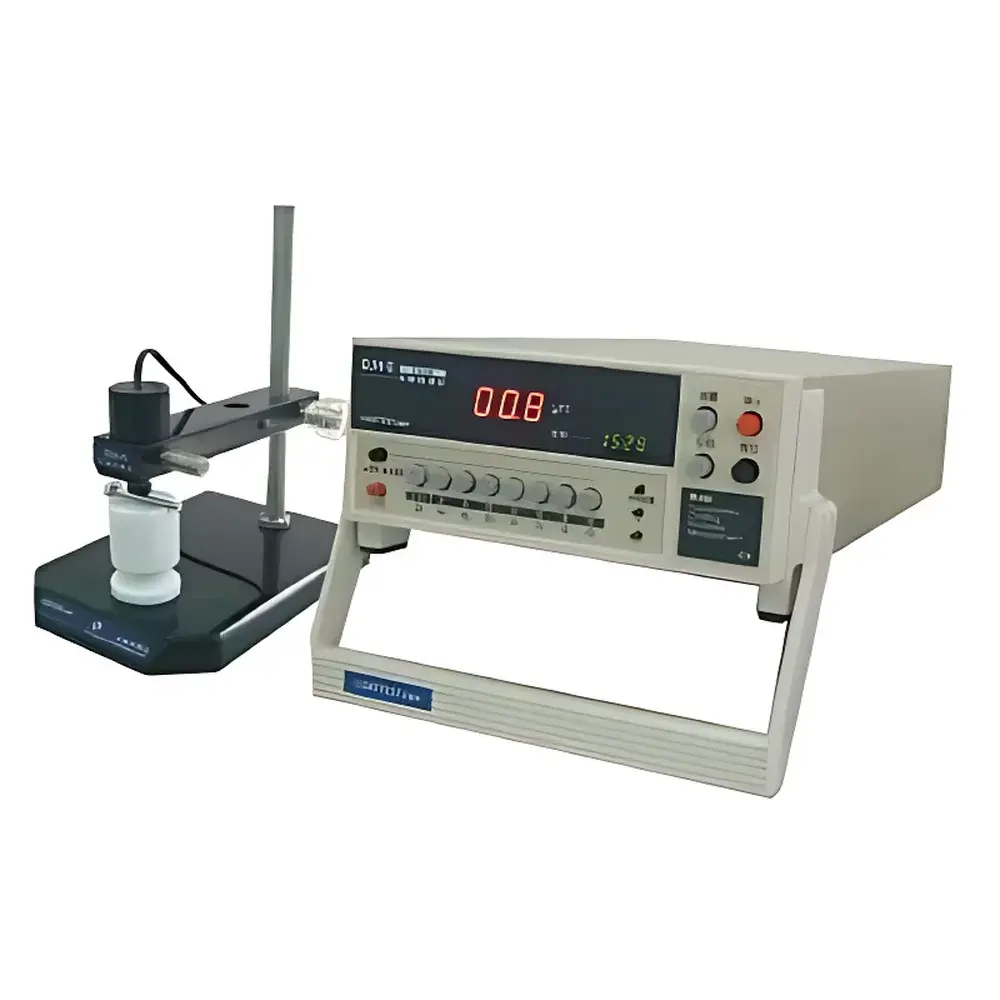
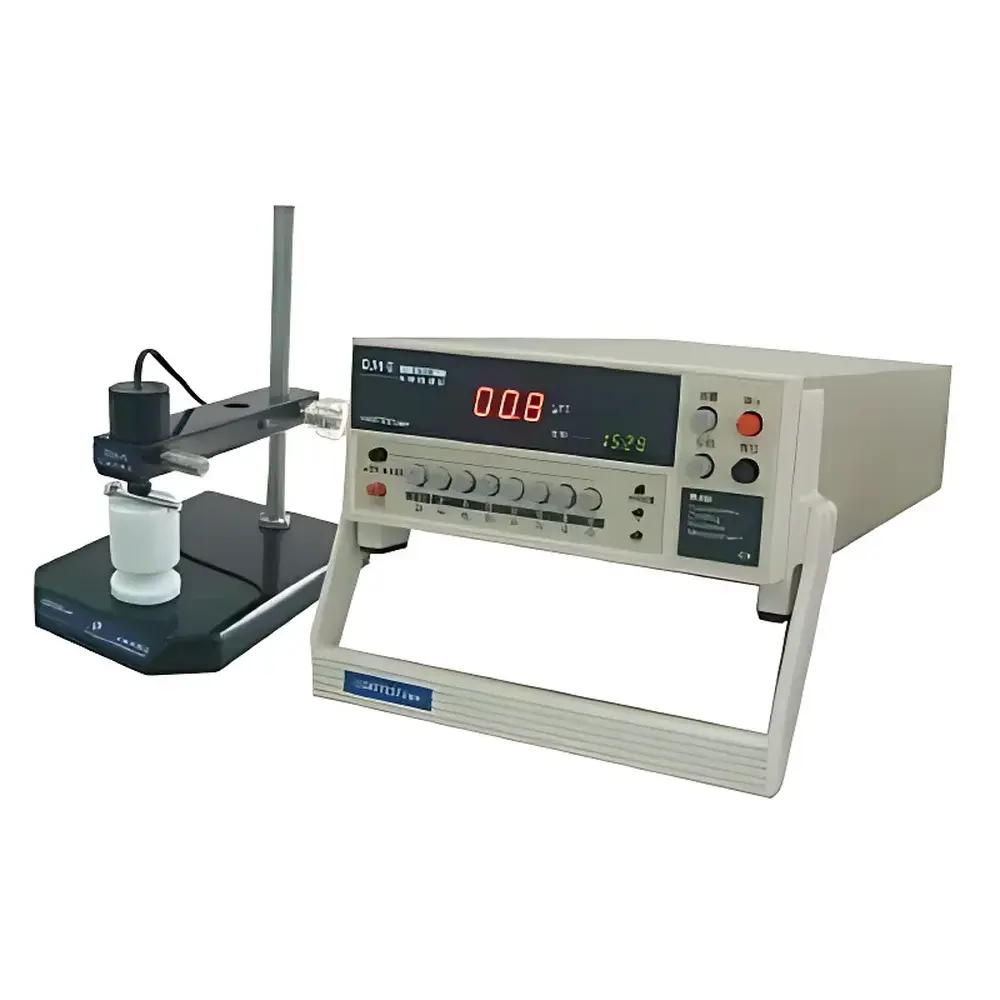
CMI810 Coulometric Coating Thickness Tester
| Origin | Hubei, China |
|---|---|
| Manufacturer Type | Authorized Distributor |
| Origin Category | Domestic (China) |
| Model | CMI810 |
| Pricing | Upon Request |
Overview
The CMI810 Coulometric Coating Thickness Tester is a precision benchtop instrument engineered for quantitative, destructive thickness measurement of electroplated and anodized metallic coatings using the controlled electrolytic dissolution principle. Based on Faraday’s law of electrolysis, the instrument applies a constant current across a defined micro-electrolytic cell formed between the coating surface and a standardized electrolyte solution. As the coating is selectively dissolved, the charge passed (coulombs) is directly proportional to the mass—and thus thickness—of the removed layer, provided density, valence, and atomic weight of the coating material are known. This method delivers high reproducibility for thin, conductive layers on both metallic and non-metallic substrates, making it especially suitable for quality control in high-volume plating lines and R&D validation where non-destructive techniques (e.g., XRF or eddy current) lack sufficient resolution below 0.5 µm or encounter matrix interference.
Key Features
- Coulometric measurement principle compliant with ASTM B504, ISO 2177, and DIN 50983 standards for electrodeposited metal coatings
- Configurable electrolyte compatibility for up to 20 common coating/substrate combinations—including Cr/Ni/Cu multilayers, decorative chromium, electroless nickel, zinc, tin, silver, and gold on steel, brass, aluminum, plastic (with conductive undercoat), and ceramic substrates
- Dual-aperture test collars (S-type: Ø1.7 mm; B-type: Ø2.4 mm) enabling precise localized measurement on flat, curved, or recessed surfaces
- High-resolution detection: 0.01 µm for Au and decorative Cr; 0.1 µm for Ni, Cu, Zn, Sn, Ag, and other standard plating metals
- Measuring range: 0.1–35 µm at certified accuracy; extended range available (up to ~100 µm) with documented uncertainty increase per ISO/IEC 17025 calibration guidelines
- Integrated digital coulometer with auto-stop function upon complete layer dissolution, minimizing operator dependency and over-etching risk
- Compact benchtop design (210 × 360 × 85 mm) with low power consumption (30 W, 220 V ±10%, 50/60 Hz)
Sample Compatibility & Compliance
The CMI810 supports single-layer and multi-layer (e.g., Cu/Ni/Cr, Ni/Fe, Sn/Cu) systems where individual layers are electrically conductive and chemically distinct in dissolution potential. Non-conductive substrates (e.g., ABS, PC, epoxy-coated steel) require prior metallization or use of conductive gel to establish stable current flow. All measurements adhere to traceable metrology practices: electrolyte volumes are dispensed via calibrated glass pipettes (included), and each test site is isolated by vacuum-sealed rubber collars to prevent lateral electrolyte creep. The system meets GLP documentation requirements when paired with manual logbooks or optional LIMS-integrated reporting. It is routinely deployed in laboratories accredited to ISO/IEC 17025 and supports audit readiness for automotive PPAP submissions (IATF 16949) and electronics IPC-4552A compliance verification.
Software & Data Management
The CMI810 operates as a standalone instrument with embedded firmware—no proprietary software required for basic operation. All measurement parameters (current setpoint, dissolution time, total charge, calculated thickness) are displayed in real time on the LCD interface and stored internally (up to 500 records). Data export is supported via RS-232 serial output to external PCs for CSV logging, statistical process control (SPC) charting, or integration into enterprise QA databases. Optional USB-to-serial adapters enable direct connectivity with Windows-based SPC platforms (e.g., Minitab, InfinityQS). For regulated environments, the instrument supports 21 CFR Part 11-compliant workflows when used with validated third-party data acquisition software that provides electronic signatures, audit trails, and user access controls.
Applications
- Automotive & motorcycle component suppliers verifying Cr/Ni corrosion barrier thickness on bumpers, grilles, and fasteners
- PCB manufacturers measuring solder mask thickness and ENIG (electroless nickel immersion gold) layer uniformity
- Aerospace MRO facilities assessing anodized Al alloy thickness per AMS-A-8625 and MIL-A-8625 specifications
- Electroplating job shops performing incoming/outgoing inspection of zinc, tin, and silver deposits on connectors and contacts
- Research institutions quantifying diffusion-controlled growth kinetics in multilayer electrochemical deposition studies
- Third-party testing labs supporting national metrology institutes in inter-laboratory comparison exercises for coating thickness reference materials
FAQ
What standards does the CMI810 comply with for coulometric thickness measurement?
ASTM B504 (Standard Test Method for Measurement of Thickness of Metallic Coatings by the Coulometric Method), ISO 2177 (Metallic coatings — Measurement of coating thickness — Coulometric method), and DIN 50983 (Coulometric determination of coating thicknesses).
Can the CMI810 measure coatings on plastic substrates?
Yes—provided the plastic part has been metallized (e.g., electroless Ni or Cu strike) or treated with conductive gel to ensure electrical continuity during electrolysis.
Is calibration traceable to national standards?
Yes. Certified reference standards (e.g., NIST-traceable gold-on-copper or chromium-on-steel foils) are available as optional accessories; calibration certificates include uncertainty budgets per ISO/IEC 17025 requirements.
What maintenance is required for long-term accuracy?
Regular replacement of electrolytes (every 50–100 tests depending on coating type), cleaning of electrodes and collars with deionized water, and periodic verification using certified calibration foils are recommended.
Are there options for automated sample handling?
While the base unit is manually operated, optional fixtures—including STD-L linear wire testers and STD08 precision XY stage adapters—enable semi-automated positioning for repetitive batch testing.



