
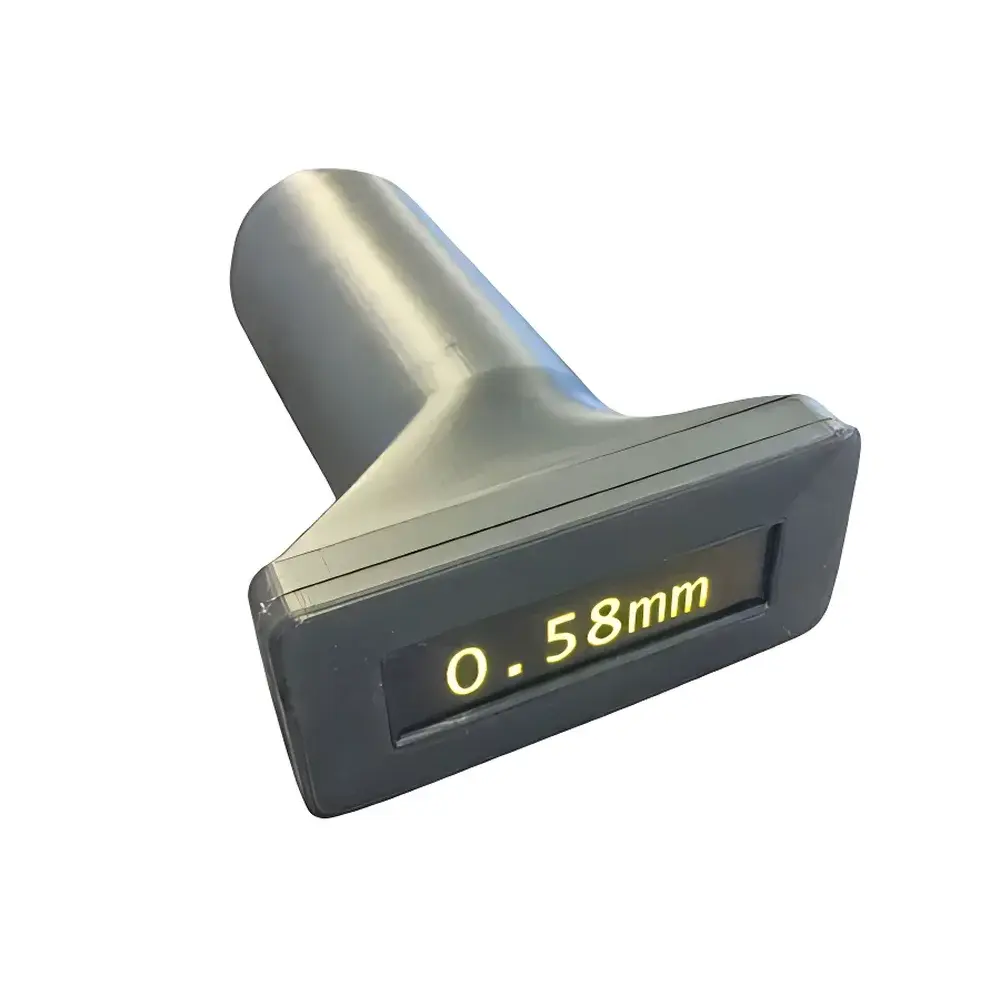
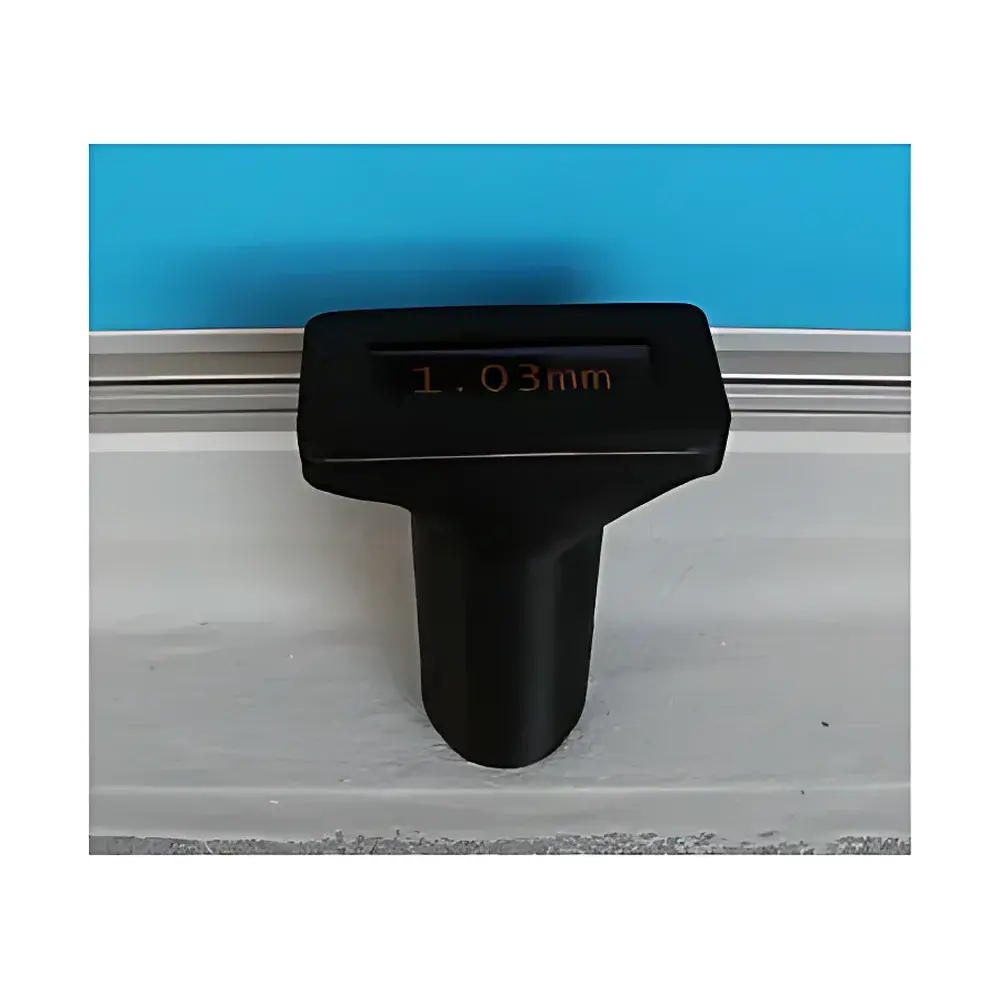
Coatmaster CoatChecker Non-Destructive Coating Thickness Measurement System
| Brand | Coatmaster |
|---|---|
| Origin | Switzerland |
| Model | CoatChecker |
| Measurement Principle | Photothermal Infrared Thermography |
| Compliance | Designed for ISO 9001 and ASTM D7091-compliant quality control environments |
| Target Substrates | Concrete, bitumen, metal, wood, and polymer membranes |
| Typical Coating Types | Liquid-applied plastics (LAP), acrylic elastomeric coatings, polyurethane sealants, bituminous membranes, cementitious waterproofing slurries |
| Measurement Speed | <2 seconds per spot |
| Standoff Distance | 15–30 cm |
| Output | Real-time thickness map with statistical process control (SPC) export |
Overview
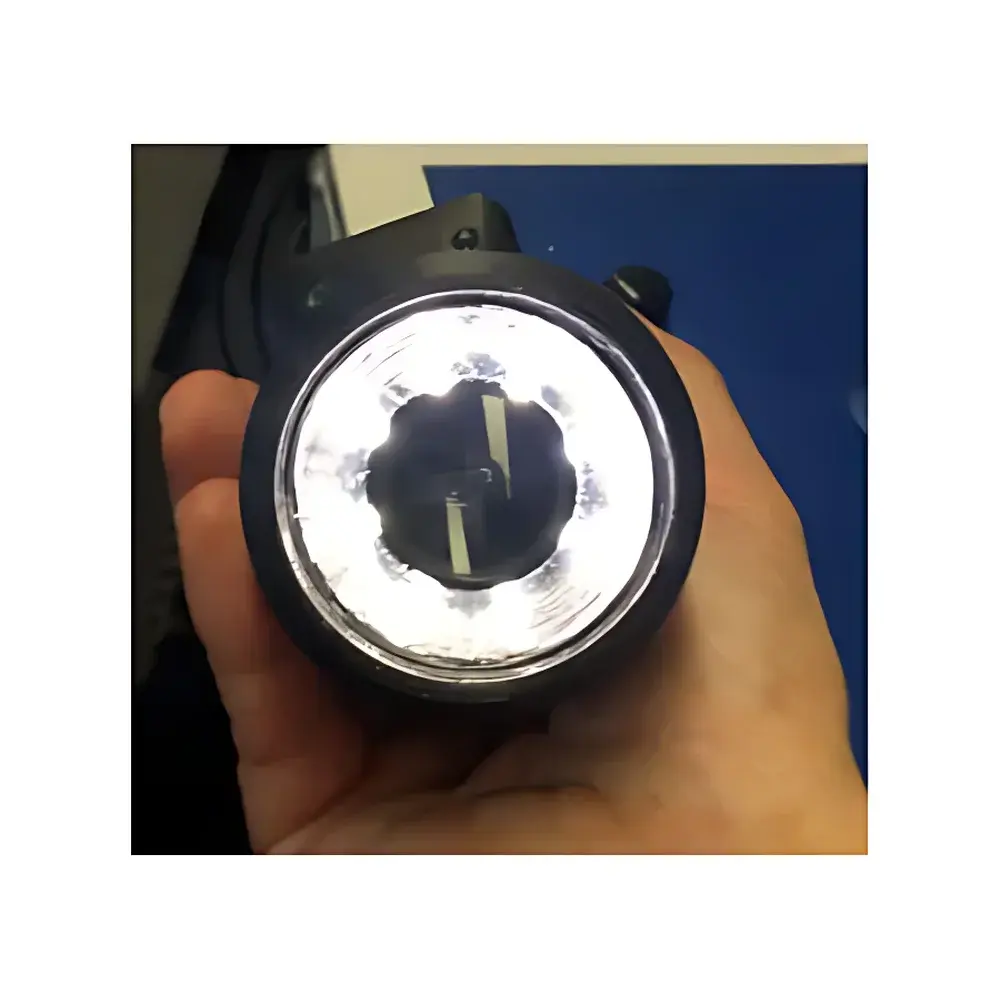
The Coatmaster CoatChecker is a non-destructive, photothermal infrared thermography-based measurement system engineered for real-time, in-line or at-line thickness verification of liquid-applied architectural coatings. Unlike contact-based mechanical gauges or destructive cross-sectioning methods, the CoatChecker operates on the principle of transient thermal response analysis: a controlled, pulsed light source uniformly heats the coating surface; an uncooled high-sensitivity infrared detector captures the spatially resolved temporal decay of surface temperature; and proprietary algorithms reconstruct coating thickness by modeling heat diffusion dynamics through the layered system—coating, interfacial layer, and substrate. This physics-based approach eliminates calibration drift, requires no physical contact, and delivers repeatable measurements independent of substrate color, texture, or ambient lighting—critical for industrial-scale quality assurance in roofing, waterproofing, and flooring applications.
Key Features
- Non-contact, non-destructive measurement at standoff distances of 15–30 cm—enabling safe operation over freshly applied, uncured, or hazardous surfaces.
- Sub-second measurement cycle (<2 s per point) with optional area scanning mode for rapid mapping of large substrates (e.g., roof membranes, parking decks).
- Patented photothermal excitation and IR thermographic detection architecture optimized for low-thermal-diffusivity coatings (e.g., acrylic elastomers, polyurethane sealants, liquid-applied plastics) on high-heat-capacity substrates (concrete, bitumen, steel).
- Integrated SPC-ready software interface supporting real-time thickness trend analysis, histogram generation, and pass/fail threshold alerts aligned with internal QA specifications or ASTM D7091 Annex A3 guidelines.
- Ruggedized industrial housing rated IP54, designed for continuous operation in construction site environments, production halls, and outdoor application zones.
- No consumables, no probe wear, and minimal operator training required—reducing total cost of ownership versus ultrasonic or eddy-current alternatives.
Sample Compatibility & Compliance
The CoatChecker is validated for use on common architectural substrates including cured concrete, asphaltic membranes, galvanized steel, plywood, and PVC roofing sheets. It supports thickness quantification of solvent-free, waterborne, and reactive liquid-applied systems—including but not limited to: elastomeric acrylics (ASTM C920), polyurethane liquid membranes (EN 15830), bituminous polymer-modified coatings (EN 13960), and cementitious waterproofing slurries (EN 14891). The system meets functional requirements for ISO 9001-certified manufacturing processes and supports audit-ready documentation per GLP/GMP-aligned quality management systems. While not a medical or pharmaceutical device, its data logging architecture conforms to core elements of FDA 21 CFR Part 11 for electronic records integrity (user authentication, audit trail, data immutability).
Software & Data Management
The CoatChecker Control Suite runs on Windows-based industrial PCs and provides intuitive workflow navigation for measurement setup, calibration verification, batch logging, and report generation. All measurements are timestamped, geotagged (optional GPS integration), and stored in a relational SQLite database with configurable retention policies. Export formats include CSV (for SPC integration), PDF (certified QA reports), and XML (MES/ERP compatibility). The software supports multi-user role-based access control, digital signature capture for release sign-off, and automated backup to network drives or cloud storage. Raw thermal image sequences and processed thickness matrices are retained for full traceability—essential for root cause analysis during non-conformance investigations or customer audits.
Applications
- Roofing & Waterproofing Systems: Verification of lap sealant thickness at flashings, penetrations, and parapet walls; uniformity assessment of liquid-applied membranes across complex geometries without disrupting curing schedules.
- Parking Structures & Underground Garages: Monitoring of traffic-bearing polyurea/polyaspartic topcoats on concrete slabs to ensure minimum dry-film thickness (DFT) compliance and mitigate cracking induced by thermal cycling and vehicular loading.
- Facade & Balcony Coatings: Quantitative validation of elastomeric crack-bridging layers on expansion joints and balcony waterproofing details where visual inspection alone cannot confirm functional thickness.
- Industrial Flooring: In-process verification of epoxy or methyl methacrylate (MMA) resin systems prior to broadcast aggregate application or topcoat sealing.
- R&D & Formulation Support: Correlation of thermal diffusivity signatures with rheological behavior and cure kinetics—enabling accelerated development of low-VOC, fast-cure architectural coatings.
FAQ
Does the CoatChecker require substrate-specific calibration?
No. The system uses physics-based modeling of heat transfer dynamics and automatically accounts for substrate thermal properties via built-in material libraries (concrete, bitumen, steel, etc.)—eliminating manual recalibration between jobs.
Can it measure over wet or tacky coatings?
Yes. Since measurement is optical and non-contact, the CoatChecker functions reliably on uncured, solvent-evaporating, or pressure-sensitive surfaces without risk of contamination or deformation.
What is the typical measurement uncertainty?
Under standard operating conditions (23 °C ±2 °C, RH <70%), repeatability is ≤±5% of reading for coatings 0.5–3.0 mm thick on concrete; reproducibility across operators and instruments is validated per ISO 5725-2 protocols.
Is training provided with purchase?
Yes. Coatmaster delivers on-site or virtual commissioning, operator certification, and annual refresher sessions aligned with ISO/IEC 17025 competency requirements.
How does it integrate with existing QA workflows?
Via OPC UA, Modbus TCP, or RESTful API—enabling direct data ingestion into LIMS, SAP QM, or custom MES platforms for closed-loop process control and automated certificate generation.



