
Coatmaster FLEX & 3D Online Non-Contact Coating Thickness Measurement System
| Brand | Coatmaster |
|---|---|
| Origin | Switzerland |
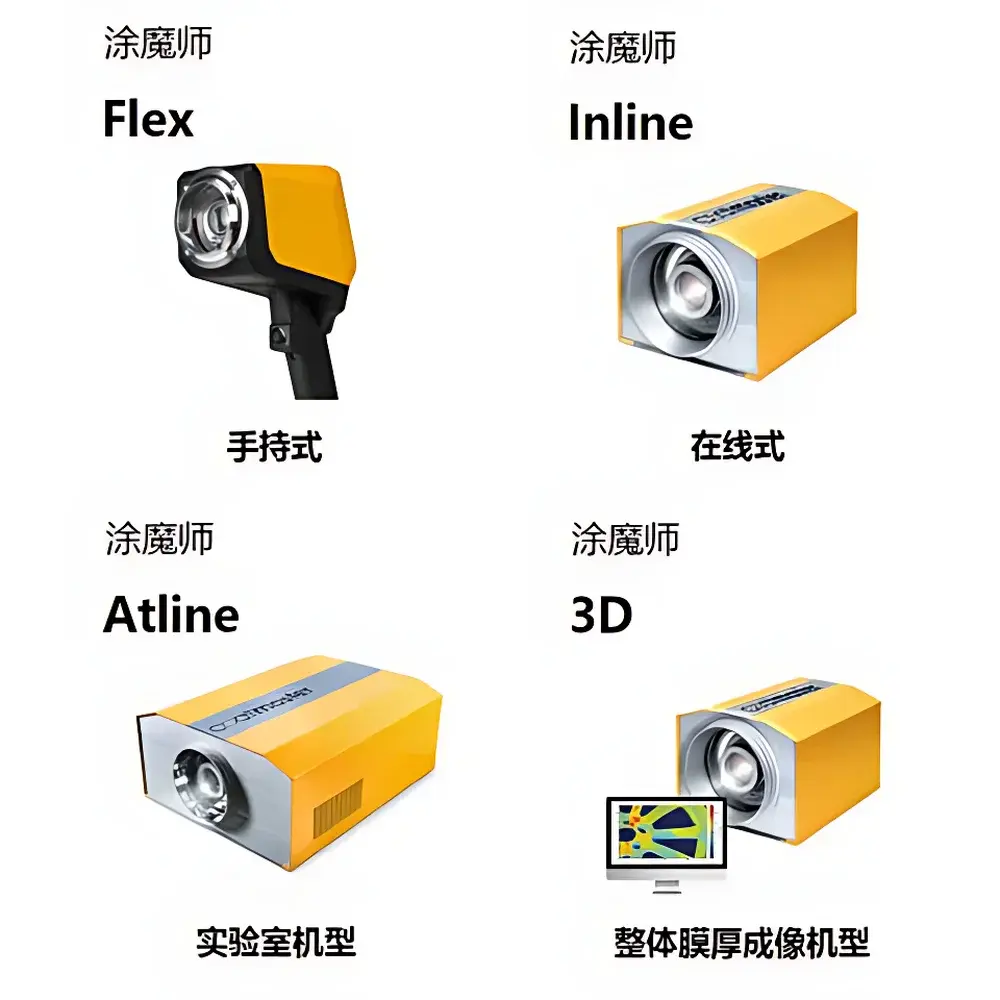
| Model | FLEX, 3D |
| Technology | Advanced ATO Photothermal Method |
| Application | Real-time in-line wet & dry film thickness measurement for powder, liquid, and UV-curable coatings |
| Compliance | Designed for ISO/IEC 17025-aligned QA environments, supports GLP/GMP data integrity requirements (audit trail, user access control, electronic signature readiness) |
| Interface | SPS-compatible industrial integration, Ethernet/IP, OPC UA optional |
Overview
The Coatmaster FLEX & 3D Online Non-Contact Coating Thickness Measurement System is an industrial-grade photothermal metrology platform engineered for real-time, non-destructive thickness quantification of organic and inorganic coatings on conductive and non-conductive substrates. Unlike conventional eddy current or magnetic induction gauges—limited to single-point, post-cure measurements—the Coatmaster system employs the ATO (Absorption–Thermal–Optical) photothermal principle. This method exploits the transient thermal response of a coating-substrate interface following controlled optical excitation. A pulsed near-infrared light source delivers uniform energy to the surface; an integrated high-speed infrared detector captures the spatially resolved surface temperature decay profile at microsecond resolution. Since thermal diffusion time through the coating layer is directly correlated with its thickness and thermal diffusivity, proprietary inverse modeling algorithms reconstruct absolute film thickness from the dynamic temperature curve—without physical contact, surface preparation, or curing dependency. The system operates independently of coating color, gloss, or geometry, making it uniquely suited for inline process monitoring in powder coating, liquid spray, and coil coating lines.
Key Features
- True non-contact operation: No probe wear, no substrate deformation, no risk of contamination—ideal for soft, tacky, or uncured films.
- Simultaneous wet and dry film measurement: Quantifies final dry-film equivalent thickness during application, enabling immediate feedback before thermal cure or solvent evaporation.
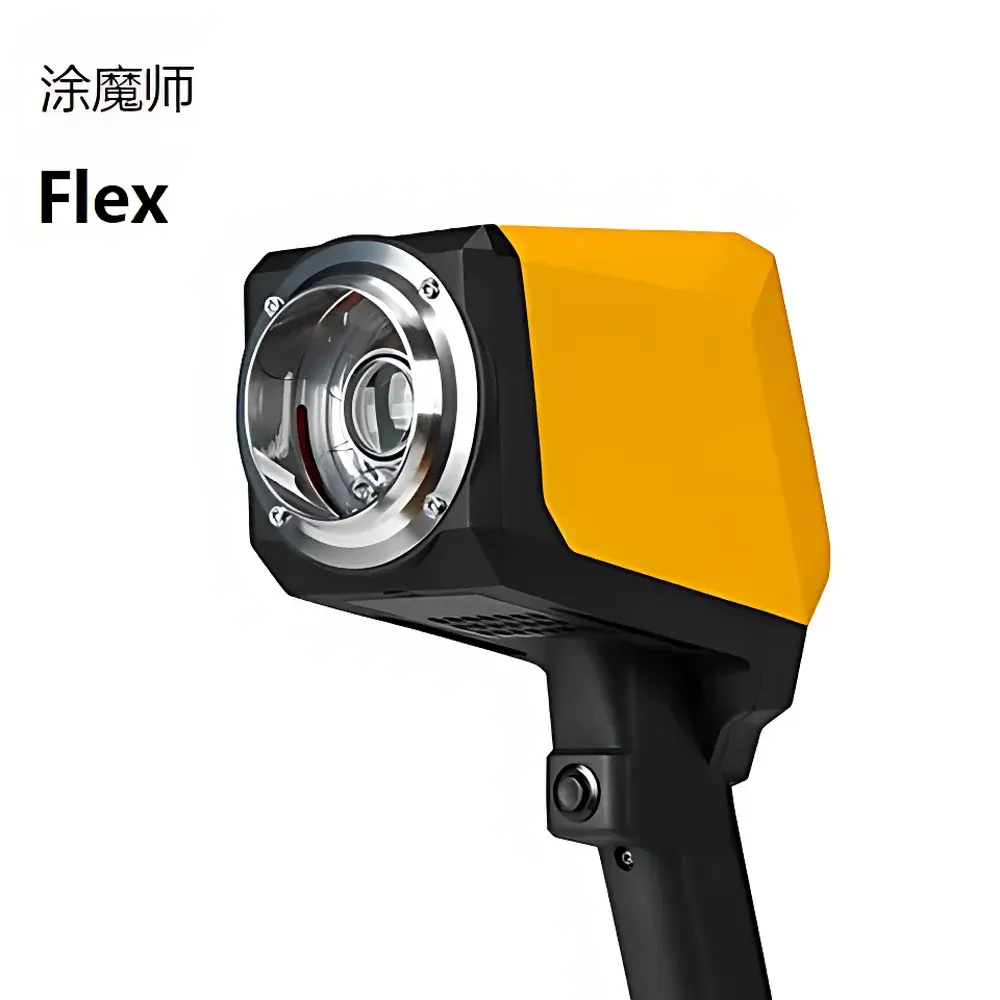
- FLEX handheld variant: Battery-powered, portable, and factory-calibrated—requires no fixed mounting or alignment jigs; maintains accuracy across variable standoff distances (50–150 mm) and incident angles (±30°).
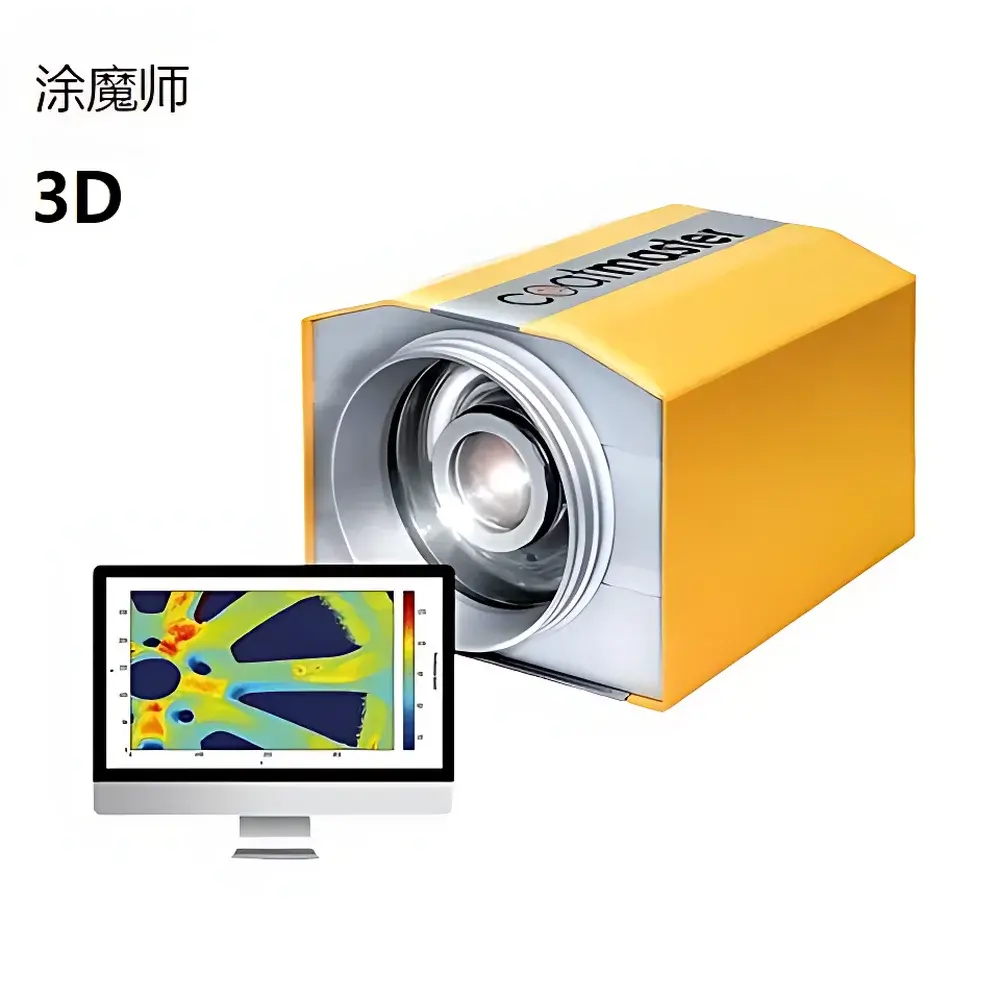
- 3D volumetric mapping capability: Captures >100,000 discrete thickness points per scan (<0.5 s), generating full-surface thickness distribution heatmaps for complex geometries including concave surfaces, internal cavities, edges, and multi-radius curves.
- Industrial interface readiness: Native SPS (Standard Paint Shop) protocol support; optional EtherNet/IP and OPC UA connectivity for seamless integration into PLC-controlled paint shops and MES platforms.
- Data traceability architecture: Built-in timestamping, operator ID logging, and configurable audit trails compliant with FDA 21 CFR Part 11 preconditions for regulated manufacturing environments.
Sample Compatibility & Compliance
The Coatmaster system measures coatings on metals (steel, aluminum, zinc), plastics (PP, ABS, PC), composites, and ceramics. It accommodates powder coatings (epoxy, polyester, polyurethane), solvent-borne and waterborne liquid paints, electrophoretic deposits (e-coat), and UV-curable systems. Measurement is insensitive to surface finish (matte, glossy, textured), pigment composition (including white, metallic, and interference pigments), and ambient lighting conditions. The system meets mechanical and electromagnetic compatibility requirements per IEC 61326-1 and is designed to operate in Class 3 paint shop environments (IP54 enclosure rating, 0–45 °C operating range). While not certified as a medical device or safety-critical instrument, its measurement uncertainty budget is validated per ISO 19840 Annex B methodology for field coating thickness verification.
Software & Data Management
Coatmaster Control Software provides real-time visualization of thickness profiles, statistical process control (SPC) dashboards (X-bar/R charts, Cp/Cpk calculation), and automated report generation (PDF, CSV, XML). All raw thermal transients and processed thickness values are stored in a relational database with immutable metadata (scan ID, timestamp, operator, recipe ID, environmental sensor inputs). Version-controlled calibration files ensure metrological traceability; software updates follow a formal change control process documented per ISO 9001:2015 clause 8.5.6. For regulated users, optional 21 CFR Part 11 modules enable role-based access control, electronic signatures, and audit log export for regulatory submissions.
Applications
- Pre-cure optimization of powder coating lines: Adjust gun parameters within first 2–3 minutes of spraying—reducing overspray by up to 30% and eliminating post-bake rework.
- In-process validation of e-coat bath stability: Monitor film build consistency across rack positions without interrupting conveyor flow.
- Quality gate enforcement for automotive body panels: Detect localized thin spots on A-pillars, door sills, and wheel arches prior to primer bake.
- Coil coating line feedback control: Correlate thickness drift with roller speed, gap settings, and viscosity changes in real time.
- R&D formulation screening: Compare thermal diffusivity-derived thickness of novel low-VOC binders against reference standards under identical application conditions.
FAQ
How does ATO photothermal measurement differ from traditional ultrasonic or beta-backscatter methods?
ATO relies on thermal diffusion physics rather than acoustic impedance or ionization yield—making it insensitive to substrate density variations, coating porosity, or surface roughness beyond 5 µm Ra.
Can the system measure on moving parts?
Yes: The 3D variant synchronizes with encoder signals to perform motion-compensated scanning at line speeds up to 12 m/min.
Is calibration required for each new substrate type?
A single substrate-specific calibration (per material family: e.g., “cold-rolled steel”, “anodized aluminum”) suffices for all coating chemistries applied to that base.
Does ambient temperature affect measurement accuracy?
Internal thermal stabilization and reference cavity compensation minimize drift; performance validation data shows ±0.5 µm repeatability over 20–40 °C ambient range.
What is the minimum measurable thickness?
Detection limit is 5 µm for typical polymer coatings on metal; lower for high-thermal-diffusivity systems (e.g., thin ceramic topcoats).



