
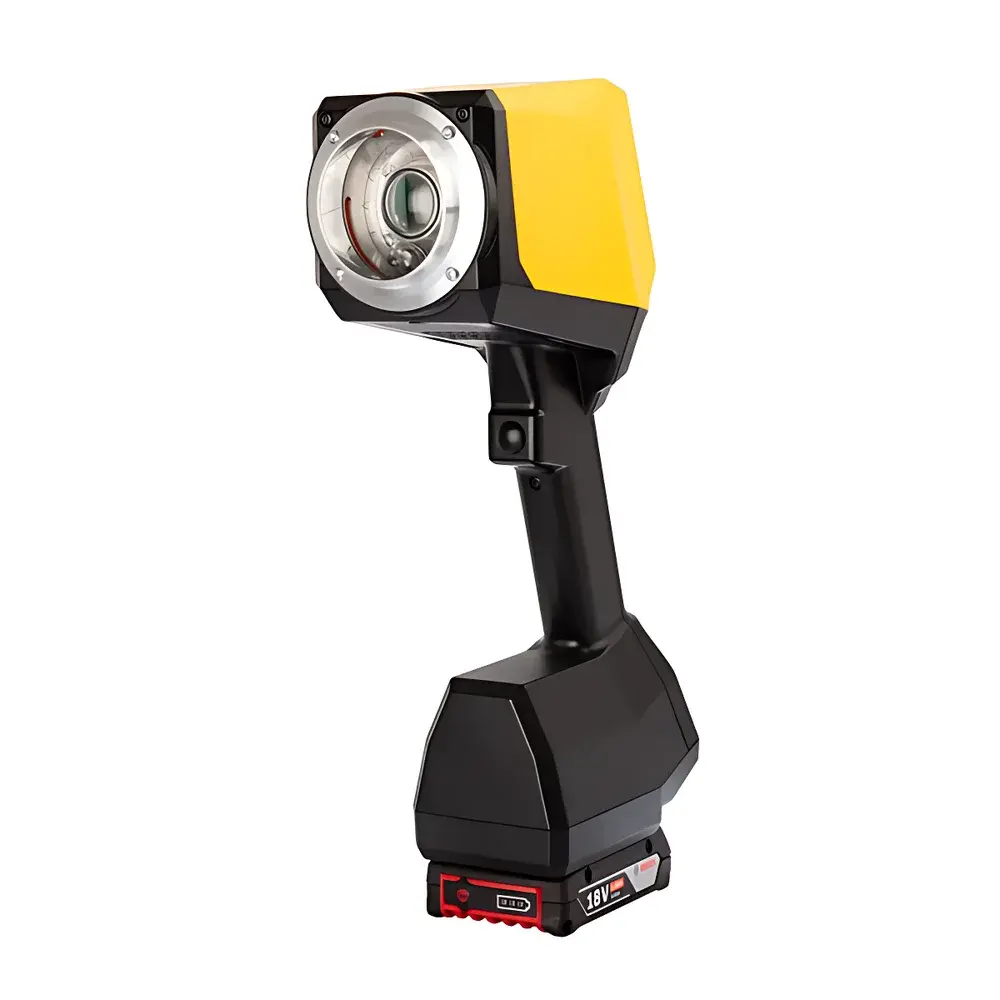
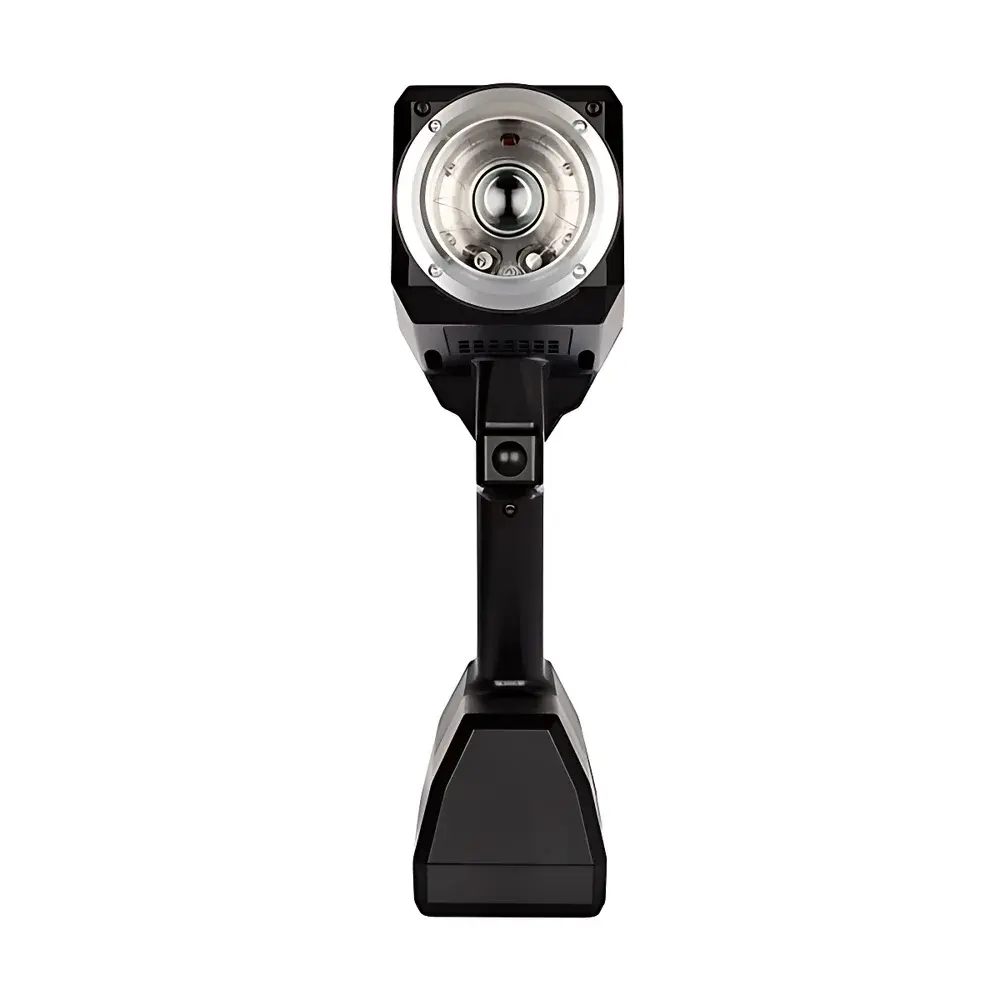
Coatmaster FLEX Offline Non-Contact Coating Thickness Analyzer
| Brand | Coatmaster |
|---|---|
| Origin | Switzerland |
| Model | FLEX Offline |
| Measurement Principle | Thermal Effusivity-Based Non-Contact Analysis |
| Substrate Compatibility | Glass, Metal, CFRP, Rubber, Wood, Plastics |
| Coating Types | Liquid Paints, Powder Coatings, Water-Based Coatings, Dacromet, UV-Curable Coatings |
| Measurement Speed | ≤ 0.5 s per point |
| Safety | Xenon Flash Lamp (Non-Ionizing, No Radiation Hazard) |
| Compliance | CE, RoHS, ISO/IEC 17025 Traceable Calibration Support |
| Data Output | CSV, XML, OPC UA, Modbus TCP |
| Software | Coatmaster Studio v5.x (GLP-Compliant Audit Trail, User Access Levels, FDA 21 CFR Part 11 Optional) |
Overview
The Coatmaster FLEX Offline Non-Contact Coating Thickness Analyzer is an industrial-grade thermal effusivity-based measurement system engineered for precise, non-destructive thickness determination of uncured and cured coatings on diverse substrates—particularly challenging non-metallic surfaces such as float glass, borosilicate containers, carbon fiber reinforced polymer (CFRP), rubber, and composite laminates. Unlike conventional contact methods—including magnetic induction (for ferrous metals) or eddy current (for non-ferrous metals)—which suffer from edge effects, curvature-induced field distortion, and probe wear, the FLEX employs transient photothermal analysis: a calibrated xenon flash lamp delivers a short, low-energy thermal pulse to the coating surface, while an infrared detector captures the substrate’s thermal response decay profile. By modeling the thermal effusivity contrast between coating and substrate—and correlating it with thickness via physics-based calibration curves—the instrument computes dry-film equivalent thickness directly from wet-film measurements, eliminating the need for post-cure rework or destructive cross-sectioning. This capability is critical in high-value manufacturing environments where real-time process feedback prior to thermal curing is essential for statistical process control (SPC) and Six Sigma compliance.
Key Features
- True non-contact operation: No mechanical pressure, zero risk of surface marking or coating deformation—ideal for soft, tacky, or UV-sensitive films.
- Substrate-agnostic architecture: Validated performance across glass (soda-lime, aluminosilicate), aluminum, steel, magnesium alloys, CFRP, PET, and elastomeric substrates without hardware modification.
- Single-instrument versatility: Measures solvent-borne, water-based, powder, and UV-curable coatings—including pigmented, transparent, and multi-layer systems—without probe swaps or recalibration.
- Robust geometric tolerance: Accurate within ±0.5 µm (typical) on curved surfaces (R ≥ 15 mm), edges, recessed areas, and inclined angles up to ±30° relative to normal incidence.
- Integrated thermal reference compensation: Automatic ambient drift correction and substrate temperature normalization ensure repeatability under variable shop-floor conditions (15–35 °C).
- Modular deployment: Handheld FLEX Offline unit supports lab verification, incoming inspection, and R&D validation; optionally interfaces with Coatmaster Online systems for line-integrated closed-loop control.
Sample Compatibility & Compliance
The FLEX analyzer meets stringent requirements for regulated industries including automotive OEM Tier-1 suppliers (VDA 5, AIAG CQI-17), pharmaceutical packaging (USP , ISO 15378), and aerospace composites (AMS 2488, NADCAP AC7108). Its measurement methodology is traceable to NIST-traceable thermal effusivity standards and supports ISO/IEC 17025-compliant uncertainty budgets. The xenon flash source operates at <10 J/m² per pulse—well below IEC 62471 photobiological safety thresholds—and requires no radiation shielding or licensing. All firmware and software modules comply with EU Machinery Directive 2006/42/EC and EMC Directive 2014/30/EU. Optional 21 CFR Part 11 configuration enables electronic signatures, audit trail logging, and role-based access control for GMP/GLP environments.
Software & Data Management
Coatmaster Studio v5.x provides a validated, Windows-based platform for instrument control, calibration management, and statistical reporting. Key capabilities include: automated calibration curve generation using certified reference standards; SPC charting (X̄-R, Cpk, Ppk); batch-level trend analysis with pass/fail threshold overlays; export to MES/SCADA via OPC UA or Modbus TCP; and full data lineage tracking—including operator ID, timestamp, environmental metadata, and raw thermal transients. All measurement files are digitally signed and cryptographically hashed to prevent tampering. Audit trails record every parameter change, calibration event, and user login, satisfying FDA and EMA data integrity expectations.
Applications
The FLEX excels in applications where traditional metrology fails: wet-film thickness control of water-based coatings on glass wine bottles (validated repeatability 40% versus post-cure destructive testing. In aerospace, it validates thermal barrier coatings on turbine shrouds without risking microcrack initiation from probe contact.
FAQ
How does thermal effusivity enable thickness measurement on non-conductive substrates like glass?
Thermal effusivity (e = √(k·ρ·cₚ)) quantifies a material’s ability to exchange thermal energy. Coating-substrate effusivity mismatch creates a measurable thermal wave reflection delay at the interface—directly correlated to coating thickness via finite-element modeled impulse responses.
Can the FLEX distinguish between multiple coating layers?
Yes—when layer thermal properties differ sufficiently (e.g., epoxy primer + polyurethane topcoat on CFRP), multi-layer inversion algorithms resolve individual thicknesses with ±1.2 µm uncertainty (subject to calibration with representative multilayer standards).
Is wet-film-to-dry-film conversion linear?
No—it is empirically derived per formulation using gravimetric correlation and validated against ASTM D4541 pull-off adhesion and ISO 2808 drawdown standards; Coatmaster Studio applies proprietary shrinkage models based on VOC content and resin chemistry.
What maintenance does the xenon lamp require?
Rated for ≥1 × 10⁶ flashes; lamp life is monitored in real time and reported in the diagnostics dashboard; replacement is a field-serviceable 15-minute procedure with no optical recalibration needed.
Does the system support custom calibration for proprietary coatings?
Yes—customers may develop application-specific calibrations using Coatmaster’s Certified Reference Material Kit (CRM-KIT-FLEX) and transfer them across instruments via encrypted calibration files.
Related Products



