
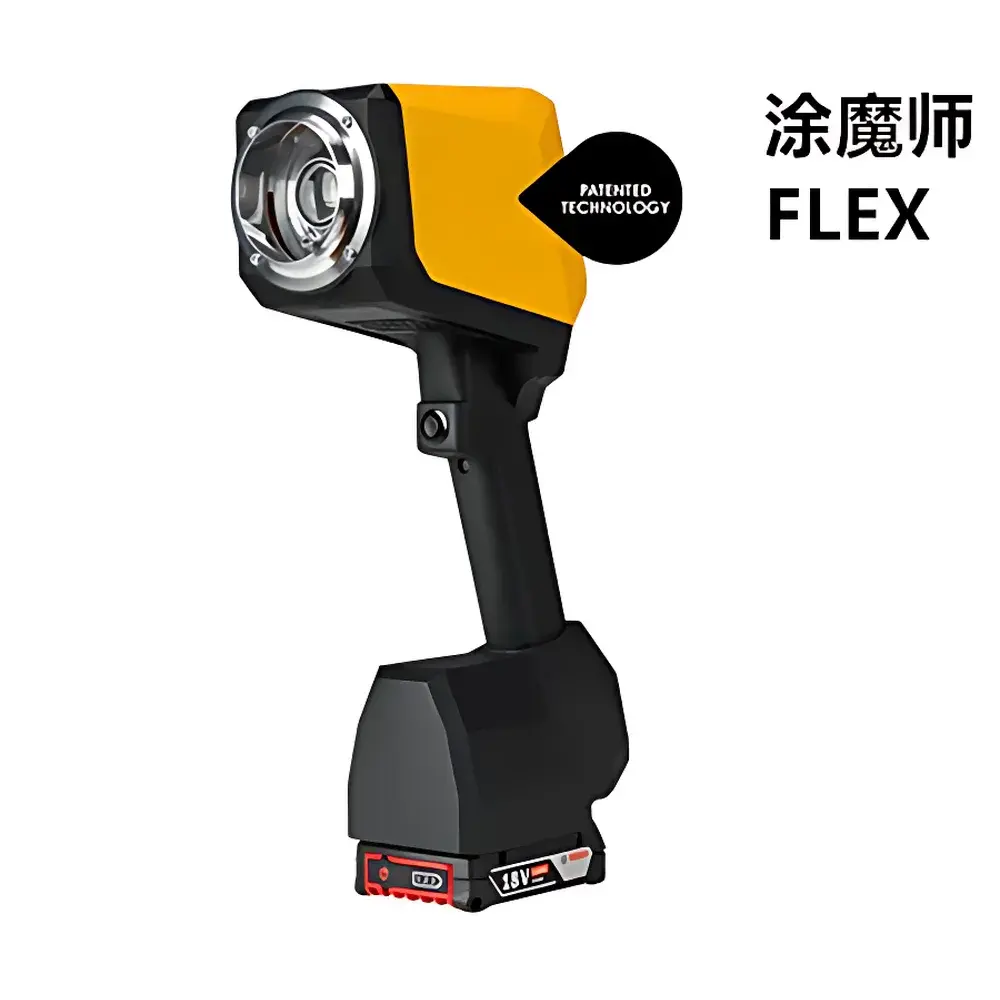
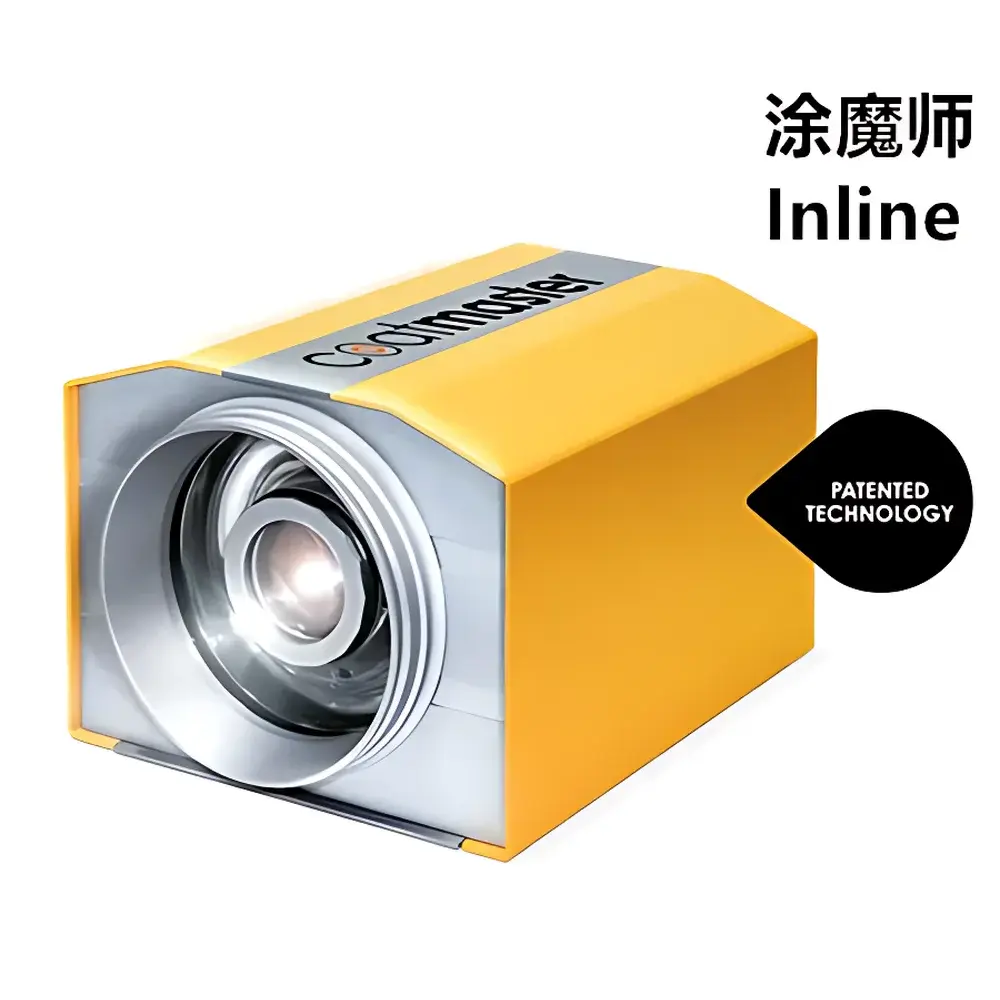
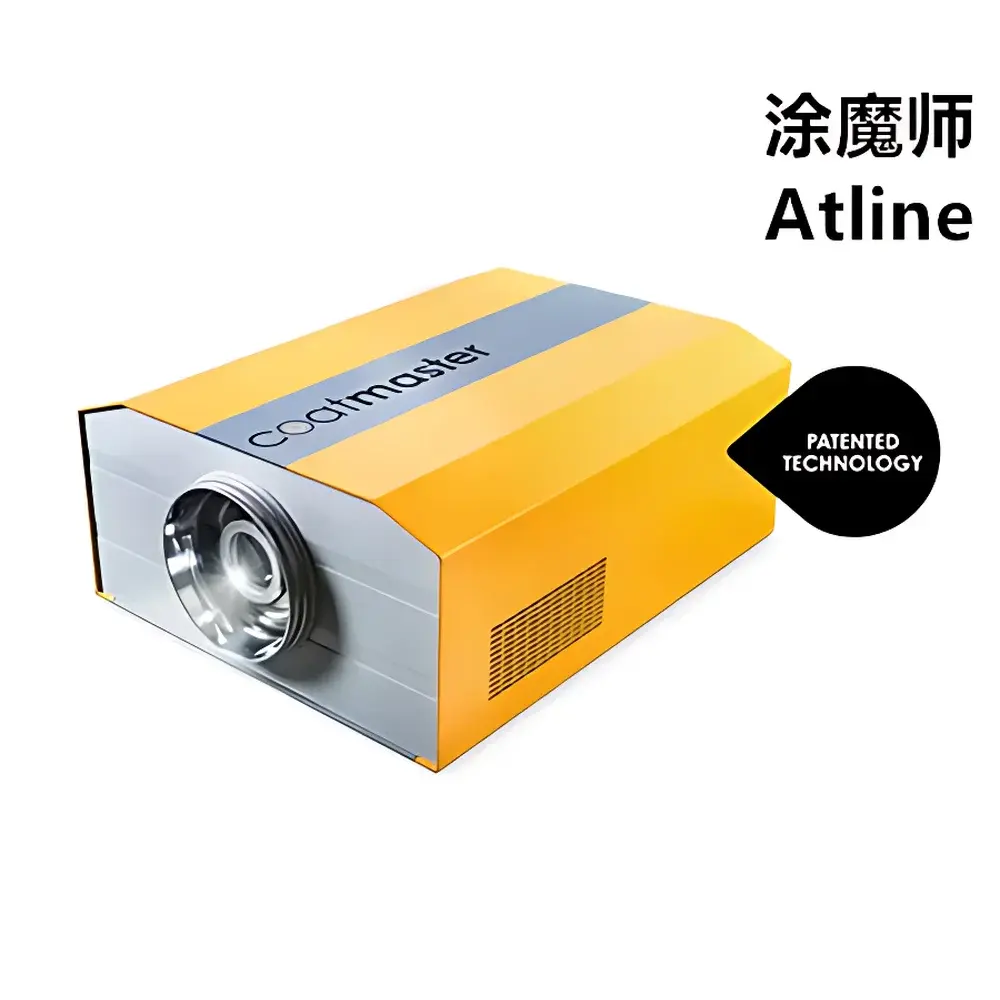
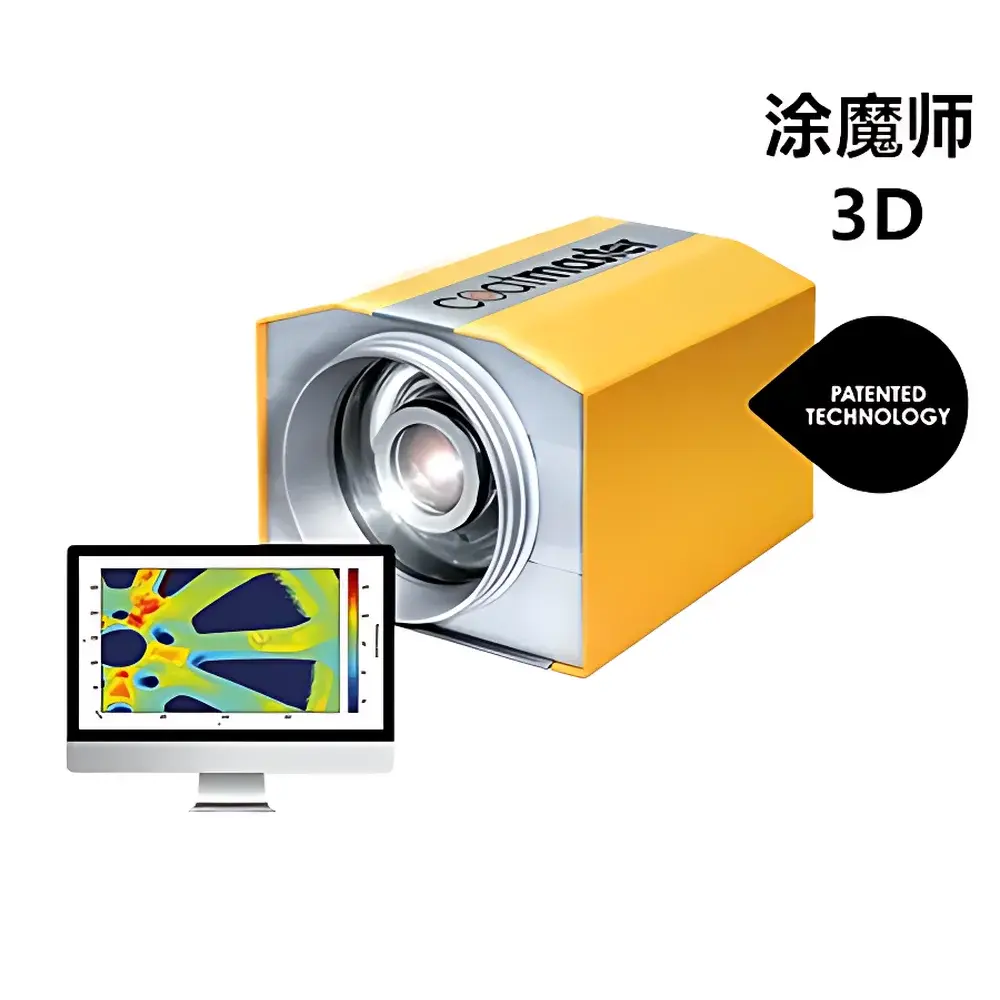
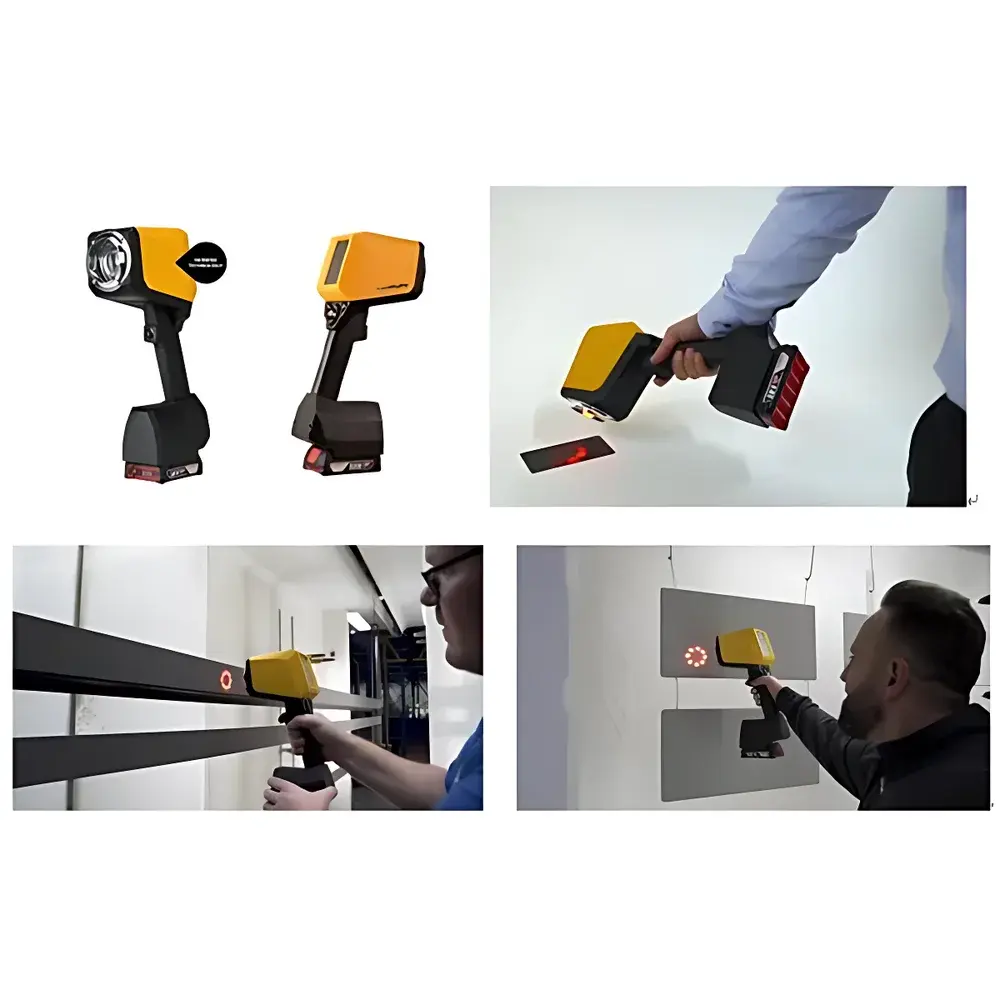
Coatmaster Inline ATO Non-Contact Optical Thermographic Coating Thickness Gauge
| Brand | Coatmaster |
|---|---|
| Origin | Switzerland |
| Model | Inline |
| Type | Online, Non-Contact, Optical Thermographic Thickness Gauge |
| Measurement Principle | Pulsed Photothermal Radiometry (PPTR) with Infrared Thermal Decay Analysis |
| Compliance | Designed for ISO/IEC 17025-aligned QA workflows, supports GLP/GMP audit trails via optional software modules |
| Sample Surface Roughness Tolerance | Up to Ra 50 µm (typical industrial roughness) |
| Measurement Speed | ≤ 0.5 s per spot |
| Output Resolution | 0.1 µm (thickness increment), ±1–2% accuracy on rough substrates |
| Substrate Compatibility | Ferrous & non-ferrous metals, carbon fiber, glass, rubber, wood |
| Coating Compatibility | Thermal spray (Fe-, Ni-, WC-based), liquid paints, powder coatings, adhesives, lubricants, Dacromet, PTFE-based films |
| Safety | Xenon flash lamp (Class 1 LED-equivalent optical safety per IEC 62471) |
| Data Interface | Ethernet/IP, Modbus TCP, OPC UA (optional) |
| Software Platform | Coatmaster Studio v5.x (Windows-based, FDA 21 CFR Part 11 compliant configuration available) |
Overview
The Coatmaster Inline ATO is an online, non-contact coating thickness measurement system engineered for high-reliability process monitoring of coatings applied to geometrically complex and topographically challenging substrates. Unlike conventional eddy current, magnetic induction, or ultrasonic gauges—whose performance degrades significantly with surface roughness, curvature, or material heterogeneity—the Inline ATO employs pulsed photothermal radiometry (PPTR). This principle involves a precisely timed xenon flash pulse heating the coating surface, followed by high-speed infrared detection of the transient thermal decay profile. The resulting temperature-vs.-time curve is analyzed using proprietary inverse heat conduction algorithms to derive absolute coating thickness, independent of substrate emissivity, roughness-induced scattering, or probe alignment. Because heat diffusion occurs orthogonally through the coating layer, measurement fidelity remains stable across variable standoff distances (±20 mm), oblique angles (up to ±30°), and localized features such as cylinder bores, edges, or micro-textured surfaces—making it uniquely suited for inline deployment in thermal spray, automotive cylinder liner, and aerospace component finishing lines.
Key Features
- True non-contact operation: No mechanical contact, no surface damage, no calibration drift due to wear.
- Robust roughness tolerance: Validated on substrates with Ra up to 50 µm; unaffected by waviness, grooves, or sandblasted finishes.
- Real-time dry-film equivalent output: Measures both uncured powder coatings and fully cured films without process interruption.
- Multi-material substrate support: Certified performance on steel, aluminum, cast iron, carbon fiber composites, glass, rubber, and timber.
- Single-platform versatility: One instrument measures diverse coating chemistries—including metallic thermal sprays, organic paints, ceramic overlays, and solid lubricants—without hardware swaps or recalibration.
- Industrial-grade data integration: Native support for Ethernet/IP and Modbus TCP; optional OPC UA server for MES/SCADA synchronization.
- Safety-certified illumination: Class 1 optical radiation source (IEC 62471), eliminating laser safety interlocks or operator training overhead.
Sample Compatibility & Compliance
The Inline ATO is routinely deployed in environments requiring adherence to ASTM B571 (adhesion testing protocols), ISO 2808 (paint and varnish thickness determination), and ISO 19840 (coating thickness on corroded steel structures). Its measurement stability across roughened surfaces aligns with NACE SP0188 and SSPC-PA 2 requirements for field-applied protective coatings. When configured with audit-trail-enabled software modules, the system satisfies FDA 21 CFR Part 11 electronic record and signature criteria for regulated manufacturing. All firmware and algorithm updates are version-controlled and traceable per ISO 9001:2015 clause 8.5.1.2 (control of monitoring and measuring resources).
Software & Data Management
Coatmaster Studio v5.x provides real-time thickness mapping, statistical process control (SPC) charting, and automated pass/fail classification based on user-defined tolerances. Each measurement includes embedded metadata: timestamp, X/Y/Z position (when integrated with encoder or robotic guidance), ambient temperature, and thermal decay curve raw data. Historical datasets are stored in vendor-agnostic SQLite or SQL Server formats, enabling third-party analytics integration (e.g., Python Pandas, MATLAB, or Tableau). Batch reporting complies with ISO/IEC 17025 documentation standards, including uncertainty budgeting per GUM (Guide to the Expression of Uncertainty in Measurement).
Applications
- Thermal spray process control: Real-time monitoring of FeCrBSi, WC-Co, and NiAl bond coats on engine cylinder blocks, turbine blades, and hydraulic piston rods.
- Automotive powertrain manufacturing: In-line verification of bore coatings prior to honing, ensuring dimensional consistency and tribological performance.
- Aerospace MRO: Thickness validation of abradable seals and thermal barrier coatings on nickel-based superalloy components without disassembly.
- Renewable energy: Quality assurance of anti-corrosion coatings on wind turbine tower sections and offshore substructures with blasted surfaces.
- General industrial finishing: Closed-loop feedback for electrostatic powder coating lines, eliminating over-spray waste and rework.
FAQ
Does the Inline ATO require substrate-specific calibration?
No. Calibration is performed once using certified reference standards; subsequent measurements are substrate-agnostic due to physics-based thermal modeling.
Can it measure coatings on curved or recessed surfaces?
Yes. The orthogonal heat diffusion mechanism eliminates dependence on geometric alignment—validated on internal cylinder diameters ≥ Φ40 mm and radii of curvature down to 5 mm.
Is wet-film thickness directly measurable?
Not directly—but the system correlates thermal response dynamics with final dry-film thickness during cure, enabling predictive thickness estimation pre-cure.
What is the minimum measurable coating thickness?
Typical lower limit is 20 µm for metallic thermal sprays and 50 µm for low-conductivity organics; exact threshold depends on thermal diffusivity contrast between coating and substrate.
How is measurement uncertainty quantified?
Uncertainty is calculated per GUM methodology, incorporating repeatability (≤0.8% RSD), environmental drift (<0.3% per °C), and algorithmic model error (≤0.5%); total expanded uncertainty (k=2) is ≤2.0% on Ra ≤30 µm substrates.



