
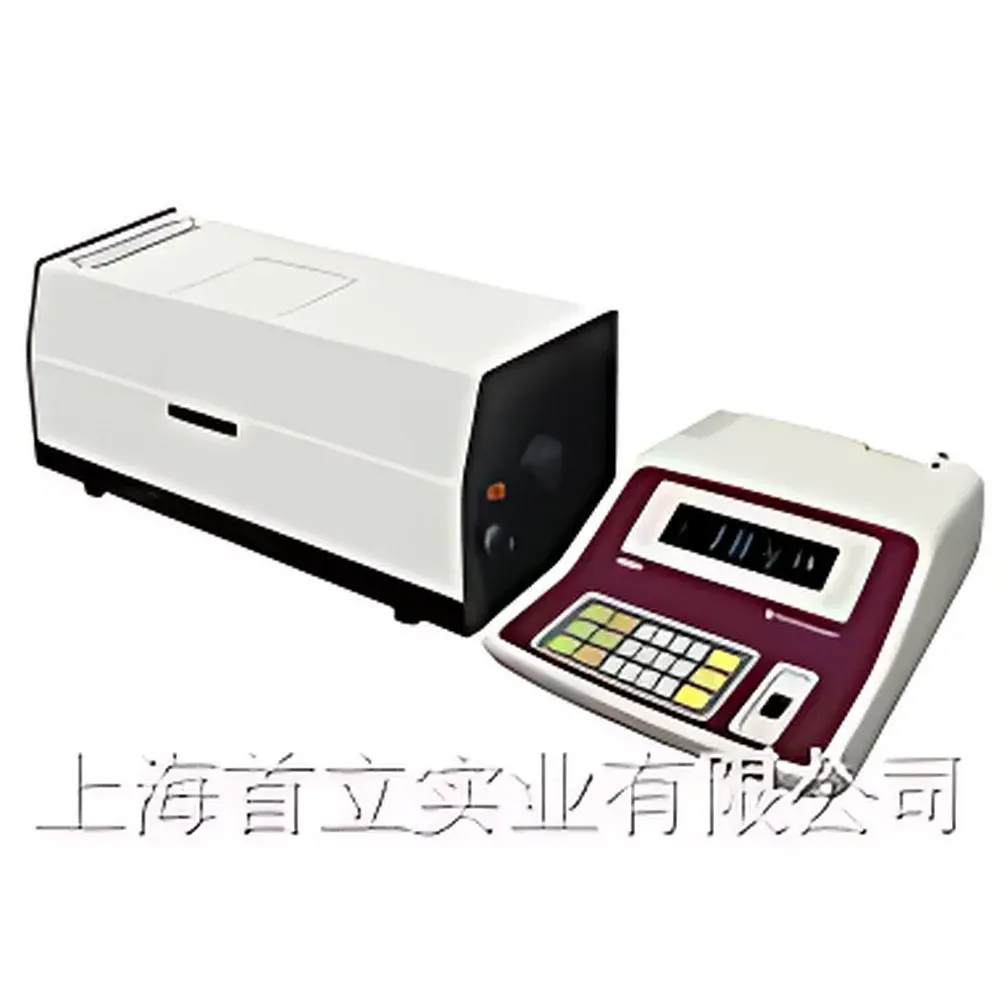
COH400 Color and Turbidity Analyzer
| Origin | Japan |
|---|---|
| Manufacturer Type | Authorized Distributor |
| Origin Category | Imported Instrument |
| Model | COH400 |
| Pricing | Available Upon Request |
Overview
The COH400 Color and Turbidity Analyzer is a dual-function optical measurement instrument engineered for simultaneous, high-reproducibility assessment of colorimetric properties and turbidity-related optical parameters across solid, semi-solid, and liquid samples. Based on standardized photometric principles—including CIE 1931 tristimulus (X, Y, Z) colorimetry under illuminant C/2, integrating sphere-based turbidity measurement per JIS K 0101, and haze quantification compliant with ASTM D 1003 and JIS K 7105—the COH400 delivers traceable, metrologically sound data for quality control, R&D, and regulatory documentation workflows. Its dual optical path architecture supports both 0°/diffuse (0°–d) geometry per JIS Z 8722 for color measurement and an integrated sphere configuration optimized for total transmittance, diffuse transmittance, and parallel transmittance evaluation. Designed for laboratories requiring conformance to international standards in polymer, pharmaceutical, petrochemical, glass, and water quality testing, the COH400 operates as a reference-grade benchtop analyzer without reliance on proprietary consumables or calibration kits beyond standard NIST-traceable references.
Key Features
- Dual-mode optical design supporting film, resin, glass, and liquid sample analysis under unified platform architecture
- Halogen lamp source (12 V, 50 W) with stabilized spectral output and rapid-response silicon photodiode detector array
- Fluorescent display (256 × 64 pixels; 166.15 mm × 41.35 mm active area; bluish-green emission) enabling real-time visualization of 22 distinct colorimetric and photometric indices
- Integrated thermal printer (258 × 8 dots resolution; 1.1 sec/line print speed) with timestamped output (YY/MM/DD/HH/MM) and full audit trail capability
- RS-232C serial interface for bidirectional data exchange with LIMS, ELN, or custom QA/QC software platforms
- Onboard statistical engine supporting mean calculation across up to 99 sequential measurements
- Modular sample handling: includes 10 mm cuvette for liquids, film holder assembly, and optional cuvettes ranging from 1–100 mm pathlength for extended dynamic range in low-to-high turbidity applications
Sample Compatibility & Compliance
The COH400 accommodates diverse physical forms—rigid films (e.g., PET, PC), molded resins, optical lenses, aqueous and non-aqueous liquids (including crude oil derivatives), and colloidal suspensions. It meets multiple national and international test method requirements: JIS Z 8722 (colorimetry), JIS K 0101 (turbidity), JIS K 7105 (haze), ASTM D 1003 (haze), ASTM D 1209 / D 5386 (APHA/Yellowness Index), ASTM D 1500 (Saybolt color), ASTM D 156 (ASTM color), ASTM D 1922 (Gardner color), and JIS K 2580 (petroleum product color). While not inherently 21 CFR Part 11 compliant out-of-the-box, its RS-232C output, timestamped records, and user-defined reference input (L*a*b*, Lab, or numeric target values) support integration into GLP/GMP environments when paired with validated third-party data acquisition systems.
Software & Data Management
The COH400 operates as a standalone embedded system with no external PC dependency. All calculations—including CIE L*a*b*, ΔE*ab, ΔL*C*H*, YI (ASTM E313), WI (ASTM E313), Whiteness Index (W, WB), and turbidity ratio (NTU-equivalent)—are performed internally using firmware algorithms aligned with cited standards. Measurement results include absolute values and deviation metrics relative to user-entered standards (via keypad or L*a*b* entry). Printouts contain full metadata: date/time stamp, operator ID field (manually entered), sample ID, measurement mode (film/liquid/petroleum), and all computed indices. Raw data export via RS-232C enables post-processing in Excel, MATLAB, or statistical packages while preserving traceability through embedded sequence numbering and time stamps.
Applications
- Quality assurance of transparent polymer films (e.g., packaging, display overlays) for haze, clarity, and batch-to-batch color consistency
- In-process monitoring of water treatment effluents and municipal supply streams per JIS K 0101-compliant turbidity protocols
- Color stability evaluation of thermoplastic resins during extrusion and injection molding cycles
- Refinery QC for crude oil fractions, lubricants, and distillates using Saybolt, ASTM, APHA, and Gardner scales
- Optical grade glass and lens manufacturing—quantifying surface scattering, bulk transmission losses, and chromatic deviation
- Pharmaceutical excipient and solution clarity testing where turbidity correlates with particulate contamination per USP
FAQ
Does the COH400 comply with ISO 7027 for turbidity measurement?
No—the COH400 implements JIS K 0101 (integrating sphere method), not the NIR 860 nm LED-based ISO 7027 protocol. It is intended for general-purpose turbidity screening rather than drinking water certification.
Can the instrument be calibrated using NIST-traceable standards?
Yes—users may input certified reference values (e.g., L*a*b*, Y tristimulus, or turbidity ratio) manually or via keyboard; calibration verification relies on stable halogen source output and factory-characterized photodiode response curves.
Is the thermal printer compatible with continuous-feed label stock?
No—it accepts only standard 57 mm wide thermal paper rolls with automatic cutter; custom media formats are unsupported.
What is the warm-up requirement before achieving specified accuracy?
A minimum 30-minute stabilization period is required after power-on to ensure thermal equilibrium of the optical train and lamp output; precision specification (±0.1% relative error at Y = 100) assumes this precondition.
Are firmware updates available, and how are they applied?
Firmware revisions are distributed by the authorized distributor upon request; installation requires connection to a host PC running dedicated utility software via RS-232C cable and execution of verified update binaries.




