
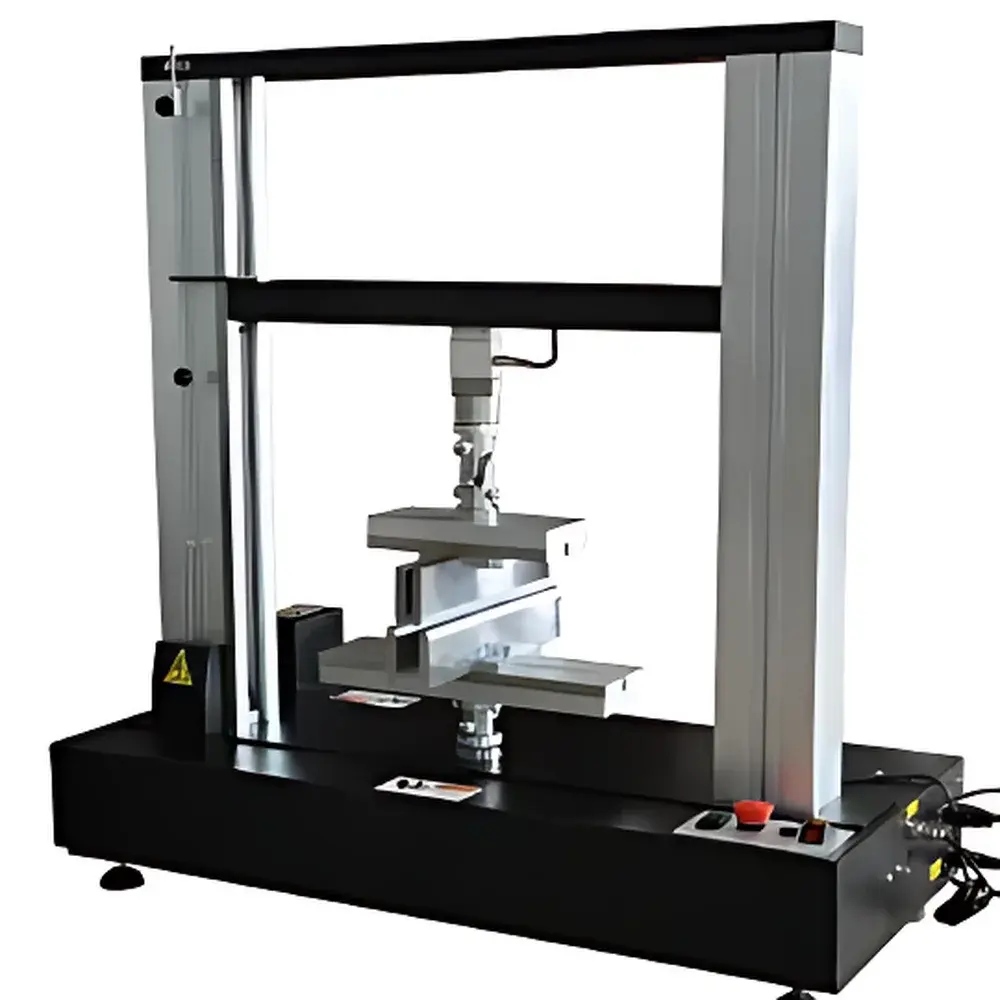
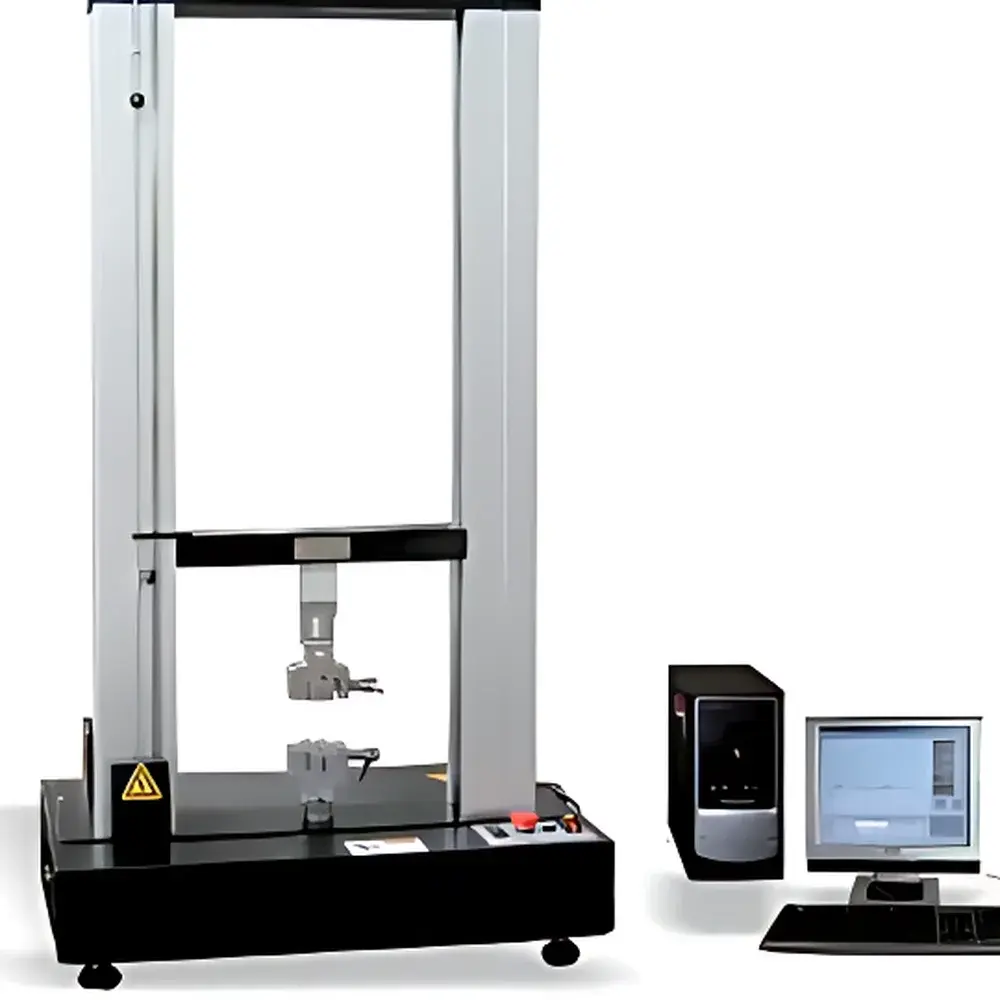
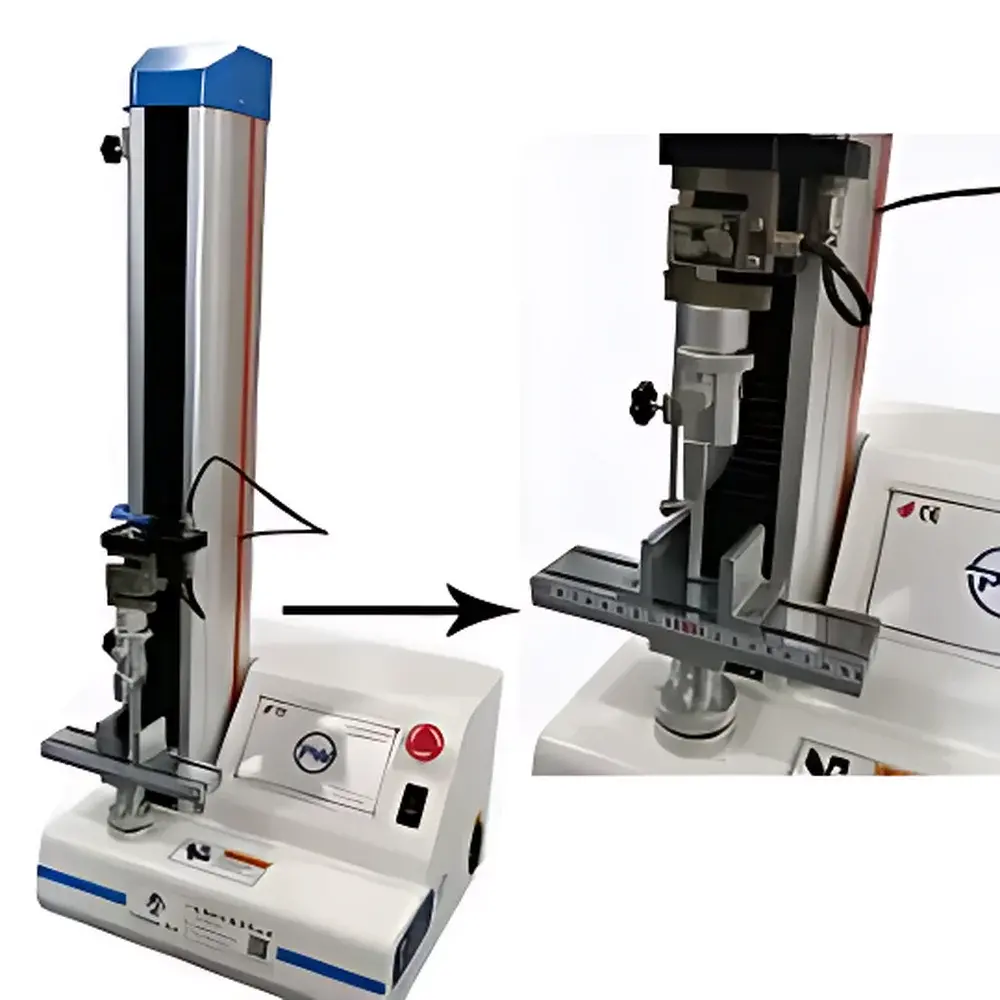
Yuelian PW-1210 Three-Point & Four-Point Flexural Testing Machine
| Brand | Yuelian |
|---|---|
| Origin | Guangdong, China |
| Model | PW-1210 |
| Type | Electromechanical Universal Testing Machine |
| Max Test Load | 10 kN |
| Load Range | 0–100,000 N |
| Load Accuracy | ±0.5% of full scale |
| Crosshead Travel | 600 mm |
| Displacement Resolution | 0.01 mm |
| Standards Compliance | GB/T 1449–2005, GB/T 9341–2008, ASTM D6109–2010, ISO 7500-1, ASTM E4, EN 10002-1, JJG 475–1988 |
| Control System | PC-based closed-loop servo control with USB interface |
| Drive System | Servo motor + precision ball screw |
| Power Supply | 220 V AC, 50/60 Hz, 10 A |
| Dimensions (W×D×H) | 900 × 450 × 970 mm |
| Weight | ~190 kg |
Overview
The Yuelian PW-1210 Three-Point & Four-Point Flexural Testing Machine is a high-precision electromechanical universal testing system engineered for standardized mechanical characterization of rigid and semi-rigid materials under bending stress. It operates on the fundamental principles of beam theory—applying controlled transverse loading to specimens supported at discrete points—to quantify flexural strength, flexural modulus, yield behavior, and fracture response. Designed specifically for quality assurance and R&D laboratories in display manufacturing, glass processing, consumer electronics, and advanced materials development, the PW-1210 supports both three-point and four-point bending configurations per international test standards. Its dual-capability architecture enables rigorous evaluation of brittle substrates—including soda-lime glass, aluminosilicate cover glass, OLED panels, and tempered smartphone displays—where localized stress concentration and uniform moment distribution must be differentiated to assess real-world failure modes.
Key Features
- Electromechanical servo-driven actuation with high-torque AC servo motor and preloaded precision ball screw transmission, ensuring smooth motion control and minimal backlash across the full speed range (0.5–500 mm/min).
- Dual-load-cell configuration option (standard 10 kN, optional dual-range sensors) supporting high-resolution force measurement down to 0.3% accuracy (per ISO 7500-1 Class 1) and resolution of 1 part in 500,000 full scale.
- Adjustable support span and loading nose geometry to meet exact dimensional requirements for ASTM D6109 (four-point flexure), GB/T 9341–2008 (three-point flexure), and ISO 178 (plastics flexural properties).
- Integrated displacement transducer with 0.01 mm resolution and automatic zeroing, synchronized with load acquisition for precise strain estimation in non-extensometer applications.
- Robust structural frame with reinforced steel base and column assembly, designed to minimize deflection and maintain alignment during high-stiffness material testing.
- Comprehensive safety architecture including overload cutoff, emergency stop button, specimen break detection, programmable upper/lower limit stops, and auto-return functionality post-test.
Sample Compatibility & Compliance
The PW-1210 accommodates flat, rectangular, or square-section specimens up to 420 mm wide and 350 mm effective test width, making it suitable for full-size smartphone cover glass (e.g., 160 × 75 mm), tablet panels, automotive HUD substrates, and architectural glazing coupons. It complies with mechanical testing standardization frameworks required for ISO/IEC 17025-accredited laboratories, including traceable calibration per JJG 475–1988 (China National Verification Regulation) and ISO 7500-1 (static calibration of uniaxial testing machines). For regulatory submissions in medical device or aerospace supply chains, test reports generated by this system may be structured to satisfy GLP audit requirements when paired with validated software and documented instrument qualification (IQ/OQ/PQ).
Software & Data Management
The embedded PC-based control and analysis platform supports Windows OS environments and features native MS Access database integration for long-term data archiving, user-defined report templates (PDF/Excel export), and audit-trail-enabled operation logs. The software implements real-time curve plotting (load vs. displacement, stress vs. strain), automatic peak detection (maximum load, yield point, fracture load), and post-processing algorithms compliant with ASTM E111 (Young’s modulus), ASTM D790 (flexural properties), and GB/T 228.1 (tensile testing). Multi-sensor synchronization allows concurrent acquisition from extensometers, environmental chambers, or digital image correlation (DIC) systems. All test parameters—including speed profiles, hold times, and trigger conditions—are programmable and stored with metadata (operator ID, timestamp, calibration certificate ID) to support FDA 21 CFR Part 11 readiness when deployed with electronic signature modules.
Applications
- Flexural strength and modulus determination of chemically strengthened glass used in mobile device front panels (e.g., Gorilla Glass, Dragon Trail).
- Quality control of laminated safety glass for automotive windshields and architectural façades per EN 1288 series.
- Mechanical validation of transparent conductive films (ITO, AgNW, graphene) bonded to flexible or rigid substrates.
- Comparative bending fatigue assessment of polymer composites and fiber-reinforced thermoplastics in electronics enclosures.
- Research-grade characterization of ceramic matrix composites and low-k dielectric thin films under controlled humidity and temperature (when integrated with environmental chamber).
- Verification of adhesive bond integrity in stacked display assemblies using peel and shear-flex hybrid protocols.
FAQ
What standards does the PW-1210 support for glass flexural testing?
It fully implements GB/T 1449–2005 (fiber-reinforced plastics), GB/T 9341–2008 (plastics flexure), and ASTM D6109–2010 (wood-based panels), with configurable fixture sets enabling direct compliance for cover glass testing per ISO 178 and industry-specific internal specifications.
Can the system perform tensile and compression tests in addition to bending?
Yes—the PW-1210 is a true universal testing machine capable of tensile, compression, shear, peel, and tear testing using interchangeable fixtures and calibrated load cells, all under unified software control.
Is the software compatible with LIMS or ERP systems?
Raw ASCII data export (CSV/TXT) and ODBC-compliant database access enable integration with laboratory information management systems (LIMS) and enterprise resource planning platforms without proprietary middleware.
Does the system include factory calibration documentation?
Each unit ships with a NIST-traceable calibration certificate for force and displacement channels, valid for 12 months under normal operating conditions, along with a detailed verification report per ISO 7500-1 Annex B.
What maintenance is required to sustain measurement accuracy?
Annual recalibration is recommended; routine checks include ball screw lubrication, sensor zero drift verification, crosshead alignment inspection, and firmware updates provided via secure Yuelian technical portal.



