
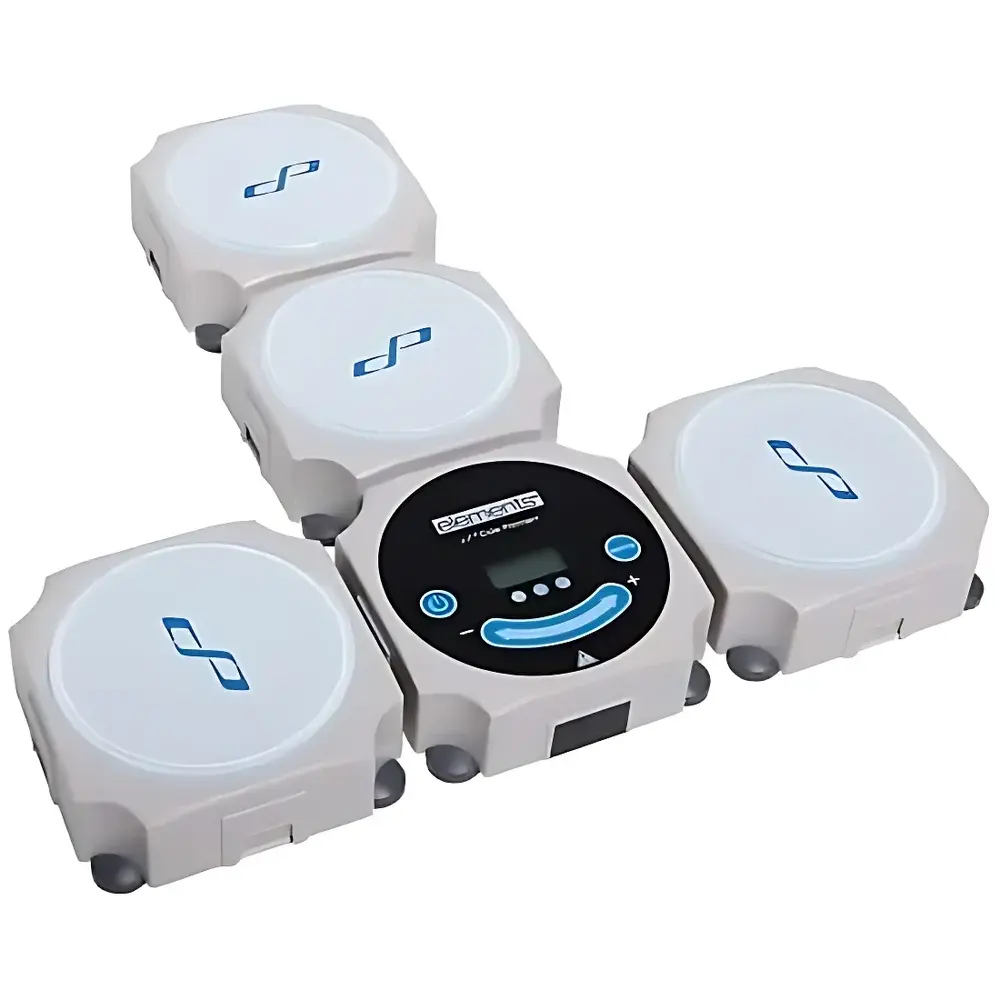
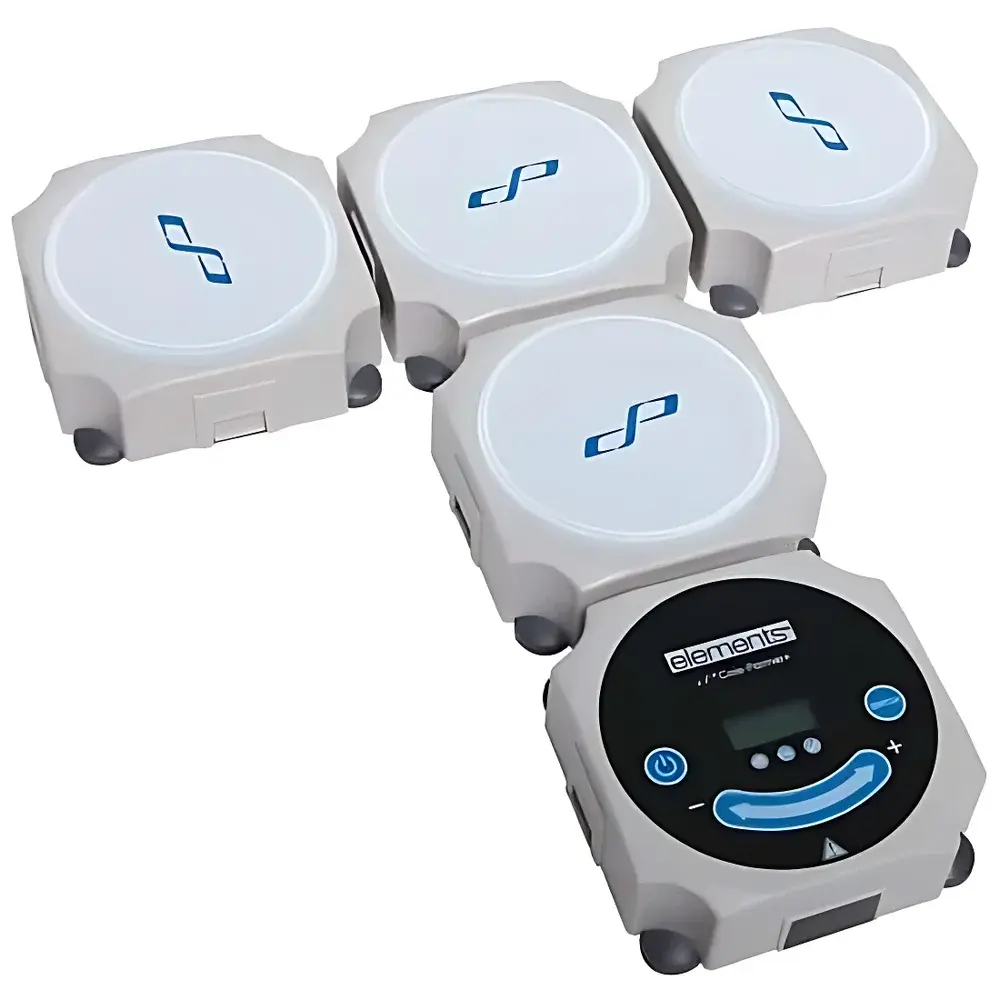
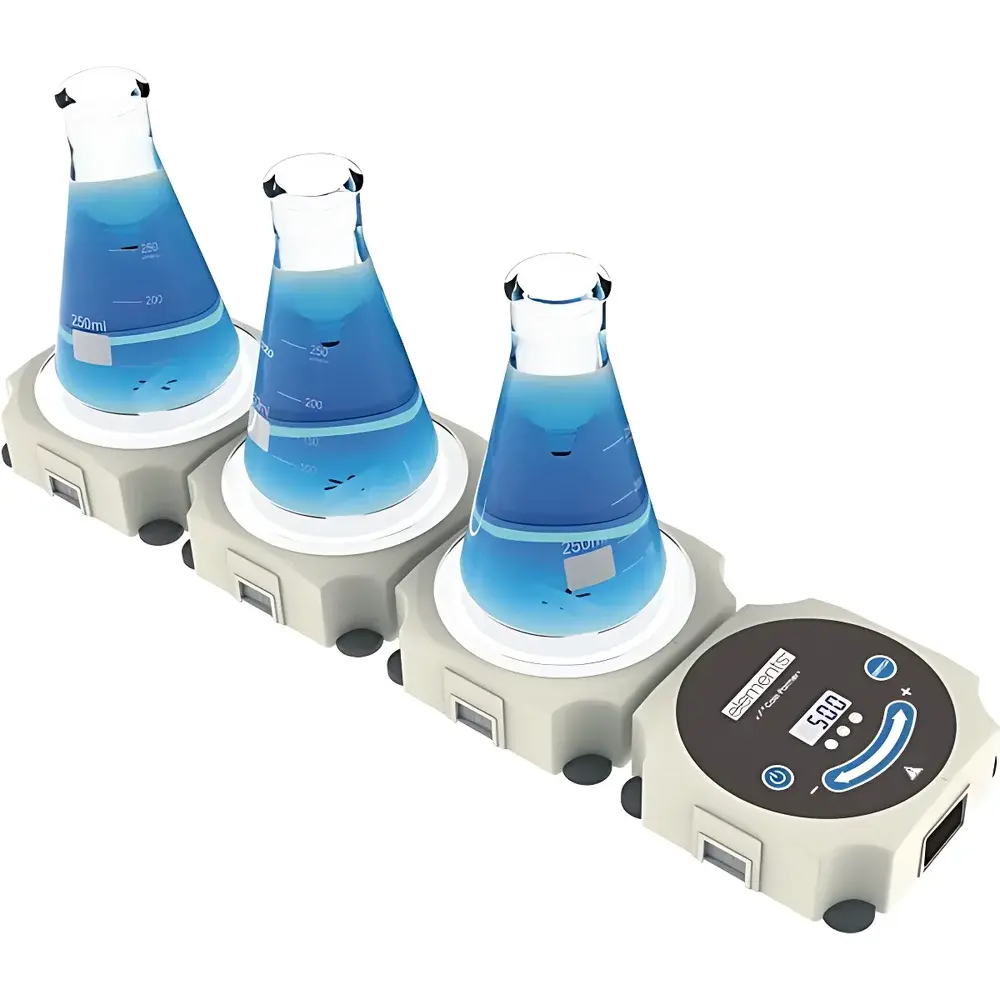
Cole-Parmer elements Modular Multi-Position Magnetic Stirrer
| Brand | Cole-Parmer |
|---|---|
| Origin | USA |
| Model | 84003-80 |
| Stirrer Type | Magnetic Stirrer |
| Max Stirring Volume per Position | 1 L |
| Speed Range | 100–1500 rpm |
| Temperature Control Range | 5–40 °C |
| Input Voltage | 100–240 VAC |
| Number of Stirring Positions | Up to 10 (configurable) |
| Display | Integrated LCD Touchscreen Controller |
| Timer Function | 1 min–9 hr or continuous operation |
| Plate Diameter | 9.5 cm (3.75 in) |
| Operating Ambient Temperature | 5–40 °C |
| Housing Material | Chemical-resistant ABS |
| Stir Plate Surface | Tempered Glass |
| Weight (Controller) | 160 g |
| Weight (Single Module) | 300 g |
| Direction Reversal Interval | 45 s (clockwise/counter-clockwise) |
Overview
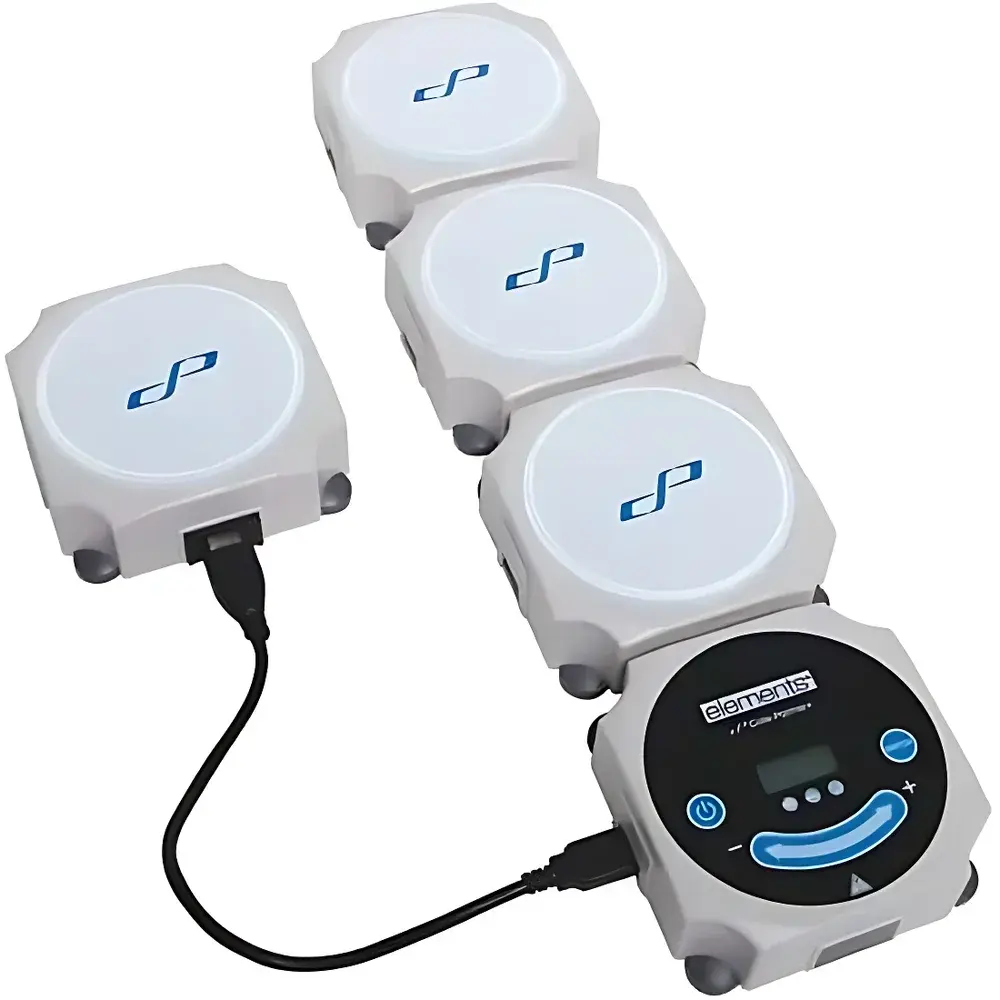
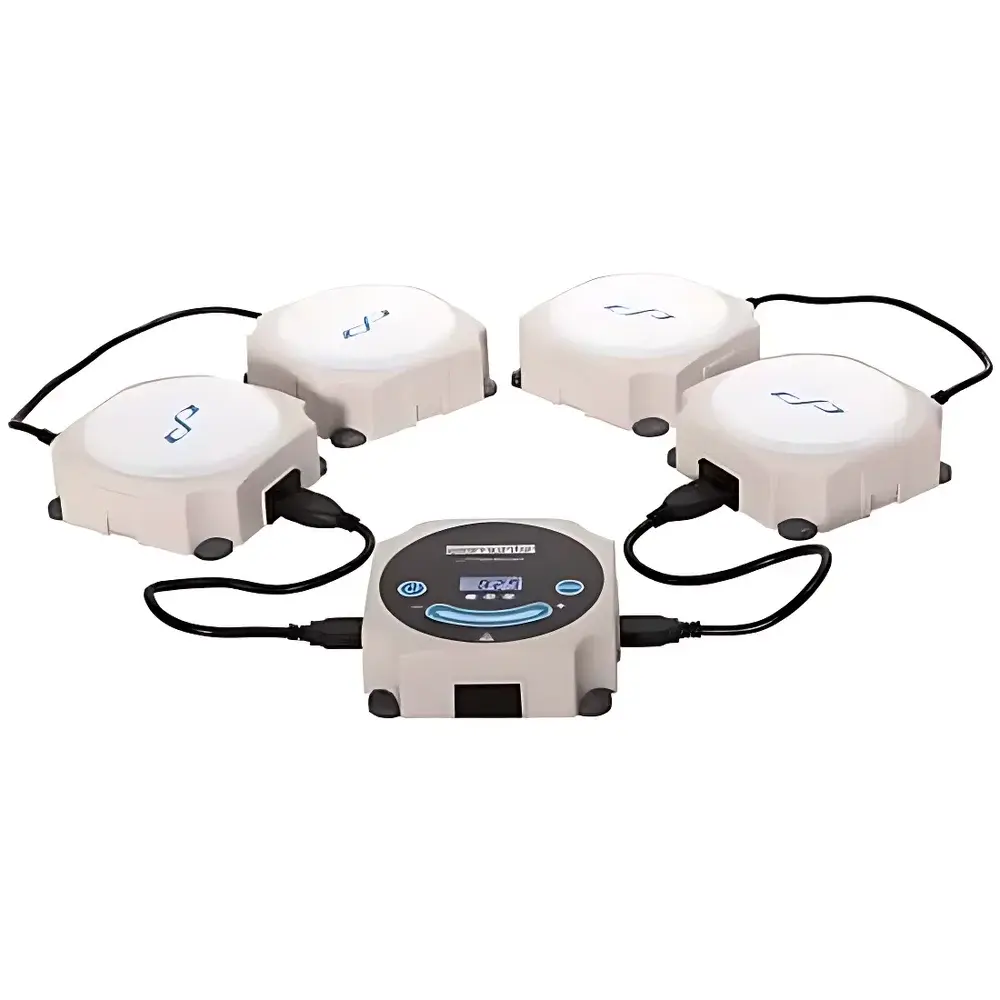
The Cole-Parmer elements Modular Multi-Position Magnetic Stirrer (Model 84003-80) is an engineered solution for high-throughput, space-constrained laboratory environments requiring precise, scalable, and chemically inert agitation. Based on permanent magnet-driven coupling principles, this system utilizes rotating magnetic fields beneath a thermally stable glass plate to induce synchronous rotation of PTFE- or ceramic-coated stir bars immersed in samples. Unlike conventional single-position stirrers, the elements platform adopts a distributed architecture: a central touchscreen controller communicates digitally with individual stirring modules via USB, enabling plug-and-play expansion without signal degradation or calibration drift. Each module operates independently—supporting simultaneous, programmable agitation across up to ten positions—while maintaining consistent torque delivery across the full 100–1500 rpm range. Designed for ambient-temperature applications (5–40 °C), it does not incorporate active heating; instead, it prioritizes mechanical stability, chemical resistance, and low thermal mass for integration with external temperature-controlled platforms (e.g., cold blocks or incubators).
Key Features
- Modular scalability: Configure 1–10 independent stirring positions on a shared benchtop footprint using standardized USB-linked modules.
- Intuitive touch interface: Integrated LCD controller enables direct rpm setting, timer programming (1 minute to 9 hours), and bidirectional reversal (45-second interval between clockwise and counterclockwise rotation).
- Chemical resilience: Stir plate surface is made of tempered borosilicate glass; housing is injection-molded ABS rated for resistance to common solvents, acids, and bases encountered in QC, synthesis, and sample prep workflows.
- Low-inertia design: Ultra-lightweight construction (160 g for controller; 300 g per module) minimizes vibration transmission and facilitates repositioning without compromising rotational stability at high speeds.
- Wide voltage compatibility: Auto-sensing 100–240 VAC power supply ensures operational continuity across global laboratory electrical standards without manual switching or adapters.
- Reproducible torque delivery: Optimized magnetic circuit geometry maintains consistent stirring force up to 1 L per position—even with viscous aqueous or low-conductivity organic media—without stalling or speed deviation.
Sample Compatibility & Compliance
This stirrer accommodates standard laboratory vessels including beakers (up to 1000 mL), Erlenmeyer flasks, and multi-well plates when paired with appropriately sized stir bars (e.g., 30 mm × 8 mm PTFE-coated). It is compatible with ISO 8573-1 clean air classifications when operated in controlled environments and meets UL 61010-1 and IEC 61010-1 safety requirements for laboratory electrical equipment. While not certified for use in explosion-proof areas or under GMP-regulated manufacturing processes, its digital logging capability (via optional PC connectivity) supports GLP-aligned documentation when integrated into validated workflows requiring traceable agitation parameters.
Software & Data Management
The elements platform operates autonomously via onboard firmware but supports optional USB-to-PC communication for remote parameter configuration and event logging. When connected to a host computer running Cole-Parmer’s elements Configuration Utility (Windows/macOS), users can export timestamped operation logs—including start/stop times, rpm profiles, reversal events, and timer status—for audit trail generation. Though not FDA 21 CFR Part 11 compliant out-of-the-box, the system’s deterministic behavior, non-volatile timer memory, and absence of user-modifiable firmware align with foundational data integrity expectations in regulated research settings.
Applications
- High-throughput reagent preparation and buffer dilution across parallel vessels in molecular biology and clinical diagnostics labs.
- Consistent mixing during enzymatic assays, immunoassay plate conditioning, and dissolution testing where uniform suspension kinetics are critical.
- Controlled agitation of cell culture media or nanoparticle dispersions prior to filtration or centrifugation steps.
- Method development in analytical chemistry requiring identical stirring conditions across multiple calibration standards or QC samples.
- Teaching laboratories emphasizing modular instrumentation concepts, experimental design, and reproducibility training.
FAQ
Can this stirrer be used with hot plates or heated blocks?
Yes—its ambient-only design (5–40 °C operating range) makes it suitable for integration beneath externally heated platforms, provided thermal expansion and condensation do not compromise the glass plate surface.
Is the reversal function programmable per module?
No—the 45-second bidirectional cycle is synchronized across all active modules via the central controller and cannot be individually adjusted.
What stir bar sizes are recommended for maximum 1 L capacity?
For optimal vortex formation and homogeneity in 1 L beakers, use 40 mm × 8 mm or 50 mm × 10 mm PTFE-coated stir bars with ≥15 mm magnetic core length.
Does the system support RS-232 or Ethernet connectivity?
No—communication is limited to USB 2.0 for configuration and logging; no network interface is included.
How is calibration verified?
RPM accuracy is factory-verified against NIST-traceable tachometric standards; no end-user calibration is required or supported.



