
COLLIN Extrusion Die Systems & Downstream Equipment
| Brand | COLLIN |
|---|---|
| Origin | Germany |
| Supplier Type | Authorized Distributor |
| Import Status | Imported |
| Model Range | Custom Configurable Die Modules |
| Pricing | Available Upon Technical Consultation |
Overview
COLLIN extrusion die systems and downstream equipment are precision-engineered components for industrial food extrusion lines, specifically designed to meet the stringent thermal, mechanical, and hygienic requirements of high-output production of expanded snacks, aquafeed, pet food, textured vegetable protein (TVP), and high-moisture meat analogs. These systems operate at the critical interface between extruder barrel output and post-extrusion handling—where melt homogeneity, dimensional stability, pressure management, and temperature fidelity directly determine product integrity, texture consistency, and process repeatability. Each die module is constructed from corrosion-resistant, food-grade stainless steel (AISI 316L) and manufactured to DIN EN ISO 9001-certified tolerances, ensuring long-term dimensional stability under continuous thermal cycling (up to 200 °C) and sustained backpressure (up to 40 bar). The modular architecture supports rapid changeover between product formats without recalibration of upstream controls—enabling agile production across diverse formulations while maintaining compliance with EU Regulation (EC) No. 1935/2004 and FDA 21 CFR Part 177 for food-contact surfaces.
Key Features
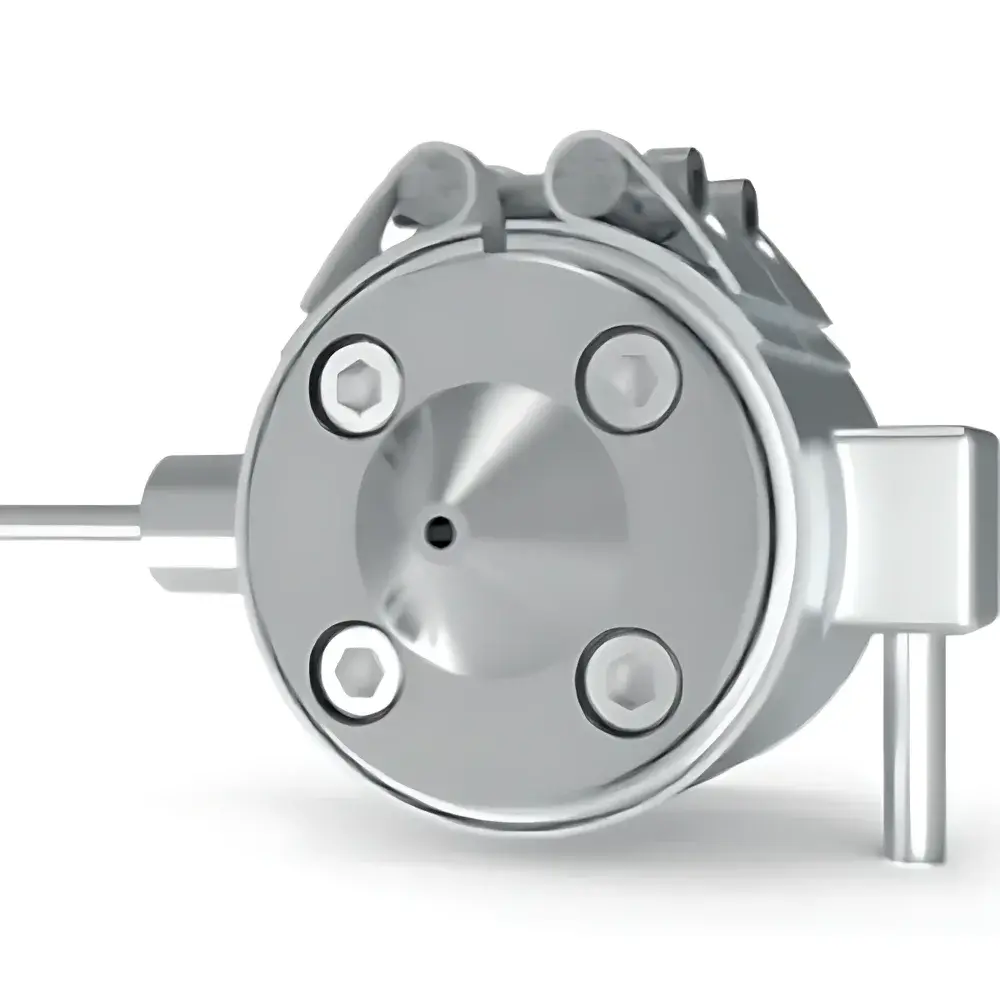
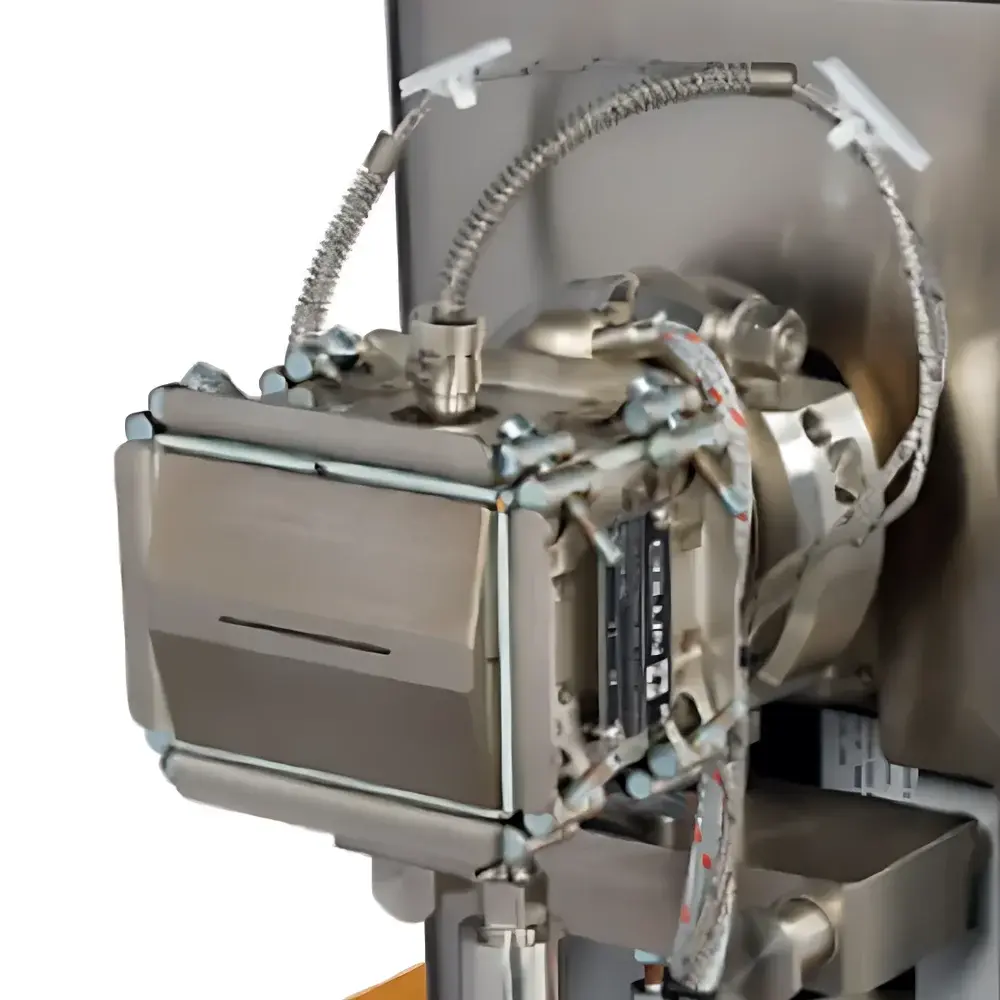
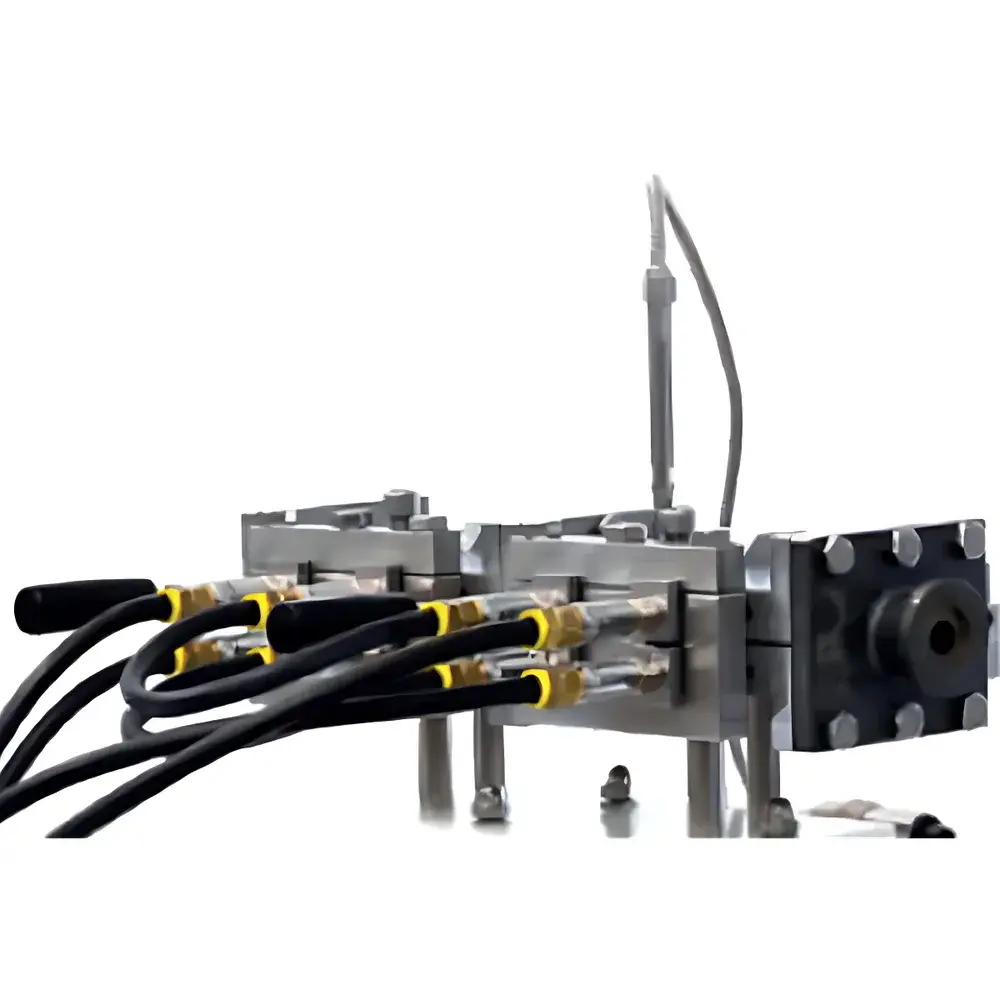
- Three primary die families: strand dies (with integrated melt temperature and pressure sensing ports), slit dies (for direct/indirect expansion control), and cooling dies (optimized for high-moisture extrudates requiring rapid heat dissipation)
- Interchangeable die inserts with standardized centering mechanisms—ensuring repeatable alignment within ±0.05 mm tolerance and eliminating manual shimming during changeovers
- Cooling dies feature integrated PT100 Class A thermocouples and piezoresistive pressure transducers (0–50 bar range), calibrated per ISO/IEC 17025 by COLLIN’s in-house metrology lab
- Strand die inserts available in diameters from 1.2 mm to 8.0 mm; slit dies configurable with widths from 0.5 mm to 12 mm and lengths up to 300 mm
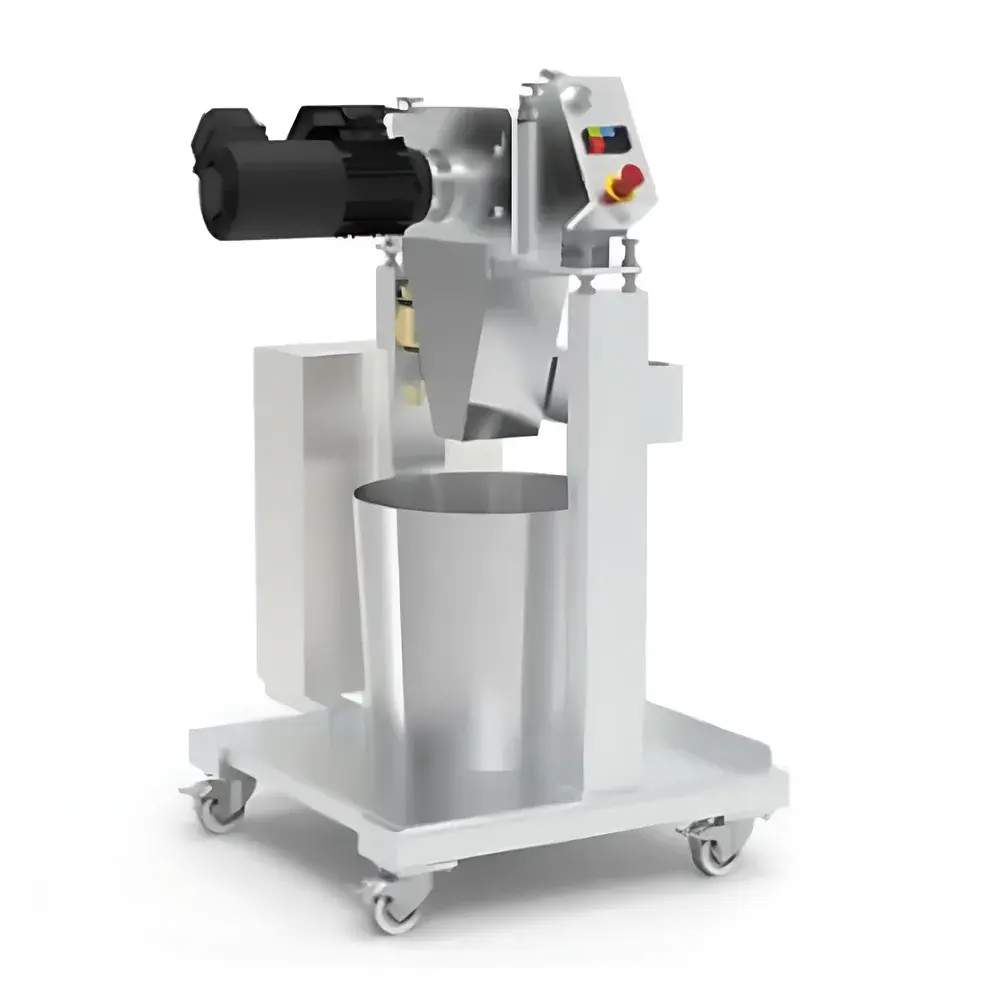
- Die-cutting units incorporate servo-controlled rotary cutters with hardened stainless-steel blades (HRC 60–62), operating at precisely adjustable speeds from 10 to 2,500 rpm (±0.5 rpm resolution)
- Quick-release hinge design with sanitary clamping (DIN 11851) and IP66-rated electrical enclosures compliant with IEC 60529 for washdown environments
Sample Compatibility & Compliance
These systems accommodate a broad spectrum of food-grade extrudates—including starch-based snacks, soy/wheat/pea protein blends, marine meal composites, and hydrocolloid-rich matrices—with viscosities ranging from 10² to 10⁶ Pa·s at shear rates of 10–100 s⁻¹. All wetted surfaces comply with EC 1935/2004 and FDA 21 CFR 177.2600 for repeated-use food-contact polymers and metals. Pressure and temperature sensors are traceable to national standards (PTB Germany) and documented per GLP Annex 11 requirements. Full system validation packages—including IQ/OQ documentation templates—are provided for GMP-regulated facilities targeting compliance with ISO 22000, FSSC 22000, and BRCGS Food Safety Issue 9.
Software & Data Management
COLLIN die modules integrate seamlessly with standard PLC-based extrusion control systems (Siemens S7-1500, Rockwell ControlLogix) via PROFIBUS DP, PROFINET IO, or Modbus TCP. Real-time process data—including die pressure (±0.25% FS accuracy), melt temperature (±0.3 °C), cutter RPM, and actuator position—is logged at 100 Hz and archived in CSV/OPC UA format. Optional COLLIN DataBridge software provides time-synchronized correlation with upstream extruder torque, barrel zone temperatures, and feed rate—enabling root-cause analysis of density variations, expansion ratio deviations, or surface cracking events. Audit trails meet FDA 21 CFR Part 11 requirements with electronic signatures, user-level access control, and immutable data storage.
Applications
- Expanded snack production (cheese curls, corn puffs, breakfast cereals) requiring precise strand geometry and uniform expansion onset
- Aquafeed and pet food manufacturing where pellet durability, water stability (WA), and nutrient retention depend on controlled die exit rheology
- High-moisture extrusion of mycoprotein and soy isolates for whole-cut meat analogs—leveraging active cooling dies to suppress Maillard browning while preserving fibrous microstructure
- Production of textured vegetable protein (TVP) with defined fiber orientation, enabled by slit-die flow channel geometry and laminar melt distribution
- Lab-scale formulation development and pilot-line scale-up using identical die geometries as full-scale production lines—ensuring linear scalability per ASTM D3800-22 guidelines
FAQ
Are COLLIN die systems compatible with non-COLLIN extruders?
Yes—mechanical interfaces follow ISO 2858 flange standards and electrical protocols support industry-standard fieldbus networks. Custom adapter plates and signal mapping documentation are supplied.
What validation support is included for regulated food manufacturing?
IQ/OQ protocols, calibration certificates (traceable to PTB), material compliance dossiers, and FAT/SAT checklists are provided. Optional GMP-compliant UAT execution is available through COLLIN’s certified validation partners.
Can die inserts be cleaned in place (CIP)?
All die bodies and inserts are fully disassemblable with no blind holes or trapped volumes. Surface roughness (Ra ≤ 0.4 µm) and electropolished finishes meet EHEDG Guideline Doc. 8 for CIP validation.
Is thermal compensation applied to pressure sensor readings?
Yes—integrated firmware applies real-time temperature-compensated zero and span correction per IEC 60770-1, eliminating drift over extended operation at elevated melt temperatures.





